
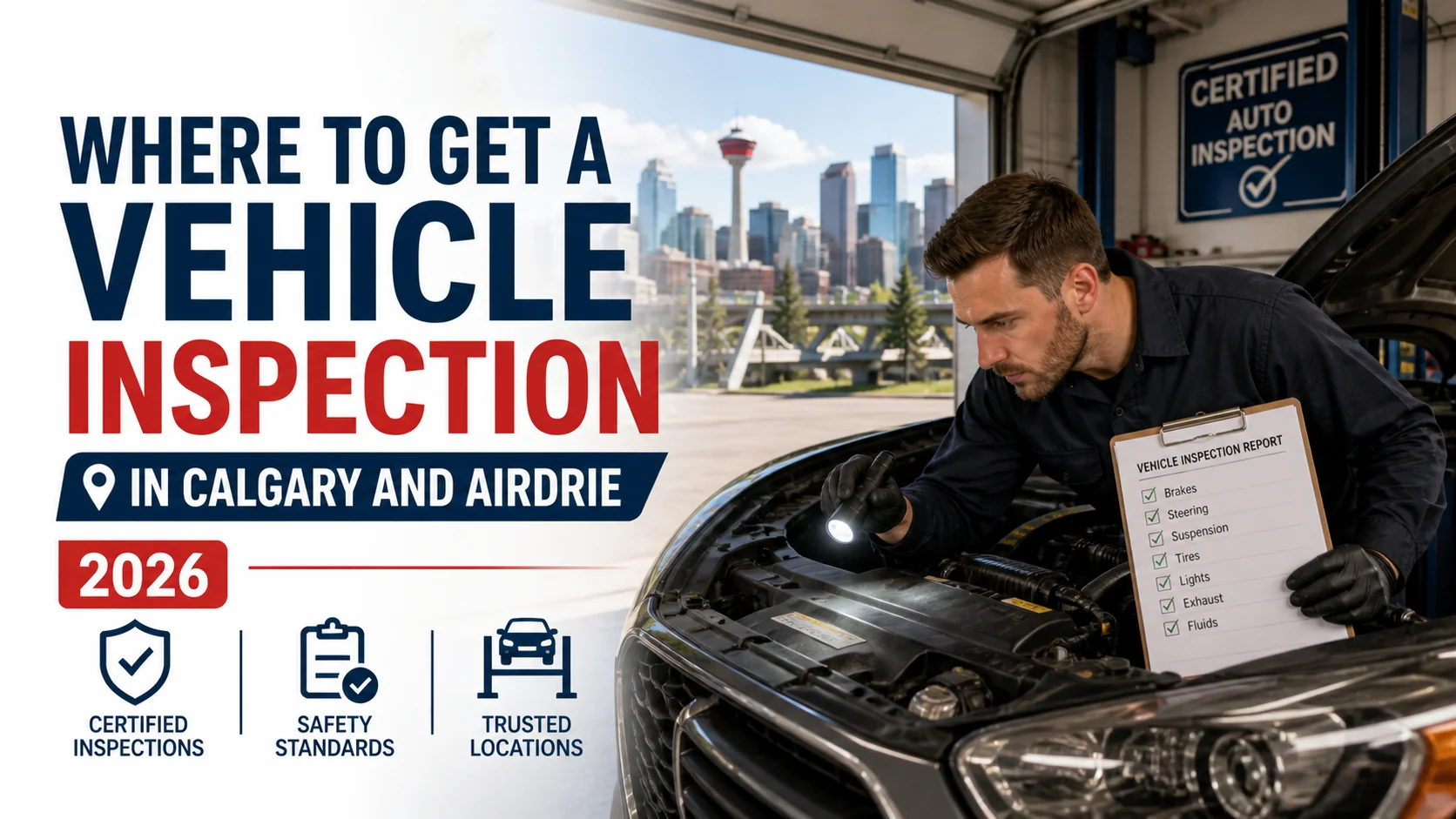
Where to Get a Vehicle Inspection in Calgary and Airdrie (2026)
In this article
- When Do You Actually Need a Vehicle Inspection in Alberta?
- Out-of-Province Vehicles
- Rebuilt Status Vehicles
- Age-Based and Insurance-Required Inspections
- Voluntary Pre-Purchase Inspections
- What Alberta Vehicle Inspections Actually Check
- Brakes
- Lights and Electrical
- Steering and Suspension
- Tires
- Rust and Structural Integrity
- Glass and Visibility
- Emissions
- How Much Does a Vehicle Inspection Cost in Alberta?
- How Long Does an Inspection Take?
- Finding a Licensed Inspector: AMVIC's Role
- Tips for Passing Your Inspection First Time
- Common Failure Points on Alberta Inspections
- What Happens If Your Vehicle Fails the Inspection?
- If You Already Own the Vehicle
- If You're Still Negotiating the Purchase
- The Lemon Protection You Have Under Alberta Law
- How Much Should Repairs Cost? A Rough Pricing Guide
- Buying from a Licensed Dealer vs. Private: The Inspection Difference
- Out-of-Province Vehicles: A Closer Look at the Risk
- British Columbia Vehicles
- Ontario and Quebec Vehicles
- Saskatchewan Vehicles
- Registering After the Inspection: What Comes Next
- The Bottom Line on Vehicle Inspections
- Related Buyer Guides
- Compare and Apply
Check Your Options in 3 Minutes
No credit impact. All credit situations welcome.
★★★★★ 106+ Google Reviews · AMVIC Licensed · Free Delivery 300km
You found the vehicle you want. The price is right, the colour works, the seller seems straight. Then you start doing your homework and realize you need a vehicle inspection — and suddenly you're not sure where to go, what it costs, how long it takes, or what they're actually looking for. If this sounds familiar, you're not alone. The Alberta vehicle inspection system is more organized than most people realize, but it's not exactly transparent to buyers navigating it for the first time.
This guide covers everything you need to know about getting a vehicle inspection in the Calgary and Airdrie area: when you're legally required to have one, what inspectors check, how much to budget, and how to give your vehicle the best chance of passing first time. We'll also cover the significant advantage of buying from a licensed dealer versus a private seller when it comes to inspection requirements.
See what you pre-qualify for
Three quick answers — soft check, no commitment.
When Do You Actually Need a Vehicle Inspection in Alberta?
Not every vehicle purchase requires a formal inspection — but several common situations do. Knowing which category your situation falls into before you buy saves significant time and potential disappointment.
Out-of-Province Vehicles
This is the most common inspection trigger. If you're buying a vehicle that was previously registered in another province or territory, it needs a full out-of-province inspection before you can register it in Alberta. No exceptions. This applies whether you're buying from a private seller in BC, bidding at auction on a vehicle from Ontario, or picking up a truck from Saskatchewan.
The inspection must be performed by an Alberta-licensed inspection facility before registration — not after. Registries will reject your paperwork without it. Plan for this requirement upfront, as failed inspections can require repairs before the vehicle qualifies.
Rebuilt Status Vehicles
Alberta has two brand categories that non-Alberta residents sometimes don't recognize: Salvage and Rebuilt. A Salvage brand means the vehicle was written off by an insurer and has not yet been repaired and re-inspected. A Rebuilt brand means it was written off, then repaired, inspected, and cleared for road use.
If you're buying a Rebuilt-brand vehicle, the inspection has already been completed — that's what converted it from Salvage to Rebuilt. But if you're ever unsure about a vehicle's history, checking for recalls and a clean title history before any money changes hands is essential. Run a CARFAX or Carproof report first.
Age-Based and Insurance-Required Inspections
Some insurance companies require inspections before insuring older vehicles — particularly those over a certain age or mileage threshold. This isn't a provincial law but a private insurer requirement. If your insurer is asking for one, they'll specify what type of inspection they need. A standard safety inspection from a licensed facility typically satisfies this requirement.
Additionally, if you're purchasing a vehicle privately and financing through a lender, some lenders may require a pre-purchase inspection as a condition of the loan — especially for higher-mileage vehicles. This is worth clarifying with your lender before you're deep into a deal.
Voluntary Pre-Purchase Inspections
These are technically optional but practically essential for any significant private sale purchase. A buyer-ordered inspection from an independent mechanic — not affiliated with the seller — gives you a professional assessment of the vehicle's actual condition before money changes hands. We cover what these inspections include in our used car inspection checklist.
What Alberta Vehicle Inspections Actually Check
An Alberta safety inspection is a standardized assessment of safety-critical systems. It is not a comprehensive mechanical assessment — a vehicle can pass an inspection while still having issues that will require future maintenance. Here's what inspectors evaluate:
Brakes
This is the most common failure point in Alberta inspections. Inspectors measure brake pad thickness, check rotors for scoring and warping, inspect calipers, and evaluate brake lines for corrosion or leakage. Alberta's winter conditions accelerate brake wear, and the salt and gravel on roads corrode brake components faster than warmer-climate vehicles. See our brake inspection guide for what good brakes look like versus borderline ones.
Lights and Electrical
Every exterior light — headlights, tail lights, brake lights, turn signals, reverse lights, hazard lights — must function properly. This sounds simple but is a frequent failure point on older vehicles or ones that have been sitting. Wiring issues, burned-out bulbs, and malfunctioning modules all count as failures.
Steering and Suspension
Inspectors check for play in the steering, worn ball joints, damaged tie rods, and deteriorated bushings. In Alberta, where potholes are a seasonal inevitability and gravel roads are common in rural areas, suspension wear happens faster than the vehicle's age might suggest.
Tires
Tread depth must meet minimums (1.6 mm for summer tires; Alberta recommends 3.5 mm for winter tires though this isn't legally mandated). Tires must also be free of bulges, exposed cords, and significant sidewall damage. Mismatched tires on the same axle can also be flagged.
Rust and Structural Integrity
This catches out-of-province vehicles from salt-belt regions. Alberta's climate is dry, so local vehicles rust more slowly than those from Ontario, Quebec, or Atlantic Canada. Inspectors look for rust on frame rails, subframes, floor pans, and body structure. Significant structural rust is a fail — and depending on severity, potentially not worth repairing.
Glass and Visibility
Windshield cracks in the driver's line of sight are a failure. Minor chips outside the sightline may be acceptable. All mirrors must be present and functional.
Emissions
Alberta does not have a province-wide emissions testing program (unlike BC or Ontario), so inspections here are safety-focused rather than emissions-focused. However, if the check engine light is on due to an emissions-related code, this may still be flagged depending on the facility and the nature of the inspection.
How Much Does a Vehicle Inspection Cost in Alberta?
Budget $150–$300 for a standard safety inspection in the Calgary/Airdrie market. The range depends on the facility, whether it's a basic safety check versus a comprehensive assessment, and how busy the shop is. Out-of-province inspections at the higher end of this range are common because they're more thorough.
Shops that specialize in inspections and are familiar with AMVIC standards tend to be more consistent than general repair shops doing occasional inspections. When you call ahead, ask specifically whether they're licensed for Alberta safety inspections and whether they issue the official documentation you'll need for registry transfer.
Budget tip: Always get a quote before authorizing the inspection. Ask whether the inspection fee is separate from any repair estimates — some shops bundle these, others keep them distinct. A separate inspection is cleaner because you can take the report and repair bids elsewhere.
How Long Does an Inspection Take?
Plan for 1–3 hours, depending on the vehicle, the facility's current workload, and whether issues requiring further investigation are discovered. Most straightforward inspections on a well-maintained vehicle are done in 90 minutes or less. If the inspector finds something ambiguous — unusual wear patterns, evidence of repairs they want to look deeper at — it can extend.
Call ahead and schedule. Walk-in inspections are possible at some facilities but not guaranteed. For an out-of-province inspection, calling ahead and describing the vehicle allows the shop to block appropriate time.
Finding a Licensed Inspector: AMVIC's Role
Alberta's vehicle inspection program is administered through AMVIC — the Alberta Motor Vehicle Industry Council. AMVIC licenses both dealers and inspection facilities. This is important: not every mechanic shop is authorized to perform official Alberta safety inspections.
To find an authorized inspection facility, search AMVIC's online registry at amvic.org. You can search by city, by facility name, or browse their licensed inspection station list. When in doubt, call and ask directly: "Are you authorized to perform Alberta safety inspections and issue the official documentation for out-of-province transfers?" A licensed facility will answer yes without hesitation.
AMVIC also handles complaints against dealers and licensed facilities. Our post on your AMVIC rights as a used car buyer in Alberta covers what you're entitled to and what to do if something goes wrong.
Tips for Passing Your Inspection First Time
If you're bringing a vehicle you own (or are about to own through a private sale) to inspection, these steps improve your odds of a clean pass:
- Fix the obvious stuff first. Burned-out bulbs cost $5 and 10 minutes. A failed bulb is a preventable inspection failure. Walk around the vehicle at night and verify every light works before the inspection date.
- Check tire tread depth. Buy a $5 tread depth gauge at any auto parts store. If any tire is near the legal minimum, replace it before the inspection — don't gamble.
- Listen for brake noises. Grinding or squealing when braking almost always signals worn pads or damaged rotors. Address these before the inspection; they're almost certain to fail.
- Address the check engine light. Even if Alberta doesn't have emissions testing, a check engine light that's on for a safety-relevant system (traction control, ABS, brake system warning) will be flagged. Scan the codes first — many auto parts stores do this free — and understand what you're dealing with.
- Clean the vehicle. This sounds irrelevant to safety, but inspectors who can actually see what they're inspecting find problems more easily — and a visibly neglected vehicle invites more scrutiny. A clean undercarriage is easier to assess for rust.
- Bring maintenance records if you have them. They don't affect the inspection outcome, but they establish credibility and can prompt the inspector to flag marginal items as advisory rather than failures.
Common Failure Points on Alberta Inspections
If your vehicle is coming from a wetter or saltier province, prioritize checking these before you even schedule the inspection:
- Frame and subframe rust — especially on vehicles from Ontario, Quebec, or the Atlantic provinces. This is the hardest failure to repair economically.
- Brake lines and brake hardware corrosion — salt exposure accelerates this significantly on Eastern Canadian vehicles.
- Suspension components — ball joints, control arm bushings, and sway bar links wear faster in cold climates and on salt-treated roads.
- Lights and lenses — UV and road spray cause lenses to yellow or crack, blocking light output below required levels.
- Windshield chips and cracks — Alberta's gravel roads and temperature extremes crack windshields faster than most provinces. Any crack in the driver's visual field is an automatic fail.
What Happens If Your Vehicle Fails the Inspection?
A failed inspection isn't the end of the road — but it does change your options significantly depending on whether you already own the vehicle or are still in the purchase process.
If You Already Own the Vehicle
You'll receive a detailed report identifying every failure point and, in most cases, advisory items that don't constitute failures but indicate upcoming maintenance. Take this report and get repair estimates from two or three shops — not necessarily including the inspection facility. Some facilities offer inspection-and-repair bundling; this is convenient but not always the most cost-effective route.
Once repairs are completed, you'll return for a re-inspection or a verification that the specific failure points were addressed. You typically don't pay for a full re-inspection if you return to the same facility within a specified period — but clarify this before you leave the first inspection.
If You're Still Negotiating the Purchase
This is where a pre-purchase inspection pays for itself immediately. If the vehicle fails — or shows significant advisory items — you have three clear options:
- Negotiate the purchase price down by the estimated repair cost, using the inspection report as documentation.
- Require the seller to complete the repairs before the sale closes, with a re-inspection to confirm.
- Walk away. A failed inspection is legitimate grounds to back out of any agreement. If a seller pushes back on this, that itself is a warning sign.
Many buyers skip the pre-purchase inspection to avoid the cost and delay. Then they're stuck owning a vehicle that needs $2,000 in brake work they didn't see coming. The $150–$200 inspection fee is insurance against this scenario. Think of it as the cheapest insurance you'll ever buy on a vehicle purchase.
The Lemon Protection You Have Under Alberta Law
Alberta's AMVIC Act provides recourse against licensed dealers who knowingly sell vehicles with material defects not disclosed. If you bought from a licensed dealer and discover a problem that should have been identified, AMVIC has a formal complaint process. For private sales, your recourse is generally limited to civil action — considerably more expensive and time-consuming than dealing with a regulated dealer who has reputational and licensing stakes in making things right.
Our post on AMVIC rights for used car buyers walks through exactly what you're entitled to and how to file if something goes wrong.
How Much Should Repairs Cost? A Rough Pricing Guide
If your inspection comes back with required repairs, here are ballpark costs for the most common failure items in the Calgary/Airdrie market. These are rough estimates — get quotes from multiple shops, particularly for labour-intensive jobs where rates vary significantly.
| Repair Item | Approximate Cost Range | Notes |
|---|---|---|
| Brake pads (per axle) | $200–$400 | Front and rear vary; OEM vs aftermarket affects cost |
| Brake rotors (per axle) | $250–$500 | Often done with pads; resurfacing cheaper but not always viable |
| Ball joint replacement | $300–$700 each | Labour-intensive; varies by vehicle make |
| Tire replacement (per tire) | $120–$250 | Season and brand dependent |
| Windshield replacement | $300–$600 | ADAS-equipped vehicles cost more (camera calibration) |
| Headlight assembly | $150–$400 | OEM vs aftermarket; HID/LED systems higher |
| Tail light / turn signal | $50–$200 | Often a $15 bulb; LED assemblies much higher |
| Frame rust repair (minor) | $500–$1,500 | Major frame rust is often not worth repairing economically |
If inspection failures total more than $1,500–$2,000 on a private sale vehicle, run the math carefully before committing. The purchase price plus repairs needs to compare favourably to buying a clean comparable vehicle from a dealer or private seller with no known issues. Don't let sunk cost (your time searching, the inspection fee) push you into a bad deal.
Buying from a Licensed Dealer vs. Private: The Inspection Difference
This is the most underappreciated advantage of buying from an AMVIC-licensed dealer like Shift Happens Auto Sales. In Alberta, licensed dealers are required to inspect vehicles before sale. When you buy from a licensed dealer, the vehicle has already been checked against safety standards — you're not managing the inspection process yourself, coordinating with shops, chasing paperwork, or budgeting for potential failures.
Private sellers have no such requirement. A private seller can sell you a vehicle with known mechanical issues as long as they don't actively misrepresent the condition. Buyer beware applies in full force. The inspection — and the cost and hassle of it — is entirely on you.
When you factor in the $150–$300 inspection cost, potential repair costs for failures, and the time involved in the private sale inspection process, the price premium of buying from a dealer often disappears entirely. And if you're buying an out-of-province vehicle privately, you're adding even more complexity — the out-of-province inspection requirement lands on the buyer's plate regardless of what the seller told you.
Our team at Calgary area dealerships navigates these inspections routinely. If you're looking at an out-of-province vehicle or want guidance on the inspection process, our contact page connects you directly with someone who knows the Alberta requirements cold.
Out-of-Province Vehicles: A Closer Look at the Risk
The Calgary area sees significant volume of vehicles coming from BC, Ontario, and Saskatchewan — and each source province brings different risk profiles. Understanding this before you buy helps you ask the right questions.
British Columbia Vehicles
BC vehicles often have lower salt exposure than Ontario but more mountain driving — which means brake wear, transmission stress, and suspension fatigue from grades. Lower-mainland BC vehicles (Vancouver area) see significant rainfall but relatively mild temperatures. Alberta inspectors generally find fewer rust issues on BC vehicles than Eastern Canadian ones, but brake and suspension checks remain important.
Ontario and Quebec Vehicles
Eastern Canada's heavy road salt use is genuinely brutal on vehicle underbodies. Ontario and Quebec vehicles at 8–12 years old frequently show significant frame and subframe rust — enough that Alberta inspectors fail them outright. Before investing time negotiating on a private sale Eastern Canadian vehicle, have a mechanic do a quick undercarriage visual before committing to a full inspection. Frame rust that looks terminal usually is.
Saskatchewan Vehicles
Saskatchewan's dry prairie climate is favourable for vehicle longevity — similar to Alberta in this regard. Rust issues are less pronounced. The main concerns with Saskatchewan vehicles are typically the same as Alberta: age-related mechanical wear rather than environmental corrosion. These are often among the better out-of-province buys.
If you're buying an out-of-province vehicle through a dealer, the dealer handles the out-of-province inspection as part of the sale process. If you're buying privately — particularly from an online listing for an Eastern Canadian vehicle — factor the cost and uncertainty of the out-of-province inspection directly into your offer price, not as an afterthought.
Registering After the Inspection: What Comes Next
Once a vehicle passes its safety inspection, the licensed facility issues an Alberta Safety Certificate — the official document you'll need at the registry to complete the title transfer and registration. This certificate is valid for a specific period (typically a few months) and is tied to the vehicle's VIN. Don't lose it.
If you're registering an out-of-province vehicle, you'll also need to surrender the out-of-province registration and, in some cases, the plates. The registry will walk you through the specific requirements for your originating province. For step-by-step guidance, see our post on how to register an out-of-province vehicle in Alberta.
The Bottom Line on Vehicle Inspections
A vehicle inspection in the Calgary and Airdrie area runs $150–$300, takes 1–3 hours, and is required in specific situations (out-of-province transfers most commonly). The inspection checks safety-critical systems — brakes, lights, steering, suspension, structural integrity, tires, and glass. Common failures involve rust on imported Eastern Canadian vehicles, brake wear, and lighting issues. Buying from an AMVIC-licensed dealer sidesteps most of this complexity, since the inspection requirement is already fulfilled before the vehicle reaches the lot.
If you're shopping for your next vehicle and want to skip the inspection headache, start your financing application and let us connect you with a vehicle that's already been through the process. Our lenders work with all credit situations — whether you're prime, near-prime, or rebuilding — and our inventory goes through AMVIC-compliant inspection before it's available for sale.
Compare and Apply
- Best Subprime Dealers in Calgary (2026) — best subprime dealers in Calgary
- Best Bad Credit Car Dealers in Airdrie — who approves bad credit car loans in Airdrie
- Used Cars in Airdrie — vehicles for sale in Airdrie
Financing Resources
Related Articles

Ready to Find Your Vehicle?
Browse our inventory or apply for financing. All credit situations welcome.
★★★★★ 106+ Google Reviews · AMVIC Licensed · Free Delivery 300km