
Self-Employed Car Financing in Alberta
You run your own business. You do not have T4 slips or pay stubs — and you should not need them to get a car loan. We work with lenders who understand self-employed income and accept NOAs, bank statements, and business financials as proof.
Last reviewed: October 2026
Can self-employed Albertans get a car loan?
Yes. Shift Happens accepts NOAs, bank statements, and business financials as income proof. We apply once to our 21+ lender network including lenders who specialize in self-employed files.
Self-Employed? Check Your Options
Bank statements, invoices, or tax returns accepted. No traditional employment verification needed.
5.0118+ Google ReviewsAMVIC LicensedFree Delivery 300km
Key Facts
- Income proof
- NOAs, bank statements, business financials
- Business types
- Sole proprietor, contractor, incorporated
- Lender network
- 21+ lenders
- Approval speed
- Same-day decisions
- Down payment
- $0 options available
No T4 Required — Bank Statements Accepted
Why Is Self-Employed Car Financing Different?
It is different because the standard lending system was built for salaried employees, not business owners. Banks use automated underwriting that requires T4 slips and pay stubs — documents self-employed people simply do not have — which triggers friction at every step.
The auto financing system was not built for you. It was built for salaried employees with predictable, employer-verified income. If you are self-employed, you are trying to fit your financial reality into a process designed for someone else. Understanding exactly why banks struggle with self-employed applications helps you navigate around those friction points.
Traditional Lenders Want T4 Slips
Most bank auto loan applications are built around salaried employees. When you are self-employed, you do not have T4 slips or regular pay stubs — and automated underwriting systems have no clean box to put you in. That is not a reflection of your financial strength, it is a limitation of systems designed for a different type of worker.
Variable Income Looks Risky on Paper
Even when your annual income is strong and consistent, a great October followed by a slow December can make algorithms nervous. Lenders trained on pay-stub patterns see volatility where self-employed people see the normal rhythm of running a business.
The Write-Off Paradox
Business write-offs are one of the primary benefits of self-employment. You save on taxes — legitimately — but those same deductions reduce your reported income. The number on your NOA can look much lower than what you actually earn, and lenders who only read that number miss the full picture.
New Businesses Face Automatic Skepticism
Most prime lenders have a two-year minimum self-employment requirement. If your business is under two years old, you are screened out before anyone looks at your actual financials. This affects a lot of capable people who are building something real.
Seasonal Income Gaps Trigger Red Flags
Construction crews, landscapers, tourism operators, and agricultural workers all earn most of their income in compressed windows. Automated underwriting reads quiet months as instability, even when your annual income tells a completely different story.
None of these are disqualifying on their own. They are friction points — and friction points can be addressed with the right documentation and the right lender. You can also compare bad credit financing options side by side on our main bad credit car loans page.
What Documents Prove Your Income?
Your Notice of Assessment (NOA) is the primary document — most lenders require one to two years of filed NOAs. Bank statements, business financials, and GST returns serve as supplementary proof depending on the lender.
The single most important thing you can do as a self-employed applicant is come prepared with documentation. Banks and alternative lenders accept different combinations of the following — the more you can provide, the stronger your application. Here is what each document proves and how lenders use it. If part of your income comes on a T4 or pay stubs, see how many pay stubs lenders ask for. Paid flat rate or on commission as an employee rather than running a business? That has its own page.
Notice of Assessment (NOA)
What it shows:CRA's official confirmation of your reported income for the year.
The gold standard for self-employed financing. Most lenders require one to two years of NOAs. Make sure your returns are filed and up to date before you apply — a missing NOA is one of the most common reasons self-employed applications stall.
Accepted by virtually all lenders as primary income proof.
Bank Statements (6-12 Months)
What it shows:A record of your account activity showing consistent deposits and cash flow.
Some lenders accept bank statements as primary income proof; others treat them as supplementary to your NOA. Both your personal and business accounts matter. The pattern of deposits over time tells a clearer story than any single month.
Accepted as primary or supplementary depending on the lender.
Business Financial Statements
What it shows:Your balance sheet and income statement showing the health of your business.
If you are incorporated, business financials can demonstrate revenue and retained earnings that do not appear on your personal NOA. Some lenders will consider retained earnings in addition to what you draw as personal income.
Most useful for incorporated businesses with strong retained earnings.
CRA Business Number
What it shows:Confirmation that you are registered and operating a legitimate business.
Not income proof on its own, but a CRA business number and GST/HST registration support the legitimacy of your application. It shows you are operating formally, not informally.
Supplementary — strengthens your file alongside other documents.
Contracts or Purchase Orders
What it shows:Active agreements showing future income you can reasonably expect.
For contractors and freelancers, an active contract with a recurring client is strong evidence of income stability going forward. This is especially valuable if your business is under two years old and your NOA history is thin.
Particularly effective with alternative lenders who underwrite manually.
GST/HST Returns
What it shows:Your filed GST/HST returns showing business revenue reported to CRA.
If your business revenue exceeds $30,000 you are required to register for GST/HST. Your quarterly or annual filings serve as independent evidence of business revenue that is separate from your personal NOA. This is an underused document that can meaningfully support your application.
Useful with lenders who look beyond personal tax filings.
How Does Financing Work for Your Business Type?
It depends on your structure — sole proprietors, incorporated owners, contractors, gig workers, and seasonal operators each have different income profiles and different documentation strengths. The approach that works best for you is specific to how your business earns and reports income.
Self-employment covers a wide range of situations. A sole proprietor plumber, an incorporated consultant, a rideshare driver, and a seasonal landscaper all have different financial profiles — and different strengths to bring to a financing application. Here is what works best for each.
Sole Proprietor
The simplest structure to finance. Your personal and business income are one and the same in the eyes of lenders. Your T1 General and NOA are the key documents. Make sure your returns are filed for the most recent two years and that your reported income is sufficient to support the loan payment you need.
Incorporated Business Owner
You can pay yourself a T4 salary from your own corporation, which gives you a document that looks exactly like a traditional employee's pay stub — useful for lenders who are not comfortable with self-employed files. Retained earnings inside the corporation can also be considered by lenders who look at the full picture. Provide both your corporate financial statements and your personal NOA.
Contractor or Freelancer
Active contracts and recurring client relationships are your strongest evidence of income stability. Bank deposit patterns over six to twelve months show consistent earning. Multiple income streams from different clients actually help your case — it demonstrates that your income does not depend on any single relationship.
Gig Economy Worker
Income from Uber, Lyft, DoorDash, Instacart, SkipTheDishes, and similar platforms is legitimate and financeable. Most platforms provide annual earnings summaries — download them and pair them with bank statements showing those deposits. The key is showing consistent activity over time, not just a few peak weeks.
Seasonal Business
Construction, landscaping, tourism, and agriculture all follow natural seasonal rhythms. Lenders need to see your full annual income, not just a slice of your peak months. Your NOA is essential because it captures the annualized figure. Strategically, plan to apply during or just after your peak season when your most recent bank statements show the strongest deposit activity.
Cash-Heavy Business
If a significant portion of your revenue is cash — trades, markets, certain service businesses — your bank deposits may not match your total earnings. Properly filed tax returns become critical in this situation because they are the only independent record of your actual income. Undeclared income cannot help your application, which is why staying current with CRA is directly tied to your financing ability.
Not sure which category you fall into? Call us before you apply. We have worked with all of these situations and can tell you in a few minutes which approach makes the most sense for your file.
How Can You Strengthen Your Self-Employed Application?
The single most impactful step is filing your taxes on time so your NOA is current — a missing NOA is the most common reason self-employed applications stall. Beyond that, a down payment, organized bank statements, and separated business banking each meaningfully improve your odds.
Self-employed applicants who get approved quickly share a few common traits: organized documentation, awareness of how their reported income looks to a lender, and strategic timing. These are not complicated moves — they are practical steps that meaningfully improve your odds. If you have just moved from self-employment to a salaried role, here is how a car loan on a new job works.
File Your Taxes on Time
A missing or late NOA is one of the most common application killers for self-employed borrowers. Lenders want to see your most recent year filed. If you are behind, getting current before you apply will open significantly more doors than any other single step you can take.
Watch Your Write-Offs the Year Before Applying
There is a genuine tension between minimizing your tax bill and maximizing your financeable income. If you know you plan to finance a vehicle in the next twelve months, consider the balance between tax savings and reported income. You can resume aggressive deduction strategies the following year once the loan is in place.
Save 3-6 Months of Bank Statements
Have them ready before you apply. Consistent, recurring deposits tell a clear story of a functioning business with stable income. Gaps or erratic patterns invite questions. The more organized your documentation is when you apply, the faster the lender can approve.
Consider a Co-Signer
If your business is under two years old or your reported income is lower than your actual earnings due to write-offs, a co-signer with stable employment can bridge the gap. This is not a sign of weakness — it is a practical tool for getting into the vehicle you need while your business file matures.
A Down Payment Significantly Improves Your Odds
Ten to twenty percent down does two things: it reduces the amount financed (which lowers the payment-to-income ratio that lenders evaluate) and it reduces the lender's risk. For self-employed applicants where income documentation is less standardized, a down payment signals genuine commitment and financial capacity.
Separate Personal and Business Banking
Lenders can follow the money more easily when your personal and business finances run through separate accounts. Mixed accounts create confusion about what income is personal and what is business-related. A dedicated business account, even a basic one, makes your application significantly cleaner to underwrite.
What Makes Self-Employed Car Financing Unique in Alberta?
Alberta's high rate of oil and gas contractors, tradespeople, and seasonal workers creates a specific income pattern — strong actual earnings, modest reported income due to deductions — that lenders experienced with the Alberta economy understand and work around. The strategies that matter most here are NOA currency, GST registration, and seasonal application timing.
Alberta has one of the highest self-employment rates in Canada, driven by oil and gas contractors, trades workers, agricultural operators, and a dense small business economy. The financing considerations for Alberta self-employed buyers reflect that reality — here is what matters most in this province.
Alberta's Self-Employment Landscape
Oil and gas contractors, pipeline workers, independent tradespeople, farmers, and small business owners make up a large share of Alberta's workforce. Many of these buyers have strong actual income — day rates that would make a bank branch manager envious — but their reported taxable income after deductions looks modest on paper. This gap between real earning power and reported income is the defining challenge for Alberta self-employed borrowers. Lenders who understand the Alberta economy know this pattern well and underwrite accordingly. We serve self-employed buyers across the province, including those in Airdrie and Calgary.
The CRA Notice of Assessment Is Your Key Document
For Alberta self-employed buyers, your Notice of Assessment is the foundation of your application. Lenders use Line 15000 (total income before adjustments) from your T1 General to establish your income for qualification purposes. If you write off aggressively — which is entirely legitimate and smart tax planning — your Line 15000 may show an income figure that does not reflect what you actually earn or keep. Some lenders will work around this by reviewing 6 to 12 months of bank statements as an alternative or supplement to your NOA, looking at gross deposits to get closer to your real income picture. The critical step: make sure your tax returns are filed and your NOA is current before you apply. If write-offs keep that number low, our guide to self-employed car loans with a low taxable income covers what else can show what you earn.
GST Registration Strengthens Your Application
Alberta has no provincial sales tax, so your only sales tax obligation is federal GST. If your business revenue exceeds $30,000 annually, you are required to register for a GST number. That registration works in your favour when applying for financing — it is independent CRA confirmation that your business exists and is operating at meaningful scale. Your filed GST returns also show your gross business revenue, which can be higher than what appears on your personal NOA after deductions. Bring your GST registration number and your most recent GST returns when you apply. It is an underused document that can shift the conversation with a lender.
Seasonal Income: Time Your Application Strategically
Construction crews, oil field workers, landscapers, and agricultural operators in Alberta often earn the majority of their annual income in a compressed window. During slow months, bank statements can look thin — which makes automated lender systems nervous even when your annual total is completely solid. If your work follows a seasonal pattern, apply during or immediately after your peak earning season. Your most recent bank statements will reflect the strongest deposit activity, and your cash position will support the application more visibly. Lenders with real Alberta experience understand seasonal income patterns, but you can make their job easier by timing your application well.
Keep Business and Personal Accounts Separate
This applies everywhere, but it matters especially in Alberta where cash-intensive trades and contract work are common. Lenders reviewing bank statements want to see consistent, identifiable deposits flowing into a business account. When business revenue and personal spending run through the same account, the picture becomes murky — it is harder to distinguish income deposits from transfers, and lenders may discount what they cannot cleanly verify. A dedicated business account, even a no-fee basic account, makes your application cleaner and your income easier to document. If your accounts are currently mixed, separating them at least six months before you plan to apply gives your statements time to establish a clear pattern.
What Our Customers Say
“When I started canvassing for a vehicle Luke reached out and was very helpful with finding cars and financing options. Luke and Shadeen helped with financing a private sale quickly.”
“Luke was fantastic with helping us get into a mini van, we are MORE than happy. I highly recommend anyone looking for a vehicle to go check out Shift Happens!”
“The buying experience was handled very professionally. Wes was very attentive and presented everything in an open and honest manner that gave me the reassurance that I made a good purchase.”
Cars you could drive home
See all inventory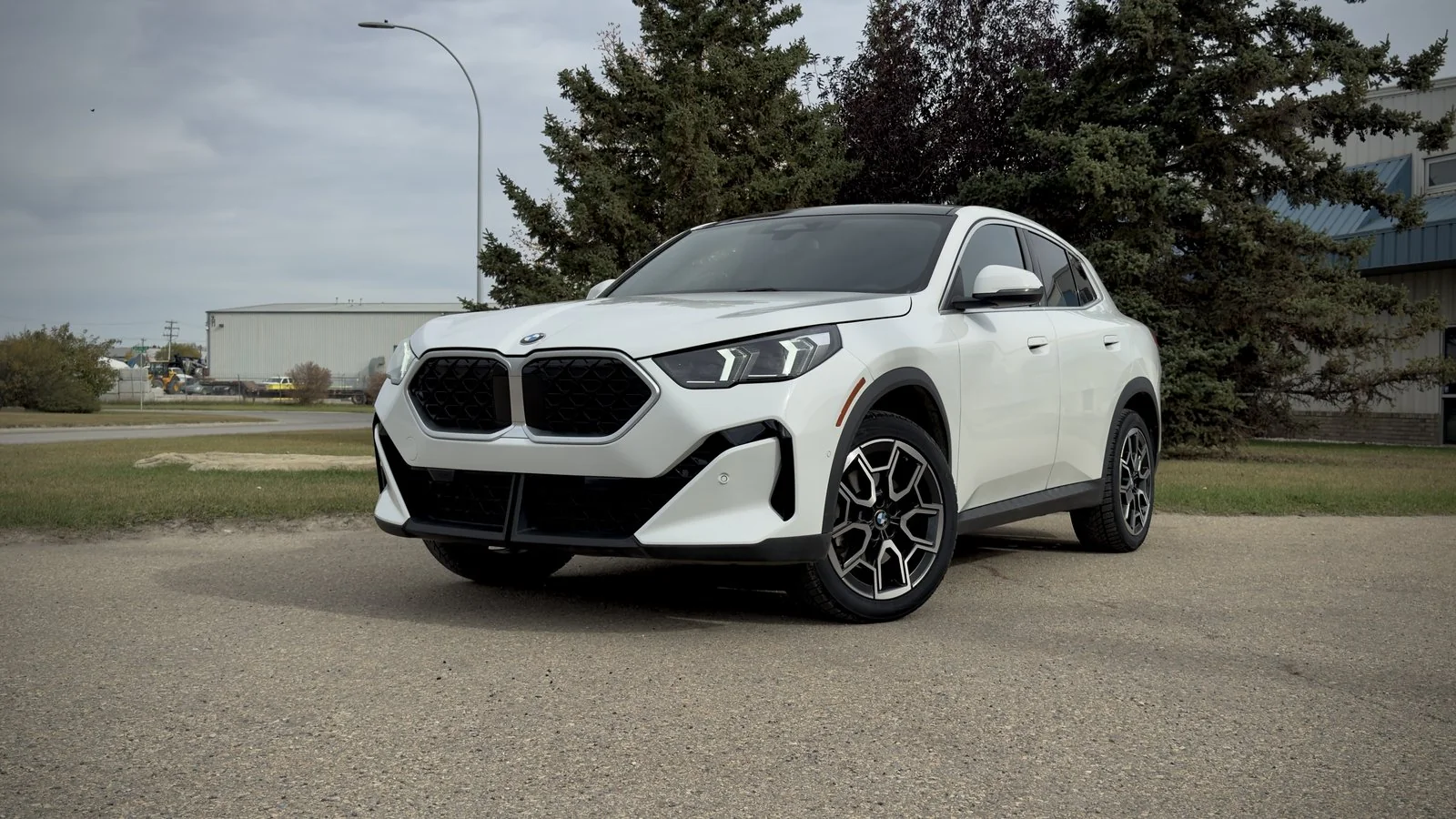
2025 BMW X2 xDrive28i

2025 Chevrolet Malibu 1LT

2025 Volkswagen Taos Comfortline

2026 Volkswagen Jetta Comfortline
Not seeing it? We'll find it.
We source through our dealer partner network across Western Canada: 25,000+ vehicles to choose from. Tell us what you want and what works for your budget.
Find my car3 min · no credit impactOAC = on approved credit. Payments are examples at 6.49% APR over 84 months with $0 down, based on each vehicle's advertised price; GST extra. Your rate depends on your credit (4.99%–29.9% APR).
Self-Employed? Check Your Options
Bank statements, invoices, or tax returns accepted. No traditional employment verification needed.
5.0118+ Google ReviewsAMVIC LicensedFree Delivery 300km
Self-Employed Financing FAQs
Can I get a car loan if I have been self-employed for less than a year?
It is more difficult but not impossible. Some lenders work with new businesses if you have a co-signer, a larger down payment, or strong bank statements showing consistent deposits. Having prior industry experience also helps your case.
What if my income varies significantly month to month?
Variable income is normal for self-employed people and our lenders understand that. The key is your annual income as shown on your NOA, not individual months. Bank statements showing the pattern of deposits over time help demonstrate overall stability.
Do business write-offs hurt my chances of getting approved?
They can. Lenders look at your reported taxable income, not your gross revenue. Heavy deductions that reduce your reported income below your debt obligations will affect approval. Some lenders are better than others at understanding self-employed income structures.
Can I use my business vehicle as a trade-in?
Yes. If the vehicle is owned personally you can trade it in directly. If it is owned by your corporation, the transaction is slightly more complex but we handle corporate trade-ins regularly.
What is the minimum income required for self-employed car financing?
There is no universal minimum, but lenders generally want to see that your monthly vehicle payment will not exceed 15-20 percent of your gross monthly income. The vehicle price, down payment, and loan term all factor into what income level works.
Can I finance a work truck or van through self-employed financing?
Absolutely. Work vehicles are financed through the same process. In fact, lenders understand that a work vehicle is a business necessity which can actually support your application.
Looking for a work vehicle? Browse our used trucks in Calgary or check vehicles priced under $25,000 in Airdrie. We also recommend asking about extended warranty options — especially important when a vehicle is a business tool you depend on.
Related Resources
Other Financing Options
Ready to Apply as a Self-Employed Borrower?
Gather your NOA or recent bank statements and apply online in 3 minutes. We understand self-employed income and work with lenders who do too.
Questions about what documents you need? Call us — we will walk you through it.