
Honda Used Vehicles in Calgary
The brand with the lowest annual maintenance cost in the industry — CR-V, Civic, and more — with financing for all credit situations and free delivery across Calgary.
Key Facts
- Warranty
- 5yr/100K powertrain
- Avg Maintenance
- $428/yr (lowest)
- Delivery
- Free across Calgary
- Lenders
- 20+ in network
Last reviewed: September 2026
Honda's $428/Year Maintenance Cost — The Lowest of Any Brand
162-point Independent Inspection on Every Vehicle
Check Your Options in 3 Minutes
No credit impact. All credit situations welcome.
★★★★★ 106+ Google Reviews · AMVIC Licensed · Free Delivery 300km
About Honda Vehicles
Honda's engineering philosophy has always prioritized the fundamentals over the spectacular. Where some manufacturers compete on horsepower numbers, luxury appointments, or advanced driver assistance systems, Honda has spent decades refining the core mechanical relationship between engine, transmission, and chassis — with results that show up not in press releases but in long-term reliability surveys and ownership cost data. RepairPal ranks Honda as the brand with the lowest average annual maintenance cost of any manufacturer: $428 per year. That is not a rounding error — it is a reflection of how thoroughly Honda has reduced the frequency and severity of unscheduled repair visits over thirty years of continuous improvement.
The Civic's dominance of Canadian sales charts is not accidental, and it is not explained by marketing spend. The Civic was Canada's best-selling car for 26 consecutive years before the RAV4 SUV crossover overtook the sedan segment. In 2025, Honda sold approximately 31,000 Civics in Canada — in a market that has shifted dramatically toward SUVs. The Civic held its position because it kept delivering on the promise that made it successful: a practical, fuel-efficient, reliable vehicle with a driving character that drivers who care about their cars actually enjoy. The eleventh-generation Civic (2022+) is widely regarded as Honda's best execution of this formula, with a turbocharged 1.5L engine, a refined interior, and a 38 mpg highway fuel economy rating that translates to meaningful savings over a Calgary commuter's typical year.
The CR-V has held the top position in Canada's compact SUV segment for most of the past decade, competing directly with the Toyota RAV4 and Mazda CX-5 in the most contested category in the Canadian market. The CR-V's advantages are specific: a class-leading cargo floor with the rear seats folded (a genuine differentiator for buyers who load bicycles, camping gear, or large sporting equipment), a two-row interior that feels more spacious than its exterior dimensions suggest, and available turbocharged powertrain that delivers noticeably better low-RPM response than the naturally aspirated competitors in its class.
Honda's VTEC (Variable Valve Timing and Lift Electronic Control) technology and the Earth Dreams powertrain family represent the engineering foundation beneath these vehicles. VTEC varies valve timing and lift to give the engine different performance characteristics at different RPM ranges — conservative and efficient at city speeds, responsive and capable at highway speeds. For used buyers, this means that well-maintained Honda engines with 120,000–150,000 km on them are not worn-out machines; they are engines that have been refined to operate efficiently across a wide range of conditions, and the mechanical complexity that enables that refinement does not accumulate wear at a disproportionate rate. Honda engines routinely reach 300,000+ km with standard maintenance.
There is one documented concern on the 2017–2019 Civic and CR-V 1.5T: oil dilution from gasoline mixing with engine oil in cold climates — a condition that occurs when frequent short trips prevent the engine from fully warming and evaporating condensed fuel from the oil. Calgary's winters, with their short commutes and cold starts, represent exactly the use case where this occurs. Honda has acknowledged the issue and updated the engine management calibration via software updates. For used buyers, the mitigation is straightforward: use full-synthetic oil, change it on time (every 8,000–10,000 km), and allow the engine to warm fully on longer trips when possible. Pre-purchase inspection should include an oil sample or fresh oil change.
Honda's total cost of ownership advantage compounds over a typical 3–5 year ownership period. At $428/year in maintenance versus the $652 industry average, a Honda owner saves approximately $1,120 over four years compared to an average vehicle — real money that offsets the price premium Honda commands in the used market versus less reliable alternatives at the same mileage.
Honda's Engineering Heritage: Why It Matters for Used Buyers
Honda began as a motorcycle manufacturer in 1948, and the engineering culture that came from competing in motorcycle racing — where weight, efficiency, and mechanical precision matter more than brute force — shaped everything that followed. When Honda entered Formula 1, it was as an engine supplier before it was a chassis builder. The engineering lineage matters for used buyers because it explains why Honda engines are engineered to different tolerances than value-focused competitors. The current Earth Dreams engine family — which includes the 1.5T used in the Civic and CR-V, the 2.0L in the Accord, and the 1.8L in older Civic models — was designed with total lifecycle cost in mind, not just initial performance figures. Direct injection (now paired with port injection on newer models to prevent intake valve carbon buildup), variable valve timing, and low internal friction specifications combine to produce engines that maintain efficiency and output across high mileage better than competitors' designs. For Calgary buyers specifically, this means a used 2018 CR-V with 110,000 km is not buying yourself a worn machine — you are buying a machine that was built to run 300,000+ km with proper care, and you are entering that machine's ownership at roughly the one-third mark of its realistic service life. Honda's transmission reliability deserves specific mention. The 6-speed manual and CVT found in Civics, and the 6-speed automatic in CR-Vs, have clean long-term reliability records when serviced on Honda's specified intervals. The CVT fluid change is the most commonly skipped service on used Civics, and the most important one to verify in a pre-purchase inspection.
- •Honda's racing heritage drives tolerances and efficiency standards beyond what value-focused competitors apply
- •Earth Dreams 1.5T: designed for 300K+ km lifecycle with full-synthetic oil on schedule
- •CR-V CVT fluid: most commonly skipped service — verify in pre-purchase inspection or change immediately
- •1.5T oil dilution: addressed via software update; mitigated with synthetic oil and regular changes
- •$428/yr maintenance cost = $1,120 saved over 4 years vs industry average
VTEC and Earth Dreams Technology Explained
VTEC is Honda's most recognized technology, and also the most misunderstood. The common shorthand refers to the moment the engine switches from its low-lift, fuel-efficient cam profile to its high-lift, high-performance profile. But the modern implementation of VTEC, combined with Variable Timing Control (VTC), is far more sophisticated than the binary switch it was in 1989. In the current Civic and CR-V 1.5T, Honda combines VTEC with direct injection and a turbocharger to produce an engine that delivers broad torque from very low RPM — torque peak arrives at 1,700 RPM, at Calgary traffic light acceleration speeds — while maintaining fuel efficiency at cruise. The result is an engine that feels more responsive in everyday driving than its 1.5L displacement suggests, without the turbo lag that characterized earlier small-displacement turbocharged designs. For used buyers who are concerned about the mechanical complexity of turbocharged engines, Honda's 1.5T has been in production since 2015 with a large installed base. Issues are known and documented (the oil dilution concern being the primary one). Independent mechanics in Calgary are familiar with this engine family. Parts are readily available. This is not exotic engineering — it is mainstream Honda technology that has had a decade to mature and accumulate service knowledge. The older naturally aspirated 1.8L found in 2012–2015 Civics is a different engineering philosophy: no turbo, simpler, proven across millions of units, and essentially without known critical failure modes on maintained examples. For buyers who prioritize absolute mechanical simplicity over performance, the 2012–2015 Civic with the 1.8L is one of the most trouble-free used vehicle options in the Calgary market under $15,000.
- •1.5T torque peak at 1,700 RPM — strong from Calgary traffic light stops
- •VTEC + VTC combination provides efficiency at cruise and response under load
- •1.8L NA engine in 2012–2015 Civic: no known critical failure modes, simplest used option under $15K
- •Earth Dreams direct injection paired with port injection on newer models to prevent carbon buildup
- •Large installed base means Calgary mechanics have extensive familiarity with this engine family
Best Used Hondas Under $25K in Calgary
The $25,000 ceiling captures a wide range of used Honda inventory in Calgary, and knowing what each price band delivers helps prioritize your search. Under $15,000: A 2013–2016 Civic LX or EX with 100,000–160,000 km. These are the 1.8L naturally aspirated cars — simple, proven, and low-drama ownership. Service history is the primary variable; a maintained example at 140,000 km will outlast an unmaintained example at 80,000 km every time. Check CVT fluid on automatics. $15,000–$20,000: A 2017–2019 Civic with the 1.5T, or a 2014–2016 CR-V. The 2017–2019 Civic is where the oil dilution concern is most relevant — verify the software update has been applied (Honda dealer can confirm by VIN). The 2014–2016 CR-V uses the 2.4L naturally aspirated engine, which is free of the oil dilution issue and has a clean reliability record. $20,000–$25,000: A 2019–2021 Civic or a 2017–2019 CR-V. At this price range you are buying vehicles with 50,000–90,000 km that carry meaningful remaining powertrain warranty if within the 5-year/100,000 km window. For Calgary buyers with financing constraints, the $15,000–$20,000 range represents the strongest value tier: proven Honda platform, manageable monthly payment at current rates, and low ongoing ownership costs.
- •Under $15K: 2013–2016 Civic 1.8L NA — simplest, most proven, lowest risk
- •$15K–$20K: 2017–2019 Civic 1.5T or 2014–2016 CR-V 2.4L — strongest value tier
- •$20K–$25K: 2019–2021 Civic or 2017–2019 CR-V — lower mileage, possible remaining warranty
- •Verify 1.5T software update on any 2017–2019 Civic or CR-V before purchase
- •CR-V 2014–2016 with 2.4L NA: cleanest reliability record in the compact SUV class
What Our Customers Say
“The truck is gorgeous and it's exactly what they said it was. I recommend to anyone.”
“Great experience with the team at Shift. The whole experience was easy from start to finish. Wes was quick to respond and answer all my questions. Luke was a dream with the paperwork.”
“Working with Shift Happens was a great experience. Dima and Luke were both professional, friendly, and always quick to respond. They made the process simple and stress-free.”
Get pre-qualified for a Honda
Soft credit check only — no impact on your score.
Frequently Asked Questions
What does VTEC mean and why does it matter for buying a used Honda?
VTEC (Variable Valve Timing and Lift Electronic Control) is Honda's system for varying when and how far engine valves open, depending on engine speed and load. At low RPM it uses a conservative valve profile for fuel efficiency; at high RPM it switches to a more aggressive profile for power. For used buyers, VTEC matters because it is a proven, mature technology that has been in production since 1989 — thousands of Calgary mechanics know how to service it, parts are not exotic, and engines with VTEC have demonstrated long service lives when maintained. A used Civic or CR-V with 150,000 km on a VTEC engine is not a concern if the service history is clean.
Is the 1.5T oil dilution problem in the CR-V serious, and should I avoid affected years?
The 1.5T oil dilution issue — where gasoline mixes with engine oil during cold-climate short trips — is a real concern documented on 2017–2019 CR-Vs and Civics, but it is manageable rather than catastrophic. Honda issued a software update to address the engine management calibration, and owners who changed oil regularly (every 8,000–10,000 km with full synthetic) and allowed longer warm-up cycles on cold Calgary mornings typically saw no lasting engine damage. Before purchasing a 2017–2019 CR-V or Civic 1.5T, confirm the software update was applied (Honda dealer can verify by VIN). The 2020+ CR-V received additional engineering revisions that further reduced this concern.
Which Civic years are the most reliable to buy used in Calgary?
The 2012–2015 Civic with the 1.8L naturally aspirated engine is the simplest and most trouble-free choice for buyers who prioritize low-risk ownership — no turbos, no documented oil concerns, straightforward service intervals. The 2016–2021 Civic 1.5T offers better performance and fuel economy but requires awareness of the oil dilution issue on 2017–2019 models. The 2022+ eleventh-generation Civic is the best overall package but commands a premium. For the best value-to-reliability balance in the Calgary market, a 2020–2021 Civic LX or Sport with 50,000–80,000 km represents a mature 1.5T with updated software and meaningful remaining warranty.
How does the Honda CR-V compare to the Toyota RAV4 for Calgary driving?
Both are excellent compact SUVs with strong reliability records. The RAV4 has standard AWD on most trims (the CR-V requires selecting the AWD variant) and a slightly more robust AWD system suited to deeper snow. The CR-V has a class-leading cargo floor when seats are folded, a quieter highway ride, and Honda's $428/year maintenance advantage. For Calgary commuting and light-to-moderate winter conditions, both perform reliably. The RAV4 has the edge for buyers who regularly drive rural roads or want more AWD confidence in extreme conditions; the CR-V has the edge on total ownership cost and interior practicality for urban family use.
What is the Honda warranty, and does it transfer to a subsequent owner?
Honda's factory warranty is 3 years/60,000 km bumper-to-bumper and 5 years/100,000 km powertrain. These warranties transfer to subsequent private owners within the coverage period — meaning a 2021 Honda CR-V purchased used in 2024 still carries Honda factory warranty through 2026 on powertrain if under 100,000 km. For buyers purchasing through our dealership, we can verify remaining warranty by VIN at the time of sale. Extended warranty options are also available through our finance office at purchase.
How much does Honda maintenance cost per year in Calgary?
RepairPal data puts Honda at $428 per year in average maintenance cost — the lowest of any mainstream automotive brand. Primary scheduled services on Calgary-driven Hondas include oil changes every 8,000–10,000 km (full synthetic recommended, especially on 1.5T engines), brake inspections every 20,000 km, CVT fluid change at 60,000–80,000 km (check service history on any used Honda purchase), and spark plug replacement at 100,000 km on most models. Budget approximately $350–$500/year for a well-maintained used Honda in Calgary.
Are there any Honda models to avoid for Calgary winter driving?
The Honda Fit and older Insight use FWD-only drivetrains, which perform adequately in Calgary with quality winter tires but do not offer the AWD option available on the CR-V and HR-V. The Accord is FWD only across all trims — a factor for buyers who drive rural routes or foothills roads. For Calgary buyers who need AWD capability, the CR-V (AWD trim) and HR-V (AWD trim) are Honda's relevant options. Within the CR-V, AWD is not standard on all trims — confirm the AWD badge on any specific unit before purchase.
Financing Resources
Whether you have great credit or are rebuilding, we work with all credit situations. Explore our financing guides to understand your options before you apply.
Honda in stock now
Browse all inventory →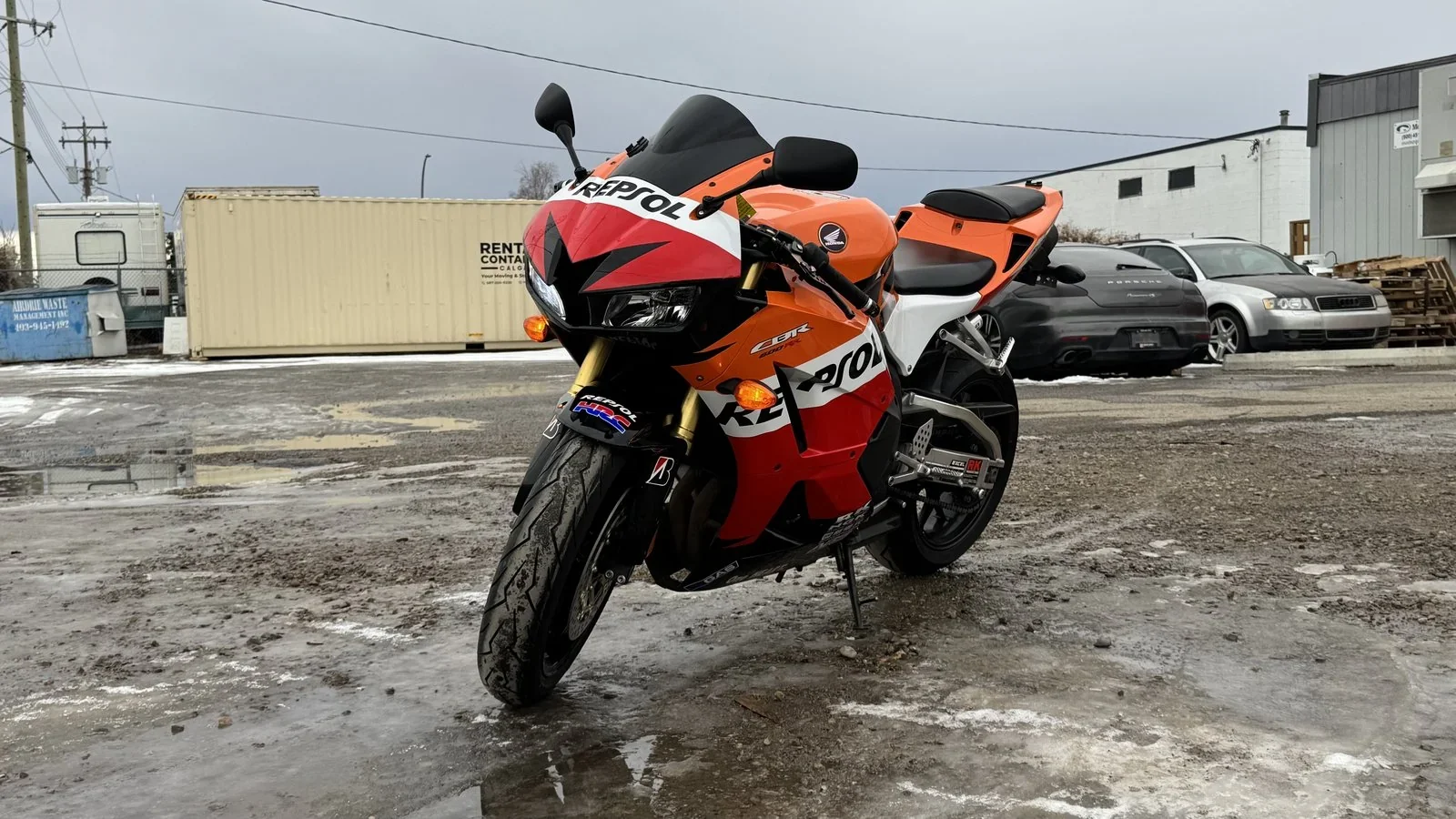
Deeper on This Topic
Pick the angle that fits your exact situation.
Financing Options
Latest Buyer Guides for Alberta Shoppers
Research before you buy — practical guides on financing, trade-ins, and finding the right vehicle.
Ready to Get Behind the Wheel?
Apply for financing in 3 minutes. We work with all credit situations — from perfect credit to rebuilding. Decision within 24-48 hours.