
Used Mazda Calgary
Jinba Ittai driving dynamics, Skyactiv technology, and a CX-5 that Car & Driver has recommended to friends four years running. Financing for all credit situations.
Key Facts
- JD Power Mass-Market Ranking
- 2nd (2025)
- Car & Driver 10Best (CX-5)
- 4 consecutive years
- Avg Annual Maintenance Cost
- ~$462 / year (RepairPal)
- i-Activ AWD Monitoring Speed
- 200 times per second
- i-Activ AWD Sensor Inputs
- ~200 sensors monitored
- Skyactiv-G Compression Ratio
- 14:1 (highest NA gasoline production engine)
- Skyactiv-X Technology
- SPCCI compression-ignition (2021+)
- Design Language
- Kodo — Soul of Motion
Last reviewed: September 2026
CX-5: The Only Crossover Car & Driver Recommended to Friends — Four Years Running
162-point Independent Inspection on Every Vehicle
Check Your Options in 3 Minutes
No credit impact. All credit situations welcome.
★★★★★ 106+ Google Reviews · AMVIC Licensed · Free Delivery 300km
About Mazda Vehicles
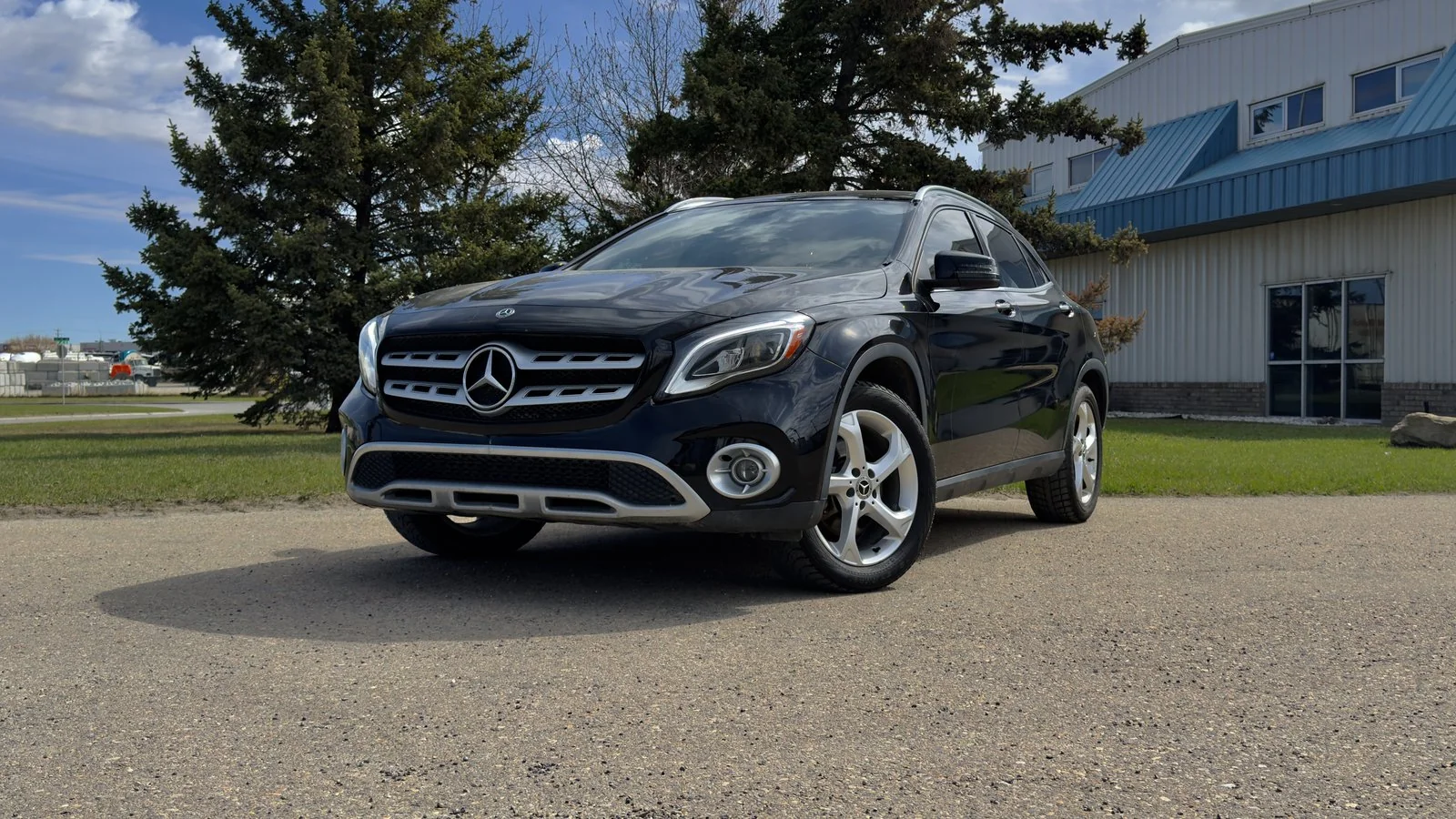
Mazda occupies a position that no other mainstream brand has managed to claim cleanly: the driver's brand at a non-premium price. The philosophy is Jinba Ittai — a Japanese concept meaning "horse and rider as one" — and it isn't marketing copy. It's an engineering mandate that shapes every component decision, from how the steering rack is calibrated to where the driver's seat is positioned relative to the centre of the chassis. In a market full of appliance SUVs, a Mazda is the car that reminds the person behind the wheel that driving doesn't have to be something you endure.
Skyactiv Technology is Mazda's integrated approach to efficiency — not a single component, but a system-level philosophy applied simultaneously to engines, transmissions, chassis, and body construction. The Skyactiv-G gasoline engines achieve compression ratios (14:1 on the naturally aspirated versions) that would cause knock in conventional engines, through multi-hole injectors, a 4-2-1 exhaust manifold, and a combustion chamber geometry that enables cleaner, more complete fuel burn. The result: fuel economy that competes with turbocharged rivals without the turbo's heat management complexity. For used buyers, this matters because there's no intercooler to degrade, no turbo to inspect for shaft play, and no boost-pressure-related stress on gaskets and seals. The engine ages predictably.
The CX-5 winning Car & Driver's 10Best award four consecutive years is not a participation trophy. Car & Driver's 10Best is an active evaluation — vehicles must re-earn inclusion each year. The CX-5 has been described in their editorial as "the crossover we recommend to friends," which is a different kind of endorsement than a press-release quote. It reflects what the vehicle is like to actually own: composed handling, a cabin that feels premium relative to its price, efficient powertrains, and a quality of build that holds up through Alberta winters without drama.
i-Activ AWD is Mazda's predictive all-wheel-drive system and one of the most sophisticated in the non-luxury segment. Using approximately 200 sensors, the system monitors inputs including windshield wiper operation (rain = likely low-traction surface), front camera data, steering angle, brake pressure, and wheel speed — checking conditions 200 times per second. It predictively transfers torque to the rear wheels before slip occurs, not after. In Calgary's context — where morning commutes regularly involve freeze-thaw ice cycles, sudden spring snow, and steep residential streets — a system that anticipates rather than reacts is a meaningful real-world advantage.
Kodo design — Mazda's "Soul of Motion" language — gives the vehicles a visual coherence that makes even entry-level trims look intentional. The design draws from the moment of peak tension in an animal's movement: a frozen instant of coiled energy before release. Every panel, every light signature, every character line is drawn to that reference. In a segment where most rivals look like they were designed by committee, Mazda's design consistency is a functional advantage that holds resale value.
Shift Happens carries used Mazda vehicles for buyers in Calgary and Airdrie. Whether you're financing with strong credit or working to rebuild, we work with 21+ lenders to match you with terms that fit your situation.
Popular Mazda Models We Carry
Kodo Design Philosophy: Soul of Motion
Kodo is not a rebrand exercise — it's a precise design language built around the concept of capturing a living creature in a moment of dynamic tension. Mazda's chief designer Ikuo Maeda described the reference as the frozen instant before an animal's body releases its coiled energy into motion. Every surface decision in a Kodo-designed vehicle traces back to that tension: the way the hood creases catch and redirect light, the stretched silhouette that implies movement even at rest, the minimal surface ornamentation that forces interest through form rather than added detail. The practical effect for buyers is a vehicle that ages well aesthetically — Kodo's language doesn't rely on trends, so a 2018 CX-5 doesn't look dated next to a 2024 model in the way that, say, a 2018 RAV4 does against the current generation. Resale values in the Mazda lineup have consistently outperformed segment averages, and design coherence is part of the reason.
- •Kodo reference: the peak tension moment in an animal's movement before release
- •Panel surfaces: shaped to move light across the body, not just contain the cabin
- •Design consistency: same language from Mazda3 through CX-90, entry through flagship
- •Resale effect: Kodo's timelessness keeps used Mazda values strong relative to segment
- •CX-5 design: widely cited by automotive press as the best-looking compact SUV in its class
Skyactiv Technology Explained for Used Buyers
Skyactiv is the name for Mazda's generation-wide engineering philosophy, applied simultaneously to engines, transmissions, chassis, and body structure. The headline specification is the Skyactiv-G engine's 14:1 compression ratio — higher than any other naturally aspirated production gasoline engine — achieved through precise multi-hole injection, a 4-2-1 exhaust manifold that prevents exhaust residue from contaminating the next intake cycle, and a combustion chamber geometry designed for controlled, complete burn. The transmission counterpart, Skyactiv-Drive, is a 6-speed automatic tuned to feel more like a manual through a torque converter lockup that engages almost immediately after launch. For used buyers, the practical implications are significant: no turbocharger to evaluate for health or replacement cost, no intercooler to inspect for heat-cycling damage, no direct-injection carbon buildup remediation required on the naturally aspirated models (the port injection architecture prevents it). The powertrain is simpler and more predictable over high mileage than turbocharged rivals.
- •Skyactiv-G engines: 14:1 compression ratio, highest among naturally aspirated production engines
- •4-2-1 exhaust manifold: prevents exhaust gas recirculation into the next combustion cycle
- •No turbocharger on base models: fewer heat-cycle components to degrade at high mileage
- •Skyactiv-Drive transmission: torque converter lockup that mimics manual transmission response
- •Skyactiv-X (2021+): adds SPCCI compression-ignition — gasoline engine with diesel-like efficiency
- •Used buyer advantage: simpler naturally aspirated architecture ages more predictably than boosted rivals
CX-5 vs Every Rival: Why It Keeps Winning
The compact crossover segment is the most competitive in the Canadian market — Toyota RAV4, Honda CR-V, Subaru Forester, Nissan Rogue, Hyundai Tucson, and Ford Escape all compete directly with the CX-5. The CX-5's four consecutive Car & Driver 10Best wins are not a statistical fluke in that context. Where the RAV4 wins on brand recognition and hybrid availability, the CX-5 wins on driving feel — steering weight and feedback that makes the RAV4 feel numb by comparison. Where the CR-V wins on cargo flexibility (magic seat), the CX-5 wins on interior quality — premium materials execution at non-premium pricing, with a cabin that consistently tests above its price class in tactile comparisons. Where the Forester wins on outright visibility and AWD engagement, the CX-5's i-Activ AWD delivers comparable winter confidence with better ride quality and more refined highway manners. For Calgary buyers who want a crossover that doesn't feel like an appliance, the CX-5 is the most defensible choice in the segment.
- •vs Toyota RAV4: CX-5 wins on driving dynamics and interior quality; RAV4 wins on hybrid variant and brand volume
- •vs Honda CR-V: CX-5 wins on cabin material quality; CR-V wins on cargo versatility (magic seat)
- •vs Subaru Forester: CX-5 wins on ride refinement; Forester wins on ground clearance and visibility
- •vs Nissan Rogue: CX-5 wins on build quality and driving feel; Rogue wins on cargo management system
- •vs Hyundai Tucson: CX-5 wins on powertrain simplicity; Tucson wins on design novelty and tech content
- •Car & Driver 10Best: active re-evaluation annually — the CX-5 has earned inclusion four consecutive years
What Our Customers Say
“I bought my RAV4 from Wes and Luke just before new years! We got the best service possible. I was at the dealership for a total of one hour and we had our deal done. The price was great.”
“Working with Shift Happens was a great experience. Dima and Luke were both professional, friendly, and always quick to respond. They made the process simple and stress-free.”
“The truck is gorgeous and it's exactly what they said it was. I recommend to anyone.”
Get pre-qualified for a Mazda
Soft credit check only — no impact on your score.
Frequently Asked Questions
What is Skyactiv technology and does it matter for a used buyer?
Skyactiv is Mazda's engineering philosophy applied to engines, transmissions, chassis, and body simultaneously. The most relevant detail for used buyers is that Skyactiv-G naturally aspirated engines have no turbocharger — which means no intercooler degradation, no shaft play to inspect, and no boost-related gasket stress at high mileage. The 14:1 compression ratio achieves strong fuel efficiency without the maintenance complexity of forced induction. For a used buyer evaluating a 100,000+ km Mazda, the naturally aspirated Skyactiv powertrain is a simpler, more predictable long-term proposition than most turbocharged rivals in the same segment.
How does Mazda i-Activ AWD compare to other AWD systems for Calgary winters?
i-Activ AWD is a predictive system that monitors approximately 200 sensor inputs — including windshield wiper status, steering angle, brake pressure, and front camera data — 200 times per second. It pre-positions torque to the rear axle before wheel slip occurs. Most entry-level AWD systems only engage after slip is detected. In Calgary's winter conditions (freeze-thaw ice, wet snow, steep residential streets), predictive engagement is a real-world advantage. Compared to Subaru's symmetrical AWD, i-Activ is more fuel-efficient in normal conditions because it sends more torque to the front by default and only distributes rearward on demand — Subaru splits torque constantly regardless of surface conditions.
Is the Mazda CX-5 reliable enough to buy used?
Yes — the CX-5 has one of the stronger reliability records in the compact SUV segment. RepairPal rates Mazda as a whole above average for reliability, with average annual maintenance costs around $462/year. Common CX-5 concerns to inspect on a used example: front brake wear (check caliper slide pins on 2017–2019 models), infotainment connectivity on pre-2019 units (screen touch interface was replaced by the MZD Connect dial system — verify the interface responds cleanly), and inspect for any rust on brake rotors around Calgary's road salt season. Structurally, the Skyactiv-G engine has no documented pattern failures at standard mileages.
Mazda3 vs Honda Civic — which is the better used car buy?
Both are strong choices but suit different buyers. The Mazda3 wins on driving dynamics — it has the most communicative steering and most composed chassis in the compact car segment, and its interior quality consistently tests above its price in tactile comparisons. The Civic wins on cargo practicality (larger trunk), powertrain variety (including Si and Type R performance trims), and generally lower used asking prices due to higher volume. For a buyer who values how a car feels to drive and wants an interior that doesn't look entry-level, the Mazda3 is the stronger choice. For maximum value per dollar with strong parts availability, the Civic earns its market-leading position.
What are the best years for a used Mazda CX-5?
The second generation (2017–present) is the generation to target. The 2017–2018 first run of the second gen is solid, but 2019 onward brought a meaningful interior quality upgrade — more premium materials, updated infotainment, and improved sound insulation. The 2021+ CX-5 added available turbo power (2.5T, 227 hp) if you want more performance headroom. Best sweet-spot years for used value: 2019–2021. Avoid first-generation CX-5 (2013–2016) if you can — the technology and interior quality are noticeably behind the second gen, and the used price gap rarely justifies the step backward.
What does a used Mazda cost to maintain in Calgary?
Mazda's average annual maintenance cost is approximately $462/year according to RepairPal, which is below the industry average of roughly $652/year. The naturally aspirated Skyactiv-G engine eliminates turbo-specific maintenance items. Service intervals are standard: oil changes every 8,000–10,000 km (full synthetic), brake inspections annually, spark plugs typically at 100,000 km. Any qualified independent shop can service a Mazda — there's nothing brand-proprietary about the service requirements. Compared to VW or BMW at similar price points, Mazda's total cost of ownership is substantially lower.
Is the Mazda CX-5 turbo worth buying used over the naturally aspirated version?
The 2021+ CX-5 2.5 Turbo adds 227 hp (vs 187 hp naturally aspirated) and a more premium interior with standard Bose audio and leather. The turbo version commands a premium on the used market — typically $3,000–$5,000 more for equivalent mileage. For most buyers, the naturally aspirated CX-5 is sufficient: it handles highway passing and mountain grades without strain and has a simpler drivetrain. If you regularly carry full loads at altitude (Banff, Kananaskis), the turbo's low-end torque is noticeable and may justify the premium. Otherwise, the NA version offers a better value proposition and a more predictable high-mileage outlook.
Financing Resources
Whether you have great credit or are rebuilding, we work with all credit situations. Explore our financing guides to understand your options before you apply.
Mazda in stock now
Browse all inventory →
Deeper on This Topic
Pick the angle that fits your exact situation.
Financing Options
Latest Buyer Guides for Alberta Shoppers
Research before you buy — practical guides on financing, trade-ins, and finding the right vehicle.
Ready to Get Behind the Wheel?
Apply for financing in 3 minutes. We work with all credit situations — from perfect credit to rebuilding. Decision within 24-48 hours.