
Can I get a car loan during a consumer proposal in Alberta?
You can apply during a consumer proposal. Start with your licensed insolvency trustee, because lenders usually ask for a consent letter. Rates depend on your credit tier (4.99%–29.9% APR across all tiers). We review every application and call you back, and each lender decides each file.
Consumer Proposal Car Loans in Alberta
In an active consumer proposal or just finished? Lenders can still look at your file. We know the process and work with lenders who understand your situation.
Not sure what the payment will be? See what a car loan costs by credit tier.
Last reviewed: October 2026
See Your Options With a Consumer Proposal
Active or finished consumer proposal. We review every application and call you back.
5.0118+ Google ReviewsAMVIC LicensedFree Delivery 300km
Key Facts
- Active proposals
- We work with lenders who look at active proposals
- Finished proposals
- More lenders look at the file
- Credit rebuilding
- Payments report to bureaus
- Lender network
- 21+ lenders
- How it works
- We review every application and call you back
Active or Discharged — Lender Options Exist
Can You Get a Car Loan During a Consumer Proposal?
Yes, it is possible, and the steps are straightforward. Your trustee is the first call, because lenders usually ask for a consent letter. The key steps are:
Get Trustee Consent First
Contact your Licensed Insolvency Trustee and ask about taking on new vehicle financing. Lenders usually ask for a consent letter, and your trustee decides whether to give one.
Apply With the Right Lender
Not all lenders offer consumer proposal financing. We work with lenders who have specific programs for active and discharged consumer proposals — they understand the legal framework and have streamlined approval processes.
Keep Your Proposal Payments Current
Your consumer proposal payments are separate from your car loan payments, and the Office of the Superintendent of Bankruptcy (OSB) says a proposal can be annulled if you miss payments. Ask your trustee how a new car loan fits your proposal.
If it is your spouse or partner who is in the proposal and you are the one buying, see how a spouse in a consumer proposal affects your car loan.
Can I Include My Car Loan in the Proposal?
Ask your licensed insolvency trustee before you sign anything or skip a payment. Whether your car loan can be included depends on your loan and your proposal.
A car loan is normally a secured debt: the lender holds a claim on the car. The OSB describes a proposal this way: once it is filed, you stop making payments directly to your unsecured creditors, and if it is accepted you keep your assets as long as you keep making payments to your secured creditors. So do not assume your car payment is covered. If you are thinking about including it, your trustee can tell you what that would mean for the car, the payment and the lender.
To find a trustee, use the OSB's directory of licensed insolvency trustees. The OSB says trustees typically do not charge for the first consultation. We cannot give legal advice, but once you have your trustee's answer we can tell you what a lender needs to see.
Active vs Discharged: What Is the Difference?
An active consumer proposal means you are still making payments, and lenders usually ask for your trustee's consent before new credit; a finished proposal means it is complete, and lenders no longer need a consent letter. Discharged status unlocks more lenders, better rates, and lower down payment requirements. If your proposal has turned into a bankruptcy, here is how car loans during an active bankruptcy work.
Where you are in your consumer proposal journey affects your financing options. Here is how the two situations differ:
Active Consumer Proposal
- •Lenders usually ask for your trustee's consent letter
- •Fewer lenders available — subprime specialists only
- •Down payment typically 10-20%
- •Rates reflect higher lender risk
- •Stable income is the primary approval factor
Discharged Consumer Proposal
- •No consent letter needed — proposal is complete
- •Broader lender selection available
- •Lower down payment requirements
- •Better interest rates compared to active CP
- •Path to near-prime rates within 12-18 months
After Your Proposal Is Finished: The First 12 Months
Finishing a consumer proposal does not end the work on your credit, but it opens more doors. In the first 12 months, get your certificate to the credit bureaus, check what they show, and build recent payment history. You will hear this called discharge or completion. The OSB calls the document you receive a certificate of full performance.
These steps are general information, not legal advice, and what lenders look for is what we see: patterns, not promises. Every lender decides each file.
On your credit report
Get Your Certificate and Send It In
What happens. Once you have fulfilled the terms of your proposal, you receive a certificate of full performance, and you are legally released from the debts included in the proposal.
What to do. The OSB says to send a copy of the certificate to the major credit-reporting agencies so your credit record is updated, and to keep all of your proposal papers for future lenders.
Check What the Bureaus Show
What happens. Once the bureaus have your certificate, they can update your file. The proposal stays on your report until the date in the box above, so lenders will still see it, and they weigh it alongside everything you have done since.
What to do. Equifax says you can order a free copy of your credit reports by contacting Equifax or TransUnion. Check the status of each account and the dates, and ask the bureau to correct anything that is wrong. Write down the date your proposal should come off your report.
Build Recent Payment History
What lenders usually look for. In our experience, more lenders look at your file than during the proposal. They want to see your certificate, steady income and time with your employer, on-time payments since your last proposal payment, and a down payment.
What to do. If you need a car, bring your certificate, recent pay stubs and your payment record. Equifax says active accounts paid as agreed stay on your report as long as the account is open and the lender is reporting it, so a new account paid on time adds history. See our credit rebuilding timeline for what the months after that usually look like.
The OSB is plain about the limits: your ability to get credit after a consumer proposal depends on convincing lenders of your financial maturity and ability to repay, and no one is required to give you credit. Planning a mortgage after your proposal? See how a car payment counts in mortgage debt ratios.
Consumer Proposal vs Bankruptcy: What It Means for a Car Loan
A lender can see either one on your credit report. How long it stays, how long it takes and what happens to your car are where they differ. This is general information, not legal advice. Your licensed insolvency trustee can tell you which one fits your situation.
How Long It Stays on Your Credit Report
Equifax and TransUnion remove a consumer proposal 3 years after you have paid off all the debts in it, or 6 years after you sign it, whichever comes first. A first bankruptcy usually comes off 6 years after you are discharged.
How Long Each One Takes
A consumer proposal ends when you have made every payment in it, so its length depends on your proposal. A first bankruptcy is eligible for automatic discharge after 9 months, or 21 months if you must make surplus income payments.
What Happens to Your Car
With a consumer proposal, the OSB says you keep your assets as long as you keep making your payments to your secured creditors, and a car loan is normally one. In a bankruptcy, the OSB says your trustee sells your assets, except those that provincial and federal laws exempt. For how that works in Alberta, see car loans during an active bankruptcy.
For the full comparison, see consumer proposal vs bankruptcy.
What Documents Will You Need?
For a consumer proposal car loan you will need your trustee consent letter (if active), proof of income, a valid driver's licence, proof of address, and your consumer proposal payment summary. Having these ready before you apply significantly speeds up the approval process.
Consumer proposal financing requires a few additional documents compared to standard financing. Having these ready speeds up your approval significantly:
Trustee Consent Letter
A letter from your Licensed Insolvency Trustee (LIT) confirming you are in a consumer proposal and granting consent for new financing. This is the most important document.
Consumer Proposal Summary
Your most recent payment summary showing the proposal terms and your payment history. Lenders want to see you're current on your proposal obligations.
Proof of Income
Two recent pay stubs or equivalent proof of stable income. Self-employed? We work with your Notice of Assessment. Income verification is the key factor for approval.
Government-Issued ID
A valid driver's licence or other government-issued photo ID. Standard requirement for all financing applications.
How a Car Loan Helps You Rebuild After a Consumer Proposal
A consumer proposal already demonstrates financial responsibility — you chose to repay your creditors rather than walking away. Adding a car loan accelerates the credit rebuild in measurable ways:
Monthly Positive Reporting
Every on-time car payment is reported to Equifax and TransUnion as a positive trade line. This is one of the fastest ways to add positive history to a credit file that may have limited recent activity.
Diversified Credit Mix
An installment loan (like a car loan) counts differently in your credit score than revolving credit (like a credit card). Having both types improves your overall credit profile and shows lenders you can manage different types of obligations.
Better Rates on Your Next Vehicle
In our experience, 12-24 months of on-time payments on your car loan, combined with a completed consumer proposal, can open the door to better rates on your next vehicle and other major purchases. Each lender decides each file.
What Vehicles Work Best During a Consumer Proposal?
Vehicles in the $12,000–$18,000 range that are 3–7 years old with under 120,000 km work best — reliable Japanese makes like Toyota, Honda, and Hyundai are lender favourites. The vehicle is the loan collateral, so lenders are more conservative during an active proposal.
The vehicle you choose during an active consumer proposal matters more than most people realize. Lenders are not just approving you — they are approving the collateral. Choosing the right vehicle can be the difference between an approval and a decline.
The Lender-Approved Price Range
During an active consumer proposal, lenders typically approve vehicles in the $10,000 to $25,000 range. Below that floor, the loan amount is too small for most lenders to bother with. Above that ceiling, the risk profile climbs faster than your approval odds. The sweet spot is $12,000 to $18,000 — enough vehicle to be reliable, not so much that the lender gets uncomfortable.
Models Lenders Prefer to Finance
Lenders do not just look at the price — they look at what happens to that vehicle if payments stop. Models like the Toyota Corolla, Honda Civic, and Hyundai Elantra hold their value predictably and are easy to resell. That resale certainty reduces lender risk, which improves your approval odds. Lower maintenance costs on these models also mean fewer surprises that could interrupt your payment schedule — a detail lenders factor in even if they do not say it out loud.
Vehicle Age: 3 to 7 Years Is the Sweet Spot
A vehicle that is too new means a larger loan amount that lenders are less comfortable advancing during a CP. A vehicle that is too old — over 10 years or above 150,000 km — introduces mechanical reliability concerns and limits your lender options further. Aim for 3 to 7 years old with under 120,000 km. That window gives you a reliable vehicle without pushing the loan amount into territory lenders flag during an active proposal.
Trucks and SUVs During an Active CP
Trucks and SUVs are not impossible to finance during an active consumer proposal, but they are harder. Higher price points mean higher loan amounts, which increases lender risk at a time when they are already being cautious. If you need a truck, expect a larger down payment requirement to bring the loan amount into a range lenders are comfortable with. After discharge, your options open up significantly — and you will be in a much better position to negotiate on rate.
162-Point Independent Inspection on Every Vehicle
Every vehicle on our lot passes a 162-point independent inspection before it is offered for sale. When you are managing both a consumer proposal payment and a car payment, the last thing you need is an unexpected repair bill. Our inspection process means you are not inheriting someone else's mechanical problems on top of your financial recovery. You can also add a vehicle warranty for additional peace of mind.
Are You Self-Employed During a Consumer Proposal?
Yes — self-employed applicants can get a car loan during a consumer proposal, but the documentation bar is higher. You will need your most recent Notice of Assessment, six months of business bank statements, and a trustee consent letter, in addition to standard application documents.
Being self-employed and in a consumer proposal adds a layer of complexity — but it is absolutely doable. The documentation bar is higher, and the preparation required is real. Here is what you need to know before you apply.
Documents You Will Need
For a self-employed consumer proposal application, lenders will typically require all of the following:
- •Your most recent Notice of Assessment (NOA) — this is how lenders verify your income
- •Trustee consent letter authorizing new vehicle financing
- •Six months of business bank statements showing consistent cash flow
- •Your consumer proposal payment history demonstrating you are current on all obligations
How Lenders View Business Income
Lenders look at your NOA — your reported taxable income — not your gross business revenue. This is the number that matters for your approval amount. If your write-offs are aggressive, your taxable income may be significantly lower than what your business actually generates. That gap can affect how much you are approved for. If your NOA income looks low relative to your actual earnings, be prepared to explain it and back it up with your bank statements.
Seasonal Income and Timing Your Application
If your income is seasonal, timing your application matters. Apply during or just after your peak earning season when your bank statements reflect the strongest cash flow. Applying during a slow period when deposits are thin makes the file look riskier than it is — and lenders will price that risk into your rate or decline outright.
Tips for Self-Employed CP Applicants
- •Keep business and personal accounts separate — commingled accounts make income verification harder and raise flags
- •File taxes on time — a late or missing NOA effectively kills the application
- •Maintain your CP payments without exception — any missed proposal payment while applying is an automatic decline with most lenders
- •Have a co-signer ready as a backup — a co-signer with stable employment can make the difference if your income documentation falls short
For more on self-employed financing, see our full self-employed financing guide.
Consumer Proposal Car Loans in Alberta — What Makes This Province Different?
Alberta's zero provincial sales tax, lower registration fees, and AMVIC consumer protection framework make it one of the most borrower-friendly provinces for consumer proposal car financing. Reliable transportation is a genuine necessity in this province, and your trustee decides how it applies to your proposal.
Alberta has specific factors that affect consumer proposal car financing differently than other provinces. Understanding these provincial realities helps you navigate the process more effectively.
Alberta Has No Provincial Sales Tax
Unlike BC (7% PST) or Saskatchewan (6% PST), Alberta charges only GST on vehicle purchases. That means the total cost of your vehicle is lower in Alberta, which directly reduces the loan amount you need approved. For someone in a consumer proposal where every dollar of loan amount matters for approval, buying in Alberta gives you a structural advantage — the same vehicle costs less to finance here than in any other western province.
Alberta's Vehicle Registration Costs Are Lower
Alberta's vehicle registration fees are among the lowest in Canada. Combined with no provincial sales tax, the total cost of getting a vehicle on the road in Alberta is significantly lower than neighbouring provinces. This matters during a consumer proposal because lower total costs mean a smaller loan, which means easier approval and lower monthly payments competing with your proposal obligations.
Rural Alberta and the Transportation Reality
Much of Alberta outside Calgary and Edmonton requires a vehicle for basic daily life — commuting to work, getting groceries, taking children to school. For many people it is a necessity for keeping the employment income that funds the proposal payments. When you ask your trustee about vehicle financing during an active proposal, say what the vehicle is for.
AMVIC Protection for Consumer Proposal Buyers
Every licensed dealership in Alberta operates under AMVIC (Alberta Motor Vehicle Industry Council) oversight. This means mandatory vehicle inspections, disclosure requirements, and consumer protection standards apply to every vehicle sale. When you are buying a vehicle during a financially sensitive period like a consumer proposal, AMVIC's regulatory framework provides an additional layer of protection that not every province offers at the same level. Every vehicle on our lot passes a 162-point independent inspection before it is listed for sale. As a consumer proposal specialist in Airdrie, we guide buyers through this AMVIC-protected process every day.
How Long Does the Entire Consumer Proposal Car Loan Process Take?
It depends mainly on how quickly your trustee gives you a consent letter and how complete your documents are. We review every application and call you back, and each lender decides each file.
From your first contact to driving off the lot, here is the order things happen in for a consumer proposal car loan:
Step 1: Contact Your Trustee
Ask about taking on vehicle financing and request a consent letter. If you already have a consent letter, skip to step 2.
Step 2: Apply With Us
Submit your financing application online — it takes about 3 minutes. Include your trustee consent letter, proof of income, and consumer proposal payment summary. We submit to multiple lenders.
Step 3: Lender Decision
Lenders that work with consumer proposal files review your application, and each lender decides each file. We call you back and go over the best available option: rate, term and conditions.
Step 4: Vehicle Selection and Delivery
Once you have an option you are comfortable with, choose your vehicle from our inventory. We handle all paperwork. Delivery is free within 300km.
What Our Customers Say
“Luke was awesome to deal with and made the car buying experience enjoyable again for me and my wife after a few very unpleasant interactions in the past. I would highly recommend.”
“Dealt with Luke and Wes. It was one of the best car buying experiences I have ever encountered. I went back to buy another vehicle from these guys as they are just so easy to deal with.”
“Thanks to Luke and his team. They were able to find me my dream car and have it delivered between cities. Easy to deal with and easy to work with.”
See Your Options With a Consumer Proposal
Active or finished consumer proposal. We review every application and call you back.
5.0118+ Google ReviewsAMVIC LicensedFree Delivery 300km
Frequently Asked Questions
Does my trustee need to approve a car loan during a consumer proposal?
Lenders usually ask for your trustee's written consent during an active consumer proposal, and your trustee may have conditions of their own, so ask before you apply. We can tell you what a lender needs to see, so the request is complete the first time.
Will a car loan violate my consumer proposal terms?
Whether a car loan fits your proposal depends on your proposal, so ask your trustee before you sign anything. A car loan is a new debt separate from the proposal. Keep your proposal payments on schedule: the Office of the Superintendent of Bankruptcy says a proposal can be annulled if you miss payments.
What is the difference between active and discharged consumer proposal financing?
During an active consumer proposal, fewer lenders are available, and they typically ask for trustee consent and a larger down payment. After your proposal is finished, meaning all payments are complete, more lenders look at the file and terms are often better. Each lender decides each file.
How long after filing a consumer proposal can I apply for a car loan?
You can apply at any time during your consumer proposal, including shortly after filing. Lenders usually want to see your trustee's consent letter and steady income you can prove. You do not need to wait until the proposal is finished, but each lender decides each file.
What down payment is required for a consumer proposal car loan?
Down payment requirements during an active consumer proposal typically range from 10-20% of the vehicle price. A trade-in vehicle can count toward this amount. After discharge, down payment requirements often decrease. Our team will review your specific situation and let you know what to expect before you apply.
What documents do I need to apply during a consumer proposal?
For a consumer proposal car loan, you will typically need: a letter from your trustee confirming you are in a consumer proposal and granting consent for new financing, your most recent consumer proposal payment summary, two recent pay stubs or proof of income, a void cheque for pre-authorized payments, and a valid government-issued ID. Our team will walk you through the exact documents needed for your application.
What types of vehicles can I finance during a consumer proposal?
Most lenders prefer vehicles in the $10,000 to $25,000 range during an active consumer proposal. Reliable models with strong resale value like Toyota Corolla, Honda Civic, and Hyundai Elantra are the ones lenders are most comfortable financing. After discharge, your options expand significantly.
Can I get a car loan if I am self-employed and in a consumer proposal?
Yes, but expect additional documentation requirements. You will need your Notice of Assessment, trustee consent, business bank statements, and a clean CP payment history. We work with lenders who understand self-employed income structures.
Does my consumer proposal show up on Equifax or TransUnion?
Yes. A consumer proposal appears on your credit report, and each debt included in it is typically shown with an R7 rating, which trustees describe as a formal arrangement to settle your debts. Equifax and TransUnion remove it 3 years after you have paid off all the debts included in the proposal, or 6 years after you sign it, whichever comes first. Lenders can see it while it is there, and they also look at your income and what you have done since.
Can I finance a truck or SUV during a consumer proposal in Alberta?
Yes, though it requires more careful planning than financing a sedan. Trucks and SUVs typically cost more, which means a larger loan amount — and lenders are more cautious about larger loans during an active CP. Expect a larger down payment requirement, typically 15-20%. The key is choosing a vehicle with strong resale value like a Toyota RAV4, Honda CR-V, or Ford F-150, which gives the lender confidence in their collateral. After discharge, truck and SUV financing becomes significantly easier.
Will making car loan payments during my consumer proposal actually improve my credit score?
It can help. Each on-time car payment is reported to Equifax and TransUnion as a positive installment trade line, which is new, positive credit activity happening alongside your proposal. Completing your proposal and keeping up a car loan shows future lenders you can handle both. Your score depends on your whole file, so there is no promise of a number.
Sources (pages opened October 5, 2026): Office of the Superintendent of Bankruptcy: You owe money, consumer proposals; Office of the Superintendent of Bankruptcy: What is a Licensed Insolvency Trustee?; Office of the Superintendent of Bankruptcy: Considering bankruptcy; Financial Consumer Agency of Canada: How long information stays on your credit report; Equifax Canada: How long does information stay on your credit report?; Hoyes, Michalos & Associates (licensed insolvency trustees): How does a consumer proposal affect your credit rating? (the R7 rating). These are public pages. Rules change, so ask your licensed insolvency trustee what applies to your proposal.
Cars in stock you could finance
See all inventory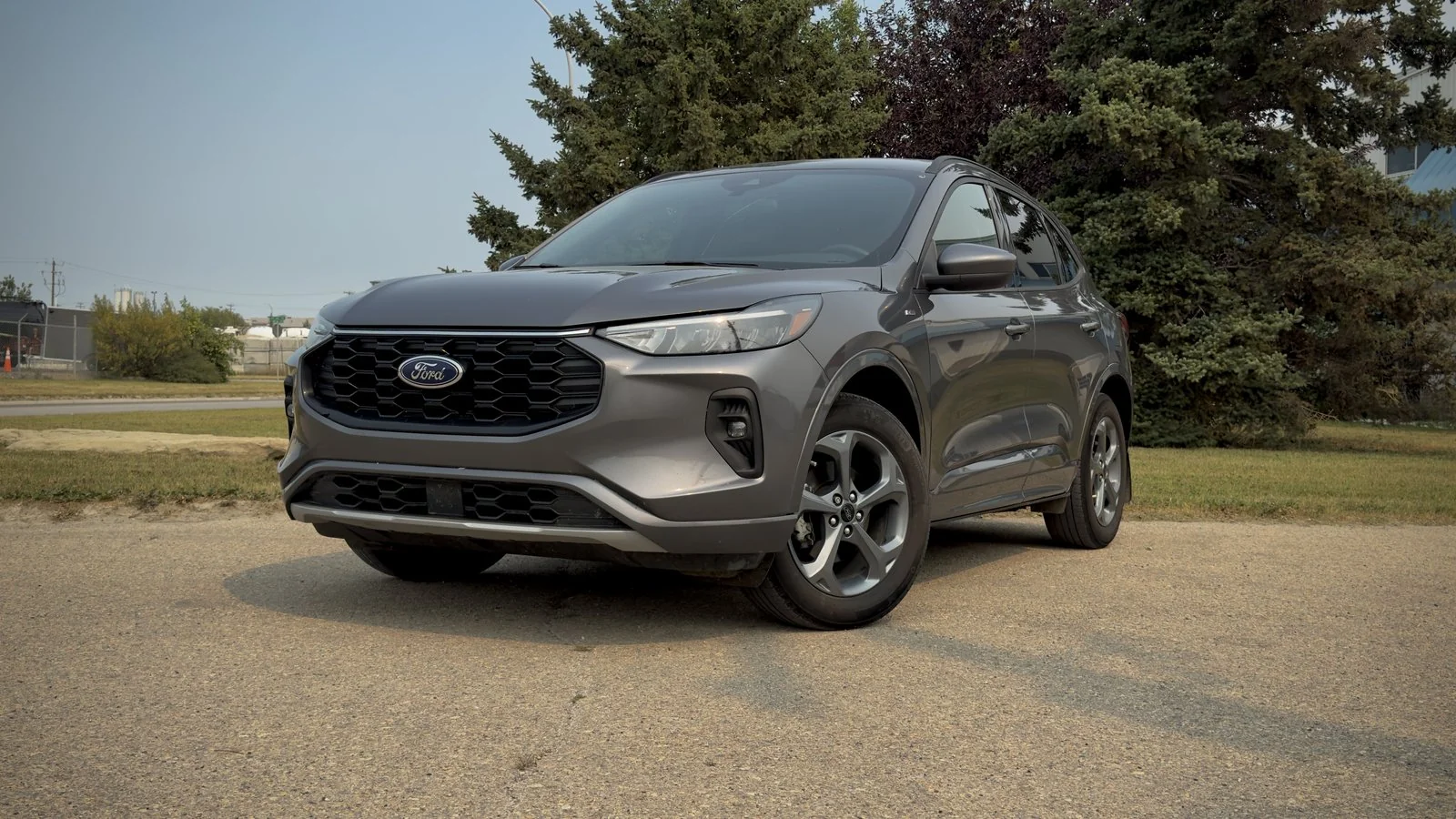
2024 Ford Escape Hybrid ST-Line

2023 Mitsubishi Outlander ES PHEV

2021 Land Rover Range Rover Evoque R-Dynamic HSE
Not seeing it? We'll find it.
We source through our dealer partner network across Western Canada: 25,000+ vehicles to choose from. Tell us what you want and what works for your budget.
Find my car3 min · no credit impactOAC = on approved credit. Payments are examples at 6.49% APR over 84 months with $0 down, based on each vehicle's advertised price; GST extra. Your rate depends on your credit (4.99%–29.9% APR).
More on Consumer Proposals and Car Loans
- Consumer proposal vs bankruptcy: the full comparison, with sources.
- When your spouse is in the proposal: applying when your spouse or partner filed.
- Rebuild credit with a car loan: what on-time payments do for your credit, month by month.
- Can I get approved?: a short quiz on where your file stands.
- By city: Airdrie, Calgary, Edmonton and Red Deer.
Related Resources
Related Buyer Guides
Rights, timelines, and credit rebuilding guides for consumer proposal borrowers in Alberta.
- Rebuilding After a Consumer Proposal: Month-by-Month Car Plan
- Deficiency Judgments After Repossession: Your Alberta Rights
- 5 Documents That Delay Every Alberta Car Loan
- Adverse Action Notice Rights When Your Loan Is Declined
- How Long After a Repossession Can You Get a Car Loan in Alberta?
- How to Dispute a Collection Hurting Your Auto Application
- What Lenders Actually Look for in Your Bank Statements
Other Financing Options
Ready to See Your Options?
Active or finished consumer proposal: apply online and we review every application and call you back. No obligation, no pressure.
Consumer Proposal & Credit Recovery Guides
In-depth guides from our editorial team — no fluff, just answers.