
Deficiency Judgments After Repossession: Your Alberta Rights
In this article
- What Is a Deficiency Judgment After Vehicle Repossession in Alberta?
- How Does Repossession Work in Alberta, Step by Step?
- Before the sale: seizure, notice and your chance to get the car back
- The sale and the deficiency
- Was the Sale "Commercially Reasonable"?
- Can the Lender Sue You for the Deficiency?
- How Long Does the Lender Have to Sue?
- What Does a Deficiency Do to Your Credit?
- Can You Negotiate the Deficiency?
- Getting a Car Loan After a Repossession in Alberta
- Voluntary Surrender vs Repossession: Does It Matter?
- Related Guides
- Is This a Fit for Your Situation?
- Frequently Asked Questions
- How long does a repossession stay on my credit report in Alberta?
- Can a lender sue me for a deficiency after repossession in Alberta?
- What if I can't afford to pay the deficiency balance?
- Can I get a car loan while my repossession deficiency is still unpaid?
- Compare and Apply
Check Your Options in 3 Minutes
No credit impact. All credit situations welcome.
5.0118+ Google ReviewsAMVIC LicensedFree Delivery 300km
Your car was repossessed and sold, and now a letter says you still owe money. Is that legal? Do you have to pay it? Will you ever get a car loan again? This post explains what Alberta law says, in plain English. If you are also asking what comes next for your car loan, start with our guide to how a repossession affects your next car loan. This is general information, not legal advice.
What Is a Deficiency Judgment After Vehicle Repossession in Alberta?
A deficiency is the money you still owe after the lender sells your repossessed car for less than you owed. Alberta's Personal Property Security Act (PPSA) says that, unless otherwise agreed or provided in an Act, "the debtor is liable for any deficiency." It becomes a judgment only if the lender sues and a court decides you owe it. The Financial Consumer Agency of Canada (FCAC) says "A judgment is a court decision that says you owe someone money." Before it sells the car, the lender must give you notice at least 20 days ahead, with narrow exceptions, and must act in good faith and in a commercially reasonable manner. Until the car is sold, you may be able to get it back by paying what the Act requires.
How Does Repossession Work in Alberta, Step by Step?
Before the sale: seizure, notice and your chance to get the car back
Most car loans are secured loans, which means the car is the collateral. If you default, the PPSA gives the lender, unless otherwise agreed, "the right to take possession of the collateral or otherwise enforce the security agreement by any method permitted by law." The lender must use a civil enforcement agency, and a civil enforcement bailiff working with the agency carries out the seizure. At a residence, a bailiff must not enter except in the presence of an adult who lives there, must not enter after entry has been refused and must not use force to get in, unless a court allows it.
Before it sells, the PPSA says: "Not less than 20 days prior to the disposition of the collateral, the secured party shall give notice of disposition to (a) the debtor." The notice can be handed to you or sent by registered mail. It must tell you:
- what it takes to pay off the loan, the sums in arrears and the lender's costs so far;
- that you can redeem the car, and reinstate the loan when the Act lets you;
- that otherwise the car will be sold and you may be liable for any deficiency; and
- when and where the sale will happen.
There are narrow exceptions, such as every person entitled to the notice agreeing after default to a sale without it. Read anything you are asked to sign after a default before you sign it.
Until the lender has sold the car or contracted to sell it, you can redeem it "by tendering fulfilment of all obligations secured by the collateral," which means paying everything you owe on the loan. Or you can reinstate the loan by paying "the sums actually in arrears, exclusive of the operation of any acceleration clause," curing any other default and paying the lender's reasonable expenses. Unless otherwise agreed, you cannot reinstate "more than twice in each year" on a loan longer than a year, and a written agreement made after default can give these rights up.
The sale and the deficiency
The sale money goes first to "the reasonable expenses of enforcing the security agreement, holding, repairing, processing or preparing for disposition and disposing of the collateral," and then to what you owe. Any surplus goes first to other people with a claim on the car and then to you. If the money falls short, the PPSA says you are liable for the deficiency unless otherwise agreed or provided in an Act.
Example, not a real case: you owe $14,000, the lender's reasonable costs are $900 and the car sells for $9,000. The sale money pays the costs first, then the loan: $14,000 + $900 - $9,000 = $5,900 left owing. Ask the lender, in writing, for the sale price, how the car was sold and the costs it deducted. The PPSA requires "a written accounting" of the sale to people entitled to the proceeds, and the debtor is among the people the Act names for any surplus.
Was the Sale "Commercially Reasonable"?
The PPSA says all rights and duties under a security agreement "shall be exercised or discharged in good faith and in a commercially reasonable manner." If the lender sues you for a deficiency, you can raise its failure to follow the Act's rules on caring for the car, answering your written requests, giving notice or accounting for the sale. But a failure limits the deficiency only "to the extent that it has affected the right of the defendant to protect the defendant's interest in the collateral or has made the accurate determination of the deficiency impracticable," and the Act puts the onus on the lender to show that it did not. If you think the sale was handled badly, keep the notice and the accounting, and talk to a lawyer.
Can the Lender Sue You for the Deficiency?
Yes. Alberta.ca says "If the value of the security doesn't cover your debt, the creditor may also sue you for any money left owing, including interest and costs." If you are served with a civil claim, it says "Don't ignore the claim." You have 20 calendar days from the time you are served to file a dispute note. If you do not file one in time or do not appear on the day of the hearing, "the court will award the creditor with a judgement against you." For a conditional sales contract, Alberta.ca says the creditor "may either seize the goods that you bought on the conditional sales contract, or sue you to get a judgement for the amount that you owe." What applies to your loan depends on the contract you signed, so check it and ask a lawyer.
After a judgment, Alberta.ca says the creditor can register a writ of enforcement, garnishee your wages and bank accounts, or seize your property. How much of a paycheque can be taken is set out in the Civil Enforcement Act. Our guide to a car loan with a wage garnishment in Alberta walks through it.
How Long Does the Lender Have to Sue?
Alberta's Limitations Act gives a claimant 2 years from the date it first knew, or in the circumstances ought to have known, that it had a claim worth bringing, and no more than 10 years after the claim arose, whichever expires first. After that, the defendant, "on pleading this Act as a defence, is entitled to immunity from liability in respect of the claim." The time limit is something you raise, so ask a lawyer when the clock started on your debt.
The clock can start again. A part payment, or an acknowledgment that must be in writing and signed, made "before the expiration of the limitation period applicable to the claim" means the period "begins again." Get advice before you pay or sign anything on an old balance. Separately, Alberta's collection rules say an agency may not "pursue a non-judgment debt where the last payment or written acknowledgement by the debtor is more than 6 years previous."
What Does a Deficiency Do to Your Credit?
A court judgment can appear on your credit report. FCAC says credit bureaus usually keep judgments for 6 years, and Equifax says the same. In Alberta, a bureau must not report a judgment more than 6 years after it was given unless the creditor confirms it "remains unpaid in whole or in part." If you pay a judgment in full, Alberta.ca says it "should be discharged at the Court of King's Bench and at the Personal Property Registry," so check that this is done and tell the credit bureau you have paid. The repossession and any collection entry have their own dates, covered in our post on how long after a repossession you can get a car loan.
Can You Negotiate the Deficiency?
You can talk to the lender or the collection agency about it. If you cannot pay in full, FCAC says to explain your situation, offer another way to repay, such as monthly payments, follow up in writing and, if possible, include a first payment, and to always get a receipt. In Alberta, a collection agency may not accept less than the balance as a final settlement without the creditor's prior express consent, and a settlement paid in full must come with a receipt stating the amount is "in final settlement of the debt or debts owing." Keep every letter and receipt.
Getting a Car Loan After a Repossession in Alberta
A repossession does not close the door for good, but every lender decides each file, and in our experience a lender will ask about any balance still owing. In our experience, lenders typically look for about $2,800 a month in income you can prove, from all sources combined. If you are under that, talk to us first. Our bad credit car loans page explains how rates follow your credit score band.
Voluntary Surrender vs Repossession: Does It Matter?
Equifax's guide uses one rating for both: "8: Repossession (voluntary or involuntary return of merchandise)." Giving the car back does not by itself erase the balance: unless otherwise agreed or provided in an Act, the debtor is liable for any deficiency after the sale, so read anything the lender asks you to sign. Our post on voluntary repossession in Alberta works through the numbers.
Related Guides
Want the next layer of detail? These guides cover the closest-adjacent situations to this one:
Is This a Fit for Your Situation?
We sell used vehicles in Alberta and work with buyers whose credit took a hit. If you have steady income and a repossession in your past, we can look at your file. We review every application and call you back. Every lender decides each file, so we cannot promise a result. You can start on our financing application page.
Frequently Asked Questions
How long does a repossession stay on my credit report in Alberta?
FCAC says information about late or unpaid loans can stay on a credit report for up to 6 years, and Equifax says about six years. Neither page names repossession, so check the dates on your own report.
Can a lender sue me for a deficiency after repossession in Alberta?
Yes. Alberta.ca says the creditor "may also sue you for any money left owing, including interest and costs." If you are served, you have 20 calendar days to file a dispute note. Ask a lawyer about your own case.
What if I can't afford to pay the deficiency balance?
Talk to a Licensed Insolvency Trustee (LIT). The Office of the Superintendent of Bankruptcy says an LIT "is the only professional authorized to administer government-regulated insolvency proceedings that allow you to be discharged from your debt, such as a consumer proposal or a bankruptcy." It also says "Typically, LITs do not charge for this first meeting." The trustee will explain your options, and a proposal or bankruptcy has its own effect on your credit, so ask about that too.
Can I get a car loan while my repossession deficiency is still unpaid?
That depends on the lender. In our experience, some lenders will look at a file with a balance still owing and others want it paid, settled or on a payment plan first. Every lender decides each file, and we cannot promise what any lender will say.
Compare and Apply
- Complete Bad Credit Car Buying Guide (Alberta) — step-by-step guide to bad credit car buying in Alberta
Sources (pages opened October 6, 2026): Financial Consumer Agency of Canada: How long information stays on your credit report, Dealing with a debt collector; Equifax Canada: How long does information stay on your credit report?, Consumer Credit Report User Guide (PDF); Government of Alberta: Creditors, collection agencies and debt repayment; Alberta King's Printer: Personal Property Security Act (current as of June 1, 2024), Civil Enforcement Act (current as of June 1, 2024), Limitations Act (current as of December 15, 2022), Collection and Debt Repayment Practices Regulation, Alta Reg 194/1999 (current as of July 1, 2026), Credit and Personal Reports Regulation, Alta Reg 193/1999 (current as of July 16, 2025); Office of the Superintendent of Bankruptcy: Consumed by debt?; Bank, credit union and loan-site pages: ATB: navigating car loans in Alberta. These are public pages, quoted to show what they say. Check the source page before you rely on a detail. This is general information, not legal advice.
Financing Resources
Cars you could drive home
See all inventory
2021 Land Rover Range Rover Evoque R-Dynamic HSE
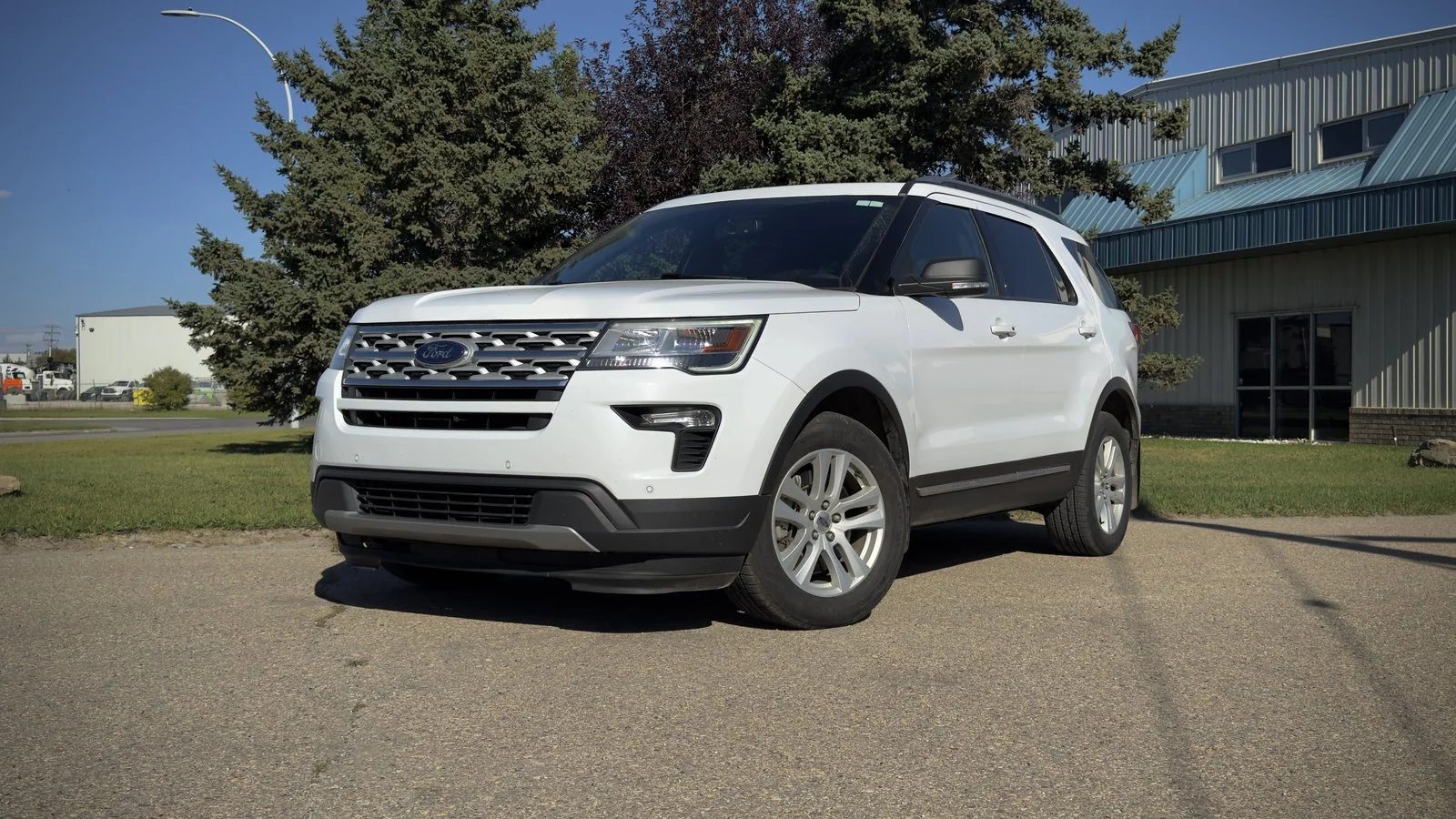
2019 Ford Explorer XLT
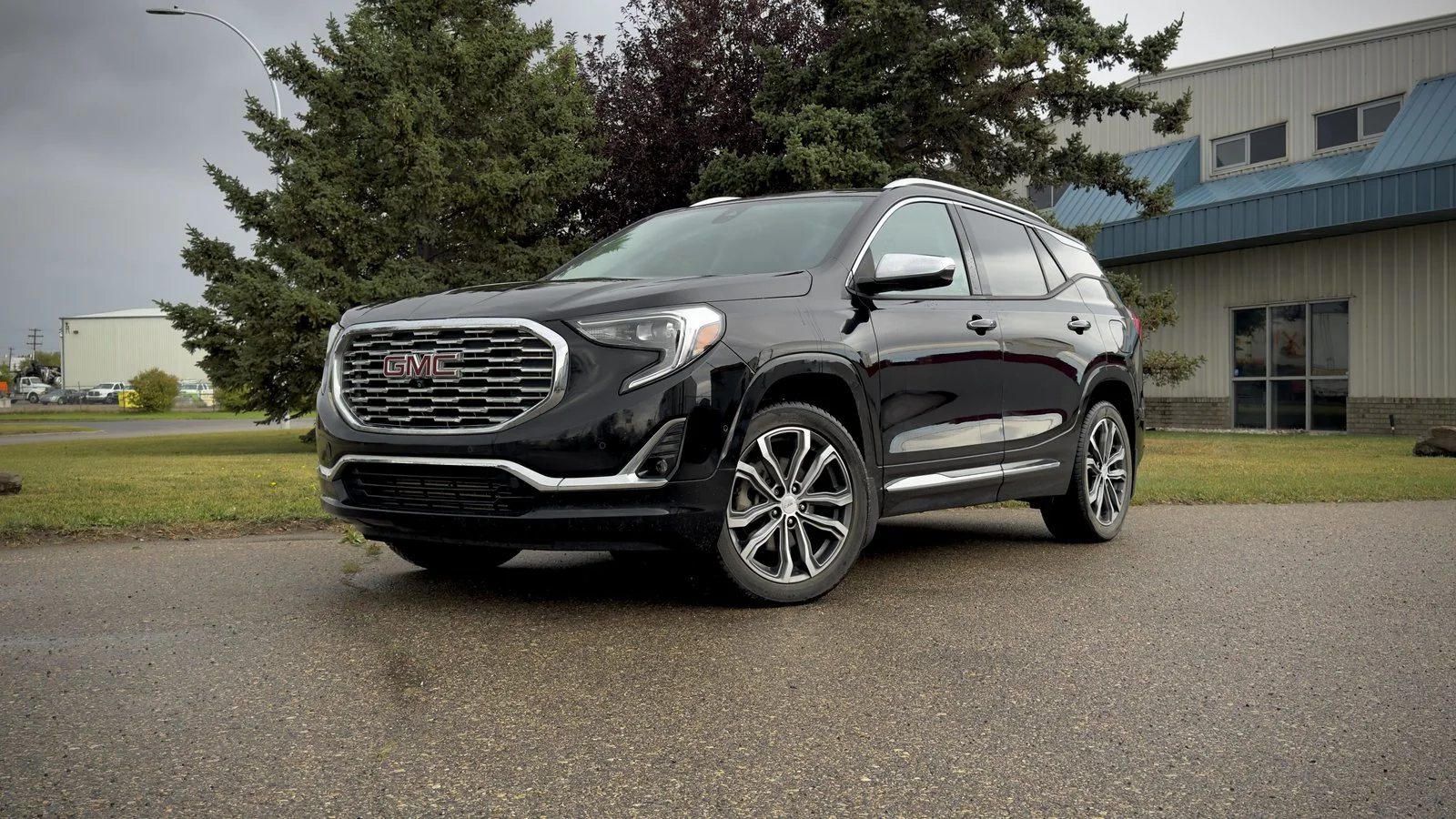
2020 GMC Terrain Denali
Not seeing it? We'll find it.
We source through our dealer partner network across Western Canada: 25,000+ vehicles to choose from. Tell us what you want and what works for your budget.
Find my car3 min · no credit impactOAC = on approved credit. Payments are examples at 6.49% APR over 84 months with $0 down, based on each vehicle's advertised price; GST extra. Your rate depends on your credit (4.99%–29.9% APR).
Related Articles

Ready to Find Your Vehicle?
Browse our inventory or apply for financing. All credit situations welcome.
5.0118+ Google ReviewsAMVIC LicensedFree Delivery 300km