
Can I get a car loan after bankruptcy in Alberta?
It is possible. Fewer lenders look at your file while the bankruptcy is open and more do after discharge. They weigh steady income, time since discharge and your payment record since. We review every application and call you back, and each lender decides each file.
Car Financing After Bankruptcy in Alberta
Currently in bankruptcy, recently discharged, or years out? Where you are decides which lenders will look at your file. This page shows what happens at each stage and what lenders usually look for. We work with all credit situations.
Last reviewed: October 2026
See Your Options After Bankruptcy
Undischarged or discharged. We review every application and call you back.
5.0118+ Google ReviewsAMVIC LicensedFree Delivery 300km
Key Facts
- First bankruptcy, automatic discharge
- 9 months, or 21 months with surplus income payments
- Second bankruptcy, automatic discharge
- 24 months, or 36 months with surplus income payments
- On your credit report in Alberta
- 6 years after discharge (14 years if you have declared bankruptcy more than once)
- Lender network
- 21+ lenders
- What lenders look at
- Steady income, time since discharge, new payment history
Still in Bankruptcy? Talk to Your Trustee First
How Soon After Bankruptcy Can You Get a Car Loan? A Stage-by-Stage Timeline
While the bankruptcy is open, fewer lenders will look at your file. At discharge more will, and each year after that adds payment history lenders can see. The table shows what is happening at each stage and what lenders usually look for.
Discharge timing and credit-report rules come from the Bankruptcy and Insolvency Act, the Office of the Superintendent of Bankruptcy (OSB) and the credit bureaus. What lenders look for is what we see: patterns, not promises. Every lender decides each file, and your income, your down payment and the vehicle still matter at every stage. This is general information, not legal advice. Your licensed insolvency trustee can tell you what applies to your file.
| Stage | What is happening | What lenders usually look for |
|---|---|---|
| During the bankruptcy | Your trustee runs your file. Property you acquire before discharge can be sold for your creditors unless the law exempts it. If you borrow $1,000 or more, you must tell the lender you are an undischarged bankrupt. See buying a car during bankruptcy. | A smaller group of lenders will look at the file. They want steady income you can prove, a letter from your trustee, a down payment and a vehicle that holds its value. |
| At discharge | First bankruptcy: automatic discharge 9 months after the date of bankruptcy, or 21 months if you must make surplus income payments. Second bankruptcy: 24 or 36 months. It is automatic only if no one opposes it and you have attended two counselling sessions. Your trustee then issues your discharge certificate. | More lenders can look at the file. Bring your discharge certificate, recent pay stubs and proof of how long you have worked there. A new account opened since you filed and paid on time helps. |
| 12 months after discharge | A year of recent history now sits next to the bankruptcy, which stays on your credit report for 6 years after discharge in Alberta. | In our experience, more lenders will look at the file than at discharge, especially with steady work and on-time payments on a new account. A larger down payment still helps. |
| 24 months after discharge | Two years of payment history. The bankruptcy is still on your report. | In our experience, this is when it is worth asking whether your loan could be refinanced at a better rate. Bring your payment record and recent pay stubs. See car loan refinancing in Alberta. |
| 36 months after discharge | Three years of payments and more time with your employer. The bankruptcy stays on your report until 6 years after discharge. | In our experience, more choices open up on your next vehicle and a lower rate becomes more realistic. A lender still sees the bankruptcy while it is on your report. |
Your credit tier sets the range of rates a lender offers: see car loan rates by credit tier. For the full discharge rules, see our bankruptcy discharge timeline.
What Do Lenders Look at After Bankruptcy?
After bankruptcy, lenders shift focus away from credit history and prioritize your current employment stability, verifiable income, time since discharge, and any new positive credit activity since filing. Your past bankruptcy matters less than the financial picture you present today.
After a bankruptcy, lenders shift their focus. Your credit history is less relevant than your current picture. These are the factors that carry the most weight:
Current Employment Stability
Lenders want to see that you are working now and have been for a reasonable stretch. A steady job history helps. We also work with customers who are self-employed or have non-traditional income sources.
Verifiable Income
Your income needs to be enough to support the loan payment alongside your other obligations. Pay stubs, direct deposit records, or an employment letter confirm your earning capacity. It is often the first thing a lender checks.
Time Since Discharge
More lender options tend to open up as you move further from your discharge date. Recently discharged files have fewer options, and each lender decides each file.
New Credit Activity Since Bankruptcy
Have you opened any new credit accounts since discharge, such as a secured card or a credit-builder loan? New positive trade lines since your bankruptcy show lenders you are actively rebuilding.
How Do You Rebuild Credit After Bankruptcy?
A car loan is one of the most effective tools for rebuilding credit after bankruptcy — each on-time payment creates a new positive trade line that is completely separate from your bankruptcy history. Your score can recover as that new history builds, and lenders can see it.
A car loan is one of the most effective tools for rebuilding after bankruptcy. Here is the typical timeline. If you're in Airdrie or Calgary, we serve both areas directly — walk-in or free delivery. For a full walkthrough of what to expect, see our step-by-step bad credit buying guide.
Months 1-6: The Foundation
Each on-time payment creates a new positive trade line on your credit report. This is new information — completely separate from your bankruptcy history. Credit bureaus begin to see a recovery pattern. Score improvements in this phase are often the sharpest.
Months 6-18: Visible Progress
With 6-18 months of positive payment history, your score can improve enough to qualify for other credit products, such as secured credit cards and credit-builder loans. Your overall credit profile starts to look like someone who had a setback, not someone who is a chronic risk.
18-36 Months: Refinance Window
In our experience, a refinance window can open around 18-36 months after discharge. A strong payment history on your car loan, combined with time since discharge and new positive accounts, can qualify you for a lower rate than the one you started at, which can lower your monthly payment. Review current car loan rates in Alberta to see what you might be working toward.
Bankruptcy and Car Financing in Alberta — Provincial Considerations
Alberta's economic and regulatory environment creates specific conditions that affect how bankruptcy car financing works in this province. Understanding these factors helps you make better decisions about when and how to apply.
Alberta's Exemption Rules Protect Your Vehicle
Under the Civil Enforcement Act and its Regulation, Alberta exempts your interest in one motor vehicle up to $5,000 (section 37(1)(c) of the Regulation), so your trustee does not sell that share of it. If you have a car loan, the OSB says bankruptcies generally do not affect the rights of secured creditors, so your lender's claim does not go away. Whether your car is covered depends on its value and what you owe, so ask your trustee. If you need to replace a vehicle during or after bankruptcy, talk to your trustee before you buy or sign. We explain how in buying a car during bankruptcy.
No Provincial Sales Tax in Alberta
The Government of Alberta says Alberta has no sales tax of its own, so a vehicle bought here carries the federal GST but no provincial tax on top. That keeps the amount you finance lower than the same vehicle in a province that adds PST or HST, and a smaller loan is easier to carry while you rebuild.
Alberta's Resource Economy and Bankruptcy Patterns
Alberta's economy cycles with oil and gas prices. Many bankruptcy filings in this province are tied to industry downturns rather than chronic financial mismanagement — and lenders who operate in Alberta understand this context. A Fort McMurray tradesperson who went through bankruptcy during a downturn but is now back to work earning strong income is a very different risk profile than how it looks on paper. We work with lenders who understand Alberta's economic cycles and evaluate your current earning capacity, not just the bankruptcy notation on your credit report.
AMVIC Consumer Protection
A licensed Alberta dealership must give you a mechanical fitness assessment before you sign and meet disclosure requirements. When you are financing a vehicle after bankruptcy, you cannot afford a lemon — an unexpected $3,000 repair bill could destabilize the financial recovery you are building. AMVIC's mandatory inspection and disclosure standards provide a safety net that protects post-bankruptcy buyers from inheriting mechanical problems. Every vehicle on our lot passes a 162-point inspection before listing, and we offer extended warranty coverage to protect your investment further. Browse our vehicles under $10,000 in Airdrie for budget-friendly options.
First Bankruptcy vs Second Bankruptcy — How Financing Differs
A first bankruptcy ends sooner and, in our experience, reads to lenders as a one-time setback. A second bankruptcy takes longer to discharge, stays on your credit report longer and means fewer lenders will look at the file. Options exist for both, but the path is narrower the second time.
The discharge timing and credit-report periods below come from the Bankruptcy and Insolvency Act, the OSB and the Financial Consumer Agency of Canada. How lenders see each one is our experience, not a rule:
First Bankruptcy
- •Automatic discharge 9 months after the date of bankruptcy, or 21 months if you must make surplus income payments
- •Automatic only if no one opposes it and you have attended two counselling sessions
- •On your credit report for 6 years after discharge in Alberta
- •Some lenders have programs for first-time bankruptcies
- •Lenders usually read it as a one-time setback
- •Income and time since discharge carry the most weight
Second Bankruptcy
- •Automatic discharge 24 months after the date of bankruptcy, or 36 months if you must make surplus income payments
- •If the discharge is not automatic, a court hearing decides if and when you are discharged
- •On your credit report for 14 years if you have declared bankruptcy more than once
- •Fewer lenders will look at the file
- •A larger down payment often helps
- •Lenders usually read it as a pattern, so steady income matters most
Whether this is your first or second bankruptcy, your income, the vehicle and your payment record since discharge all count. Stable employment, a reasonable vehicle selection and a down payment help your file. Each lender decides each file.
What Are the Common Myths About Bankruptcy and Car Loans?
The most persistent myths are that you must wait 7 years after bankruptcy, that you need a huge down payment, and that you can only get an old unreliable vehicle. None of them is a rule. Each lender sets its own terms, and your income and the vehicle matter at every stage.
“You cannot get a car loan for 7 years after bankruptcy”
There is no fixed waiting period. A bankruptcy stays on your credit report for 6 years after discharge in Alberta, but lenders look at your current income and what you have done since. Some lenders will look at a file within months of discharge and others want more time. It depends on your income and each lender's program.
“You need a huge down payment to get a car loan after bankruptcy”
Down payment requirements vary by lender and by file. A larger down payment lowers the loan and helps, but it is not a fixed rule. Steady income and a suitable vehicle count too.
“You can only get an old, unreliable vehicle”
Lenders look at the vehicle as collateral, so a reliable, fairly priced vehicle works in your favour. Old and cheap is not the only choice. See what is in stock below.
“All lenders treat bankruptcy the same way”
Different lenders have very different appetites for post-bankruptcy files. Some will not touch them at all; others specialize in exactly this situation. That is why working with a dealer who has access to multiple subprime lenders matters.
What Our Customers Say
“Thanks to Luke and his team. They were able to find me my dream car and have it delivered between cities. Easy to deal with and easy to work with.”
“A huge thank you to Wes and Luke for making my vehicle purchase such a great experience. This has been the best experience I've had at a dealership. They were patient, kind, and attentive.”
“The buying experience was handled very professionally. Wes was very attentive and presented everything in an open and honest manner that gave me the reassurance that I made a good purchase.”
See Your Options After Bankruptcy
Undischarged or discharged. We review every application and call you back.
5.0118+ Google ReviewsAMVIC LicensedFree Delivery 300km
Frequently Asked Questions
How soon after filing for bankruptcy can I get a car loan?
You can apply while the bankruptcy is open, but fewer lenders will look at the file, and you must tell the lender you are an undischarged bankrupt if you borrow $1,000 or more. In our experience, more lenders look at a file after discharge. Talk to your trustee before you apply. We review every application and call you back, and each lender decides each file.
Do I need trustee permission to get a car loan during bankruptcy?
The rule you can point to is disclosure: an undischarged bankrupt who borrows $1,000 or more without telling the lender about the bankruptcy commits an offence under the Bankruptcy and Insolvency Act. Beyond that, what your trustee requires depends on your file, so ask before you apply. Some lenders also ask for a letter from your trustee.
Is financing different for a first bankruptcy vs a second bankruptcy?
Yes. A first bankruptcy is automatically discharged after 9 months, or 21 months if you must make surplus income payments. A second takes 24 months, or 36 months with surplus income payments. In our experience, a first bankruptcy reads as a one-time setback and a second means fewer lenders will look at the file. Each lender decides each file.
How long does a bankruptcy stay on my credit report in Canada?
In Alberta, Equifax and TransUnion usually remove a bankruptcy 6 years after you are discharged. TransUnion keeps it 7 years in Newfoundland and Labrador, Ontario, Prince Edward Island and Quebec. If you declare bankruptcy more than once, credit bureaus keep it for 14 years. Lenders can see it while it is on your report, and they also look at your income and what you have done since.
What interest rate should I expect on a car loan after bankruptcy?
Your rate depends on your credit tier, and a file in or just out of bankruptcy often sits toward the top of the range. Our lender programs run 4.99%–29.9% APR across all tiers. Rates can come down as time passes and your payment history builds. Each lender decides each file, and your income, down payment and vehicle count too.
Can I keep my current vehicle during bankruptcy in Alberta?
Alberta law exempts your interest in one motor vehicle up to $5,000 (Civil Enforcement Act, section 88(d), and Civil Enforcement Regulation, section 37(1)(c)), and exempt property stays out of what your trustee sells. If you have a car loan, the Office of the Superintendent of Bankruptcy (OSB) says bankruptcies generally do not affect the rights of secured creditors. Ask your trustee how your car and your loan will be treated.
Can I finance a vehicle if my bankruptcy was caused by a business failure?
Lenders look first at your current income and what you have done since the bankruptcy. Bring proof of work: recent pay stubs or, if you are self-employed again, your Notice of Assessment and bank statements. Your trustee can tell you what the discharge looks like for a business-related file. Each lender decides each file.
Should I get a secured credit card before applying for a car loan after bankruptcy?
It can help but is not required. Lenders like to see new accounts opened since your bankruptcy and paid on time, and a secured card is one way to start. If you have not opened any new credit since discharge, some lenders may ask for a larger down payment. If your bankruptcy is still open, ask your trustee before you open any new credit.
Sources (pages opened October 5, 2026): Bankruptcy and Insolvency Act, section 168.1 (automatic discharge); Bankruptcy and Insolvency Act, section 199 (telling a lender you are an undischarged bankrupt); Office of the Superintendent of Bankruptcy: Considering bankruptcy; Alberta King's Printer: Civil Enforcement Act, section 88; Alberta King's Printer: Civil Enforcement Regulation, section 37; Financial Consumer Agency of Canada: How long information stays on your credit report; Equifax Canada: How long does information stay on your credit report?; Government of Alberta: About Tax and Revenue Administration. These are public government and credit-bureau pages. Laws change, so ask your licensed insolvency trustee what applies to your file.
Cars in stock you could finance
See all inventory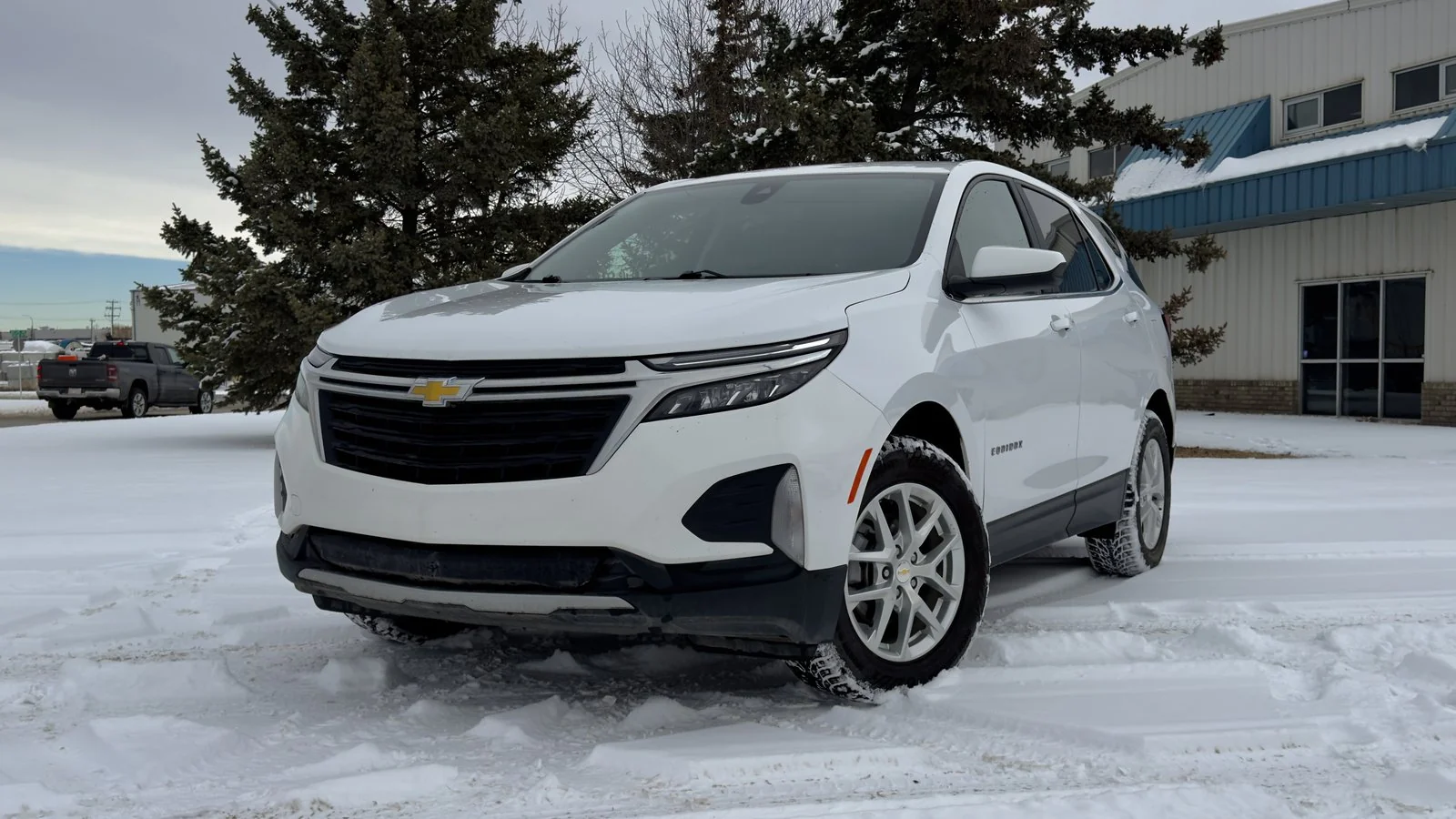
2022 Chevrolet Equinox LT
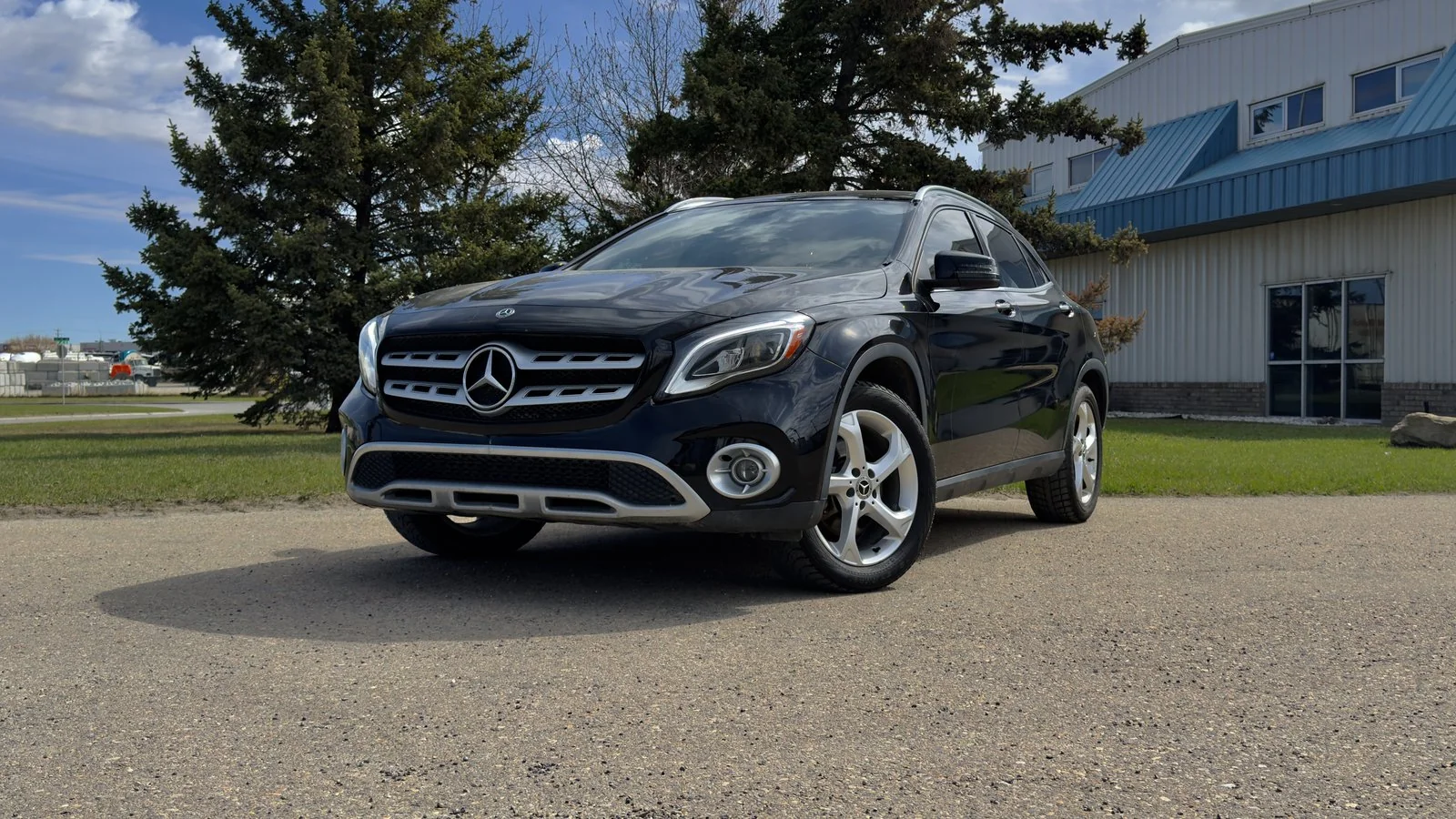
2020 Mercedes-Benz GLA250 4Matic

2020 Land Rover Range Rover Evoque P250 First Edition
Not seeing it? We'll find it.
We source through our dealer partner network across Western Canada: 25,000+ vehicles to choose from. Tell us what you want and what works for your budget.
Find my car3 min · no credit impactOAC = on approved credit. Payments are examples at 6.49% APR over 84 months with $0 down, based on each vehicle's advertised price; GST extra. Your rate depends on your credit (4.99%–29.9% APR).
More on Bankruptcy and Car Loans
- Car loans during an active bankruptcy: buying while the bankruptcy is still open.
- Bankruptcy discharge timeline: when and how a discharge happens.
- Consumer proposal vs bankruptcy: the full comparison for a car loan.
- Rebuild credit with a car loan: what on-time payments do for your credit, month by month.
- Can I get approved?: a short quiz on where your file stands.
- By city: Airdrie, Calgary, Edmonton and Red Deer.
Related Resources
Related Buyer Guides
Bankruptcy borrower rights, deficiency judgments, credit rebuilding, and approval strategy in Alberta.
- Deficiency Judgments After Repossession: Your Alberta Rights
- Adverse Action Notice Rights When Your Loan Is Declined
- Rebuilding After a Consumer Proposal: Month-by-Month Car Plan
- How Long After a Repossession Can You Get a Car Loan in Alberta?
- How to Dispute a Collection Hurting Your Auto Application
- 5 Documents That Delay Every Alberta Car Loan
- What Lenders Actually Look for in Your Bank Statements
Other Financing Options
Ready to Get Back on the Road?
Whatever stage of bankruptcy you are in, apply online and we review every application and call you back. No obligation, no pressure.