
Ford Used Vehicles in Calgary
59 years as Canada's #1 truck brand meets Calgary's toughest driving conditions — F-150, Escape, Explorer, with financing for all credit situations and free delivery across Calgary.
Key Facts
- F-Series Record
- 59yr as #1 Truck
- AB Service Network
- 50+ Ford Dealers
- Delivery
- Free across Calgary
- Lenders
- 20+ in network
Last reviewed: September 2026
Ford's Alberta Service Network — 50+ Dealers Province-Wide
162-point Independent Inspection on Every Vehicle
Check Your Options in 3 Minutes
No credit impact. All credit situations welcome.
★★★★★ 106+ Google Reviews · AMVIC Licensed · Free Delivery 300km
About Ford Vehicles
The F-Series has been Canada's best-selling truck for 59 consecutive years. That fact alone would be remarkable if it were the result of market inertia or brand loyalty — but the F-150's sustained dominance is the result of Ford consistently engineering the truck to match where the market is heading rather than defending what it built. The 2015 shift to aluminum body construction was the most visible example: an unpopular decision at announcement, a successful engineering outcome at volume. The aluminum body has held up in Canadian winter conditions, proven rust-resistant in ways that steel-body competitors have not, and made the truck 300 lbs lighter — which directly contributes to towing and payload capacity as well as fuel economy.
EcoBoost is the technology decision that reshaped what Calgary truck buyers expect from an engine. When Ford introduced the 3.5L EcoBoost V6 to the F-150 in 2011, it produced more torque than the outgoing 5.4L V8 — and did so with meaningfully better fuel economy. For Calgary buyers, the altitude dimension is specifically relevant: at 1,048 metres above sea level, naturally aspirated engines lose approximately 8–10% of their rated power output. A turbocharged engine compensates automatically, because boost pressure replaces the atmospheric pressure that altitude removes. The 3.5L EcoBoost at Calgary altitude performs closer to its rated output than a V8 alternative in the same conditions.
The F-150's commercial context in Alberta is as important as its consumer context. Alberta's oil and gas sector, construction industry, and agricultural economy generate enormous fleet demand for trucks — and Ford Pro, Ford's commercial vehicle division, has built a service and upfitting infrastructure in Alberta that is the densest of any truck manufacturer in the province. More than 50 Ford dealers operate across Alberta, and the province-wide parts distribution network means that a repair requiring a non-standard component on an F-150 can typically be sourced within 24–48 hours at any dealer. For buyers whose truck is their income-generating tool, parts availability is not an abstract specification — it is a downtime risk management calculation.
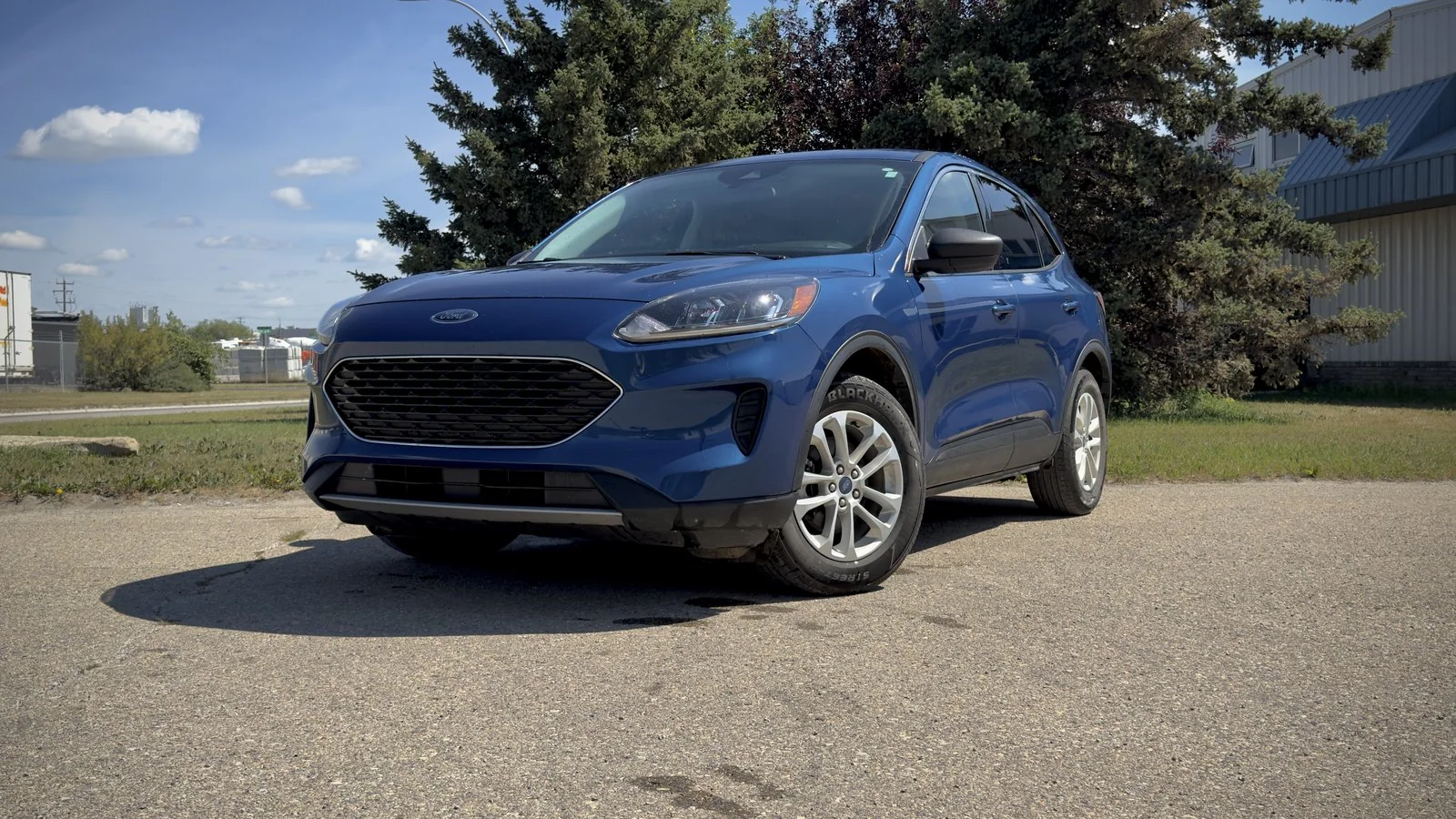
Beyond the F-150, Ford's lineup addresses different Calgary buyer profiles with the Escape and Explorer. The Escape has occupied the compact crossover market since 2001 and was one of the earliest SUVs to prove that the format could be practical, fuel-efficient, and family-friendly simultaneously. The current Escape uses a 1.5T or 2.0T four-cylinder, available in FWD or AWD, and delivers an interior that — despite being mechanically a compact — feels more spacious than its footprint suggests. For Calgary buyers who need AWD for winter confidence but drive primarily in the city and suburbs, the Escape AWD represents a practical balance between truck-level weather capability and car-level fuel and maintenance costs.
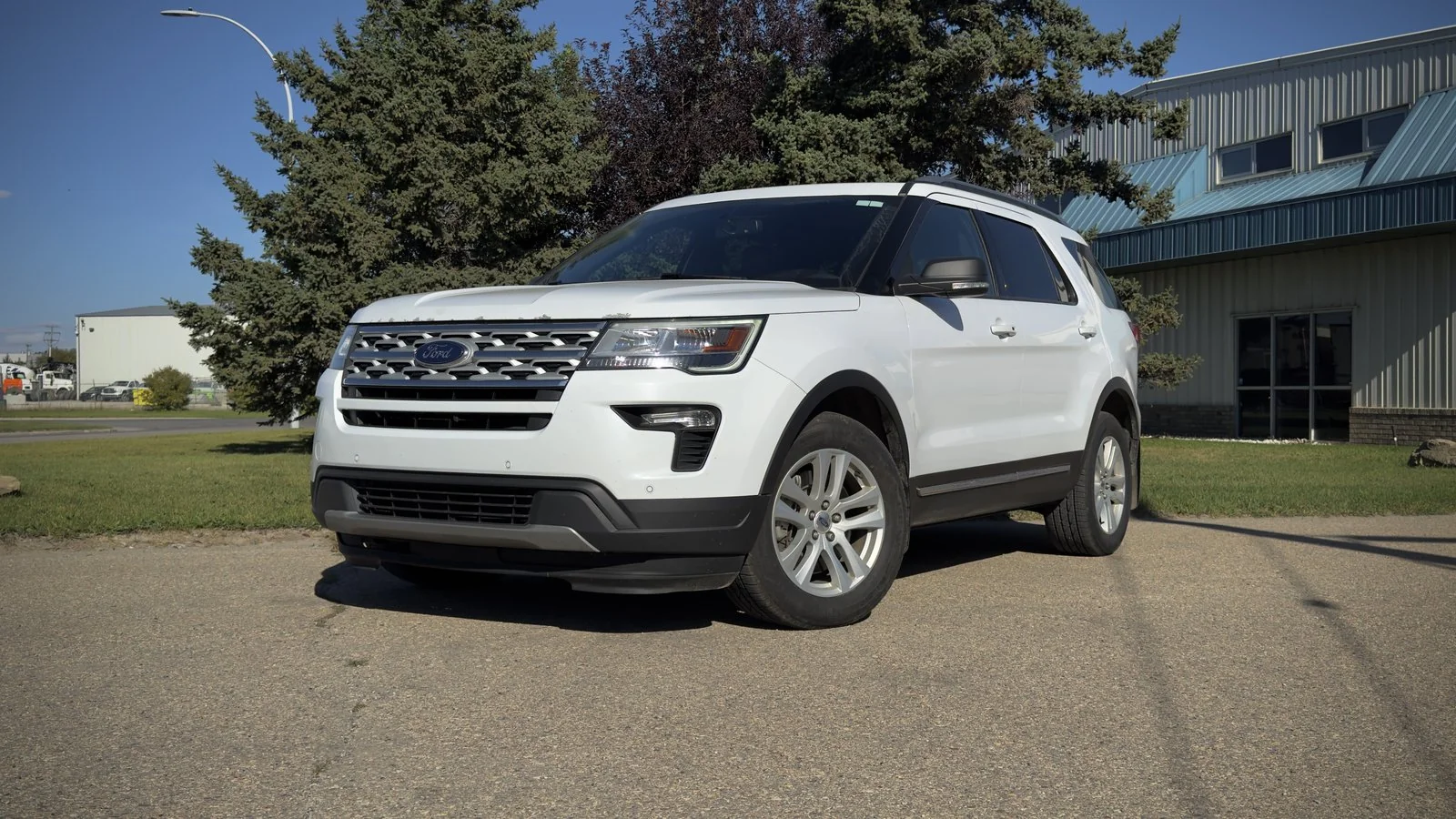
The Explorer seats seven and bridges the gap between the family-friendly Escape and the full three-row capability of larger SUVs like the Expedition. The Explorer's rear-wheel-drive-based platform — unusual in the crossover class — gives it genuine towing capacity (up to 5,600 lbs) and dynamic handling that front-wheel-drive-based platforms cannot match. For Calgary families who want SUV capability for ski season trips to Lake Louise or summer drives through Banff, the Explorer provides the interior space and towing numbers that make it a genuine alternative to larger, less practical vehicles.
Ford's service network density in Alberta is a legitimate advantage that is difficult to quantify but easy to appreciate in a breakdown situation. With more than 50 dealers province-wide, the probability of being within a reasonable distance of a Ford service facility at any point in Alberta is higher than for any other brand. Extended warranty coverage through Ford's service network means warranty repairs can be performed at any of those locations — not just the dealer who sold the vehicle. For buyers who travel frequently within Alberta for work or recreation, that coverage geography has real value.
The F-Series Legacy in Alberta
The F-Series has been the best-selling truck in Alberta for as long as reliable data exists, and the reasons go beyond badge preference. Alberta's economic structure — oil and gas extraction, construction, agriculture, pipeline work — creates a sustained commercial demand for trucks that can handle genuine work loads over long service lives in challenging conditions. The F-150 has built its reputation in this context, not in automotive press parking lots. The aluminum body, introduced in 2015, was the engineering decision that attracted the most skepticism and ultimately proved the most consequential. Aluminum does not rust in the way steel does — and in Calgary's salt-treated winter roads, this matters. A 2018 F-150 aluminum body at 150,000 km typically looks structurally cleaner than a comparable-year RAM 1500 or Silverado steel body at the same mileage, simply because the corrosion mechanism is fundamentally different. Aluminum oxidizes rather than rusts, and the oxidation layer is protective rather than progressive. The F-150's towing and payload credentials are matched by Ford's support infrastructure. Alberta's Ford Pro dealer network — commercial vehicle specialists within the dealer network — can upfit, service, and warranty trucks with a depth of institutional knowledge that no other manufacturer has replicated in this province. For self-employed contractors, oil field workers, and small business operators, this ecosystem matters: it means faster warranty resolution, access to commercial-grade accessories, and service advisors who understand how a truck is actually being used. The 2021 F-150 PowerBoost hybrid deserves mention as Alberta's most practical entry point into electrification. The 3.5L PowerBoost generates 430 hp and 570 lb-ft of torque while delivering approximately 20% better fuel economy than the equivalent non-hybrid. It also includes a 7.2 kW Pro Power Onboard generator — essentially a portable power station in the truck bed, useful for remote job sites, off-grid camping, and emergency power situations that are not uncommon in rural Alberta.
- •Aluminum body resists Calgary road salt corrosion — structural advantage over steel at 150K+ km
- •F-150 aluminum oxidizes rather than rusts — corrosion is protective, not progressive
- •3.5L EcoBoost compensates for Calgary altitude: turbos recover 8–10% power loss at 1,048m
- •Ford Pro commercial network: 50+ Alberta dealers with fleet service and upfitting capability
- •PowerBoost hybrid: 7.2kW onboard generator — practical for remote Alberta job sites
EcoBoost Technology: What Calgary Buyers Need to Know
EcoBoost is Ford's family of turbocharged, direct-injected engines. The name reflects the engineering premise: turbocharging delivers V8-level torque from a smaller displacement, while direct injection maximizes fuel efficiency. For Calgary buyers, understanding EcoBoost in practical terms determines whether this is the right engine for your use case. The 2.7L EcoBoost V6 is the most compelling engine in the F-150 lineup for most Calgary buyers. It produces 325 hp and 400 lb-ft of torque — numbers that were V8 territory ten years ago — in a lighter package that returns noticeably better fuel economy than the 3.5L. The 2.7L has proven highly reliable from 2018 onward (the 2015–2017 generation had documented issues with debris ingestion and coolant loss that Ford addressed in the 2018 redesign). For buyers who tow occasionally (under 9,000 lbs) and commute daily, the 2.7L offers the best balance of performance, efficiency, and long-term reliability. The 3.5L EcoBoost is the performance flagship. At 400 hp and 500 lb-ft of torque in its 2021+ iteration, it matches or exceeds anything in the half-ton class for towing and performance. The cam phaser concern that affected early 3.5L EcoBoost engines (2011–2016) is documented — worn cam phasers produce a rattle on cold start that worsens over time if ignored. The 2017+ 3.5L received a redesigned phaser system and this issue is largely absent from post-2017 examples with proper service history. The key maintenance requirement for all EcoBoost engines in Calgary's climate: full-synthetic oil on schedule. The turbochargers run at high temperatures and rely on oil for cooling and bearing lubrication. Extended oil change intervals with conventional oil accelerate turbo bearing wear in ways that do not manifest as immediate symptoms but shorten component life.
- •2.7L EcoBoost (2018+): best balance of performance/efficiency/reliability for most Calgary buyers
- •3.5L EcoBoost (2017+): cam phaser redesign resolves rattle issue from 2011–2016 generation
- •Both EcoBoost engines: full-synthetic oil mandatory — turbo bearing health depends on it
- •3.5L compensates for Calgary altitude (1,048m) — delivers near-rated output vs NA V8 alternatives
- •Cold-start rattle on pre-2017 3.5L: symptom of cam phaser wear, inspect before purchase
Ford Service Network Advantage in Alberta
Alberta has more than 50 Ford dealers — a service network density that no other truck manufacturer matches in this province. For used vehicle buyers, this matters in ways that are easy to underestimate at point of purchase and very easy to appreciate when something goes wrong 200 km from Calgary on a Tuesday afternoon. Ford's extended warranty (Ford Protect) is serviced at any Canadian Ford dealer, not just the selling dealer. This means that a buyer in Calgary who works in Fort McMurray, drives through Medicine Hat, or skis at Banff has access to warranty service at Ford dealers in all of those communities. The breadth of coverage geography is a genuine differentiator compared to brands with thin Alberta dealer networks. Parts availability is the related advantage. F-150 components are among the most widely stocked parts in the Canadian aftermarket because the installed base is so large. An F-150 in need of a front strut, a transfer case component, or a body panel can typically be sourced within 24–48 hours at any Alberta Ford dealer — often in stock. The same part for a less common brand might involve a week-long backorder. For Calgary buyers who are purchasing used F-150s outside of factory warranty coverage, Ford's aftermarket warranty options through Endurance, CARCHEX, and Canadian dealership extended warranty programs provide mechanical coverage that mirrors OEM coverage at varying price points.
- •50+ Ford dealers across Alberta — highest service network density of any truck brand
- •Ford Protect extended warranty honored at any Canadian Ford dealer, not just selling dealer
- •F-150 parts among most widely stocked in Canadian aftermarket — 24–48hr typical availability
- •Large installed base means independent warranty providers comfortable covering F-150 components
- •Ford Pro commercial network: faster warranty resolution for work-truck operators
What Our Customers Say
“The buying experience was handled very professionally. Wes was very attentive and presented everything in an open and honest manner that gave me the reassurance that I made a good purchase.”
“A huge thank you to Wes and Luke for making my vehicle purchase such a great experience. This has been the best experience I've had at a dealership. They were patient, kind, and attentive.”
“Dealt with Luke and Wes. It was one of the best car buying experiences I have ever encountered. I went back to buy another vehicle from these guys as they are just so easy to deal with.”
Get pre-qualified for a Ford
Soft credit check only — no impact on your score.
Frequently Asked Questions
Is the EcoBoost engine reliable for long-term Calgary ownership?
The 2.7L EcoBoost from 2018 onward and the 3.5L EcoBoost from 2017 onward are proven engines with large installed bases and documented service histories. The critical maintenance requirement is full-synthetic oil changed on schedule — turbochargers rely on oil for bearing cooling and lubrication, and extended intervals with conventional oil accelerate wear that does not produce immediate symptoms. On maintained examples, both EcoBoost variants regularly reach 250,000–300,000 km without major mechanical issues. The early (2011–2016) 3.5L EcoBoost had documented cam phaser wear that produces a cold-start rattle; this is largely absent from 2017+ examples with clean service history.
Which F-150 years are the best to buy used in Calgary?
The 2018–2021 F-150 generation represents the strongest value in the used Calgary market. The 2018 model year introduced the revised 2.7L EcoBoost (resolving early-generation issues), the refreshed exterior, and updated technology. The 2021 model year introduced the PowerBoost hybrid as an option. Within this window, 2019–2020 F-150s hit the optimal combination of updated engineering, post-depreciation pricing, and pre-chip-shortage supply. Avoid 2013–2014 models with early EcoBoost engines if they show deferred maintenance.
What are cam phasers and should I be worried about them on a used F-150?
Cam phasers are components of the variable valve timing system — they allow the engine computer to adjust camshaft timing for optimal efficiency and power at different operating conditions. On 2011–2016 F-150s with the 3.5L EcoBoost, cam phaser wear produces a characteristic cold-start rattle that sounds like a diesel knock for the first 5–15 seconds before disappearing. Left unaddressed, worn phasers accelerate further and eventually require a full timing system replacement. The 2017+ redesigned phaser system has not shown the same wear pattern. Budget $800–$1,500 for phaser replacement if they are worn on a pre-2017 unit.
How does the Bronco Sport compare to the Escape for Calgary winter driving?
The Bronco Sport and Escape share a platform but are engineered for different use cases. The Bronco Sport uses a more sophisticated AWD system with a rear-axle disconnect that can distribute torque to individual rear wheels independently — a meaningful advantage on loose or uneven terrain like Kananaskis staging areas or forest service roads. It also has higher ground clearance (8.8 inches versus 7.9 inches on the Escape). The Escape AWD uses a conventional viscous-coupling system that performs well in Calgary winter conditions but is not designed for trail driving. For purely urban and suburban Calgary use with winter tires, the Escape AWD is adequate.
What does the F-150 tow in Alberta, and is it enough for typical Calgary uses?
F-150 tow ratings vary significantly by configuration: from 5,000 lbs on a base 3.3L V6 2WD to 13,200 lbs on a properly configured 3.5L EcoBoost Max with tow package. Most Calgary use cases — a large boat (6,000–8,000 lbs), a fifth-wheel toy hauler (10,000–12,000 lbs), a horse trailer (6,000–8,000 lbs), a snowmobile trailer (4,000–6,000 lbs) — fall well within the F-150's range when equipped with the appropriate tow package.
Is Ford warranty coverage good in Alberta for used vehicles?
Factory warranty on a used Ford transfers to subsequent owners within the coverage period: 3 years/60,000 km bumper-to-bumper and 5 years/100,000 km powertrain. Ford Protect extended warranty plans can be purchased at the time of used vehicle sale, adding coverage from 60,000 km through 160,000 km or beyond depending on the plan selected. Because there are 50+ Ford dealers across Alberta, warranty repairs can be performed province-wide — not just near Calgary.
How much does it cost to maintain a used Ford F-150 annually in Calgary?
RepairPal data puts average F-150 maintenance at approximately $788 per year — above the industry average, reflecting the truck's more complex drivetrain and higher-cost parts compared to a passenger car. In practice, a well-maintained F-150 under 150,000 km with no deferred service will run closer to $500–$700/year in routine maintenance: oil changes (every 8,000–10,000 km with synthetic), annual brake inspection and service, transmission fluid at 80,000 km, and spark plug replacement at 100,000 km on EcoBoost engines (budget $400–$600 when the time comes). The cost premium over a Toyota or Honda is real but manageable with proactive scheduling.
Financing Resources
Whether you have great credit or are rebuilding, we work with all credit situations. Explore our financing guides to understand your options before you apply.
Ford in stock now
Browse all inventory →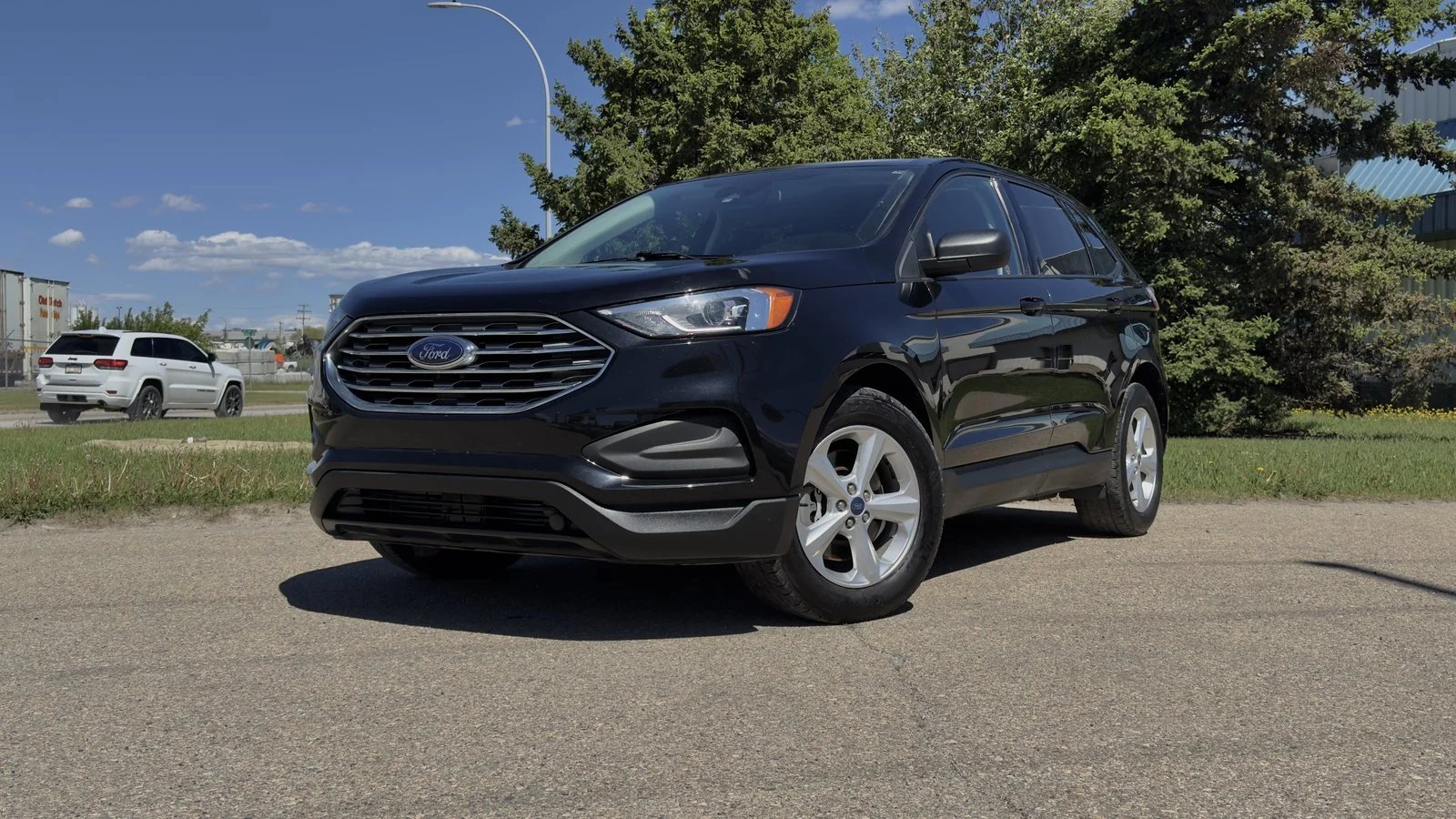
Deeper on This Topic
Pick the angle that fits your exact situation.
Financing Options
Latest Buyer Guides for Alberta Shoppers
Research before you buy — practical guides on financing, trade-ins, and finding the right vehicle.
Ready to Get Behind the Wheel?
Apply for financing in 3 minutes. We work with all credit situations — from perfect credit to rebuilding. Decision within 24-48 hours.