
Ford Explorer Used for Sale in Airdrie
Canada's family adventure SUV — three real rows, capable AWD, and the 2020 redesign that fixed everything the previous generation got wrong.
Is the Ford Explorer reliable?
The sixth-generation Explorer (2020+) has a significantly better reliability record than its predecessor. J.D. Power scores improved substantially with the platform change, and the complaints that defined the fifth-generation (transmission issues, MyFord Touch failures, AWD integration problems) have not materialized in the same way. The 2020+ Explorer is a genuinely reliable family SUV. The fifth-generation (2011–2019) is more variable — 2017–2019 with 2.3L EcoBoost are the most reliable version of that generation, but we recommend 2020+ for buyers prioritizing reliability above all else.
Check Your Options in 3 Minutes
No credit impact. All credit situations welcome.
★★★★★ 106+ Google Reviews · AMVIC Licensed · Free Delivery 300km
Key Facts
- Body
- Mid-size SUV
- Seating
- 7 passengers (3-row)
- Drivetrain
- AWD / RWD
- Financing
- All credit situations
Last reviewed: August 2026
Financing Available for All Credit Situations
162-point Independent Inspection on Every Vehicle
The Explorer for Alberta Families
The Ford Explorer is Canada's best-selling three-row SUV for a reason that goes beyond marketing reach: it is genuinely a complete solution for the family that needs real space, real capability, and real versatility across Alberta's varied driving conditions. From the school run in Airdrie to a weekend hauling hockey equipment to Red Deer to a summer road trip through the Rockies, the Explorer is designed to do all of it without compromise. Three rows means genuine third-row seating — not the emergency fold-down that most crossovers pretend constitutes a third row. In the sixth-generation Explorer (2020+), third-row legroom is 33.5 inches, which accommodates adult passengers for trips of reasonable length without the kind of suffering that makes them veto the vehicle for the next trip. The second row slides forward for third-row access in a smooth motion that parents with car-seat-laden hands will appreciate. Cargo behind the third row is 515 litres — enough for a week of groceries, not just soft bags. For Alberta winter driving, the Explorer's AWD system — available on all but the base trim — provides genuine confidence. The intelligent AWD can distribute torque front-to-rear continuously, and the Terrain Management System offers dedicated modes for snow, mud, sand, and grass/gravel. In practice, the Snow mode adjusts throttle response, transmission shift points, and AWD bias simultaneously, producing a vehicle that starts and stops more calmly in Alberta's January conditions than one attempting to apply all-season tires' limits. Towing capacity of up to 5,600 lbs (with the optional tow package on the 2020+ model) accommodates boats, utility trailers, and smaller fifth-wheels. The Explorer is not a truck substitute, but it handles the towing needs of most Alberta families without requiring a separate truck purchase for the one or two times a year it comes up. For the family that wants an all-in-one vehicle — daily commuter, hockey taxi, camping hauler, ski trip vehicle, and occasional tower — the Explorer's package is difficult to argue with at the price points available in the used market.
- •33.5" third-row legroom (2020+): genuine adult seating, not emergency fold-down
- •515L cargo behind third row — practical grocery and gear capacity, not just theoretical
- •Terrain Management System: Snow, Mud, Sand, Grass/Gravel modes — dedicated traction strategy per surface
- •5,600 lb tow rating with tow package — handles boats and utility trailers without a separate truck
- •EcoBoost 2.3L + EcoBoost 3.0L (ST): same family of engines as F-150, well-proven over millions of km
Gen 5 vs Gen 6 — The 2020 Redesign Changed Everything
This is the most important piece of information any Explorer buyer needs: the 2020 redesign was not a styling refresh. It was a ground-up platform change that addressed every major criticism of the fifth-generation Explorer, and the resulting vehicles are so different that we treat them as fundamentally separate products. The fifth-generation Explorer (2011–2019) was built on a front-wheel-drive-biased platform adapted from the Ford Edge and Ford Fusion. This created several persistent problems. The AWD system, being rear-biased by retrofit rather than design, felt less natural than vehicles engineered for it. The transmission — a six-speed automatic under constant strain in a heavy vehicle — earned a reputation for premature wear. The front-row infotainment system (MyFord Touch, 2011–2014) was notoriously unreliable. Third-row access required athletic patience. Fuel economy was poor for what was delivered. Consumer Reports repeatedly flagged the fifth-gen Explorer for below-average reliability, which was a well-earned assessment. The 2020 sixth-generation Explorer was built on a rear-wheel-drive-biased platform — a completely different architecture. This is the same approach BMW, Mercedes, and Cadillac use for their SUVs, and it produces similar results: better weight distribution, more natural handling, more efficient AWD integration (it is easier to add front wheels to a RWD platform than vice versa), and a lower floor that dramatically improved third-row packaging. The 10-speed automatic transmission that replaced the previous six-speed is measurably more responsive and more durable under load. Electrically, the 2020+ Explorer benefits from Sync 4 infotainment — responsive, logical, and wireless CarPlay/Android Auto compatible. The reliability trajectory for 2020+ Explorers has been significantly better than their predecessors. J.D. Power scores improved substantially, and the complaints that defined the fifth-generation have not materialized in the same way on the sixth. If you are shopping for an Explorer and the price difference between a 2018 and a 2020 seems significant — it is, and it reflects a genuine difference in product quality. Pay the premium for the 2020+. If budget constrains you to a fifth-generation, the 2017–2019 models with the 2.3L EcoBoost and updated infotainment (Sync 3) are the most refined versions of a flawed platform, but know what you are getting.
- •2020+ is a new RWD-biased platform — not a refresh, a ground-up redesign
- •2011–2019 Gen 5: FWD-biased platform, transmission wear issues, MyFord Touch unreliability — buy with caution
- •10-speed automatic (2020+) replaces the problematic 6-speed — measurably better under load
- •Sync 4 (2020+): wireless CarPlay, responsive, logical — night-and-day improvement over MyFord Touch
- •Gen 5 buyer note: 2017–2019 with Sync 3 and 2.3L EcoBoost are the best Gen 5 if budget forces it
Three-Row Reality Check
Three-row SUVs are often sold on a promise of versatility, and it is worth checking that promise against reality before you commit to the purchase. The Explorer's three-row configuration is genuinely useful — but "useful" comes with honest qualifications. Third-row seating is best suited for children and adults in the 5'5" and under range for trips longer than an hour. At 33.5 inches of legroom, it is competitive for the class — better than the Hyundai Palisade's 31.0 inches and similar to the Kia Telluride's 33.5 inches — but the headroom and shoulder room are tight for large adults. We recommend putting your actual third-row passengers in those seats during the test drive, not just looking at the number on a spec sheet. Cargo with all three rows in use is limited. 515 litres behind the third row sounds workable until you remember it is roughly the size of a large suitcase. Road trips with seven people require creative packing or a roof rack. This is not an Explorer problem — it is a physics problem inherent to putting three rows in a vehicle this size. The Toyota Highlander has similar constraints, and the Ford Expedition is the answer if you regularly need both seven people and genuine cargo. Second-row captain's chairs versus a bench also matters for actual family use. The bench configuration seats three in the second row for a total of eight; captain's chairs seat two in the second row for seven total but with better comfort and much easier third-row access. Many buyers prefer captains — check the specific vehicle's configuration because it affects how you will actually use it. Fold-flat third-row seats expand the Explorer to 2,274 litres of cargo space — competitive with the Highlander and meaningfully larger than five-passenger crossovers. For families who use the third row occasionally but haul cargo regularly, the fold-flat configuration is genuinely useful versatility rather than a marketing claim. For most Alberta families of four to six people, the Explorer delivers real-world value. For families who regularly transport seven or more adults with luggage, consider the Ford Expedition or a minivan for the cargo math to work comfortably.
- •Third row best for under 5'5" adults on trips over an hour — test it with actual passengers before buying
- •515L behind third row: enough for groceries, not a week of luggage for seven people
- •Bench vs captains chairs: bench = 8 seats, captains = 7 seats with better second-row comfort and third-row access
- •2,274L fully folded: competitive with Highlander, much larger than 5-passenger crossovers
- •For 7+ adults with luggage regularly: Ford Expedition or minivan is the more honest recommendation
Financing a Used Explorer in Airdrie
The Ford Explorer is one of the most financing-friendly vehicles in the three-row SUV category, for a combination of reasons that benefit buyers across the credit spectrum. Ford is the strongest automotive brand in Alberta by volume — more Fords per capita in this province than anywhere in Canada outside the Atlantic provinces — and that brand presence creates a deep, liquid used market for Explorer inventory specifically. Lender familiarity matters. Lenders who specialize in Alberta subprime automotive financing see Explorer applications frequently, which means they have established valuation frameworks and risk parameters for the vehicle. An unusual or rare vehicle creates uncertainty for lenders; an Explorer is a known quantity with a predictable resale curve. That familiarity typically translates to more confident approval decisions. The 2020+ Explorer's platform change is particularly relevant to financing discussions. Because the sixth-generation cars are meaningfully better vehicles than their predecessors, they are holding their value more competitively against alternatives like the Toyota Highlander and Kia Telluride. A 2021 Explorer with 60,000 km retains its value better than a 2018 with the same mileage, which means lenders writing loans on 2020+ Explorers are working with better collateral. Family vehicles in general occupy a favorable position in subprime lending: they serve an essential need (transporting a family), they are purchased by buyers with real motivation to maintain payments, and the demographic that buys three-row SUVs tends to have household stability that correlates with payment reliability. None of this guarantees approval, but it does mean the underwriting framework for an Explorer application starts from a positive position. For buyers working with bad credit, discharged bankruptcy, consumer proposals, or thin credit history, we work with all credit situations and partner with over 21 lenders who specialize in Alberta subprime automotive financing. The Explorer's broad appeal and strong Ford brand recognition make it one of the better vehicles to finance with challenged credit at this price point. Apply online in three minutes — no commitment, no pressure, and we will present your options clearly before you decide anything.
Browse Our Current Inventory
Our inventory rotates frequently. Browse our full selection or contact us to be notified when a matching vehicle arrives.
Browse All InventoryWhat Our Customers Say
“I honestly can't thank Luke enough. From start to finish he was patient, respectful, transparent, and genuinely cared about helping me find the right vehicle instead of just making a sale.”
“Hands down one of the best motorcycle shops I have ever been to. The staff is super friendly, knowledgeable, and genuinely passionate about what they do. They treated me like family.”
“Amazing service. Wes was very helpful. Got me a great deal and made everything happen very quickly and stress free. Love my vehicle and much lower payments. Highly recommend!”
See what you qualify for
Soft credit check only — no impact on your score.
Frequently Asked Questions
Is the Ford Explorer reliable?
The sixth-generation Explorer (2020+) has a significantly better reliability record than its predecessor. J.D. Power scores improved substantially with the platform change, and the complaints that defined the fifth-generation (transmission issues, MyFord Touch failures, AWD integration problems) have not materialized in the same way. The 2020+ Explorer is a genuinely reliable family SUV. The fifth-generation (2011–2019) is more variable — 2017–2019 with 2.3L EcoBoost are the most reliable version of that generation, but we recommend 2020+ for buyers prioritizing reliability above all else.
What is the best year Ford Explorer to buy?
2020 or newer, full stop. The platform change was comprehensive and the resulting vehicles are fundamentally better. Within the 2020+ range, 2021–2022 models have the benefit of first-year production issue resolution. If budget forces a fifth-generation Explorer, choose 2017–2019 with the 2.3L EcoBoost and Sync 3 infotainment — avoid anything with MyFord Touch (2011–2014) and avoid the V6 3.5L non-EcoBoost for fuel economy reasons.
How does the Explorer compare to the Toyota Highlander?
The Highlander wins on long-term reliability reputation and resale value — Toyota's track record in this segment is better than Ford's, and Highlander holds its value marginally better. The 2020+ Explorer closes the reliability gap significantly and offers more power (2.3L EcoBoost vs Highlander's 2.4L turbo) and a more rear-biased driving feel. The Highlander's interior quality is excellent; the Explorer ST's interior is sportier. For families prioritizing absolute long-term reliability, the Highlander has the edge. For driving dynamics and technology, the 2020+ Explorer is competitive. Both are good choices — this comparison comes down to your priorities.
Is the Explorer ST worth the premium?
The ST adds the 3.0L EcoBoost V6 producing 400 horsepower — a genuinely quick number that makes the ST feel like a performance vehicle despite its family-SUV dimensions. It also adds ST-specific suspension tuning, larger brakes, sport seats, and a distinct appearance. If driving feel and outright performance matter to you in an SUV, the ST is one of the most compelling options in its class. If your priority is maximum reliability and cost efficiency, the 2.3L EcoBoost base engine is the more prudent choice — same great vehicle, lower performance ceiling, lower repair costs.
Is the third row in the Explorer actually usable?
For children and shorter adults on trips under two hours, yes — genuinely usable. For tall adults on long road trips, it is uncomfortable. Third-row legroom is 33.5 inches, which is competitive for the class, but headroom and shoulder room are tight. The strongest advice: put whoever will actually sit in the third row in those seats during the test drive. Do not make the decision from the front seat. The spec sheet number does not capture the difference between a 10-year-old and a 6'1" adult in the same 33.5 inches.
Can I finance a used Ford Explorer with bad credit in Alberta?
Yes. The Explorer is one of the more financing-friendly three-row SUVs for buyers with challenged credit because of Ford's strong Alberta market presence and the vehicle's broad used market demand. We work with all credit situations including bad credit, past bankruptcy, active or completed consumer proposals, and newcomers to Canada without established credit history. We partner with over 21 lenders who specialize in Alberta subprime automotive financing. Apply online in three minutes — no commitment required until you decide to proceed.
Check Your Options in 3 Minutes
No credit impact. All credit situations welcome.
★★★★★ 106+ Google Reviews · AMVIC Licensed · Free Delivery 300km
Ford Explorer in stock now
Browse all inventory →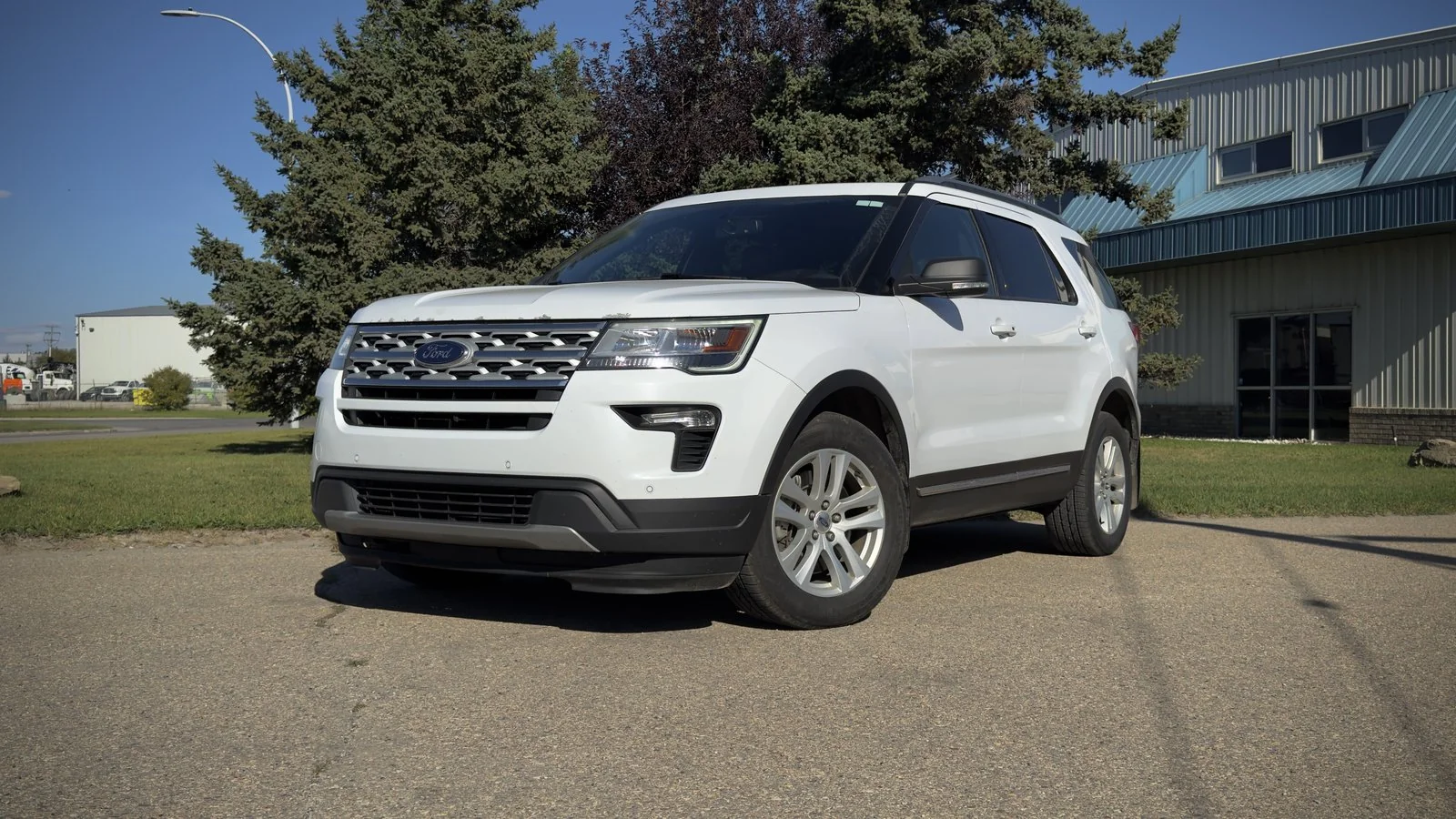
Deeper on This Topic
Pick the angle that fits your exact situation.
Financing Options
Buyer Guides for This Vehicle
In-depth guides to help you buy, finance, and maintain your next vehicle in Alberta.
Financing Resources
Whether you have great credit or are rebuilding, we work with all credit situations. Explore our financing guides to understand your options before you apply.
Ready to Get Behind the Wheel?
Apply for financing in 3 minutes. We work with all credit situations — from perfect credit to rebuilding. Decision within 24-48 hours.