
How Your Driving Record Affects Car Loan Approval in Alberta
In this article
- Do Lenders Actually Check Your Driving Record?
- DUI and DWI: The Insurance Problem That Becomes a Loan Problem
- Suspended Licence: The Hard Stop
- Alberta's Demerit Point System and How It Affects Your Situation
- Criminal Record vs. Driving Infractions: Two Different Systems
- A Clean Driving Record as Leverage for Better Rates
- How Insurance Costs Factor Into Debt-to-Income Ratio
- Practical Steps If Your Driving Record Complicates Your Application
- What Lenders in Alberta Actually Look At
- What Happens When Your Driving Record and Credit File Are Both Challenging
- The Bottom Line on Driving Records and Car Loans in Alberta
- Related Buyer Guides
- Compare and Apply
Check Your Options in 3 Minutes
No credit impact. All credit situations welcome.
★★★★★ 106+ Google Reviews · AMVIC Licensed · Free Delivery 300km
Most Albertans assume their driving record lives in a separate universe from their credit file — and for most lenders, it does. But the relationship between your driving history and your ability to finance a vehicle is more tangled than a simple yes/no. A DUI conviction can make insurance so expensive that it wrecks your debt-to-income ratio. A suspended licence means no lender will touch you. And some insurance-bundled loan products explicitly pull your abstract before approving. Understanding exactly where driving history shows up — and where it doesn't — puts you in a far stronger position than walking into a dealership blind.
See what you pre-qualify for
Three quick answers — soft check, no commitment.
Do Lenders Actually Check Your Driving Record?
Standard auto lenders — banks, credit unions, and the captive finance arms of automakers — do not pull your driving abstract as part of a car loan application. Their underwriting is built entirely around your credit bureau (Equifax or TransUnion), income verification, and debt-to-income ratios. A speeding ticket won't show up on your credit report; neither will an at-fault accident or a roadside suspension.
The exception is a niche category of bundled financial products where the lender is also arranging insurance. A handful of insurers in Alberta offer combined auto insurance and financing packages, particularly to high-risk drivers who have been declined by standard carriers. In these cases, the underwriter is assessing your insurability and your creditworthiness simultaneously — and yes, they will pull your five-year driving abstract from Alberta Transportation.
For the vast majority of car loans in Alberta, including every lender in the network we work with at Shift Happens, your driving record is not part of the approval decision. What matters is your credit score, your income, your existing debt obligations, and the vehicle itself.
Key takeaway: Your driving abstract does not appear on your credit report. Standard auto lenders do not request it. Insurance-bundled products are the rare exception.
DUI and DWI: The Insurance Problem That Becomes a Loan Problem
A DUI conviction doesn't kill your car loan application directly — but it can kill it indirectly through insurance costs. Here's how the chain works.
After a DUI in Alberta, you're classified as a high-risk driver. Alberta's auto insurance market requires every vehicle to be insured before it can be legally driven, and high-risk drivers are often placed in the Facility Association — Alberta's insurer of last resort. Facility Association rates are dramatically higher than standard market rates. For a typical sedan, you might be looking at $4,000–$6,000 per year in premiums instead of $1,200–$1,800. For a truck or SUV, even more.
Lenders calculate your debt-to-income (DTI) ratio by adding up all your monthly obligations — rent or mortgage, existing loan payments, credit card minimums, and any other fixed costs — and dividing by your gross monthly income. Car loan payments are included. But insurance isn't a debt payment in the traditional sense, so most lenders don't include it in DTI calculations.
The problem emerges at the practical level: if your insurance bill jumps by $300–$400 per month, that money has to come from somewhere. A lender approving a $700/month car loan isn't building in room for a $450/month insurance premium on top. You might qualify on paper but be financially underwater in practice — and experienced lenders and dealers who see this pattern often flag it. You can learn more about how DTI affects your overall approval picture in our post on debt-to-income ratio and car loan approval in Alberta.
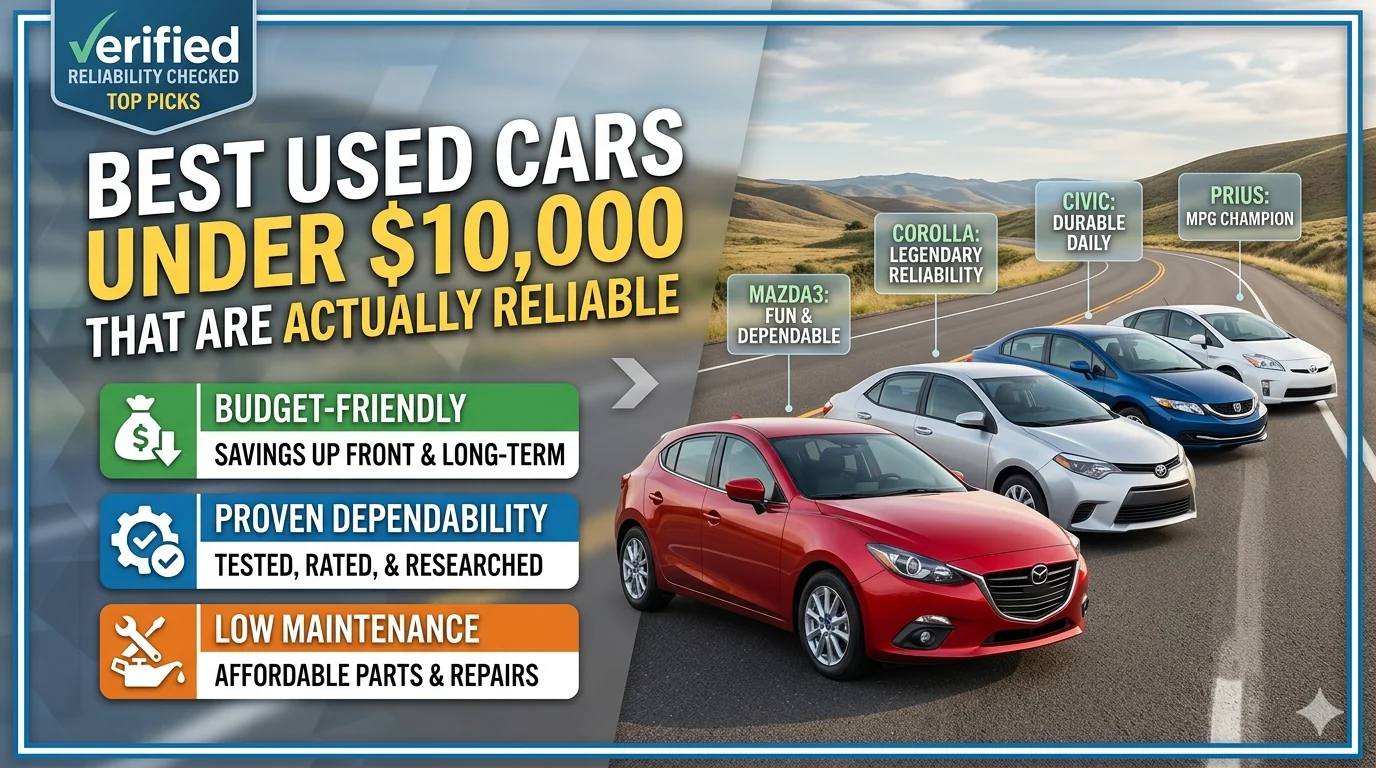
If you're post-DUI and looking to finance a vehicle, choosing a vehicle that's cheaper to insure in Alberta can make a real difference — a Honda Civic or Toyota Corolla will run dramatically cheaper to insure than a sports car or a large truck, which keeps your total monthly commitment at a manageable level.
Suspended Licence: The Hard Stop
If your licence is currently suspended, no legitimate lender will approve a car loan. Full stop. This isn't a matter of credit scores or income — it's a fundamental insurability issue. You cannot legally register and insure a vehicle in Alberta without a valid licence, and a lender cannot fund a loan against a vehicle that can't be legally operated by the borrower.
The suspension categories that trigger this wall include:
- Administrative licence suspension (ALS) — issued roadside for blowing over .08 or failing a field sobriety test
- Court-ordered suspension following a DUI conviction
- Suspension for accumulated demerit points (15+ points)
- Suspension for failure to pay fines or judgments
- Medical suspension
- GDL (graduated driver's licence) violation suspensions
The path forward is straightforward but not fast: reinstate your licence, clear any outstanding conditions, obtain a valid abstract showing full reinstatement, then apply. Trying to work around a suspension by putting the vehicle in someone else's name is fraud — lenders verify the licence of whoever is on the loan application.
Once your licence is reinstated and you have a clean abstract showing no current suspension, the process of getting a car financed in Alberta proceeds normally. Your credit history from the period of suspension will still be evaluated, but the suspension itself — now resolved — is not a permanent barrier.
Alberta's Demerit Point System and How It Affects Your Situation
Alberta uses a demerit point system administered by Alberta Transportation. Points accumulate on your driving record when you're convicted of traffic offences. Different violations carry different point values:
| Offence | Demerit Points |
|---|---|
| Speeding 16–30 km/h over | 2 points |
| Speeding 31–50 km/h over | 3 points |
| Speeding 51+ km/h over | 4 points |
| Failure to stop at red light/stop sign | 2 points |
| Distracted driving (hand-held device) | 3 points |
| Improper passing | 3–4 points |
| Driving while suspended | 6 points |
| Failing to remain at scene of accident | 7 points |
Accumulating 8 or more demerit points triggers a warning letter from Alberta Transportation. At 15 or more points, your licence is suspended for one month per occurrence. Points expire after two years from the date of conviction, not the date of the offence.
From a car loan perspective, demerit points themselves don't show up on your credit bureau and don't affect standard underwriting decisions. Their relevance is indirect: if demerit accumulation has resulted in a suspension, you're back to the hard stop described above. And if the underlying violations that generated those points have also generated insurance surcharges, that feeds back into the insurance cost / affordability dynamic.
Criminal Record vs. Driving Infractions: Two Different Systems
This distinction confuses a lot of people, and it's worth being clear: a criminal record and a driving abstract are completely separate documents maintained by separate government bodies.
Driving infractions (speeding, red lights, distracted driving, even most impaired driving convictions under the Alberta Traffic Safety Act) appear on your driving abstract maintained by Alberta Transportation. They do not appear on a criminal record check. Standard auto lenders never see your abstract.
Criminal convictions (including Criminal Code DUI/impaired driving charges, which are separate from TSA administrative offences) appear on your criminal record maintained by the RCMP. Standard auto lenders also don't pull criminal records — their underwriting is credit-and-income based.
Where a criminal record can indirectly affect your car loan application is through employment. A criminal record that costs you a job or limits your income level obviously affects your DTI and repayment capacity — but that's an income problem, not a record problem. The lender sees reduced income; they don't see why.
The exception, again, is specialized lenders serving very specific niches. If you're looking at bad credit car loan options, it's worth knowing that the subprime lenders in our network evaluate credit history, income, and vehicle — not criminal records or driving abstracts.
A Clean Driving Record as Leverage for Better Rates
Here's the flip side: if your driving record is clean, it's worth leveraging — specifically through your insurance rate, which feeds back into your real-world affordability.
Alberta uses a merit-based insurance rating system. Drivers with multi-year claims-free histories and no at-fault accidents earn significant discounts. If you've been accident-free and ticket-free for five or more years, your insurance premiums on a comparable vehicle might be 30–50% lower than someone with a checkered history. That gap has real dollar consequences for your monthly budget.
When you apply for a car loan and a lender calculates whether your income can support the payment, you want as much breathing room as possible. Lower insurance costs mean more of your monthly income is available for the loan payment — which can help you qualify for a larger amount, a better vehicle, or a shorter term (which reduces total interest paid). Check our current car loan rates in Alberta to see what's available based on your profile.
If you're shopping for a vehicle and you have a clean record, use that as a budget exercise: get an insurance quote before you commit to a specific vehicle. The difference between insuring a 2019 Ford F-150 and a 2019 Honda Civic can be $150–$300/month. That's money that either stays in your pocket or goes toward a loan payment.
How Insurance Costs Factor Into Debt-to-Income Ratio
Even though most lenders don't include insurance in a formal DTI calculation, the practical reality is that your total monthly vehicle cost is what determines whether you can actually afford a loan without defaulting.
A responsible lender — and a good broker — will think about total cost of vehicle ownership, not just the loan payment. For subprime borrowers in particular, where every dollar of margin matters, stacking a high-rate loan on top of high insurance premiums on top of fuel costs for a large SUV creates a fragile budget that breaks at the first unexpected expense.
This is why vehicle selection matters as much as financing structure. If your driving history has pushed your insurance premiums up significantly, selecting a vehicle with lower insurance costs isn't just a nice-to-have — it's a risk management decision that makes your loan more sustainable. Our guide on cheapest vehicles to insure in Alberta breaks this down by category if you're working through the math.
Common mistakes that compound this problem are covered in our post on mistakes that tank car loan approval in Alberta — worth reading if you're in a complicated credit or insurance situation.
Practical Steps If Your Driving Record Complicates Your Application
If you're dealing with a challenging driving history, here's a concrete sequence to follow:
- Pull your own abstract first. Order a certified five-year driving abstract from Alberta Transportation (available online at MyAlberta Digital ID or in person at a registry agent). Know exactly what's on it before a lender asks.
- Confirm your licence status. Any suspension — even a resolved one — should be documented as fully cleared before you apply. Get written confirmation of reinstatement from Alberta Transportation if there's any ambiguity.
- Get insurance quotes before shopping. Know your insurance cost for the type of vehicle you're targeting. This prevents the scenario where you fall in love with a truck you can't sustainably insure.
- Check your credit separately. Your credit bureau is what lenders actually evaluate. Pull your Equifax and TransUnion reports through a service like Borrowell or Credit Karma before applying. If there are errors, dispute them before they become part of a lender decision.
- Choose your vehicle strategically. If high insurance is the constraint, smaller, safer vehicles with strong safety ratings and lower theft risk are your friends. A used Toyota Corolla or a used Honda Civic consistently rank among the cheapest to insure in Alberta, and both are reliable, practical vehicles.
- Work with a multi-lender broker. A single bank will decline you or quote a poor rate and that's the end of the conversation. A broker with access to multiple lenders can find the one whose risk appetite fits your profile — including lenders who specialize in complex situations.
What Lenders in Alberta Actually Look At
Since we've established that driving records aren't the primary concern, it's useful to be clear about what actually drives approval decisions. Alberta lenders evaluate:
- Credit score and history — Payment history is the biggest factor. Missed payments, collections, and derogatory marks are the real flags.
- Income and stability — Can you demonstrate consistent income? T4 employment, self-employment with two years of NOAs, EI with return-to-work documentation — all workable depending on the lender.
- Debt-to-income ratio — Total monthly obligations as a percentage of gross income. Most subprime lenders look for this to be under 45–50%.
- Down payment — More down payment reduces the lender's risk and improves approval odds, especially for thin credit files.
- Vehicle selection — Age, mileage, and type affect the lender's collateral position. A 2018 Toyota RAV4 with 90,000 km is very different collateral than a 2012 F-150 with 220,000 km.
- Time at residence and employment — Stability signals matter. Two years at the same job and address reads better than frequent changes.
You can use our approval likelihood quiz to get a read on where you stand before you formally apply — it's anonymous and takes about two minutes.
What Happens When Your Driving Record and Credit File Are Both Challenging
The hardest scenarios involve someone whose driving record has caused problems that have also damaged their credit. A DUI followed by a period of financial stress, missed payments, and a collection or two — that's a real situation that people navigate every day in Alberta. The good news is that these two issues are treated separately, and fixing one doesn't require fixing both simultaneously.
From a lender's perspective, the credit issues are the primary concern. A lender who specializes in bad credit car loans can often work with a credit score in the 500s if the income is stable and the vehicle is appropriate. The driving record — assuming the licence is valid — doesn't enter the picture.
The insurance issue is the parallel problem to solve. If your record is still in the Facility Association period (typically three to five years post-DUI before you can move back to standard market insurers), the strategy is to minimize insurance costs through vehicle choice. A reliable, low-value, highly-rated-for-safety sedan in a low theft category is your friend. Paying Facility Association rates on a $12,000 Civic is far more manageable than paying them on a $30,000 truck.
Alberta's Facility Association period isn't permanent. Most DUI convictions clear from insurance rating history after five to six years, at which point you can shop standard carriers again and premiums drop substantially. Documenting a clean record in the interim — zero additional incidents — accelerates the path back to standard rates. Some insurers offer graduated returns to standard market rates after three years if the record has been clean since the conviction.
If you're currently in this situation and wondering whether financing a vehicle makes sense, the calculation usually comes out in favour of a modest, reliable vehicle over no vehicle at all — particularly in Alberta, where public transit infrastructure outside Calgary and Edmonton is limited and a vehicle is often a practical necessity for maintaining employment. A structured conversation with a broker who understands both the credit landscape and the insurance dynamics in Alberta can help you model the real numbers before you commit to anything.
The Bottom Line on Driving Records and Car Loans in Alberta
Your driving record is not your credit file. Standard auto lenders in Alberta — including all 15+ lenders in the Shift Happens network — evaluate car loan applications based on credit history, income, and vehicle, not on your driving abstract. A speeding ticket won't cost you a car loan. Multiple at-fault accidents won't either, as long as your credit and income profile is solid.
Where driving history creates real problems is through its downstream effects: suspended licences block all financing; DUI convictions drive up insurance costs that compress your real-world affordability; demerit accumulations that trigger suspensions create temporary hard blocks. Understanding these indirect mechanisms — and knowing that the path around them is usually through the insurance problem, not the loan application — puts you in control of the process.
If you're ready to move forward and want to see what's actually available for your situation, start your application at Shift Happens. We work with all credit situations across Alberta — the driving record question is one we can answer in the first five minutes of the conversation.
Compare and Apply
- Complete Bad Credit Car Buying Guide (Alberta) — your complete Alberta subprime buyer guide
Financing Resources
Related Articles


Ready to Find Your Vehicle?
Browse our inventory or apply for financing. All credit situations welcome.
★★★★★ 106+ Google Reviews · AMVIC Licensed · Free Delivery 300km