
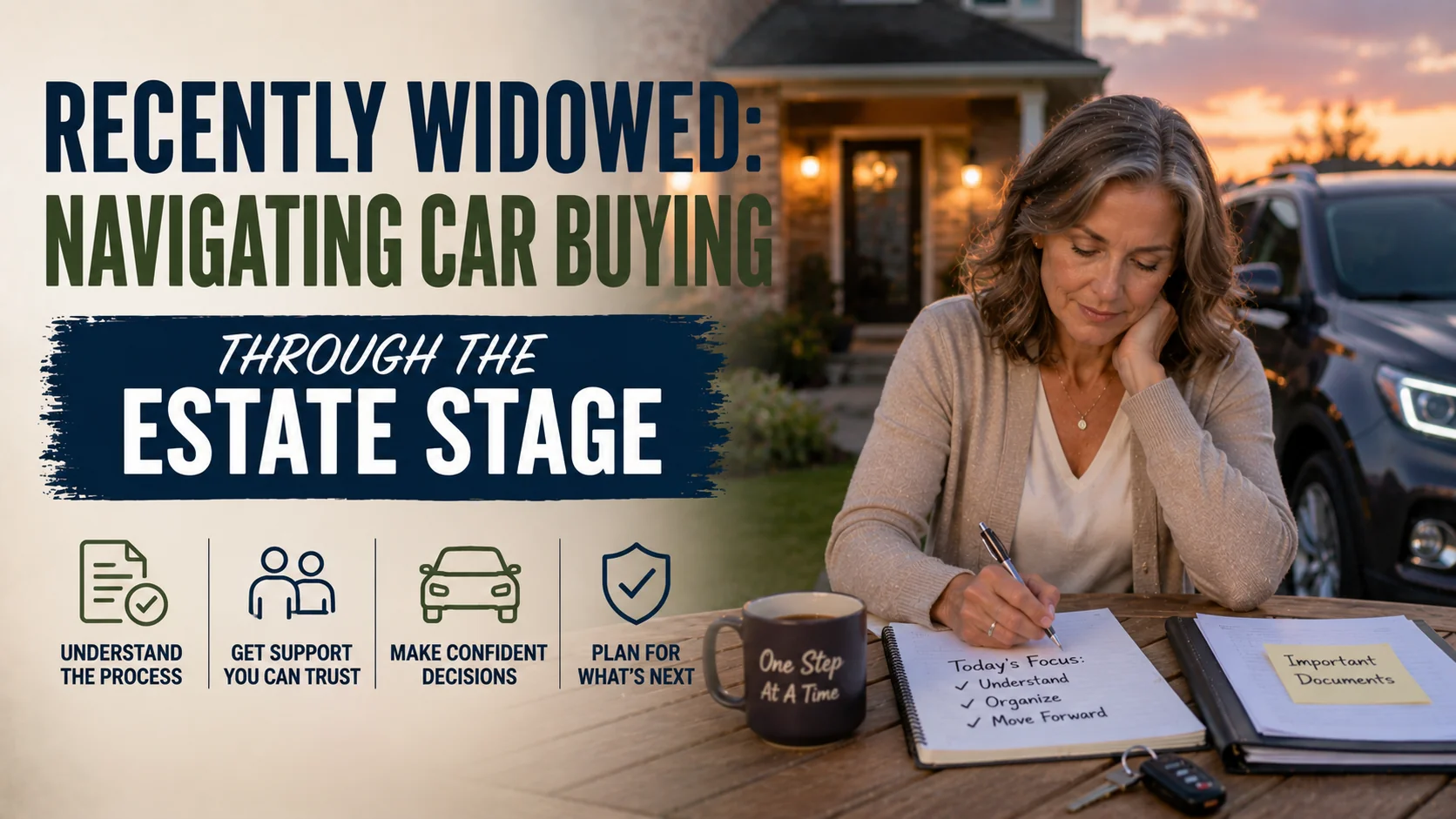
Recently Widowed: Navigating Car Buying Through the Estate Stage
In this article
- Can a recently widowed person get a car loan in Alberta?
- The Estate Stage and Vehicle Financing — What Creates Complications
- What Income Counts After Bereavement
- Thin Credit File: What Happens and How to Navigate It
- Choosing the Right Vehicle During the Estate Period
- The Application Process: Step by Step
- What to Do If the Deceased's Vehicle Is Still in Their Name
- Building Your Own Credit Identity After a Marriage
- Managing the Emotional Side of a Major Purchase During Grief
- Related Guides
- Could Shift Happens Help With This?
- Practical Next Steps When You're Ready
- Frequently Asked Questions
- Can I use life insurance proceeds as a down payment on a car loan in Alberta?
- Does a CPP survivor's pension count as income for a car loan?
- How long after my spouse's death should I wait before applying for a car loan?
- What if my credit score is very low because everything was in my spouse's name?
- Can I trade in a vehicle that is still titled in my deceased spouse's name?
- Compare and Apply
Check Your Options in 3 Minutes
No credit impact. All credit situations welcome.
5.0118+ Google ReviewsAMVIC LicensedFree Delivery 300km
Losing a spouse creates dozens of financial decisions you were not prepared for — and buying or financing a vehicle is often one of the most pressing. Maybe the car was in your spouse's name only. Maybe the estate is still being probated and you're unsure what accounts you can access. Maybe you need a more practical vehicle now that you're managing everything alone, but your own credit history is thin because your spouse handled the finances. This is a situation lenders see regularly in Alberta, and there are clear paths forward.
Can a recently widowed person get a car loan in Alberta?
Yes. Recently widowed Albertans can qualify for auto financing even if the family credit was primarily in the deceased spouse's name. Lenders assess your individual income, credit file, and ability to service the loan. Survivor's pension, CPP survivor benefit, employment income, and estate distributions all count. Rates typically range from 9.99% to 24.99% depending on your individual credit profile.
The Estate Stage and Vehicle Financing — What Creates Complications
The estate stage is typically the 3-18 months after a death when assets are being probated, titles transferred, and finances restructured. During this period, several things can complicate a vehicle purchase:
- Shared accounts being frozen or restricted — some joint accounts remain accessible, others require a grant of probate before the estate trustee (executor) can distribute funds
- Vehicle title in deceased's name — a vehicle titled solely in your spouse's name becomes an estate asset. You can continue using it while probate proceeds, but you generally cannot sell it or transfer it until the executor handles the estate vehicle
- Thin personal credit file — if your spouse carried all the credit cards, auto loans, and mortgage in their name, your personal file may have very little history. This is extremely common in marriages where one partner managed finances
- Income disruption — your household income may have dropped significantly, particularly if your spouse was the primary earner
None of these issues are disqualifying. They are documentation challenges that, handled correctly, result in a clean application.
What Income Counts After Bereavement
Lenders look at your current, sustainable income. Here are the sources that typically qualify:
- CPP Survivor's Pension — the federal survivor's pension is a recurring, government-guaranteed income stream. The monthly amount depends on your late spouse's CPP contributions and your own situation. For spouses 65+, it's integrated into your own CPP retirement pension.
- Employer pension or group benefits — many defined-benefit pensions transfer partially to surviving spouses. Your spouse's former employer's HR department can confirm the survivor benefit amount and provide the letter lenders need.
- Your own employment income — if you were working independently, your personal T4 and pay stubs apply as they always would
- RRSP/RRIF withdrawals — if estate assets have transferred and you're drawing from registered funds, these can be documented as income during the transition period
- Rental income — if you own rental property, documented rental income qualifies
- Life insurance proceeds — proceeds received as a lump sum don't typically qualify as ongoing income, but they can serve as a down payment that reduces the loan amount and monthly commitment, making the file more financeable
The practical income floor is $1,800–$2,000/month. If your combined survivor benefits and personal income meet that threshold, you are fundable at some rate bracket.
Thin Credit File: What Happens and How to Navigate It
A thin credit file — fewer than 3 active tradelines with 24+ months of history — is one of the most common challenges widowed applicants face. Lenders assess your creditworthiness, and without a history of your own accounts, they have little to assess. This doesn't mean decline; it means the file gets evaluated differently. If you're wondering how lenders look at a thin file, this explainer on credit checks and car loans covers the basics.
Steps that help:
- Establish what you do have — any account in your name counts: a credit card you've had for years, a utility in your name, a previous auto loan. Pull your credit report to see what's actually there before assuming it's empty.
- Joint accounts — accounts that were joint (not just authorized user) will show in your credit file and carry the full payment history. These are the strongest thin-file assets you have.
- Consider a co-signer — an adult child, sibling, or trusted family member can co-sign the loan. Their credit history strengthens the application; they're responsible only if you default. Review when a co-signer makes sense before involving family members in financial obligations.
- Down payment — a larger down payment reduces lender risk and often enables approvals that wouldn't work at zero down. If you have access to life insurance proceeds or estate distributions, applying $3,000–$5,000 down can move you from a declined file to an approved one.
Choosing the Right Vehicle During the Estate Period
The estate stage is not the time to stretch on a vehicle purchase. Prioritize reliability and low total cost of ownership over features or brand prestige. For most recently widowed buyers in Alberta:
- Practical SUV or crossover for Alberta winters: Toyota RAV4, Honda CR-V, or Subaru Outback in the $15,000–$22,000 range offer AWD reliability with manageable running costs
- Sedan for lower costs: a Toyota Corolla or Honda Civic with 80,000–130,000 km runs $10,000–$16,000 and offers exceptionally low maintenance costs — critical when you're managing a household budget solo for the first time
- Downsizing a truck: if the household had a full-size truck that no longer makes sense for your needs, trading down to a crossover or sedan can reduce your payment and insurance significantly
The Alberta vehicle maintenance guide is worth reviewing when you're selecting — some vehicles are considerably cheaper to keep running than others, and over 5 years, a $1,000 annual maintenance difference adds up to $5,000.
The Application Process: Step by Step
- Gather your income documents — CPP benefit statement, pension letters, pay stubs or T4, 90-day bank statements
- Pull your credit report — free from Equifax or TransUnion. Know your score before applying so you're not surprised
- Determine what you can put down — even $2,000 helps materially. More helps more.
- Identify co-signer if needed — discuss with family before starting the application
- Start the application — our financing application takes about 10 minutes and is no credit-impact until you formally authorize
- Review offers — with 15+ lenders competing for your file, you'll see multiple options. Our team explains each offer clearly before you decide.
You don't need to walk into a dealership unprepared. Our team handles every step of the lender submissions from Airdrie, covering buyers across Calgary, Cochrane, Chestermere, and the surrounding area. We can do much of this remotely so you don't have to leave home during a difficult time. Buyers from across the Calgary area regularly complete applications online and come in only for delivery.
What to Do If the Deceased's Vehicle Is Still in Their Name
If you're currently driving a vehicle titled in your deceased spouse's name, you have a few options:
- Transfer via estate — the executor can transfer the title to you as a surviving spouse or beneficiary. In Alberta, this typically requires the Death Certificate, the Grant of Probate (or a small estate affidavit if the estate qualifies), and a form at a Motor Vehicles Registry office.
- Sell as estate asset — if the vehicle has value and you want to use the proceeds as a down payment on something different, the executor can sell it and distribute the net to the estate.
- Use it as a trade-in (post-transfer) — once the title is in your name, you can trade it in. The value reduces your loan principal, which lowers your payments and makes financing easier.
Get the title sorted before applying for financing on a new vehicle — lenders want to see clear ownership of any trade-in.
Building Your Own Credit Identity After a Marriage
Many widowed Albertans discover they have a thin individual credit file after years of jointly-managed finances. Building a personal credit identity isn't complex, but it does require intentional action. The vehicle loan itself is a powerful first step — it creates an installment tradeline in your name only that reports payment history to both Equifax and TransUnion every month. After 12 months of on-time payments, your credit profile looks substantially different than it did when you started.
Parallel steps that accelerate the rebuild:
- Secured credit card — if you don't have a credit card in your own name, open a secured card at your bank or a provider like Capital One. Deposit $500-$1,000 as collateral; the card gives you a revolving tradeline. Use it for one small recurring bill and pay it in full each month. This adds a second reporting account without interest cost.
- Keep existing joint accounts open — if you have joint accounts that remain in good standing, keep them active rather than closing them. Length of credit history matters, and a long-standing joint account in good standing helps your score significantly.
- Monitor your report quarterly — bereavement is a period when identity theft risk is elevated. Monitor your credit report at least every 3 months for the first year after a spouse's death.
The guide to how car payments build credit explains exactly how the installment reporting process works month by month, and what to expect in terms of score changes at 6, 12, and 24 months. Most widowed Albertans who start with a thin file and a vehicle loan see measurable score improvement within 9-12 months — enough to qualify for a credit card in their own name independently.
Managing the Emotional Side of a Major Purchase During Grief
Car buying is stressful at the best of times. During bereavement, the decision-making load is already at its peak. A few practical suggestions that clients in this situation have found helpful:
- Bring someone you trust — an adult child, a sibling, or a trusted friend. Not to make the decision for you, but to ask questions you might not think of, take notes, and confirm you heard offers correctly.
- Take the application paperwork home if you need to — there's no legitimate reason a lender can't give you 24 hours to review documents before signing. Any dealership that pressures you to sign on the spot during a difficult life moment is not operating in your interest.
- Get the full disclosure document — Alberta's Motor Vehicle Dealers Act requires dealers to provide a written disclosure statement. Read it. It shows the total interest you'll pay over the full loan term, which helps you evaluate offers clearly.
- Consider a remote application first — Shift Happens processes financing applications remotely and can present offers before you visit the lot. You review the numbers from home, on your timeline, without the physical and emotional overhead of a dealership visit during a hard time.
Buyers from across the Airdrie area and greater Calgary regularly complete the application and approval process remotely and come in only once a decision has been made. This is available to you as well.
Related Guides
If this post was useful, these directly-related guides will help you go deeper:
- Selling a Deceased Relative's Vehicle in Alberta: Estate Steps
- Alberta Has No Car Cooling-Off Period: What Buyers Must Know
- Catalytic Converter Theft Prevention for Alberta Urban Drivers
- Boating Season: Tow Vehicle Setup and Trailer Wiring in Alberta
- Hail Season Vehicle Prep: May to September in Alberta
- Harley-Davidson Resale Value by Model: Alberta Guide
- Real Estate Agents: Commission Income and the Car Loan Process
Could Shift Happens Help With This?
We're likely a fit if you: (1) are navigating vehicle financing as a recently widowed Albertan, (2) have any level of income from survivor's pension, personal employment, or estate distributions, (3) want a team that handles lender submissions on your behalf without pressure. Not a fit if: you require legal estate advice, notarial services, or are buying a new vehicle from a franchise dealer.
If this article describes your situation, the fastest next steps are: check your approval likelihood in 60 seconds or start a financing application. Both are no-impact on your credit score until you formally apply.
Practical Next Steps When You're Ready
Widowed Albertans who come to us for vehicle financing typically arrive in one of two states: either they've been putting it off because the process feels overwhelming during an already difficult time, or they've already been turned down by their bank and need a different path. Both are common, and both have a clear way forward.
If you're in the "overwhelmed" group: the application is simpler than you expect. You don't need to have everything sorted — we help you identify which documents are available now versus which need to be retrieved from the estate, and we structure the application around what's accessible. You don't need to know exactly what vehicle you want before you talk to us. Many clients come in for a financing conversation first, establish their budget, and then pick the vehicle that fits.
If you've been declined by a bank: a bank decline does not transfer to subprime lenders. They evaluate files differently. A bank's automated system may reject a thin credit file or non-employment income with no human review. Our lender network does manual underwriting on files exactly like yours — they're accustomed to CPP survivor income, estate transition documentation, and bereaved applicants rebuilding independent financial lives. The outcome is frequently different from the bank's. If you've been declined, the second-chance financing page explains how alternative lenders approach these files.
The most important thing: you don't have to figure this out alone. Our team has helped many recently widowed Albertans through the vehicle financing process — from the paperwork, to the lender submissions, to choosing a vehicle that makes practical sense for one person instead of two. The vehicle purchase is one of the first steps in rebuilding your independent financial life, and it doesn't have to be as complicated as it feels right now.
One more practical note: Alberta's AMVIC consumer protection framework applies to all purchases from licensed dealerships. You have rights including written disclosure of vehicle history, accurate representation of financing terms, and a clearly itemized contract. These protections matter most when you're making a significant purchase during an emotionally vulnerable time. Shift Happens is AMVIC licensed and operates transparently — every fee is disclosed, every financing term is explained before you sign. You can confirm our registration at the AMVIC public registry before you visit.
Frequently Asked Questions
Can I use life insurance proceeds as a down payment on a car loan in Alberta?
Yes. Lump-sum proceeds from a life insurance policy are accepted as a down payment by lenders. They do not count as recurring qualifying income, but they directly reduce your loan amount and improve your loan-to-value ratio — both of which improve approval odds and can lower your rate. A $5,000 life insurance down payment can be the difference between a declined thin-file application and an approval.
Does a CPP survivor's pension count as income for a car loan?
Yes. Government pension payments, including CPP survivor benefits, are treated as stable, recurring income by virtually all lenders — both prime and subprime. Bring your CPP benefit statement from Service Canada showing the monthly amount. The monthly amount depends on your late spouse's CPP contributions and your own situation; for spouses 65 and older, the benefit integrates with your own CPP retirement pension.
How long after my spouse's death should I wait before applying for a car loan?
There is no required waiting period. Apply when you need a vehicle. Lenders assess your current income, credit profile, and repayment capacity independently of your personal circumstances. Bereavement is not a lending factor. If your income and credit support an application today, applying today is appropriate. The estate does not need to be fully settled before you can establish your own vehicle financing.
What if my credit score is very low because everything was in my spouse's name?
A thin individual credit file is one of the most common challenges widowed applicants face, and it is manageable. Options include: a co-signer (an adult child or trusted family member with established credit), a larger down payment that reduces lender exposure, or working with lenders in our network who specialize in non-traditional files and assess applications with manual underwriting rather than automated score cutoffs. A thin file is not a bad file — it just requires the right lender.
Can I trade in a vehicle that is still titled in my deceased spouse's name?
Not directly — the title must be transferred to your name or the estate's name first. In Alberta, this requires the Death Certificate, a Grant of Probate or a small estate affidavit if eligible, and a completed transfer form at an Alberta Motor Vehicles Registry agent. Once the title is properly transferred, the vehicle can be traded in normally. Get the title sorted before applying for financing so the trade-in value can be counted toward your down payment.
Compare and Apply
- Complete Bad Credit Car Buying Guide (Alberta) — how to buy a car with bad credit in Alberta
Financing Resources
Cars you could drive home
See all inventory
2021 Land Rover Range Rover Evoque R-Dynamic HSE
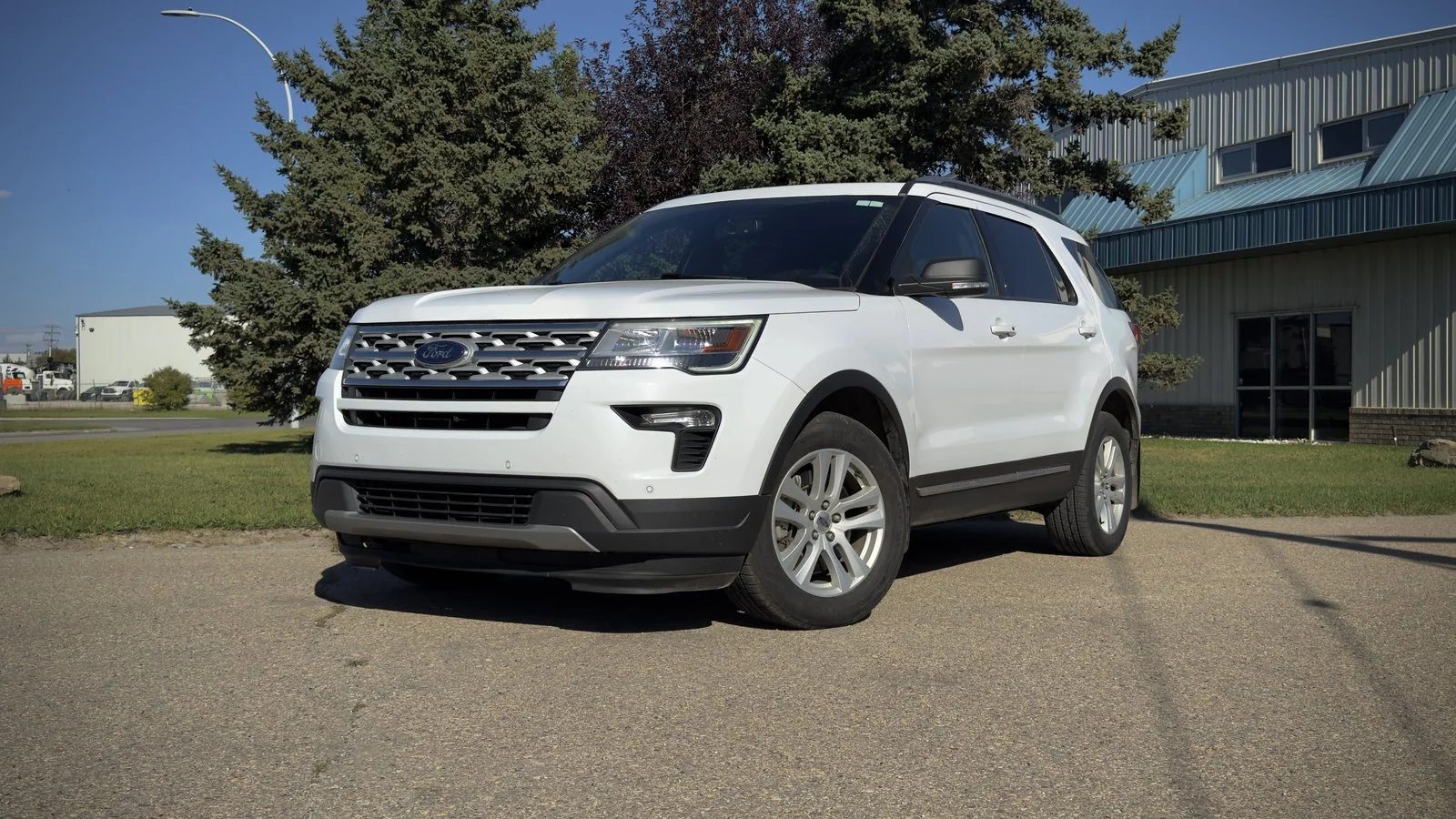
2019 Ford Explorer XLT
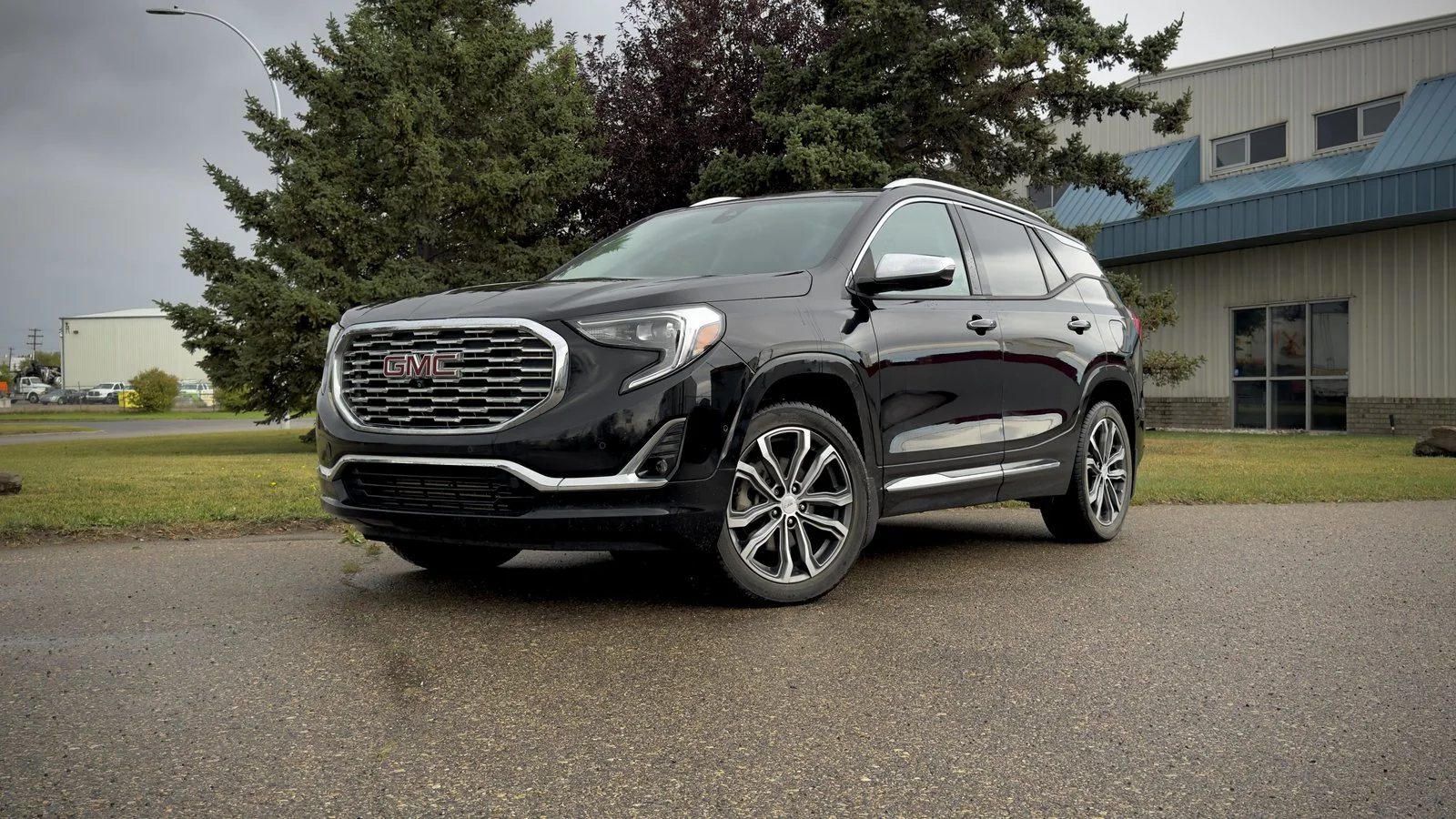
2020 GMC Terrain Denali
Not seeing it? We'll find it.
We source through our dealer partner network across Western Canada: 25,000+ vehicles to choose from. Tell us what you want and what works for your budget.
Find my car3 min · no credit impactOAC = on approved credit. Payments are examples at 6.49% APR over 84 months with $0 down, based on each vehicle's advertised price; GST extra. Your rate depends on your credit (4.99%–29.9% APR).
Related Articles
Ready to Find Your Vehicle?
Browse our inventory or apply for financing. All credit situations welcome.
5.0118+ Google ReviewsAMVIC LicensedFree Delivery 300km