
Cosigner vs Joint Applicant: Which Is Better for Your Car Loan?
In this article
- The Core Difference: Who Owns the Car?
- What Lenders Actually Look For — and Which Option They Prefer
- When a Cosigner Helps vs When You Need a Co-Borrower
- How Each Arrangement Affects Both Credit Files
- Risk Factors Every Cosigner Must Understand
- How to Have "The Cosigner Conversation" With Family
- Alberta-Specific Legal Context
- Alternatives Worth Exploring Before Adding a Supporting Party
- How Income Gets Combined — and What Documents You Both Need
- When the Loan Gets Approved — Reading the Terms Together
- Cosigner or Joint Applicant — What Happens Next
- Related Buyer Guides
- Compare and Apply
Check Your Options in 3 Minutes
No credit impact. All credit situations welcome.
5.0118+ Google ReviewsAMVIC LicensedFree Delivery 300km
You've found a vehicle you want. The lender's approval is close — but not quite there on its own. Someone close to you has offered to help. Now comes the question almost every finance manager gets wrong on the first explanation: are they signing on as a cosigner or a joint applicant? These two words get used interchangeably at dealerships across Alberta, but they describe very different legal and financial relationships. Getting this wrong doesn't just cause confusion — it can damage a relationship, expose someone to unexpected liability, or quietly block your approval when the lender actually needed the other arrangement.
The Core Difference: Who Owns the Car?
Here's the clearest way to separate these two terms. A cosigner guarantees the debt but doesn't own the vehicle. A joint applicant — sometimes called a co-borrower — is on the loan and on the title. Both names appear on the financing contract, but only a joint applicant has an ownership stake in the asset.
Think of it this way: a cosigner is like a guarantor on a rental application. They're there to make the lender feel safer, but they don't get a key. A joint applicant is more like a co-owner — they share both the financial obligation and the rights to the vehicle itself. In Alberta, this distinction matters significantly when it comes to insurance, registration, and what happens if the relationship between the two parties changes.
| Feature | Cosigner | Joint Applicant (Co-Borrower) |
|---|---|---|
| On the loan contract | Yes | Yes |
| On the vehicle title | No | Yes |
| Liable for missed payments | Yes | Yes |
| Appears on both credit files | Yes | Yes |
| Can drive/sell the vehicle | No (unless also on title) | Yes |
| Ownership rights | None | Equal co-ownership |
| Common relationship | Parent for adult child | Spouse, partner, sibling |
What Lenders Actually Look For — and Which Option They Prefer
Subprime lenders — the specialists who approve bad credit car loans — evaluate two things in any supported application: the primary borrower's intent to pay, and the supporting party's ability to pay if the primary doesn't. From a pure risk perspective, lenders often prefer a joint applicant because that person has a direct stake in the vehicle. They're not just guaranteeing someone else's debt — they're protecting their own asset.
That said, what lenders care about most is income and credit strength. Whether the supporting party is called a cosigner or joint applicant matters less than whether they bring enough provable income and a credit score that fills the gap. If the primary borrower has a score in the 500s and the supporter has a score above 680 with stable employment, the lender gains meaningful confidence regardless of the structure.
One practical note: some lenders in Alberta's subprime market will only structure the deal one way based on their underwriting guidelines. It's worth asking your finance manager which format a specific lender prefers before bringing the paperwork to the supporting party.
When a Cosigner Helps vs When You Need a Co-Borrower
A cosigner typically makes sense when the primary borrower has adequate income but a thin or damaged credit file. A parent helping their adult child who just moved out and has no credit history is the classic scenario. The child earns enough to make payments; they just haven't had time to prove it to a lender yet. This is a common situation among first-time car buyers in their early twenties.
A joint applicant structure tends to work better when both parties will genuinely use and rely on the vehicle — spouses commuting in one household vehicle, for instance — or when the primary borrower's income alone isn't sufficient to meet the lender's payment-to-income ratio. Lenders typically want total car payment (including insurance) to represent no more than 15–20% of gross monthly income. If your income is $3,200/month and the payment is $520 biweekly ($1,040/month), you're at 32.5% — that's a problem a co-borrower's income can fix, not just a credit score boost from a cosigner.
If you're already managing your payments confidently but just need someone to vouch for your credit profile, explore whether a no-cosigner car loan might be achievable first. Lenders in Alberta's subprime space sometimes approve strong-income applicants with damaged credit without a supporting party — especially with a meaningful down payment.
How Each Arrangement Affects Both Credit Files
This is where people get the biggest surprises — and where relationships get strained. Whether the arrangement is a cosigner or joint applicant, the loan appears on both parties' credit reports through Equifax and TransUnion. Every on-time payment builds credit for both. Every late payment damages both.
Important: If the primary borrower misses a payment, the cosigner or co-borrower typically receives no advance notice before the lender reports the delinquency. The damage to the supporting party's credit happens automatically — and they often don't find out until they check their own report or apply for credit elsewhere.
For someone who wants to understand how their credit file is structured before making this kind of commitment, it's worth learning how to read an Equifax report — both the primary borrower and the supporting party benefit from understanding what's on their files going in.
The loan will also appear in the supporting party's total debt calculation. This matters enormously if they plan to apply for a mortgage, line of credit, or other loan while the car loan is active. Lenders calculating debt-service ratios for a mortgage will count the car payment against the cosigner's income, even if they never make a single payment. A parent cosigning for their child's $550/biweekly car loan may find their own mortgage renewal complicated by that commitment.
Risk Factors Every Cosigner Must Understand
Being a cosigner is an act of significant financial trust, and it deserves a frank conversation before anyone signs anything. Here are the concrete risks:
- You can't force the lender to come after the primary borrower first. In most Alberta loan agreements, if the primary borrower defaults, the lender can pursue the cosigner directly without exhausting collection efforts on the primary borrower first.
- The debt counts against you immediately. As soon as the loan funds, your credit utilization and total debt load reflect the full amount — typically $15,000–$35,000 for a used vehicle. This is true even if you make zero payments.
- You cannot remove yourself easily. Getting off a car loan as a cosigner typically requires either paying it off entirely or refinancing into the primary borrower's name alone — which requires them to qualify independently at that point. (There's a full walkthrough of this in our post on how to remove a cosigner from a car loan.)
- Relationship damage is real. A 2023 survey found that roughly 38% of people who cosigned a loan reported it created tension or conflict in the relationship. Money stress is one of the fastest ways to strain a family dynamic.
- If the vehicle gets repossessed, you're still on the hook. If the car is repossessed and sold at auction for less than the outstanding loan balance, the lender can pursue the cosigner for the remaining deficiency balance.
None of this means cosigning is a bad decision — it means it's a decision that deserves full information on both sides. The do I need a cosigner guide on our site walks through the situations where it genuinely helps vs. when the deal structure needs a different solution.
How to Have "The Cosigner Conversation" With Family
Asking someone to cosign is asking them to stake their credit rating — potentially their mortgage qualification — on your financial behaviour for the next four to seven years. Done right, this conversation builds trust. Done poorly, it creates resentment before the first payment is even due.
Here's a structure that works:
- Lead with the full picture, not just the ask. Show them the loan amount, the monthly payment, the total interest cost, and the term. Don't downplay the numbers. If it's a $22,000 loan at 18.99% over 72 months, the total cost including interest is roughly $34,500 — they deserve to know that.
- Explain what happens if you miss a payment. Tell them directly: "Your credit score takes the hit too, and you won't necessarily get a warning call from the lender first." This honesty builds credibility.
- Propose a safety net. Offer to give them read-only access to your bank account or to set up automatic payments from a joint account they can monitor. Giving them visibility reduces their anxiety and your temptation to coast.
- Set an exit timeline. "My goal is to refinance this into my name alone within 24 months once I've rebuilt my credit." A specific timeline is more reassuring than a vague promise.
- Put it in writing between yourselves. A simple agreement — not legally binding, but documented — about what happens if things go sideways (they cover a payment, you pay them back within X days) removes ambiguity and shows seriousness.
If the person you're asking has been through a similar experience as a first-time buyer themselves, they'll likely appreciate the honesty. Most people who have navigated bad credit car loans in Calgary remember exactly how hard it was to get approved — and how much it would have meant to have someone in their corner.
Alberta-Specific Legal Context
Alberta's consumer protection framework treats both cosigners and joint applicants similarly when it comes to collection — both are fully liable under the terms of the loan agreement. There's no Alberta legislation that limits a lender's ability to pursue a cosigner before the primary borrower, unlike some U.S. states that require lenders to exhaust primary borrower remedies first.
Under the Personal Property Security Act (PPSA) of Alberta, the vehicle serves as security for the loan regardless of how many names are on the contract. If payments stop, the lender's right to repossess the vehicle is governed by the PPSA — not by which name appears first on the agreement. Repossession in Alberta can happen without a court order after default (though the lender must give notice and follow prescribed procedures).
For joint applicants, both parties have equal title ownership — which means both parties must consent to sell or transfer the vehicle. If a relationship breaks down and only one party wants to sell, this can create a genuine legal complication. This is a scenario we see occasionally in situations involving divorce or separation; the financing side of vehicle ownership often gets overlooked in the immediate aftermath. If you're in Airdrie or the surrounding area and navigating this situation, our team has dealt with it enough times to help you find a path forward.
Alternatives Worth Exploring Before Adding a Supporting Party
Before bringing someone else into your loan, it's worth testing whether you can qualify on your own terms — or improve the terms enough to make the deal work solo. A few options:
- Larger down payment. Every dollar down reduces the loan amount, which reduces the payment-to-income ratio and lowers the lender's exposure. Even $1,500–$2,000 more can tip a borderline decision.
- Shorter loan term. Counterintuitively, a shorter term sometimes gets approvals that longer terms don't — lenders see less total exposure period, even though the payment is higher.
- Different vehicle price point. A $16,000 vehicle instead of $21,000 can make you approvable on your own. Use the payment calculator to find your solo-approval sweet spot before deciding a cosigner is necessary.
- Multi-lender shopping. Our model runs your application past 15+ lenders simultaneously. What one lender declines, another sometimes approves with different criteria — particularly for applicants in the near-prime range (600–659).
The approval likelihood tool gives you a quick read on where you sit before you have the cosigner conversation at all. Many applicants who expected to need a cosigner are surprised to find they qualify solo.
How Income Gets Combined — and What Documents You Both Need
One of the most practical questions about joint applications is how lenders actually calculate combined income, and what paperwork both parties need to bring. Understanding this upfront prevents last-minute scrambles and delays when the lender asks for documents you hadn't prepared.
For a joint applicant, lenders typically combine the gross incomes of both parties and use the total to evaluate affordability. If the primary borrower earns $3,800/month gross and the co-borrower earns $4,200/month, the lender sees a $8,000/month household — and a biweekly payment of $380 is only 9.5% of that combined gross, well within comfortable approval range. This is the real power of the co-borrower structure: it doesn't just improve credit strength, it fundamentally changes the affordability math.
For a cosigner, the calculation is slightly different. The lender verifies that the cosigner has sufficient income to service the debt if required — but they don't always fully combine incomes for the primary borrower's approval. The cosigner's role is backup capacity, not front-line income. Some lenders will consider blended income; others won't. This is one reason why a cosigner sometimes gets a deal approved that the primary borrower couldn't get alone, but at a higher rate or lower loan amount than a full joint application would have achieved.
Here's what both parties typically need to provide:
- Primary borrower: Government-issued photo ID, two recent pay stubs (or 3 months of bank statements for variable income), proof of address (utility bill, lease agreement), proof of insurance, and a void cheque for pre-authorized payments.
- Cosigner or joint applicant: Same photo ID and income verification. They also typically need to show they have no major outstanding debts that would prevent them from servicing the loan if called upon. The lender will pull their credit bureau independently.
- Self-employed parties: Last two years of Notices of Assessment (NOAs) from the CRA, plus bank statements showing deposits. Understanding how car financing works for non-traditional income situations helps set realistic expectations about what documentation each lender requires.
The documentation step is where applications stall most often. A cosigner who hasn't filed their taxes recently, or a co-borrower who changed jobs three months ago, can delay the approval process by days while the lender satisfies their income verification requirements. Get the document checklist from your finance manager before you involve the supporting party — there's nothing more awkward than asking a parent to dig up their T4s at the last minute.
When the Loan Gets Approved — Reading the Terms Together
When the approval comes back, both parties should read the loan terms together before signing. This isn't just good practice — it's the moment where any misunderstanding about the arrangement gets caught before it becomes a legal commitment.
The key terms to verify together:
- Who is listed as primary borrower vs. cosigner/co-borrower. Confirm the lender has structured the loan the way you intended — mistakes here are surprisingly common.
- The exact biweekly payment amount and draft date. Both parties should confirm this date works with the primary borrower's pay cycle. A payment that drafts two days before payday is a structural NSF risk.
- The total interest cost over the full term. On a $20,000 loan at 16.99% over 72 months, the total interest paid is approximately $11,800. This number should not surprise the supporting party — they should have seen it during the cosigner conversation.
- Prepayment privileges. Some lenders allow accelerated payments or lump-sum payments without penalty. If the primary borrower plans to pay the loan off early and remove the cosigner sooner, confirming this option exists upfront is essential.
A Ford Escape for the daily Airdrie–Calgary commute or a Mazda CX-5 for a growing family — whatever the vehicle, the financing structure underneath it should be as solid as the vehicle itself. Clarity at the signing table is what prevents the awkward phone call six months later when someone discovers they're on a loan they didn't fully understand.
Cosigner or Joint Applicant — What Happens Next
Once you've sorted out the structure and both parties are ready to proceed, the mechanics are straightforward. Both parties complete the credit application. The lender pulls both credit files. Income documents for both parties are submitted together. The lender issues an approval — either as structured or with adjusted conditions — and both parties sign the loan documents at the dealership.
For the supporting party, the process typically takes 20–30 minutes of their time at the dealership. They review the contract, confirm the terms, and sign. They don't need to be physically present for every step — much of the pre-approval paperwork can be handled digitally — but Alberta lenders generally require wet signatures on the final contract.
If you're ready to see what you qualify for — with or without a supporting party — start your application here. Our team will tell you exactly what structure makes sense for your situation, and we'll walk your supporting party through every line they're signing before any pen hits paper.
Compare and Apply
- Bad Credit Car Loans — Complete Guide — subprime auto financing options
Financing Resources
Cars you could drive home
See all inventory
2025 Volkswagen Taos Comfortline

2026 Volkswagen Jetta Comfortline
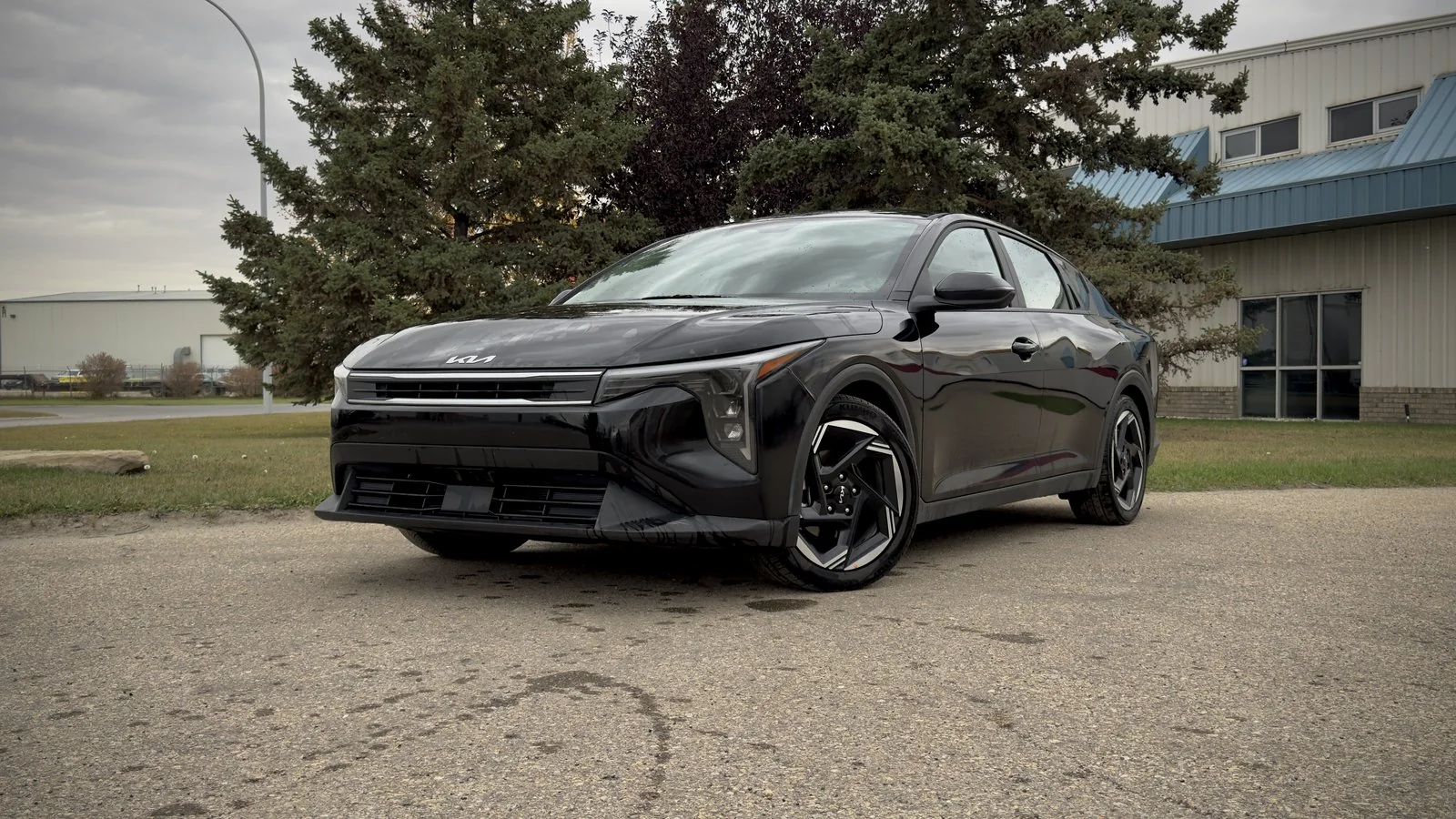
2025 Kia K4 EX
Not seeing it? We'll find it.
We source through our dealer partner network across Western Canada: 25,000+ vehicles to choose from. Tell us what you want and what works for your budget.
Find my car3 min · no credit impactOAC = on approved credit. Payments are examples at 6.49% APR over 84 months with $0 down, based on each vehicle's advertised price; GST extra. Your rate depends on your credit (4.99%–29.9% APR).
Related Articles
Ready to Find Your Vehicle?
Browse our inventory or apply for financing. All credit situations welcome.
5.0118+ Google ReviewsAMVIC LicensedFree Delivery 300km