
Emergency Fund vs Bigger Down Payment: Where to Put Your Money First
In this article
- Why "Put Everything Down" Advice Is Incomplete
- The Actual Monthly Payment Math
- The "3-Month Expenses" Rule, Calibrated for Car Owners in Alberta
- 1. Income Disruption Risk
- 2. Vehicle-Specific Emergency Risk
- Building Both Simultaneously: The Parallel Savings Strategy
- When a Bigger Down Payment IS the Right Call
- Deep Subprime Credit (Below 500)
- Negative Equity Trade-In
- Very Short Loan Terms (Under 48 Months)
- Alberta Cost of Living Context: Why This Matters More Here
- The Debt-to-Income Sanity Check
- Zero Down Options: When They Make Sense
- The Decision Framework in One Place
- The Opportunity Cost Perspective: What Else Could That Money Do?
- Communicating Your Strategy to the Lender
- Related Buyer Guides
- Compare and Apply
Check Your Options in 3 Minutes
No credit impact. All credit situations welcome.
5.0118+ Google ReviewsAMVIC LicensedFree Delivery 300km
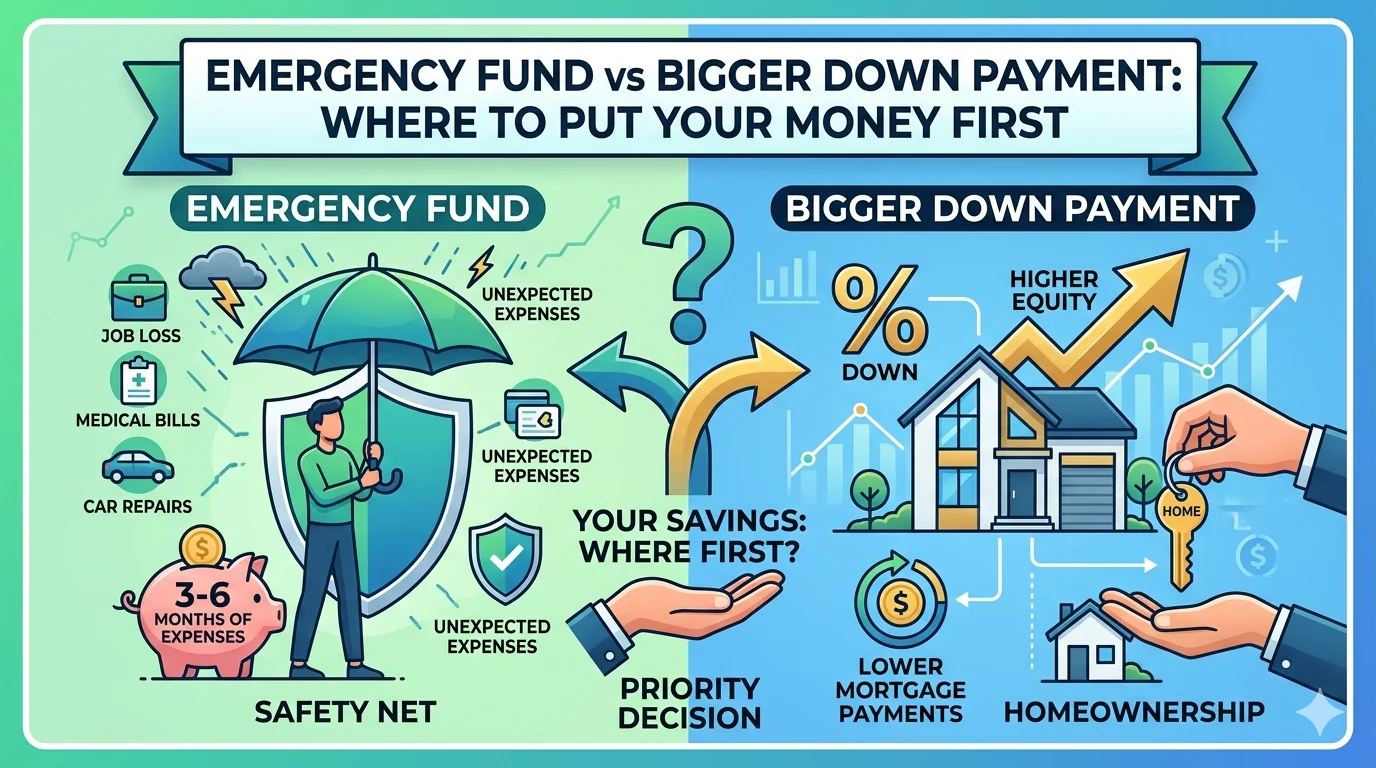
You've saved $3,000. Your credit isn't perfect, and someone at the dealership told you a bigger down payment will help you get approved. Your financial instincts are telling you to hold back some of that money as a safety net. So which is it — put the full $3,000 down and get the lowest possible payment, or keep some back as a cushion? This is one of the most practical personal finance decisions car buyers face, and the conventional dealership advice ("put as much down as possible") doesn't account for what happens the month after you drive off the lot with no savings.
Why "Put Everything Down" Advice Is Incomplete
The logic behind maximizing your down payment is mathematically sound: more down means smaller loan, less interest, lower payment. On a $15,000 vehicle at 19.99% over 72 months, the difference between $1,000 down and $3,000 down is roughly $30-45 biweekly. That's real money.
But here's what that math ignores: the month you make your first car payment, your alternator fails. Or you need emergency dental work not covered by insurance. Or your hours get cut at work. If you put your entire $3,000 down, you now have a car payment AND no financial buffer. The response to an unexpected $800 expense is a credit card charge at 22% interest — which costs more over time than the down payment savings ever delivered.
Worse: a missed car payment due to a financial emergency doesn't just cost you a late fee. It damages the credit score you were trying to build, potentially triggers additional lender fees, and in worst cases leads to repossession — which puts you back to zero and leaves a major derogatory item on your credit report for years. The question isn't "what's the best math assuming everything goes fine?" It's "what's the best strategy accounting for the reality that things will go wrong?"
The Actual Monthly Payment Math
Let's be concrete. Take a $15,000 vehicle with a loan at 17.99% over 72 months. Run three scenarios:
| Down Payment | Loan Amount | Biweekly Payment | Total Interest Paid | Emergency Fund Remaining |
|---|---|---|---|---|
| $3,000 | $12,000 | ~$146 | ~$3,310 | $0 |
| $2,000 | $13,000 | ~$158 | ~$3,587 | $1,000 |
| $1,000 | $14,000 | ~$170 | ~$3,864 | $2,000 |
The difference between putting $3,000 down vs $1,000 down is $24 biweekly — about $48/month. Over six years, the full $3,000 down scenario saves roughly $550 in total interest. That's meaningful — but it comes at the cost of zero emergency buffer for six years.
Compare that $550 in interest savings to the cost of a single credit card cash advance at 24.99% to cover a $1,200 emergency when you have no savings: if you carry that balance for 18 months, you pay roughly $300 in interest on the emergency alone. One emergency wipes out half your "savings" from the bigger down payment. Two emergencies over six years — which is not an unlikely scenario — and the no-emergency-fund strategy has already cost you more.
The "3-Month Expenses" Rule, Calibrated for Car Owners in Alberta
The classic personal finance rule of thumb — keep three months of living expenses in an emergency fund — was designed before widespread gig work, variable-hour employment, and the current Alberta cost of living environment. Let's adapt it specifically for someone who is taking on a car payment.
As a car owner, your emergency fund needs to cover two categories of risk:
1. Income Disruption Risk
Job loss, illness, reduced hours. In Alberta's economy — where oilfield cycles, construction seasonality, and retail volatility are real — income can change faster than in more stable employment markets. Three months of core expenses (rent/mortgage, utilities, food, car payment, phone) is the baseline. In Alberta, that might be $5,000-9,000 depending on your household, but even $2,000 buys you six to eight weeks of critical payment protection before you need to make hard decisions.
2. Vehicle-Specific Emergency Risk
A used vehicle will need unexpected repairs. Tires, brakes, alternator, battery — these aren't "if" items, they're "when" items. In Alberta's climate, the battery failure risk alone is significant: cold-cranking amps degrade faster in extreme cold, and a battery that performs fine at -5°C can fail completely at -30°C. A new battery is $150-250. An alternator is $400-800. Front brakes are $300-500. Having $1,000-2,000 specifically tagged for vehicle repairs means the car payment never gets missed because the car needed work.
The adapted rule for Alberta car owners: aim for one month of core expenses PLUS $1,000-1,500 in vehicle-specific reserves. If you're starting from zero, that might mean $2,500-4,000 total. Build toward it — don't drain savings to zero chasing a lower car payment.
Building Both Simultaneously: The Parallel Savings Strategy
The false binary here is "down payment OR emergency fund." The real answer for most people is: both, in appropriate proportions, built simultaneously over a few months before purchase.
Here's a practical approach if you currently have $2,000 saved and want to build to a position where you can put $2,000 down AND keep $1,500 in reserve:
- Set a purchase timeline of 3-4 months out, not immediately
- Allocate income to both pools: for example, $300/month to the down payment fund and $200/month to the emergency fund
- After 3 months: down payment grows to $2,900 and emergency fund grows to $600 — closer to both targets simultaneously
- After 4 months: down payment at $3,200 and emergency fund at $800 — now you can put $2,500 down and keep $1,500 back
This patience pays off in two ways: more down payment AND a financial buffer on day one. It also gives you time to shop without the urgency that leads to rushed decisions on vehicle selection and loan terms. Budgeting for a car on a paycheque-to-paycheque income covers how to find the savings room even when it feels like there isn't any.
Use our biweekly payment calculator to model different down payment amounts against different loan amounts and rates. Run the $1,000 down vs $2,000 down scenarios with your actual target vehicle price — the payment difference is often smaller than people expect, which makes the case for holding back a meaningful reserve even stronger.
When a Bigger Down Payment IS the Right Call
The case for prioritizing the down payment over the emergency fund is real in specific circumstances. This isn't a universal rule favoring the emergency fund — it's a situational analysis.
Deep Subprime Credit (Below 500)
At a credit score below 500, lenders carry substantially more risk in their assessment. Many lenders require a minimum down payment — often $1,500-3,000 — just to approve the deal. In deep subprime, a larger down payment doesn't just improve your payment; it may be the difference between approved and declined. In this situation, the priority is getting into the loan and starting the credit-rebuilding clock, even if it means a thinner emergency buffer. The down payment guide for bad credit car loans covers lender minimums and what thresholds actually move the needle.
Negative Equity Trade-In
If you're trading in a vehicle you owe more on than it's worth — commonly called being "upside down" — the gap between what you owe and what the dealer credits becomes part of your new loan. A $3,000 negative equity position rolled into a new loan means you're financing $3,000 of debt from day one with no corresponding asset. In this scenario, additional cash down reduces that negative equity and protects you from being underwater on the new vehicle too. This is one of the clearest cases for maximizing the down payment over the emergency fund, though ideally you'd have both.
Very Short Loan Terms (Under 48 Months)
If you're structuring a short-term loan to minimize total interest cost, the payment will be significantly higher than a 72-84 month loan. A bigger down payment reduces the higher payment to a manageable level. Short-term, high-payment loans combined with thin emergency reserves are the riskiest combination — but if you can put enough down to make the payment genuinely comfortable, the interest savings justify it.
Alberta Cost of Living Context: Why This Matters More Here
Alberta has a reputation as a high-income province — and for many, it is. But the cost of living, especially in Calgary and Airdrie, has increased significantly. Rental costs in Calgary have surged 20-30% in recent years. Groceries run higher than national averages. Utilities with gas heating are a factor. And Alberta's boom-bust economic cycles mean income is often less stable than the province's reputation suggests.
In this environment, an emergency fund isn't a luxury for people with stable six-figure incomes. It's infrastructure — the thing that keeps a financial plan from collapsing at the first disruption. A car payment that's $146 biweekly is manageable when you're employed. It becomes a crisis when you're not, and you have nothing to bridge with.
Alberta also has some specific vehicle-cost factors worth building into your emergency calculation: winter tires (if not already equipped) run $700-1,200 for a set; block heater cords are inexpensive but battery replacement in cold weather is not; stone chips on Alberta highways are common and windshield replacement averages $300-500. These costs hit car owners here disproportionately. Factor them into your vehicle emergency reserve.
For a complete view of what vehicle ownership actually costs in this province, the total cost of car ownership in Alberta covers insurance, registration, fuel, maintenance, and financing costs together — a useful framework before deciding how much to put down.
The Debt-to-Income Sanity Check
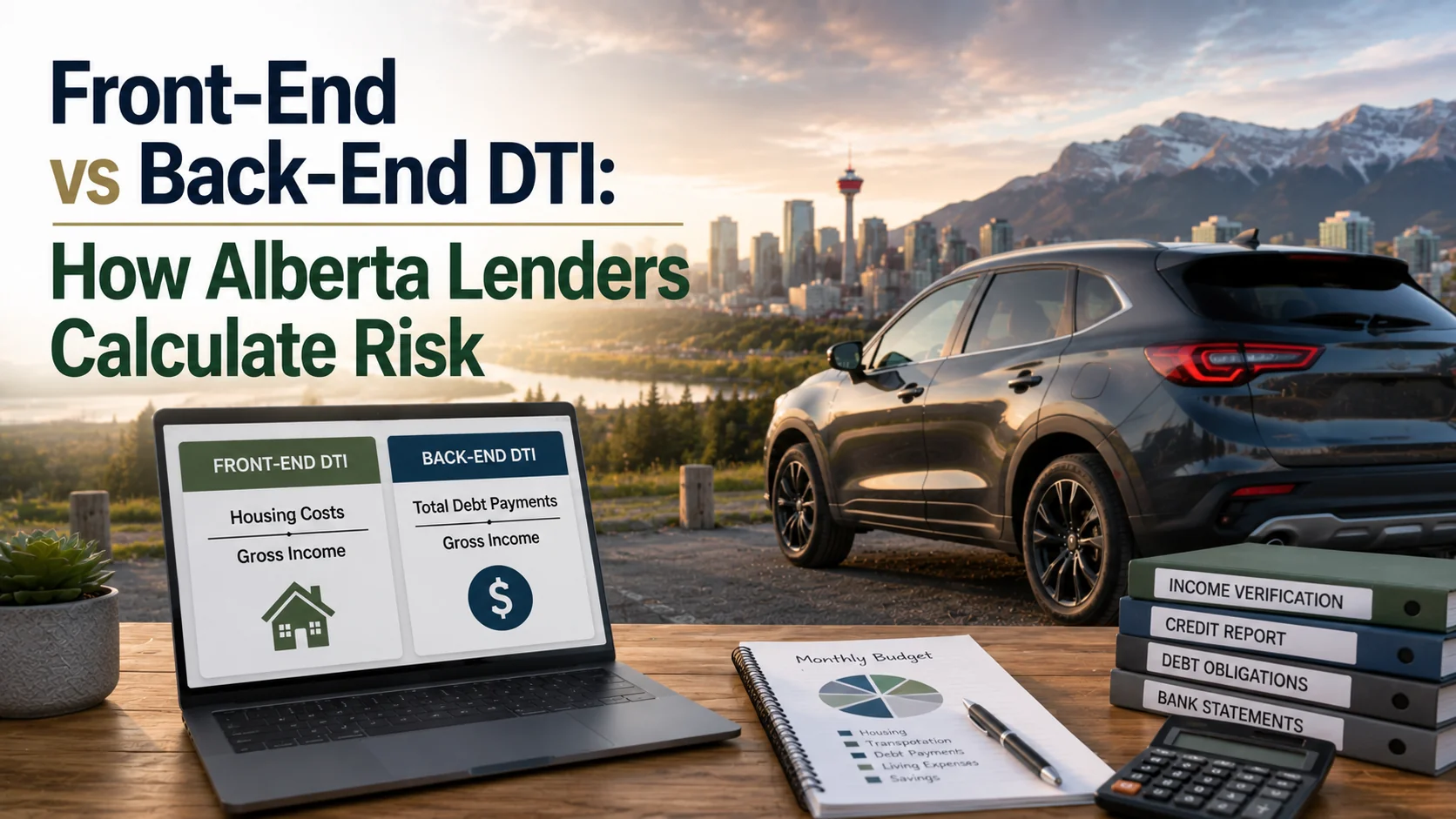
Before deciding how much to put down, confirm that the resulting payment is actually within your debt-to-income ratio comfort zone. Lenders use a debt-to-income ratio — total monthly debt payments divided by gross monthly income — to assess risk. Most lenders want this below 40-45%. But what your lender will approve and what's actually sustainable for your household may differ.
A simple self-test: take your new biweekly payment, add all your other minimum debt payments (credit cards, student loans, rent if it's included), and compare to your take-home pay. If the car payment plus existing obligations exceeds 35% of your net take-home income, a bigger down payment to lower the payment is more urgent than building the emergency fund. Overextending on the payment is a faster path to financial stress than a thin emergency fund — if the payment itself is the problem, solve that first.
Debt-to-income ratio calculations for Alberta car loans walks through exactly how lenders calculate this and what your ratio means for approval odds and rate.
Zero Down Options: When They Make Sense
We offer zero down payment options for qualified buyers — and while that might seem counterintuitive to this entire conversation, there are situations where financing 100% of the vehicle and keeping all available cash as an emergency fund is the right call.
Specifically: if you have a stable, well-documented income, a credit score in the near-prime range (620-659), and a vehicle selection that fits conservatively within your income, a zero-down structure with a healthy emergency fund often produces better long-term financial outcomes than a maxed-out down payment with no buffer. The risk premium in the interest rate for zero down is often modest — a percentage point or less — and the cost of that premium over the loan term may be less than the cost of a single emergency handled via high-interest credit card debt.
This is a conversation worth having with our finance team rather than assuming the answer. The optimal strategy depends on your specific rate, loan term, vehicle price, and income stability — not a universal rule.
The Decision Framework in One Place
Here's how to make this decision for your specific situation:
- Check your credit score and estimate your rate range using our approval quiz. If you're deep subprime (below 500), lender minimums may require a specific down payment regardless of your preferences.
- Calculate the monthly payment difference between your available down payment and a version that keeps $1,500-2,000 back. Use the payment calculator. If the difference is under $30 biweekly, keeping the emergency fund is almost certainly the right call.
- Check your debt-to-income ratio with both down payment scenarios. If the lower-down scenario creates a ratio above 35% of net income, prioritize the down payment.
- Assess vehicle reliability. A newer, lower-km vehicle from a reliable make has lower emergency repair probability than a high-km older vehicle. For high-km vehicles, your vehicle-specific emergency reserve should be higher.
- Evaluate income stability. Stable salaried employment → more comfortable with thin emergency fund. Variable/seasonal/gig income → emergency fund is more critical.
Most buyers in the $1,500-4,000 available savings range will land on a split: $1,000-2,000 down and $1,000-2,000 retained as a buffer. The exact split is less important than not going to zero on one side or the other.
If you're shopping for a vehicle in the under-$15,000 range in Airdrie, the down payment / emergency fund split is especially consequential — lower-priced vehicles often have higher km and more unpredictable repair needs, making the emergency fund component more important, not less.
The Opportunity Cost Perspective: What Else Could That Money Do?
When you put $3,000 down on a car, you're committing that capital to a depreciating asset. The vehicle will be worth less next year than it is today. The down payment doesn't earn a return — it reduces your loan balance, which saves you interest, but it doesn't grow. This is worth thinking about in the context of competing financial priorities.
In Alberta, many households carry high-interest credit card debt alongside a car loan. If you have $2,000 in credit card debt at 22.99% and $3,000 available for a down payment, the math of eliminating or reducing that credit card balance versus putting more down on the car is worth running. Paying down a $2,000 credit card balance saves you $460 in annual interest. Putting an extra $2,000 down on a car loan at 17.99% saves you roughly $360 in annual interest — and reduces your available credit utilization, which can actually improve your credit score faster than a larger down payment on an installment loan.
This isn't a reason to skip the down payment entirely — lenders require minimums, and some amount down is usually necessary. But it reinforces why "put everything down" isn't universally correct. The capital allocation question has multiple dimensions: interest rate comparisons, credit score impact, liquidity preservation, and risk management all feed into the answer.
Communicating Your Strategy to the Lender
Here's a nuance that most buyers don't know: lenders don't generally see your emergency fund balance. They see your income, your debts, your credit score, and your down payment. So the decision about how much to put down vs keep in reserve is yours to make — the lender isn't going to reward you for draining your savings. What they do reward: a sufficient down payment to meet their program minimums, a debt-to-income ratio within their guidelines, and stable income documentation.
At Shift Happens, we work with 15+ lenders who have different down payment requirements and flexibility thresholds. Some programs require only $500-1,000 down for near-prime credit. Others require 10-15% down for deep subprime applications. Knowing which program you're likely to qualify for helps you target the right down payment amount — not just "as much as possible." Our finance team structures deals to meet lender requirements with the minimum down payment necessary to get approved at your credit tier, preserving your remaining funds for the emergency reserve that protects the deal long-term.
Ready to see what your financing options actually look like? Our financing application takes about five minutes and connects you with our lenders who specialize in working with all credit situations across Alberta. Knowing your real rate and payment options is the starting point for making the down payment vs emergency fund decision intelligently — not guessing from a chart. And if you want to understand what happens on the other side if things go sideways, what happens when you miss a car payment in Alberta is worth reading before you sign.
Our affordability calculator can also help you work backwards from your monthly budget to a target vehicle price — which is often more useful than starting with a vehicle and trying to make the numbers fit.
Compare and Apply
- Bad Credit Car Loans in Alberta — how lenders look at your whole file, with any credit
Financing Resources
Cars you could drive home
See all inventory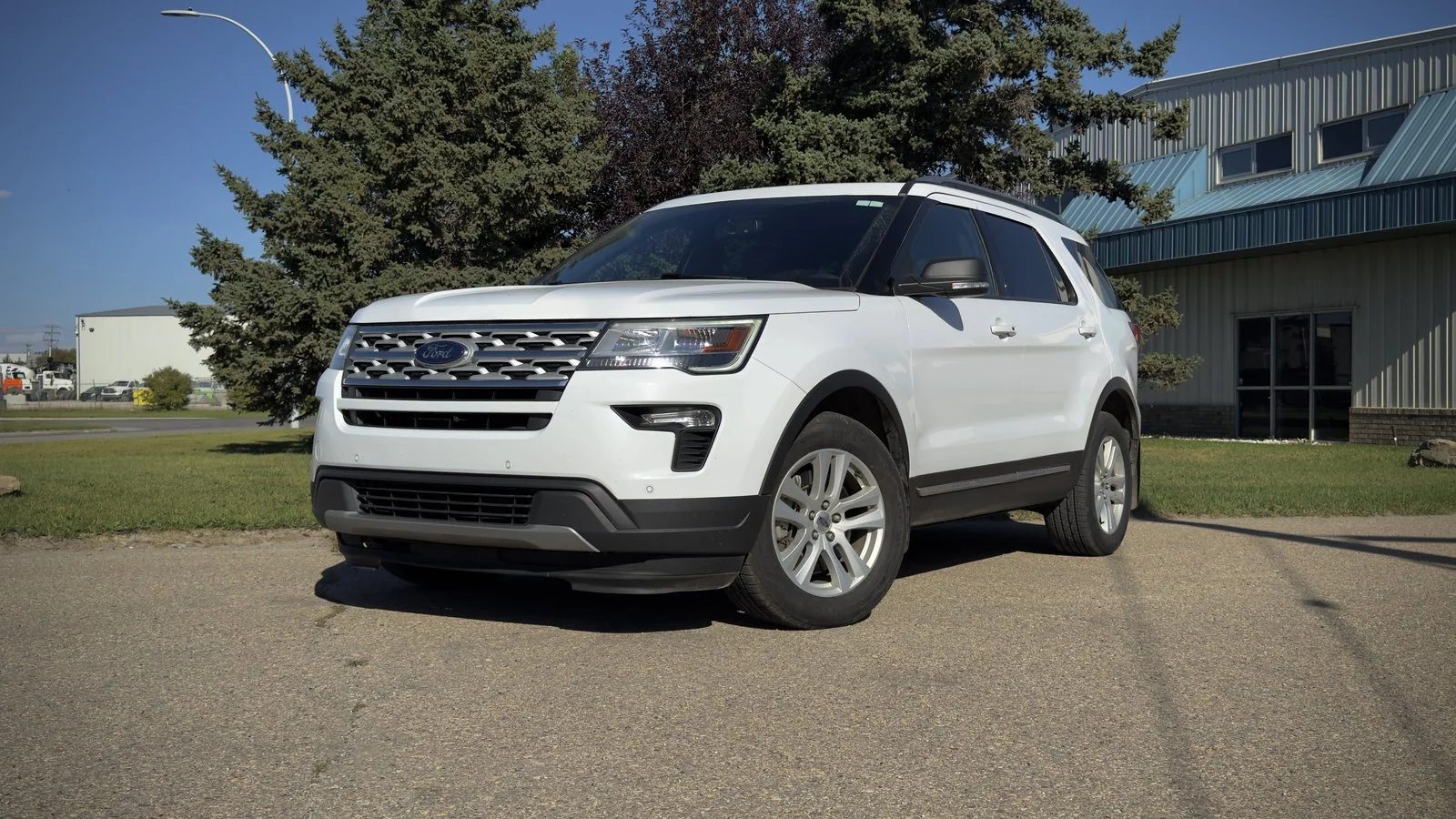
2019 Ford Explorer XLT
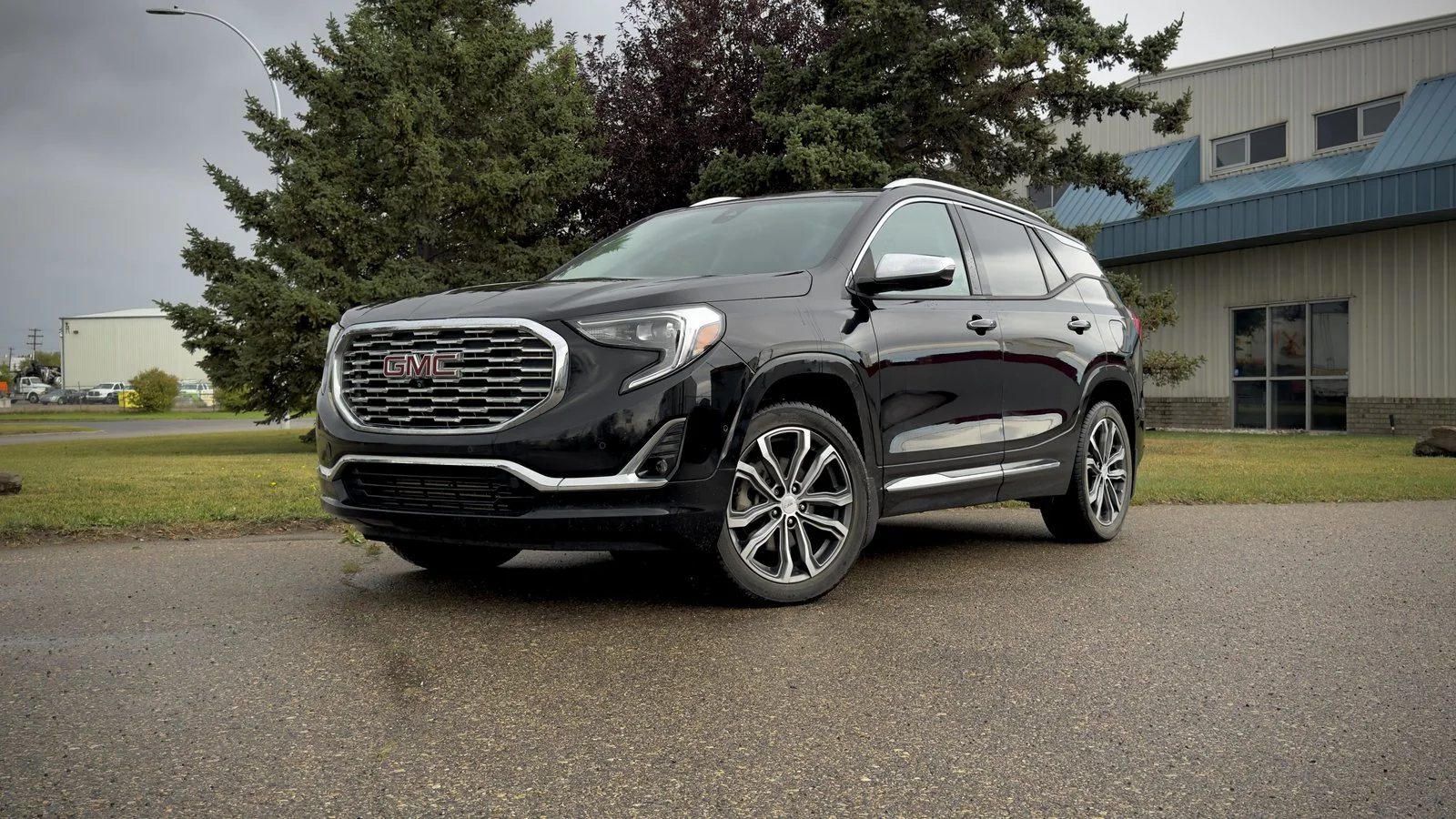
2020 GMC Terrain Denali
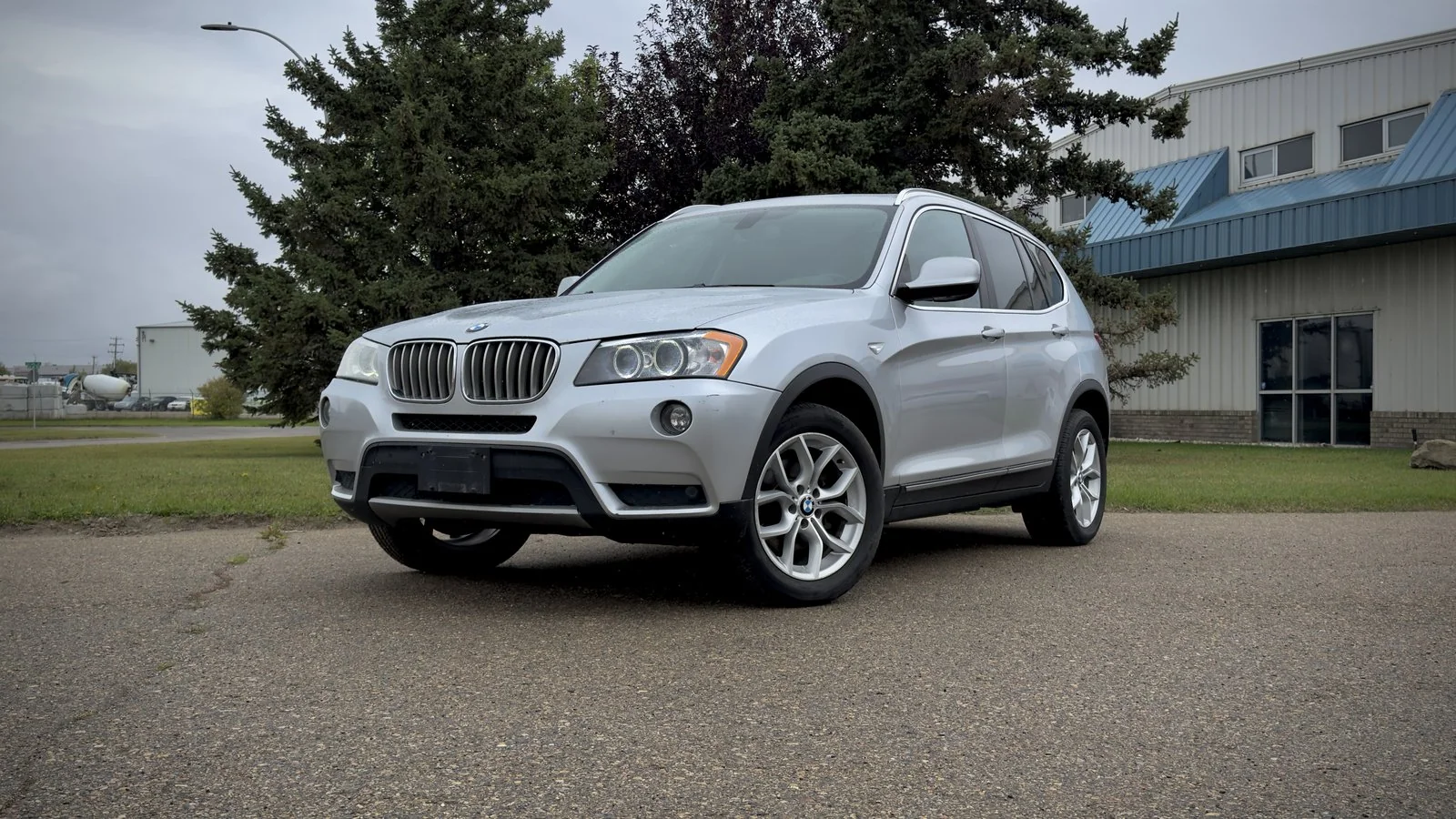
2014 BMW X3 xDrive28i
Not seeing it? We'll find it.
We source through our dealer partner network across Western Canada: 25,000+ vehicles to choose from. Tell us what you want and what works for your budget.
Find my car3 min · no credit impactOAC = on approved credit. Payments are examples at 6.49% APR over 84 months with $0 down, based on each vehicle's advertised price; GST extra. Your rate depends on your credit (4.99%–29.9% APR).
Related Articles

Ready to Find Your Vehicle?
Browse our inventory or apply for financing. All credit situations welcome.
5.0118+ Google ReviewsAMVIC LicensedFree Delivery 300km