
Buying Your First Truck for a New Trade Job in Alberta
In this article
- The Alberta Trades Boom and Why a Truck Matters
- What to Look for in a Trades Truck
- Bed Size
- Towing Capacity
- Four-Wheel Drive
- Fuel Economy on Highway Commutes
- The Best Used Trucks for Alberta Trades Work
- Financing on Apprentice Income: What Lenders Look For
- How Much Truck Can an Apprentice Actually Afford?
- Tool Insurance and Truck Customization
- Tax Deductions for Your Work Truck
- Diesel vs. Gas for Trades Work: A Quick Take
- Getting Financed: The Process
- Related Buyer Guides
- Compare and Apply
Check Your Options in 3 Minutes
No credit impact. All credit situations welcome.
5.0118+ Google ReviewsAMVIC LicensedFree Delivery 300km
You just landed a trade job — electrician, plumber, welder, carpenter, pipefitter, heavy equipment operator — and within about a week of showing up on a job site, it becomes obvious: you need a truck. Not a want. A need. Alberta's trades industry runs on pickup trucks. They haul tools and materials, tow trailers, get to job sites that would swallow a sedan, and serve as a mobile office for everything from blueprints to spare PPE. The problem is that if you're a first- or second-year apprentice, you're buying your first truck with a wage that's still ramping up, possibly no vehicle credit history, and a limited sense of which trucks are actually worth owning. This guide covers all of it.
The Alberta Trades Boom and Why a Truck Matters
Alberta's construction and trades sector has been running hot for years, and 2025-2026 is no different. Residential builds in Calgary and Airdrie are up. The industrial maintenance sector in Fort McMurray is hiring. LNG and pipeline infrastructure keeps moving. The result: trades workers with current certifications are in demand across the province, and the income trajectory for a journeyman in almost any Red Seal trade is strong — typically $35-$55/hour at journey level, and many trades workers move into supervisory or self-employed roles that push compensation higher.
But getting to that income level takes time, and while you're apprenticing, your truck still needs to show up on a job site every morning. The right truck, purchased at the right price with financing that fits your current income, is a genuine career investment — not just transportation.
Beyond your own use, many Alberta trades contractors view a reliable truck as a minimum requirement for employment on certain sites. If you're running your own tools, you need your own way to move them. That's the reality on most private residential and commercial projects across Calgary, Airdrie, and the surrounding area.
What to Look for in a Trades Truck
Not all trucks are equal for trades use. These are the specs that actually matter on a job site:
Bed Size
A 6.5-foot bed handles most trades needs. If you're carrying long conduit, lumber, or pipe regularly, a 8-foot bed eliminates the need for a bed extender, but it makes parking in urban areas noticeably harder. A 5.5-foot short bed is convenient in the city but restricts what you can carry flat. For most electricians, plumbers, and carpenters: 6.5 feet is the practical sweet spot.
Many trades workers add a toolbox to the front of the bed for lockable storage. That eats 12-18 inches of bed length — account for it when you're evaluating a short-bed truck.
Towing Capacity
If you're pulling a trailer with equipment, a compressor, or materials, you need a truck rated for the job. Most half-ton trucks (F-150, RAM 1500, Silverado 1500, Sierra 1500) tow between 6,500 and 13,000 lbs depending on configuration. Engine and rear axle ratio matter significantly — the same truck with different axle gearing can have a 3,000-lb towing capacity difference. If towing is a regular requirement, confirm the specific truck's tow rating using the door jamb sticker or VIN lookup before you buy.
For most apprentice trades workers who aren't running a full contractor rig yet, a standard half-ton with a V8 or high-output V6 is sufficient. Three-quarter ton trucks (F-250, RAM 2500, Silverado 2500) cost significantly more to purchase, insure, and fuel — they're usually overkill until you're running a larger operation.
Four-Wheel Drive
In Alberta, 4WD is not a luxury — it's a practical necessity from October through April and often into May at higher elevations. Job sites in new developments, rural acreages, and anywhere with an unpaved access road become genuinely dangerous in two-wheel drive during winter or after rain. A 4WD truck is safer, more capable, and significantly easier to sell when the time comes. Budget for it from the start.
Note the difference between 4WD (mechanical, with a transfer case) and AWD (automatic, electronically controlled). AWD is better for light slippage on paved roads; 4WD is what you want for actual off-road and deep snow conditions. For trades use in Alberta, 4WD wins.
Fuel Economy on Highway Commutes
Alberta trades workers often commute significant distances — Airdrie to Calgary, Calgary to job sites 30-60 minutes out, or longer hauls to industrial sites. Fuel economy matters in a way it doesn't when you're driving 15 minutes to an office. The gap between a 5.7L V8 getting 14L/100km and a 2.7L turbocharged V6 getting 11L/100km is roughly $700-$900/year at 20,000 km — real money on an apprentice wage.
The Best Used Trucks for Alberta Trades Work
Here's an honest breakdown of the most common used trucks in the Alberta market and how they stack up for trades use:
| Truck | Best For | Strengths | Watch Out For |
|---|---|---|---|
| Ford F-150 | Most versatile all-rounder | Widest parts/service network in Alberta; huge inventory selection; EcoBoost options save fuel | 2011-2014 EcoBoost engines had some reliability issues; avoid high-mileage examples of that era |
| Toyota Tacoma | Best long-term reliability | Legendary reliability; holds value better than any competitor; lower long-term maintenance cost | Smaller bed than full-size; less towing capacity; commands a premium on the used market |
| RAM 1500 | Best interior comfort for daily driving | Best-in-class interior; rear coil spring suspension is notably more comfortable; good V8 options | Higher long-term maintenance costs than Toyota; some reliability concerns on older electrical |
| GMC Canyon / Chevy Colorado | Best fuel economy in a truck format | More fuel efficient than full-size; easier to park; lower purchase price; capable 4WD | Less towing capacity; smaller bed; Duramax diesel option adds capability but also maintenance cost |
| Chevy Silverado 1500 | Strong all-around option | Proven 5.3L V8 is extremely durable; wide service network; good towing | Interior quality trails RAM and F-150 in comparable years; some infotainment issues on older models |
For first-time buyers on an apprentice budget, the Ford F-150 offers the best combination of selection, price range, and service network. If reliability is your top priority and you can handle a smaller bed, the Toyota Tacoma is worth the premium — it'll likely still be running strong when trucks bought at the same time are on their third repair bill. The RAM 1500 is a genuinely excellent daily driver with a truck bed — if you commute significant highway distance, the comfort difference is noticeable. For the best fuel economy without giving up a truck platform, the Chevy Colorado or GMC Canyon deserve serious consideration.
A broader view of the used truck market — including specific model years to target and years to avoid — is available in the guide to the best trucks for towing in Alberta.
Financing on Apprentice Income: What Lenders Look For
Here's the thing about apprentice wages that lenders actually understand better than most applicants expect: apprentice income is documented, regular, and on a known progression schedule. A first-year apprentice electrician in Alberta earns roughly $22-$26/hour. By fourth year, that's $33-$40/hour. Journeyman rates push $40-$55/hour. Lenders who work with trades workers have seen enough applications to know what apprentice T4s look like and where that income goes over time.
What you need to document your income:
- Two recent pay stubs — showing hourly rate, hours worked, and YTD earnings
- Employment letter — on company letterhead, confirming your position, hourly rate, and start date (some lenders request this, some don't)
- Most recent T4 or Notice of Assessment — particularly important if you've only been at this employer a short time and want to show prior work history
- Union card or apprenticeship registration — for unionized trades, this can support your application
If you've been in the trades for less than 3 months at your current employer, some lenders will want to see either a longer history at the previous employer or a larger down payment to offset the perceived risk. If you're coming directly out of a trade program into your first placement, bring your program completion documentation as supporting evidence.
For trades workers who operate through a corporation or take contracts, the income documentation picture is different. The self-employed car financing guide covers the contractor/incorporated trades worker application in detail — it's a different process that requires NOAs, financial statements, and sometimes business bank statements rather than pay stubs.
If you're in the oilfield sector specifically, the oilfield worker car loan guide addresses the irregular pay cycle, camp rotation income documentation, and lender considerations specific to that industry.
The car loan with part-time or variable income post is also worth reading if your hours fluctuate seasonally — many Alberta trades workers see their hours vary between busy and slow periods, and that variability affects how lenders assess your income.
How Much Truck Can an Apprentice Actually Afford?
Let's run real numbers. A first-year apprentice electrician earning $24/hour at 40 hours/week grosses roughly $4,160/month. After taxes and benefits, take-home is approximately $3,300-$3,500/month. Most lenders want total debt service (all loan payments) under 40-44% of gross income — so your maximum total monthly loan payments are around $1,650-$1,830.
If you have no other debt, that gives you meaningful truck-buying power. A $30,000 truck financed at 11.99% over 72 months is approximately $298 biweekly — or about $646/month. Add in insurance ($200-$350/month for a young male driver on a truck in Alberta), fuel ($250-$400/month depending on commute), and basic maintenance ($100-$150/month amortized), and your total vehicle cost is $1,200-$1,500/month. That's tight but workable on apprentice income if you don't have other large obligations.
A $22,000 truck at the same rate and term drops to about $217 biweekly. That's a more comfortable number on an apprentice wage, with room for tools, trade union dues, and life. Use the payment calculator to model different price points against your actual take-home — the numbers are more telling when they're personalized to your situation.
The used trucks Calgary inventory regularly has quality half-tons in the $18,000-$28,000 range that hit the sweet spot of capable enough for trades use without pushing into overbuilt territory for an apprentice's first truck.
Tool Insurance and Truck Customization
Your truck becomes an extension of your trade once you're working. That means tools — often thousands of dollars of them — living in the bed or cab. Your auto insurance policy almost certainly does not cover theft of tools from your vehicle. This is a common and expensive discovery that happens to trades workers every year in Alberta.
What to do about it:
- Get a separate tools and equipment floater policy. Many insurers offer this as an add-on to home or tenant insurance, or as a standalone commercial tools policy. Coverage typically runs $20-$60/month for $10,000-$30,000 in tool coverage.
- Install a quality truck box. A locking toolbox in the bed significantly reduces opportunistic theft. Brands like Weather Guard and Dee Zee are standard on Alberta job sites. Cost: $400-$900 installed.
- Document your tools. Serial numbers, photos, purchase receipts. Keep the list in the cloud or at home — not in the truck. If you ever need to make a claim, this documentation is what gets you paid.
Other common trades truck customizations in Alberta include bed liners (spray-on are more durable than drop-in), towing hitch/ball setup, running boards for muddy job site access, and roof-mounted work lights for early-morning or late-evening site work.
Tax Deductions for Your Work Truck
If you use your truck for work — and you can document it — you may be eligible to claim vehicle expenses against your employment income. CRA allows employed trades workers to claim vehicle expenses using Form T777 (Statement of Employment Expenses), provided your employer provides a signed T2200 (Declaration of Conditions of Employment) confirming that you're required to use your own vehicle for work.
You can claim a percentage of fuel, insurance, maintenance, registration, and interest on your car loan — the percentage based on your work-use mileage vs. total mileage. Keep a mileage log. It doesn't have to be complicated: a small notebook in the truck where you record date, destination, odometer start/end, and purpose is sufficient.
Example: If 70% of your annual driving is for work and your total vehicle costs are $14,000/year (loan interest + insurance + fuel + maintenance), you can potentially claim $9,800 against your employment income. At a 30% marginal tax rate, that's roughly $2,940 back. Over a 4-year apprenticeship, that's meaningful money.
Talk to a tax professional about your specific situation — CRA rules have nuances depending on whether you're an employee vs. subcontractor, and the T2200 requirement means your employer has to sign off. But for trades workers who drive to multiple job sites, this deduction is real and significant.
If you're eventually moving into self-employment or running your own contracting business, the vehicle expense treatment changes — depreciation (CCA) becomes available, and the deduction approach is different. The self-employed financing guide touches on some of these considerations for owner-operators.
Diesel vs. Gas for Trades Work: A Quick Take
Diesel trucks (RAM 2500 Cummins, F-250 Power Stroke, Silverado 2500 Duramax) come up in this conversation regularly. They're real trucks built for real work, and if you're towing heavy consistently, they're genuinely superior. But for a first truck on an apprentice budget, diesel usually doesn't make financial sense:
- Diesel trucks cost $8,000-$15,000 more than equivalent gas half-tons on the used market
- Diesel maintenance (DEF fluid, DPF cleaning, longer oil change intervals but higher cost) is more expensive
- The fuel savings diesel provides only offset the purchase premium after significant high-mileage towing use
- For a first-year apprentice not yet running a heavy trailer, the extra cost is rarely justified
More detail on the real cost comparison between diesel and gas powertrains in Alberta is available in the diesel vs. gas trucks Alberta cost breakdown. Worth reading before you get attached to a diesel option that your budget may not support yet.
Getting Financed: The Process
The trades community in Alberta has a financing profile that lenders understand. You have documented income, a clear job role, and a vehicle that's genuinely necessary for your work — not a lifestyle purchase. That context matters in the lending conversation.
When you apply for financing, bring your last two pay stubs, your employment letter if available, and your most recent T4. If you're new to the workforce and have limited credit history, a down payment of $1,500-$3,000 strengthens your application meaningfully — it reduces the lender's risk and often moves you from a "maybe" to an approval. If you don't have that saved yet, ask about zero-down options; not every application requires a down payment.
We're based in Airdrie on Highway 2 — convenient for tradespeople coming from Calgary, Crossfield, Carstairs, and surrounding communities. Our network of 15+ lenders includes specialists who work regularly with apprentices, journeymen, and trades contractors. We work with all credit situations — whether you're a first-time borrower with no credit history, or you've had some past credit challenges from a slower work period, there are options at multiple price points to get you into a capable truck.
The right truck won't make or break your career. But showing up every morning in something reliable, capable, and paid for at a number that fits your current income — that's one less thing between you and the work. That's worth getting right from the start.
Compare and Apply
- Bad Credit Car Loans — Complete Guide — bad credit car financing in Alberta
Financing Resources
Cars you could drive home
See all inventory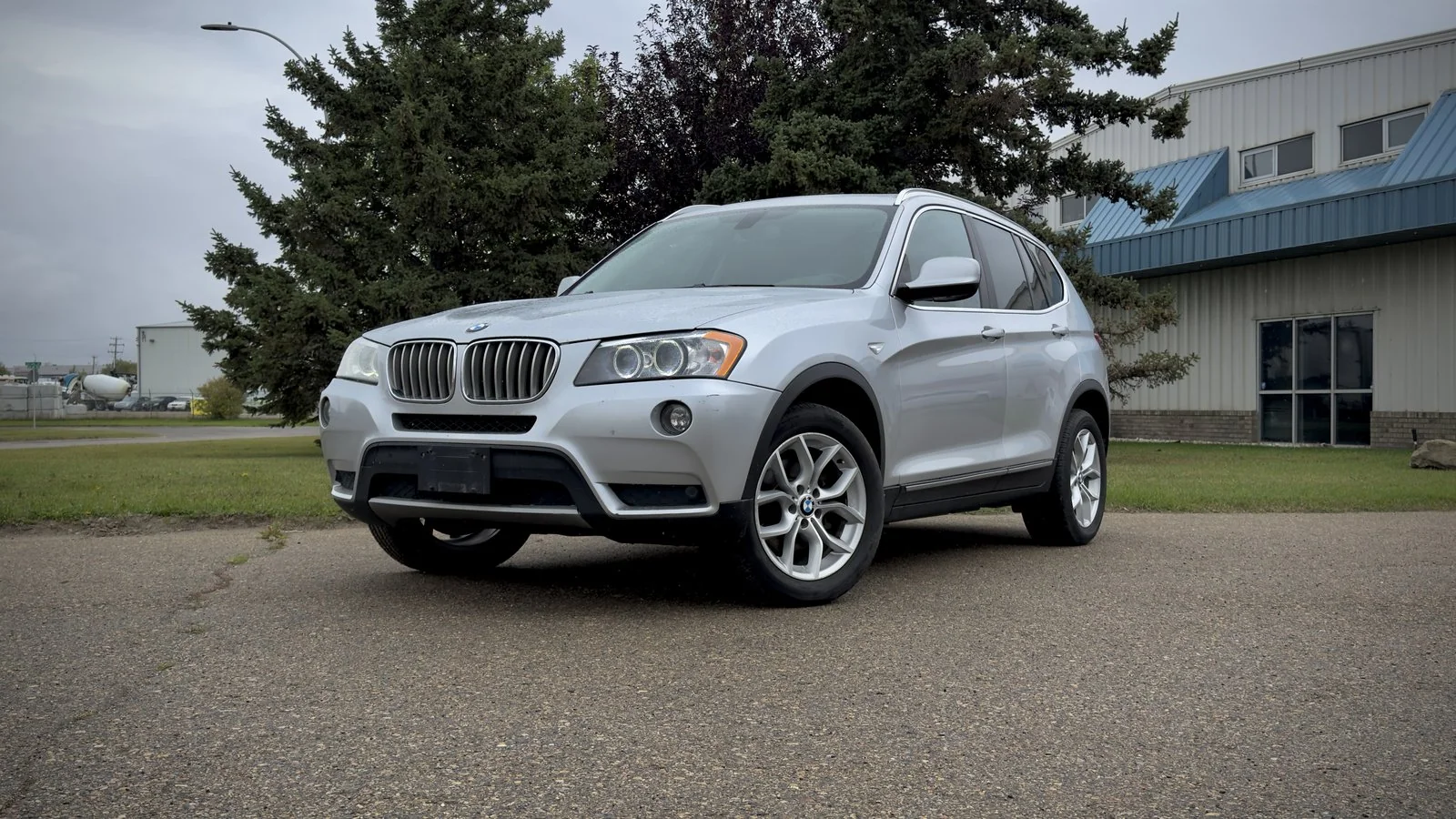
2014 BMW X3 xDrive28i

2021 Lincoln Corsair Reserve
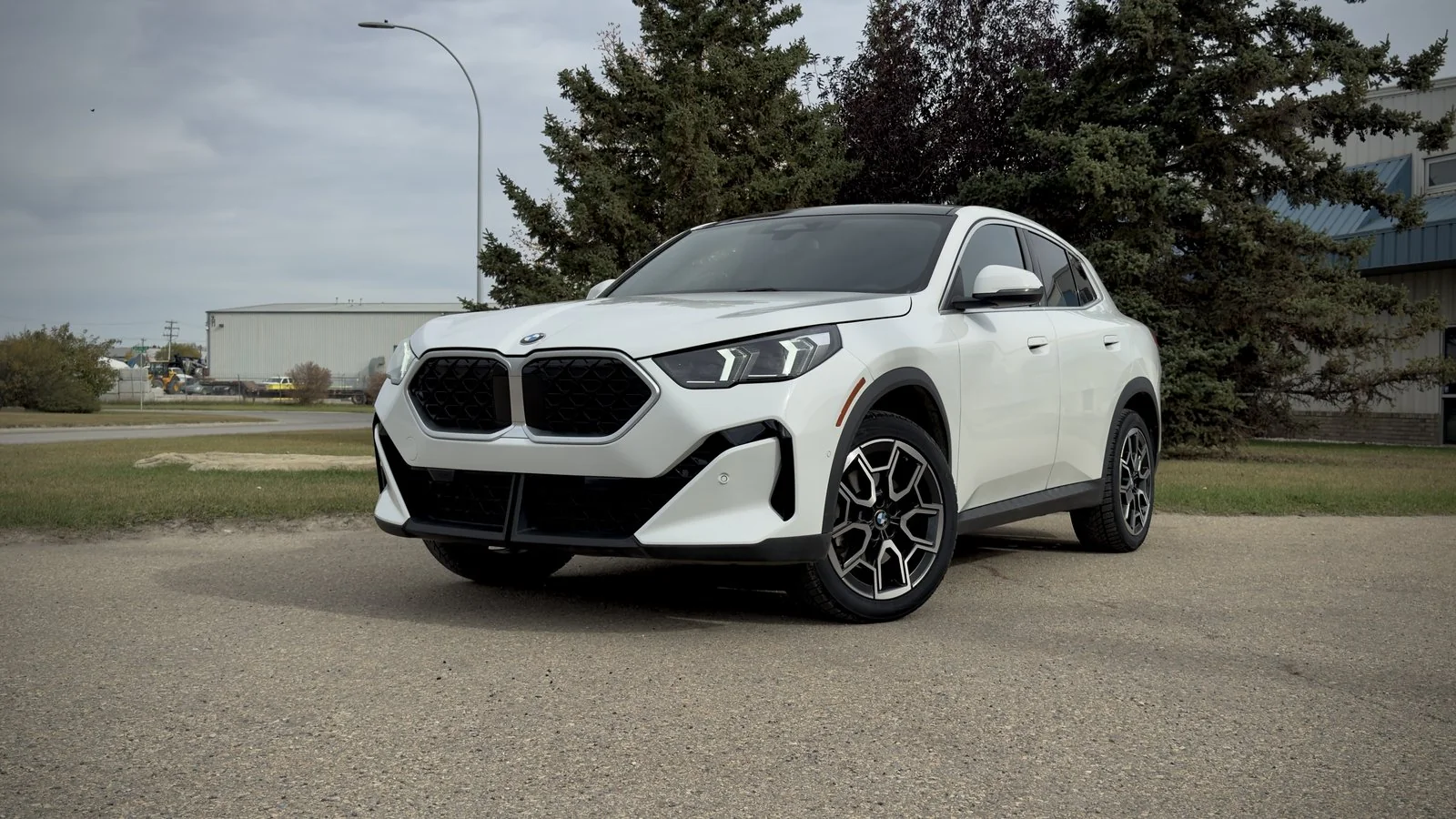
2025 BMW X2 xDrive28i
Not seeing it? We'll find it.
We source through our dealer partner network across Western Canada: 25,000+ vehicles to choose from. Tell us what you want and what works for your budget.
Find my car3 min · no credit impactOAC = on approved credit. Payments are examples at 6.49% APR over 84 months with $0 down, based on each vehicle's advertised price; GST extra. Your rate depends on your credit (4.99%–29.9% APR).
Related Articles



Ready to Find Your Vehicle?
Browse our inventory or apply for financing. All credit situations welcome.
5.0118+ Google ReviewsAMVIC LicensedFree Delivery 300km