
Used Mitsubishi Calgary
The most affordable AWD SUVs in the Canadian market. S-AWC with 6 terrain modes, Outlander PHEV with 430-mile range, and financing for all credit situations.
Key Facts
- Powertrain Warranty (Original Owner)
- 10yr / 100,000 km
- Powertrain Warranty (Transferred)
- 5yr / 100,000 km from in-service
- S-AWC Drive Modes
- 6: Eco, Normal, Tarmac, Gravel, Snow, Mud
- S-AWC Components
- ACD + AYC + ASC
- Outlander PHEV Electric Range
- 74 km all-electric
- Outlander PHEV Total Range
- 430 miles (~692 km)
- Outlander Sales Growth 2025
- +40.9% year-over-year
- Rally Heritage
- Lancer Evolution — 4x World Rally Championship
Last reviewed: September 2026
Mitsubishi Outlander: The Most Affordable AWD SUV You Can Finance in Alberta
162-point Independent Inspection on Every Vehicle
Check Your Options in 3 Minutes
No credit impact. All credit situations welcome.
★★★★★ 106+ Google Reviews · AMVIC Licensed · Free Delivery 300km
About Mitsubishi Vehicles
Mitsubishi's value proposition in the Canadian market is clear and honest: the most affordable path to a genuine AWD SUV. In a segment where a Toyota RAV4 AWD commands $40,000+ new and the Subaru Forester's base AWD price has climbed steadily, Mitsubishi's Outlander and RVR represent the entry point where AWD becomes accessible to buyers who need traction capability but can't absorb the premium pricing of more popular brands. This is a real positioning advantage, not a consolation prize.
The 10-year/100,000 km powertrain warranty is the headline number, and it's real — but used buyers need the honest version. Like Hyundai's equivalent warranty, the 10-year/100,000 km coverage applies to the original registered owner only. When a Mitsubishi changes hands, the powertrain warranty transfers at a reduced 5-year/100,000 km from the original in-service date. The bumper-to-bumper warranty (5 years/100,000 km) does not transfer at full coverage to subsequent owners. If you are buying a used Mitsubishi, calculate the remaining transferred coverage precisely: original in-service date plus five years, or 100,000 km, whichever comes first. A 2020 Outlander purchased used in 2026 is six years from in-service — the transferred powertrain warranty would already be outside the five-year window. Inspect carefully, get a pre-purchase inspection, and budget for an extended warranty if the factory coverage has expired.
Super All-Wheel Control (S-AWC) is Mitsubishi's flagship AWD system and one of the more capable multi-mode systems available outside the luxury segment. The full S-AWC system combines Active Centre Differential (ACD), Active Yaw Control (AYC), and Active Stability Control (ASC) into a unified platform with six selectable terrain modes: Eco, Normal, Tarmac, Gravel, Snow, and Mud. ACD manages front-to-rear torque distribution; AYC uses independent brake application to individual rear wheels to correct oversteer and understeer mid-corner; ASC acts as the overarching stability envelope. This three-system integration is borrowed from Mitsubishi's Lancer Evolution rally heritage — a lineage that produced four World Rally Championship victories and directly influenced the AWD architecture in current production vehicles.
The Outlander PHEV is the standout product in the current lineup. With a 430-mile total range (combined electric and gasoline), a 74-km all-electric range, and a tri-motor AWD system, the Outlander PHEV has consistently ranked as Canada's best-selling plug-in hybrid SUV. For Calgary buyers with home charging access, the daily commute math is compelling: average Calgary commute distance is well within the 74 km electric range, meaning most daily driving happens at EV cost. The gasoline engine provides unlimited range for Banff trips or road trips without the range anxiety of a pure EV.
Mitsubishi's sales growth trajectory is worth noting as context. Canadian Outlander sales grew 40.9% in 2025, driven by the PHEV's market share gains and the third-generation Outlander's substantially improved interior quality. The brand's volume growth means more units on the secondary market, better parts availability, and growing independent shop familiarity — practical factors that affect used ownership economics.
Shift Happens carries used Mitsubishi vehicles for Calgary and Airdrie buyers. Whether you're working with strong credit or need flexible financing, we work with 21+ lenders to find terms that fit your situation.
The Budget AWD Leader: Why Mitsubishi Costs Less
Mitsubishi's lower price positioning relative to Toyota, Honda, and Subaru reflects several structural factors — not shortcuts in engineering. Brand recognition in Canada is lower, which compresses the brand premium buyers are willing to pay at the showroom. Lower new-vehicle sales volume means less used-market competition, which keeps secondary-market prices accessible. Mitsubishi also retains a simpler product lineup with fewer trim proliferations, which reduces the "option anxiety" premium that affects brands with dozens of configurations. The result for used buyers: you can access AWD capability, a 10-year/100,000 km powertrain warranty on original-owner vehicles, and a legitimate multi-mode AWD system (S-AWC) at a price point where RAV4 and CR-V buyers would be looking at base FWD configurations. The trade-off is brand liquidity on resale — Mitsubishi vehicles don't command the used-market premiums that Toyota and Honda do, which is either a buy opportunity or a resale consideration depending on which side of the transaction you're on.
- •RVR vs RAV4 base: typically $4,000–$8,000 less on the used market for equivalent mileage
- •AWD standard on most trims: Mitsubishi doesn't reserve AWD for premium configurations
- •Simpler lineup: fewer trim levels means less used-market confusion about what you're buying
- •Lower resale premium: lower brand recognition compresses residuals — a buy advantage, a resale consideration
- •Parts availability: improving as sales volume grows — 2022+ Outlander has materially better shop penetration than earlier generations
Super All-Wheel Control (S-AWC) Explained
S-AWC is the most technically sophisticated element of Mitsubishi's lineup, and it traces directly to the Lancer Evolution's rally pedigree. The system integrates three independent controllers into a unified AWD management platform. Active Centre Differential (ACD) handles front-to-rear torque distribution, using an electronically-controlled multi-plate clutch to split torque based on surface conditions and driver inputs. Active Yaw Control (AYC) applies selective braking to individual rear wheels mid-corner to generate or correct yaw moment — in plain terms, it steers the car using brakes, not just the front wheels, which makes the vehicle more stable in oversteer and understeer situations. Active Stability Control (ASC) provides the envelope-level management: if ACD and AYC aren't sufficient to maintain stability, ASC intervenes. The six terrain modes (Eco, Normal, Tarmac, Gravel, Snow, Mud) change how aggressively each subsystem responds and how torque split targets are calibrated. Snow mode pre-loads rear torque to prevent front-axle spin on slippery starts; Mud mode allows more wheel spin before intervention to help clear loose surfaces.
- •ACD (Active Centre Differential): manages front-to-rear torque split via electronically-controlled clutch
- •AYC (Active Yaw Control): selective rear-wheel braking for mid-corner stability correction
- •ASC (Active Stability Control): system-level envelope management when ACD and AYC reach their limits
- •Eco mode: prioritizes FWD to maximize fuel economy on dry pavement
- •Snow mode: pre-loads rear torque before slip for predictive winter traction
- •Mud mode: permits measured wheel spin to clear loose surfaces without immediate intervention
- •Rally lineage: system architecture borrowed from Lancer Evolution — 4x WRC championship pedigree
Outlander PHEV: 430-Mile Range, Canada's Best-Selling Plug-In
The Outlander PHEV's 430-mile total range resolves the core objection to plug-in hybrid SUVs for Alberta drivers: what happens when you need to go somewhere the electric range doesn't cover. With a 74 km all-electric range handling most daily driving and a gasoline engine providing unlimited range beyond that, the Outlander PHEV operates as a full EV for city use and a conventional SUV for road trips. The tri-motor AWD system — one electric motor per rear wheel, one at the front — provides AWD capability without a mechanical rear driveshaft, which eliminates a mechanical component and distributes torque with electric motor precision rather than clutch response time. For buyers with home Level 2 charging (240V), daily fueling costs drop to electricity rates for all typical use. The payback math varies by electricity rate and driving distance, but at Alberta electricity rates and current gasoline prices, buyers averaging 60 km/day typically break even on the PHEV premium within four to five years of ownership. Buyers without home charging access see less benefit — a standard Outlander is a more straightforward choice in that case.
- •All-electric range: 74 km (covers average Calgary daily commute on electric power)
- •Total range: 430 miles / ~692 km combined electric + gasoline
- •AWD system: tri-motor (front + two independent rear motors) — no mechanical rear driveshaft
- •Charging: Level 2 (240V) fully charges in approximately 3.5 hours
- •Canada ranking: Canada's best-selling PHEV SUV by volume
- •Home charging caveat: full PHEV benefit requires Level 2 home charging — assess before purchase
What Our Customers Say
“Thanks to Luke and his team. They were able to find me my dream car and have it delivered between cities. Easy to deal with and easy to work with.”
“Luke was fantastic with helping us get into a mini van, we are MORE than happy. I highly recommend anyone looking for a vehicle to go check out Shift Happens!”
“I bought my RAV4 from Wes and Luke just before new years! We got the best service possible. I was at the dealership for a total of one hour and we had our deal done. The price was great.”
Get pre-qualified for a Mitsubishi
Soft credit check only — no impact on your score.
Frequently Asked Questions
How does Mitsubishi S-AWC compare to Subaru symmetrical AWD?
They're built on different philosophies. Subaru's symmetrical AWD is a mechanically simple, always-on system that distributes torque continuously between axles — its strength is reliability and consistent engagement with no electronic complexity required. Mitsubishi's S-AWC is an electronically-managed multi-mode system with ACD, AYC, and ASC working together — more capability in its design for handling dynamic situations like cornering instability and active yaw correction, but more electronic complexity. For everyday winter commuting and occasional mountain driving, both are more than capable. S-AWC has a technical advantage in dynamic driving situations (corners, mixed-surface transitions); Subaru's symmetrical system has an advantage in mechanical simplicity and long-term durability due to fewer electronic components involved.
Does the Mitsubishi 10-year warranty transfer when I buy used?
No — not at the full 10-year/100,000 km level. The 10-year/100,000 km powertrain warranty applies to the original registered owner only. When the vehicle changes hands, the powertrain warranty transfers at a reduced 5-year/100,000 km from the original in-service date. This means a Mitsubishi originally sold in 2020 that you purchase used in 2026 has already exceeded the five-year transferred window — you would have no remaining factory powertrain coverage. Always calculate the original in-service date before factoring factory warranty into your purchase decision. A pre-purchase inspection and extended warranty consideration are important for any used Mitsubishi with expired transferred coverage.
Mitsubishi Outlander vs RVR — which is better for a Calgary buyer?
They serve different use cases. The RVR (sold as the ASX in other markets) is a compact subcompact crossover — smaller footprint, more city-friendly, better fuel economy, and lower acquisition cost. The Outlander is a mid-size SUV with substantially more interior room, three-row seating on GT trims, and the PHEV drivetrain option. For Calgary urban commuters who want the smallest capable AWD vehicle at the lowest price, the RVR is the stronger choice. For families who need usable cargo space and the option of a plug-in hybrid drivetrain, the Outlander is the right direction. The RVR also tends to have lower maintenance costs due to its smaller powertrain and simpler AWD system.
Is the Outlander PHEV worth the premium without home charging?
No — bluntly. The PHEV's cost advantage comes almost entirely from running on electricity for daily driving. Without a home Level 2 charger (240V), you can't reliably charge between uses, which means the 74 km electric range is only intermittently available. The PHEV premium (typically $5,000–$8,000 over a comparable gasoline Outlander on the used market) takes years to recover through fuel savings even with home charging. Without home charging, you own the weight, complexity, and cost premium of the PHEV drivetrain without access to most of its benefit. If home charging isn't possible, the standard Outlander AWD is the better value by a significant margin.
Are used Mitsubishi vehicles reliable for high-mileage use?
Mitsubishi's reliability record is solid but mid-tier by industry standards — stronger than some European brands at equivalent price points, not as strong as Toyota or Honda long-term. RepairPal rates Mitsubishi above average for reliability in the crossover segment. The most commonly cited concern on used examples is CVT reliability on pre-2016 models — the INVECS III CVT had documented issues at high mileage in the same era that Nissan's Xtronic CVT was also problematic. The 2022+ Outlander moved away from the CVT to a new 8-speed automatic, which has a substantially better early track record. If evaluating a high-mileage Outlander, prioritize 2022+ for the automatic transmission, or have a CVT specialist inspect earlier examples.
What are the best years for a used Mitsubishi Outlander?
The third generation (2022+) is the clear target — substantially redesigned interior (addressed the most common criticism of earlier Outlanders), new 8-speed automatic replacing the CVT, updated safety technology, and available PHEV drivetrain. Used examples from 2022–2023 are beginning to appear in the secondary market as lease returns and trade-ins. Second generation (2014–2021) Outlanders are solid value if budget is the priority and a pre-purchase CVT inspection is performed — the 2016–2021 years are preferable within this generation. Avoid 2008–2013 first-generation examples for daily-driver use: the technology and interior are significantly dated and maintenance cost predictability is lower.
How does Mitsubishi's price compare to RAV4 and Forester for budget AWD buyers?
The price gap is the core of Mitsubishi's value case. A used 2020–2022 Mitsubishi Outlander AWD typically lists $4,000–$8,000 below a comparable-year Toyota RAV4 AWD and $3,000–$6,000 below a Subaru Forester in Calgary's used market. For buyers who need AWD capability but can't absorb the Toyota or Subaru used-market premium, Mitsubishi provides a genuine AWD system (S-AWC with terrain modes) at an accessible price. The trade-off is lower resale demand — when you go to sell, Mitsubishi won't command the same buyer competition as a RAV4. For buyers who plan to keep the vehicle five-plus years, the lower acquisition cost typically outweighs the resale difference. For buyers who upgrade frequently, the RAV4's resale strength may make it the better financial choice despite higher entry cost.
Financing Resources
Whether you have great credit or are rebuilding, we work with all credit situations. Explore our financing guides to understand your options before you apply.
Mitsubishi in stock now
Browse all inventory →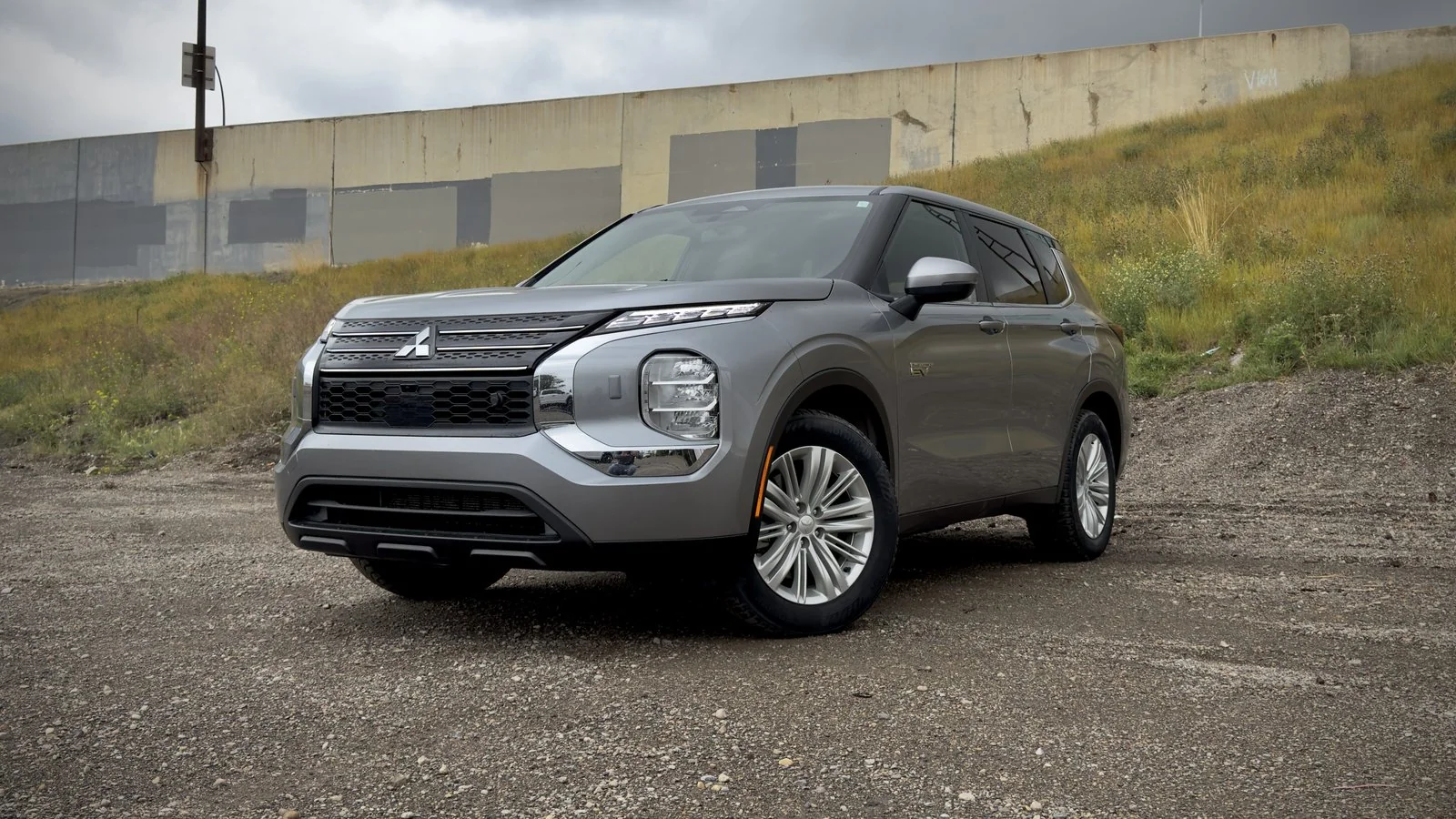
Continue Your Research
These pages cover the closest-adjacent situations to yours.
Financing Options
Latest Buyer Guides for Alberta Shoppers
Research before you buy — practical guides on financing, trade-ins, and finding the right vehicle.
Ready to Get Behind the Wheel?
Apply for financing in 3 minutes. We work with all credit situations — from perfect credit to rebuilding. Decision within 24-48 hours.