
Alberta Vehicle Registration Fees Explained (2026)
In this article
- The Base Registration Fee: How It's Calculated
- Plate Fees: What You Pay for Physical Plates
- Personalized Plates: The Full Cost Breakdown
- GST: The Critical Difference Between Dealer and Private Sales
- VIN Inspections: When They're Required and What They Cost
- Out-of-Province Transfers: A Different Fee Structure
- Lien Registration: Protecting Lenders and Buyers
- Truck and Commercial Vehicle Registration: Weight-Based Fees
- Business vs. Personal Registration
- Registration Renewal: Timing and What to Expect
- Complete Fee Summary: What to Budget When Registering in Alberta
- Registry Agent Fees: The Add-On Most People Forget
- Documentation Fees at the Dealership: What's Included
- Getting Into a Vehicle Without Fee Surprises
- Related Buyer Guides
- Compare and Apply
Check Your Options in 3 Minutes
No credit impact. All credit situations welcome.
★★★★★ 106+ Google Reviews · AMVIC Licensed · Free Delivery 300km
You've agreed on a price, the financing is sorted, and then the registry agent slides a sheet across the counter with a list of fees you didn't fully account for. It happens constantly. Alberta's vehicle registration process involves multiple separate fees — some mandatory, some situational, some people never think about until they're standing at the counter with a cashier's lineup forming behind them. This guide breaks down every fee category you'll encounter when registering a vehicle in Alberta in 2026, so there are no surprises.
See what you pre-qualify for
Three quick answers — soft check, no commitment.
The Base Registration Fee: How It's Calculated
In Alberta, annual vehicle registration is calculated based on the number of cylinders in your engine (or equivalent for EVs and alternative fuel vehicles). This is one of the simpler parts of the fee structure:
| Engine Type | Annual Registration Fee |
|---|---|
| 2 cylinders (or equivalent) | $60.00 |
| 4 cylinders (or equivalent) | $84.00 |
| 6 cylinders (or equivalent) | $108.00 |
| 8 cylinders (or equivalent) | $132.00 |
| Over 8 cylinders (or equivalent) | $156.00 |
Electric and alternative fuel vehicles use an "equivalent cylinder" rating. Most EVs and hybrids are rated in the 4–6 cylinder equivalent range. If you're buying a used Hyundai Tucson hybrid or another hybrid or electric vehicle, confirm the cylinder equivalent with the registry agent — it's stamped on the vehicle registration document.
Registration fees are prorated when you register mid-year, so you won't pay a full year's fee on a vehicle you're registering in October. The expiry date on your registration will be one year from the original plate assignment date, not from the calendar year end.
Plate Fees: What You Pay for Physical Plates
Alberta charges a separate fee for licence plates themselves. This is distinct from the annual registration fee — you're paying for the physical plate once, and then renewing registration annually.
- Standard passenger plates: $22.00 per pair (front and rear)
- Motorcycle plates: $11.00 (single plate)
- Commercial/truck plates: Varies by GVW class (see below)
- Replacement plate (lost, stolen, or damaged): $22.00
When you purchase a vehicle from a dealership, the plates are typically transferred from your previous vehicle or new plates are assigned at the time of sale. Private sales work differently — the buyer is responsible for plating the vehicle themselves at a registry agent.
If you're financing a vehicle through a dealership, the plate and registration fees are often rolled into the deal documentation and paid on your behalf, then billed back to you at the registry. Make sure you understand whether these fees are included in your purchase price or whether you'll be paying them separately. When comparing private sale vs dealer purchase costs, plate and registration handling is one of the differences worth accounting for.
Personalized Plates: The Full Cost Breakdown
Alberta's personalized licence plate program lets you choose a custom combination of 2–7 characters. The cost structure:
- Initial fee: $275.00 (one-time, when you first create the personalized plate)
- Annual renewal fee: $57.00 per year (in addition to standard registration fees)
- Personalized motorcycle plate: $165.00 initial + $35.00 annual renewal
Personalized plates belong to you, not to the vehicle. You can transfer them to a new vehicle when you trade up — there's a small transfer fee at the registry, but you don't lose the plate combination. If you sell the vehicle and don't want to transfer the plates to a new one, you can put them in storage (no annual fee during storage, but you must reactivate before the two-year abandonment deadline).
One common misconception: personalized plates still carry the standard registration fee on top of the plate-specific fees. Budget accordingly.
GST: The Critical Difference Between Dealer and Private Sales
This is where many buyers are caught off guard, particularly those buying privately for the first time.
Dealer purchases: When you buy from a licensed AMVIC dealer like Shift Happens Auto Sales, GST (5%) is included in the sale price and remitted by the dealer. You don't pay GST separately at the registry. The price you agreed to at the dealership includes the GST — it's collected by us and sent to the CRA. There's no surprise at the registry counter.
Private sales: When you buy from a private individual, the GST situation changes fundamentally. Private sellers are not GST registrants, so no GST is collected at the point of sale. However, when you go to register the vehicle in your name, Alberta Transportation will assess GST on the higher of the declared sale price or the Canadian Black Book (CBB) wholesale value of the vehicle. You pay this GST to the registry agent at the time of registration.
Example: You buy a 2017 Honda CR-V privately for $16,500. The CBB wholesale value is $17,200. You'll pay GST on $17,200 — that's $860 due at the registry, even though you paid $16,500. If you try to declare a below-market sale price, Alberta Transportation will assess on CBB anyway.
This asymmetry is one of the real hidden costs in private sales that makes the math closer to dealer purchase than many buyers realize. If you're weighing your options, read our detailed breakdown of private sale vs dealer purchase in Alberta — the GST point alone is often the deciding factor.
When you're financing a private sale vehicle, the lender requires full registration in your name before funding, which means you'll need to have the GST amount available upfront — it can't be rolled into the loan in most cases. This is worth factoring into your planning when using our payment calculator to model a private purchase.
VIN Inspections: When They're Required and What They Cost
A Vehicle Identification Number (VIN) inspection is required in specific situations — it's not a standard part of every registration. You'll need a VIN inspection if:
- The vehicle has never been registered in Alberta (brand new vehicle without dealer handling)
- The VIN plate is damaged, missing, or there's a discrepancy in the records
- The vehicle was previously registered outside Canada (imported vehicle)
- A registry agent flags an anomaly in the vehicle's history
VIN inspections are conducted at Alberta Motor Vehicle Industry Council (AMVIC)-approved inspection facilities or by authorized registry agents with inspection authority. The fee is approximately $25–$40 depending on the location, and results are typically available immediately for standard inspections.
If you're registering a vehicle that came from out of province, see the next section — the VIN inspection may be part of a broader out-of-province process that also requires a mechanical inspection.
Out-of-Province Transfers: A Different Fee Structure
Buying a vehicle that was previously registered in BC, Ontario, Saskatchewan, or another Canadian province? The process adds a layer. Our full guide on how to register an out-of-province vehicle in Alberta covers this in detail, but here's the fee summary:
- Out-of-province inspection: Required for all vehicles previously registered outside Alberta. A licensed Alberta inspection facility performs a mechanical safety inspection against Alberta standards. Fee varies by facility — typically $80–$150, sometimes more for commercial vehicles. This is not a registry fee; it's paid directly to the inspection shop.
- VIN inspection: Usually required at the same time or immediately after — $25–$40.
- New plate and registration fees: Standard fees apply ($22 plates + cylinder-based registration fee).
- GST implications: If you purchased the vehicle in another province and paid that province's applicable taxes, you will not generally owe GST again in Alberta — you'll present proof of tax paid. The rules here can get nuanced depending on the province, so confirm with a registry agent before assuming you're exempt.
Vehicles from the United States require a Registrar of Imported Vehicles (RIV) compliance process before they can be registered in Alberta — this involves Transport Canada, CBSA, and an additional set of inspections and modifications to bring the vehicle to Canadian standards. Budget $500–$2,000+ for the RIV process depending on what modifications are required.
Lien Registration: Protecting Lenders and Buyers
If you're financing a vehicle, the lender registers a lien against it through the Alberta Personal Property Registry (APPR). This is how the lender protects their security interest — the vehicle is their collateral for the loan, and the lien makes that interest public and searchable.
Lien registration is handled by the lender as part of the financing process, and the cost is typically absorbed into the deal documentation fees. You won't usually see it as a separate line item unless you're dealing with a private lender or an unusual financing structure.
The important buyer-side implication is when you're purchasing a used vehicle privately: before you hand over money, search the APPR to confirm no outstanding lien exists on the vehicle. If there's a registered lien and you buy the vehicle, the lender can repossess it regardless of your innocence as a buyer — you inherit the lien problem. A PPSR (Personal Property Security Registry) search in Alberta costs approximately $10 at a registry agent or online through Alberta's registry portal.
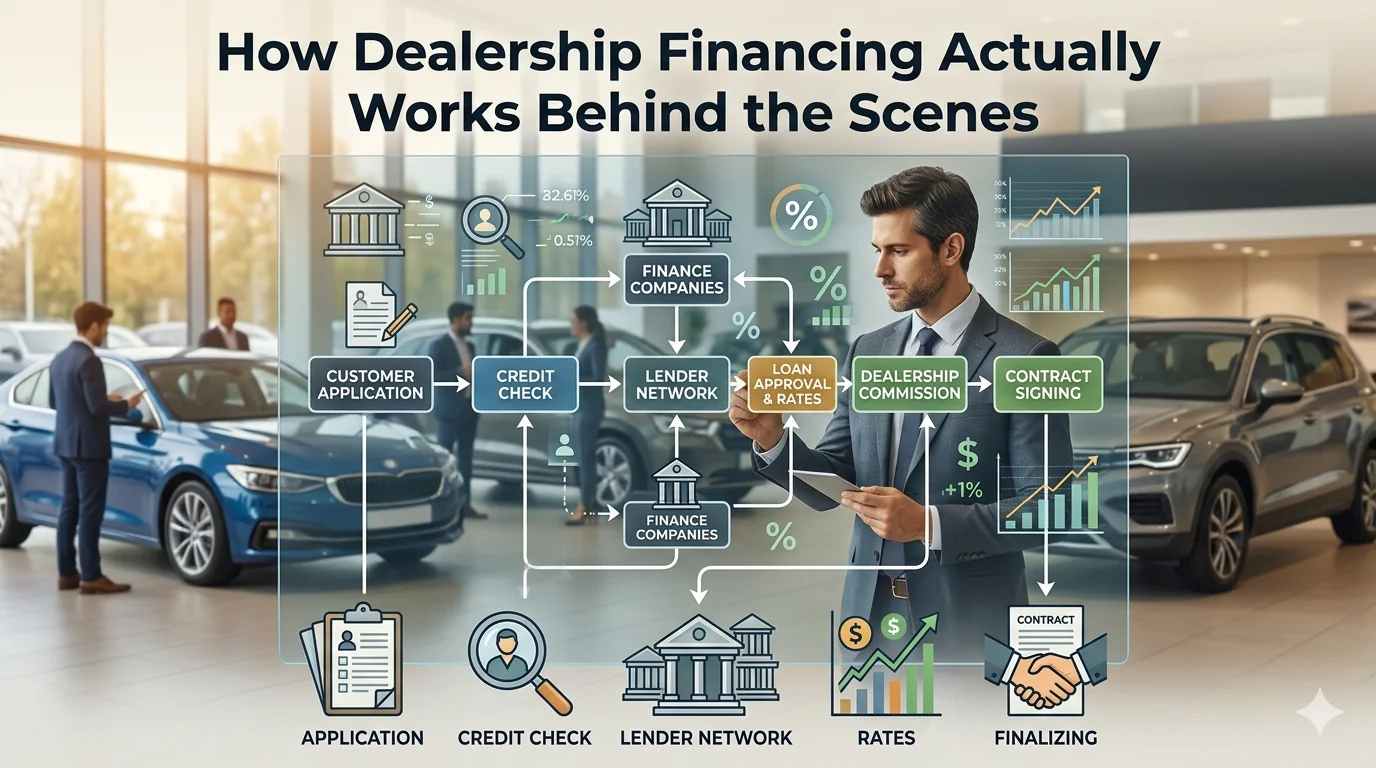
This is one of many reasons the dealership route offers protection the private market doesn't. When you buy from an AMVIC-licensed dealer, the dealer is responsible for ensuring the vehicle is lien-free at time of sale — if a lien surfaces afterward, it's our problem, not yours. If you're financing through us and want to understand how the complete financing process works, the lien registration piece is explained as part of the funding sequence.
Truck and Commercial Vehicle Registration: Weight-Based Fees
Light passenger trucks (half-ton pickups like the Ford F-150) register on the same cylinder-based fee as passenger vehicles. Where it changes is for heavier commercial vehicles.
Vehicles with a Gross Vehicle Weight (GVW) exceeding 4,500 kg register under the commercial rate schedule, which is based on GVW rather than cylinders:
| GVW (kg) | Approximate Annual Fee |
|---|---|
| Up to 4,500 kg | Standard cylinder rate |
| 4,501–5,000 kg | ~$165 |
| 5,001–7,000 kg | ~$235 |
| 7,001–10,000 kg | ~$330 |
| Over 10,000 kg | $330+ (varies by weight class) |
If you're buying a 3/4-ton or one-ton truck for work purposes and registering it as commercial, confirm the GVW class before estimating your registration cost. The pickup truck you're using for oilfield work or contracting may fall into a different fee bracket than the one you use personally.
Business vs. Personal Registration
Alberta allows vehicles to be registered in an individual's name or in a business name (sole proprietor, corporation, partnership). The registration fee structure is the same — the distinction is primarily for insurance, liability, and tax purposes.
Key differences from a practical standpoint:
- Business registration requires a valid Alberta business number or corporate registration
- Insurance classification changes when a vehicle is registered to a business — commercial use rates typically apply, which affects premiums
- GST input tax credits: Businesses registered for GST can claim the GST paid on registration fees as an input tax credit
- CCA (Capital Cost Allowance): A vehicle registered to a business may qualify for CCA deductions — consult a tax professional on the specifics
For financing purposes, business-registered vehicles follow a different approval pathway than personal vehicles. If you're looking to put a vehicle in a business name and need financing, mention it upfront — we have lenders who handle commercial registrations and understand the documentation requirements.
Registration Renewal: Timing and What to Expect
Alberta vehicle registration expires one year from the date of original registration (not December 31 like some provinces). You'll receive a renewal notice by mail approximately 60 days before expiry — the notice will include the renewal fee amount based on your vehicle's cylinder class.
Registration can be renewed:
- Online through the Alberta registry portal (credit card required)
- In person at any registry agent location in Alberta
- Up to 90 days before the expiry date (early renewal)
- Up to 60 days after expiry (late renewal with a $15 late fee)
Driving with an expired registration is a $115 fine in Alberta. Lapsed registration also creates an insurance gap in some policy structures — confirm with your insurer whether your coverage continues through a registration lapse period.
If you moved to Alberta from another province recently, the rules are slightly different — you have 90 days from establishing residency to register your vehicle in Alberta. Our post on buying a car after moving to Alberta covers the full transition process including timing and documentation.
Complete Fee Summary: What to Budget When Registering in Alberta
To make this concrete, here's a realistic fee estimate for three common scenarios in 2026:
| Scenario | Estimated Fees |
|---|---|
| New registration, 4-cyl sedan, dealer purchase | $84 (reg) + $22 (plates) = $106 |
| New registration, 6-cyl SUV, private purchase | $108 (reg) + $22 (plates) + GST on CBB value = $130 + GST |
| Out-of-province transfer, 6-cyl truck | $108 (reg) + $22 (plates) + $40 (VIN) + $100–$150 (inspection) = $270–$320 |
The single biggest variable in the table above is GST on private purchases — on a $20,000 private sale vehicle, that's $1,000 in GST due at the registry that many first-time private buyers don't anticipate. Factor it in before you shake hands on a private deal.
Registry Agent Fees: The Add-On Most People Forget
In Alberta, vehicle registration is handled through a network of private registry agents — not directly by the government. Registry agents charge their own service fees on top of the government-mandated registration and plate fees. These fees are not regulated, so they vary by location, though they tend to cluster in a predictable range.
Typical registry agent service fees for vehicle registration transactions:
- New vehicle registration: $10–$20 in registry agent service fees
- Registration transfer (ownership change): $15–$25 in service fees
- Registration renewal: $5–$15 in service fees
- Plate order: $5–$10 additional for plate processing
- PPSR (lien) search: $10–$15 per search
These amounts are small individually but add up. A full new registration with a PPSR search and a plate order can generate $30–$50 in registry agent service fees on top of the government fees. When you're budgeting a vehicle purchase, round up your registry cost estimate by $40–$50 to account for this variable.
Some registry agents in Calgary and Airdrie offer online or drive-through registration services — convenient if you're pressed for time. The service fees at these locations tend to be at the higher end of the range, but the time savings often justify it for buyers who don't want to stand in a traditional lineup.
Documentation Fees at the Dealership: What's Included
When you purchase a vehicle from a dealer in Alberta, you'll typically see a documentation or administration fee on the purchase contract. This fee — commonly in the $300–$600 range — covers the dealer's cost to handle registration paperwork, ownership transfer, lien discharge on the traded or financed vehicle, and related administrative work.
AMVIC regulations require dealers to disclose this fee before finalizing the sale — it cannot be added at signing without prior disclosure. The fee is legitimate and covers real work: properly handled paperwork at a dealer means you walk out with registration processed, plates on the vehicle, and financing documented correctly. Errors in registration handling can take weeks to unwind through the registry system.
The documentation fee does attract GST (5%) as a service charge. So a $495 doc fee costs $519.75 all-in. This is standard across all AMVIC-licensed dealerships in Alberta — it's not a mark that one dealer is more expensive than another, it's just part of the transaction cost of buying through the regulated dealer channel.
When comparing total cost of a dealer purchase vs. a private sale, the dealer's doc fee is often offset by the GST advantage: you don't pay GST at the registry because the dealer collects it. The private sale might look cheaper on the sticker price, but once you add GST at the registry, PPSR search fees, and the risk premium of buying without AMVIC protection, the gap narrows considerably. Our detailed analysis of private sale vs dealer purchase in Alberta walks through the full math side by side.
Getting Into a Vehicle Without Fee Surprises
The registration fee picture in Alberta is manageable once you know where to look. The cylinder-based annual fee is predictable, plate fees are fixed, and the only real curveball is GST on private purchases and the out-of-province inspection requirement.
When you buy through a dealership, the registration and documentation process is handled for you — you sign, we file, and the vehicle comes back registered and plated. If you want to understand the full cost picture before you commit to a specific vehicle or buying method, our team in Airdrie can walk through the numbers with you in plain terms. We also have an about page with our full contact details if you want to reach us before coming in.
Ready to look at your options? Browse our inventory and start a financing application — we'll help you figure out the full cost of getting into the right vehicle, registration fees included. Or use our payment calculator to see what different purchase prices look like on a biweekly schedule before you apply.
Compare and Apply
- Bad Credit Financing — Complete Guide — auto loans for all credit situations
Financing Resources
Related Articles
Ready to Find Your Vehicle?
Browse our inventory or apply for financing. All credit situations welcome.
★★★★★ 106+ Google Reviews · AMVIC Licensed · Free Delivery 300km