
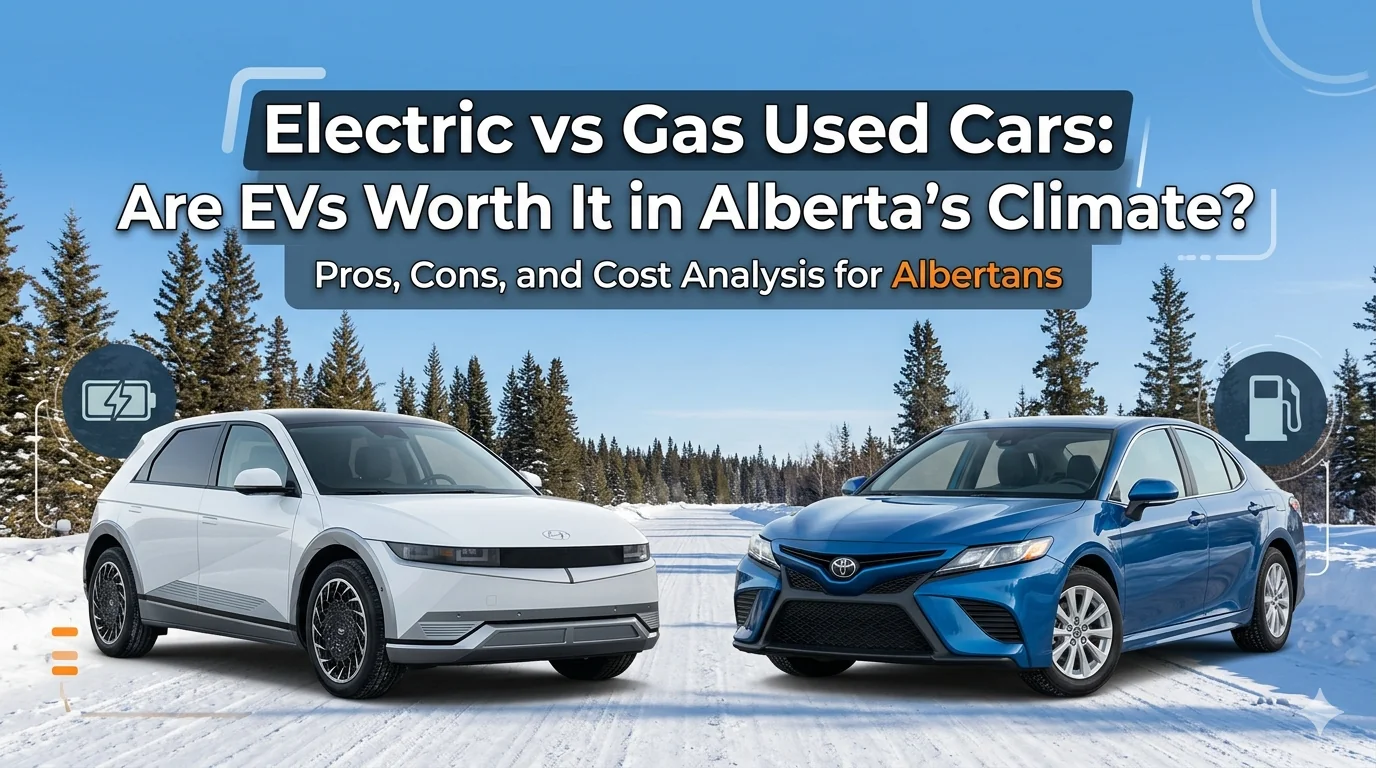
Electric vs Gas Used Cars: Are EVs Worth It in Alberta's Climate?
In this article
- The Cold Hard Truth About EVs in Alberta Winters
- What That Means Practically
- Alberta's Charging Infrastructure Reality
- Used EV Options: What's Actually Available in Alberta
- Nissan Leaf (2018–2022)
- Chevrolet Bolt EV (2017–2023)
- Tesla Model 3 (Standard Range and Long Range)
- How Financing Works for Used EVs
- The 5-Year Total Cost Comparison: Used EV vs. Used Gas Sedan in Alberta
- When a Used EV Makes Sense in Alberta
- When a Used Gas Vehicle Makes More Sense
- Charging at Home vs. Public: The Math Nobody Runs
- Insurance Considerations for Used EVs in Alberta
- The Honest Verdict
- Battery Health: The One Number That Changes Everything
- Hybrid Vehicles: The Middle Ground Worth Considering
- The Cold Weather Preparation Question
- Related Buyer Guides
- Compare and Apply
Check Your Options in 3 Minutes
No credit impact. All credit situations welcome.
5.0118+ Google ReviewsAMVIC LicensedFree Delivery 300km
The conversation about used EVs in Alberta tends to go one of two ways: either electric vehicles are the obvious future and you're leaving money on the table by not buying one, or Alberta winters make EVs impractical and anyone who says otherwise has never driven the QE2 at -30°C. The honest answer is somewhere in the middle — and it depends on factors most EV articles never address for this specific province. Let's work through the real numbers.
The Cold Hard Truth About EVs in Alberta Winters
Lithium-ion batteries don't like cold. This isn't a myth or manufacturer spin — it's electrochemistry. At -30°C, which is a common Alberta winter temperature in Calgary, Airdrie, and definitely Edmonton and points north, a typical used EV loses 30–40% of its rated range. A Nissan Leaf rated at 240 km in moderate temperatures might deliver 140–160 km on a cold Alberta winter day.
That range loss compounds quickly. Add climate control running full blast to keep the cabin warm, and you're drawing battery capacity that isn't moving the vehicle. Unlike a gas engine that produces waste heat you can redirect into the cabin for essentially free, an EV's heating system is an active draw on the same battery powering your wheels.
The result: a used EV's real-world Alberta winter range is often 50–60% of its rated range. You need to plan around that number, not the EPA or Transport Canada figure on the listing.
What That Means Practically
If you buy a used Chevy Bolt rated at 417 km range, expect roughly 230–260 km on a cold Alberta winter day with the heat on. That's still functional for most daily driving — the average Canadian commutes under 50 km per day. But it eliminates the casual spontaneity of gas ownership: you cannot decide at 10 pm to drive to Edmonton tomorrow morning without thinking through charging stops.
The range anxiety that sounds theoretical in California is genuinely real in Alberta. Not because EVs are bad vehicles, but because our charging infrastructure outside Calgary and Edmonton is sparse, our winters are harsh, and our culture involves longer-distance driving between cities than most Canadian provinces. Driving from Calgary to Lethbridge or Red Deer in January in a used Nissan Leaf requires planning. Driving from Calgary to Edmonton requires multiple charging stops if you're in a base-model Leaf. In a Tesla Model 3 Long Range, Calgary to Edmonton is comfortable with one stop.
Alberta's Charging Infrastructure Reality
Alberta's public charging network is growing but remains uneven. Calgary and Edmonton have reasonable DC fast-charging coverage. Between those cities along the QE2, there are fast chargers at Innisfail, Red Deer, and Lacombe — workable if not abundant. Outside that corridor, infrastructure drops off sharply.
For a buyer in Airdrie who commutes to Calgary and occasionally travels within the Calgary metro area, public charging infrastructure is adequate. For a buyer who works in Drayton Valley, hauls to Grande Prairie twice a month, or lives in a rural community where the nearest Level 2 charger is 40 km away, the current infrastructure creates genuine limitations.
The most important infrastructure question isn't public chargers — it's whether you can charge at home. A Level 2 home charger (240V, typically $800–$1,500 installed) changes the EV ownership equation entirely. You wake up every morning with a full charge. Range anxiety largely disappears for daily driving. Public charging becomes a convenience rather than a necessity.
The garage question: If you have a garage or dedicated parking where you can install a Level 2 charger, an EV's value proposition improves dramatically. If you live in an apartment without access to charging, or park on the street, the calculus shifts significantly toward gas. This single factor predicts EV satisfaction in Alberta more reliably than almost any other variable.
Used EV Options: What's Actually Available in Alberta
The used EV market in Alberta has three realistic options for most buyers in 2026:
Nissan Leaf (2018–2022)
The most common used EV in Alberta. The 40 kWh Leaf rates 240 km, delivering roughly 140–160 km in Alberta winter conditions. The 62 kWh e+ rates 363 km, giving you closer to 200–220 km in winter. Key concern: the Leaf uses air-cooled battery management, not liquid cooling. In extreme cold, this is somewhat irrelevant (liquid cooling actually helps in heat, not cold). In warm weather, air cooling means battery degradation is faster than liquid-cooled competitors if the vehicle is regularly fast-charged. Inspect the battery health report before buying any used Leaf. Prices for a 2019–2021 used Nissan Leaf range from roughly $12,000–$20,000 in Alberta's 2026 market.
Chevrolet Bolt EV (2017–2023)
The Bolt had a high-profile recall for battery fire risk in 2021 — all affected vehicles were supposed to receive battery replacements. Verify recall completion before buying any 2017–2022 Bolt. Post-recall, the Bolt is a genuinely capable city EV with 417 km rated range (2020+), liquid-cooled battery management, and a reasonably comfortable interior. It's one of the stronger used EV values in Alberta if recall work is confirmed complete. Prices for a clean 2020–2022 used Chevrolet Bolt run $18,000–$28,000 in Alberta depending on mileage.
Tesla Model 3 (Standard Range and Long Range)
The Model 3 Long Range is the only used EV in Alberta's typical price range that handles winter driving with minimal anxiety. Its 576 km rated range translates to 340–380 km in cold Alberta conditions — enough to do Calgary-Edmonton comfortably on one charge or run a demanding daily routine without constant monitoring. Tesla's Supercharger network is also superior to any other charging network in Alberta. The trade-off is price: a clean 2019–2021 Model 3 Long Range is typically $30,000–$42,000 in Alberta's current market. That's a significant premium over the Leaf or Bolt.
How Financing Works for Used EVs
Used EVs finance the same way any used vehicle does. Alberta no longer has a provincial EV purchase incentive (the provincial program was discontinued), and the federal iZEV incentive only applies to new vehicles. There is no rebate or incentive on used EVs in Alberta in 2026 — the purchase price is the purchase price.
This matters because some buyers expect a rebate that doesn't exist, which distorts their price comparisons. Compare used EV prices to used gas prices on an apples-to-apples basis: total purchase price, no rebate offset.
Financing rates for used EVs are identical to gas vehicles — your credit profile determines your rate, not the vehicle type. Our financing application handles used EVs the same as any vehicle. Rates start from 6.99% for well-qualified buyers and vary based on your credit situation. Use the payment calculator to model exact biweekly payments for any vehicle you're considering — plug in the full price (including taxes and fees) for an accurate comparison. For the process behind the application itself, see in-house financing explained for Alberta buyers.
The 5-Year Total Cost Comparison: Used EV vs. Used Gas Sedan in Alberta
Let's run an actual comparison. Used 2020 Nissan Leaf (40 kWh, 80,000 km) vs. used 2020 Toyota Corolla (80,000 km), both purchased in Alberta in 2026.
| Cost Category | 2020 Nissan Leaf | 2020 Toyota Corolla |
|---|---|---|
| Purchase price (approx.) | $16,500 | $18,500 |
| Fuel/electricity (5 years, 20,000 km/yr) | ~$3,800 (home charging at Alberta average) | ~$10,500 (avg. fuel cost at ~9L/100km) |
| Insurance (5 years, estimated) | ~$9,500 | ~$8,200 |
| Maintenance (oil changes, filters, brakes) | ~$2,000 (no oil changes; brake savings partial) | ~$4,500 |
| Level 2 charger installation | ~$1,200 | $0 |
| Estimated 5-year total | ~$33,000 | ~$41,700 |
On this comparison, the Leaf comes out ahead by roughly $8,700 over five years — meaningful savings. But those savings depend heavily on home charging being available (if you're paying for public Level 3 fast charging, the fuel cost advantage shrinks or disappears), on driving primarily in the city, and on the Leaf's battery holding capacity reasonably well. A Leaf whose battery has degraded to 70% capacity fundamentally changes the equation.
For a full methodology on comparing vehicle ownership costs including insurance, see our post on total cost of car ownership in Alberta. Insurance premiums are another variable worth modelling — the cheapest cars to insure in Alberta page shows where EVs and gas vehicles compare on this metric.
When a Used EV Makes Sense in Alberta
A used EV is a strong choice if most of the following are true for you:
- You have a garage or dedicated parking where you can install a Level 2 home charger
- Your primary driving is urban or suburban — commuting within Calgary, Airdrie, or Edmonton
- Your daily round-trip is under 100 km in summer, under 80 km in winter
- You have access to a second vehicle (gas) for longer trips, or you're comfortable planning charging stops on road trips
- You're attracted by the lower maintenance profile (no oil changes, less brake wear, fewer fluid services)
- You're buying the Bolt post-recall-repair, or a Leaf with battery health confirmed above 80%, or a Model 3
When a Used Gas Vehicle Makes More Sense
A used gas vehicle is the better choice if most of the following are true:
- You regularly drive 400+ km in a single trip — highway travel to Edmonton, Banff, Lethbridge, or beyond
- You live in rural Alberta or a smaller city with limited public charging infrastructure
- You don't have home charging ability and would rely on public chargers
- Your vehicle does double duty: daily commuter and occasional trailer puller or work vehicle
- You want simplicity — fill up anywhere, go anywhere, no planning required
- Your budget is under $15,000, where gas options are more numerous and in better condition than affordable used EVs
The best used cars under $10,000 — where many credit-challenged buyers start — are almost all gas vehicles. See our breakdown of reliable used cars under $10,000 for what's available in that range in Alberta.
Charging at Home vs. Public: The Math Nobody Runs
Home charging at Alberta's electricity rate (roughly $0.10–$0.15 per kWh residential) makes EVs genuinely economical. Charging a 40 kWh Leaf from near-empty to full costs $4–$6. At 240 km of rated range (call it 160 km real-world in winter), you're paying $2.50–$3.75 per 100 km — versus $11–$14 per 100 km for a gas vehicle averaging 8–10L/100km at current Alberta gas prices.
Public Level 2 charging is still significantly cheaper than gas. Public DC fast charging is where the economics start to compress — commercial fast chargers charge by the kWh at rates that can run $0.30–$0.45/kWh, which narrows but doesn't eliminate the fuel cost advantage.
The break-even on home charger installation is typically 12–24 months of regular home charging versus what you'd spend on gas. After that, you're banking the difference every month.
Insurance Considerations for Used EVs in Alberta
Used EVs in Alberta insure at similar rates to comparable gas vehicles, but there are nuances. Replacement parts for EVs — particularly battery-related components — are expensive, which can push comprehensive premiums higher. Collision repair costs on newer EVs can also be elevated due to sensor integration and specialized repair requirements. An older Leaf or Bolt doesn't carry this premium as severely as a newer Tesla, but it's worth getting insurance quotes before committing to a purchase. After you've bought, our post on lowering car insurance after buying a used vehicle in Alberta covers how to reduce premiums without cutting coverage you actually need.
The Honest Verdict
Used EVs are worth it in Alberta for a specific type of buyer: urban commuter, home charging available, daily range under 100 km, and comfort with planning around range limitations in winter. For that buyer, a used Chevy Bolt or Nissan Leaf saves real money over five years and offers a genuinely pleasant day-to-day driving experience.
For rural Alberta buyers, frequent highway travelers, or anyone without home charging access, a used gas vehicle remains the more practical choice in 2026. The charging infrastructure and cold-weather range simply aren't at a level where EV ownership is seamless for these use cases yet.
The market for used EVs is also evolving quickly. Prices on used EVs have been dropping, which improves their value proposition as a percentage of the gas alternative. The current used car market — as we break down in our post on used car prices in 2026 Canada — has EVs trading at some of their most accessible prices in years. That trend is likely to continue modestly as more used EVs enter the market from off-lease and trade-ins.
Battery Health: The One Number That Changes Everything
If you take away one practical point from this entire article, make it this: check the battery health percentage before buying any used EV. This single number tells you more about the vehicle's real-world value than any other data point on the listing.
EV batteries degrade over time and charge cycles. A 2019 Nissan Leaf with 90% battery health still delivers roughly 216 km of rated range (and about 130–145 km in an Alberta winter). The same vehicle with 75% battery health delivers only 180 km rated range — call it 108–120 km in winter conditions. That's a vehicle where a round-trip Airdrie-to-Calgary commute with an after-work errand becomes a nerve-wracking exercise in range management.
How to check:
- Nissan Leaf: Use the LeafSpy app via a Bluetooth OBD-II reader. This gives you State of Health (SoH) as a percentage and shows individual cell data. A full LeafSpy report takes about 10 minutes to run and costs under $30 in equipment.
- Chevy Bolt: The Bolt's onboard display shows the estimated remaining range, but for a proper battery health assessment, you need an OBD scan or dealer diagnostics. Ask the seller to provide a dealer-run state of health report.
- Tesla Model 3: Tesla's app and vehicle display show estimated range. A meaningful degradation check involves charging to 100% and comparing the displayed range to the original EPA rating for that model year.
Any used EV seller who refuses to allow a battery health check before purchase is telling you something important about the vehicle. Walk away.
Hybrid Vehicles: The Middle Ground Worth Considering
If the range anxiety of a full EV concerns you but you want the fuel savings of electric drive, hybrid vehicles represent a legitimate middle ground in Alberta. Used Toyota Prius, Honda Accord Hybrid, and Toyota RAV4 Hybrid vehicles sidestep the range and cold-weather limitations of full EVs while delivering significantly better fuel economy than equivalent gas-only vehicles.
A used Toyota RAV4 Hybrid, for example, averages around 7–8L/100km in real-world Alberta driving compared to 10–12L/100km for a comparable RAV4 AWD. Over 20,000 km per year at Alberta fuel prices, that difference saves $600–$800 annually. There's no range anxiety, no home charging required, no infrastructure dependency. The trade-off is that used RAV4 Hybrids command significant premiums — they hold value better than almost any other used vehicle in Alberta because demand has consistently outpaced supply.
For buyers who want efficiency without the EV commitment, hybrids in Alberta are often a better practical choice than full EVs — though the math depends heavily on your specific use case and what's available in your budget at the time you're shopping.
The Cold Weather Preparation Question
One last Alberta-specific factor: used EVs in this province benefit significantly from a few inexpensive modifications that most listings won't mention but savvy owners have already done.
A block heater equivalent for EVs is a battery pre-conditioning system — essentially parking the vehicle on charge overnight and telling it to warm the battery to operating temperature before you leave in the morning. Every EV in Alberta should be set up this way. It dramatically reduces the cold-weather range penalty because the battery is already at optimal temperature when you start driving, rather than spending the first 10–15 km warming up. The Bolt and Model 3 handle this through their apps. The Leaf's pre-conditioning is less sophisticated but still helpful.
Buying a used EV that already has a Level 2 home charger installed at the seller's property is also worth noting — if they're willing to include it in the sale, that's $800–$1,500 in equipment you don't have to purchase and install separately.
Shift Happens Auto Sales works with buyers across Alberta on all vehicle types — gas, hybrid, and EV. Our financing options cover every credit situation, and we can help you compare specific vehicles in our network. Start your application today or reach out if you have questions about whether a specific used EV fits your situation. We're based in Airdrie and serve buyers across Alberta — real answers, no pressure.
Compare and Apply
- Complete Bad Credit Car Buying Guide (Alberta) — your complete Alberta subprime buyer guide
Financing Resources
Cars you could drive home
See all inventory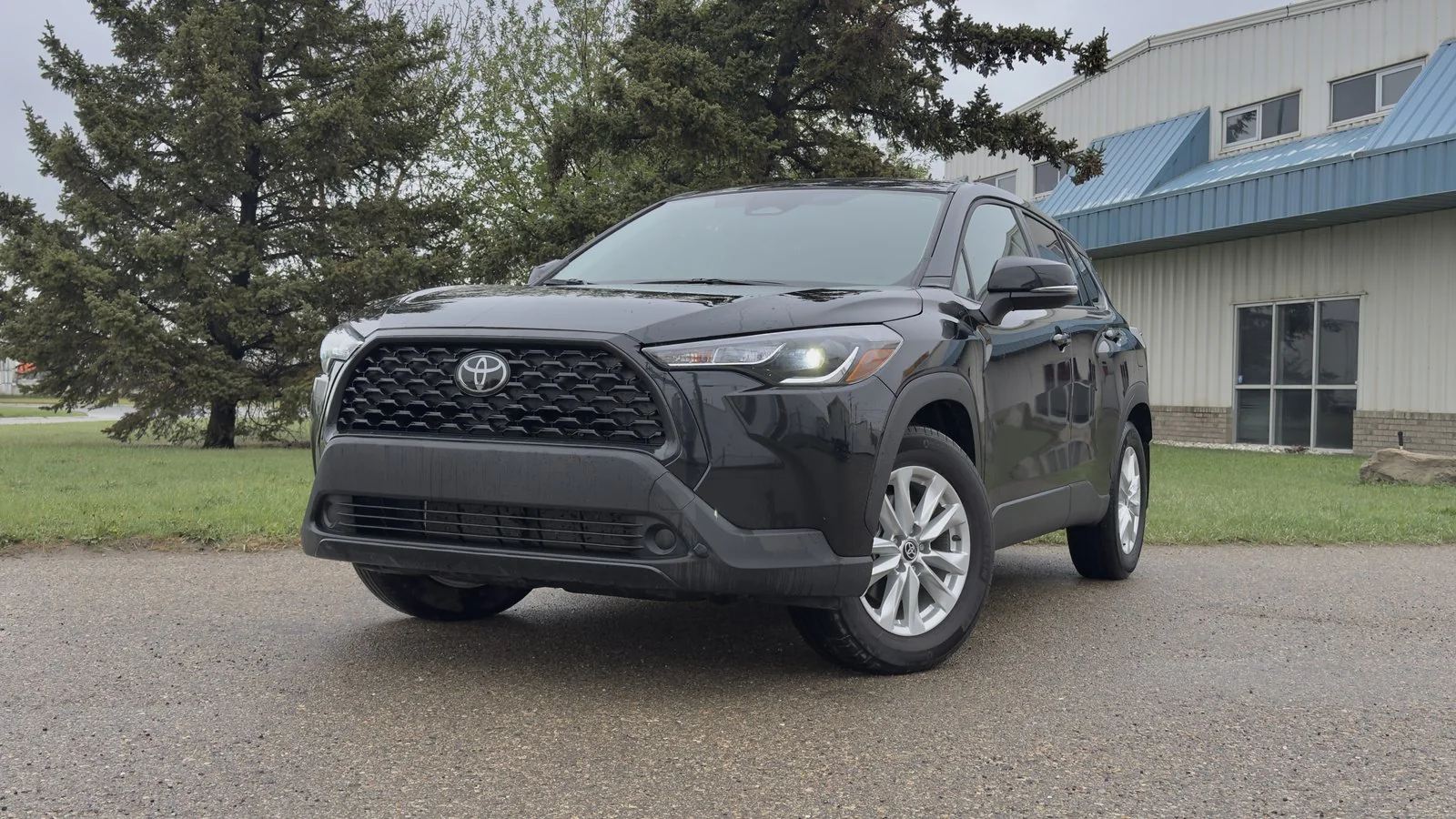
2024 Toyota Corolla Cross LE
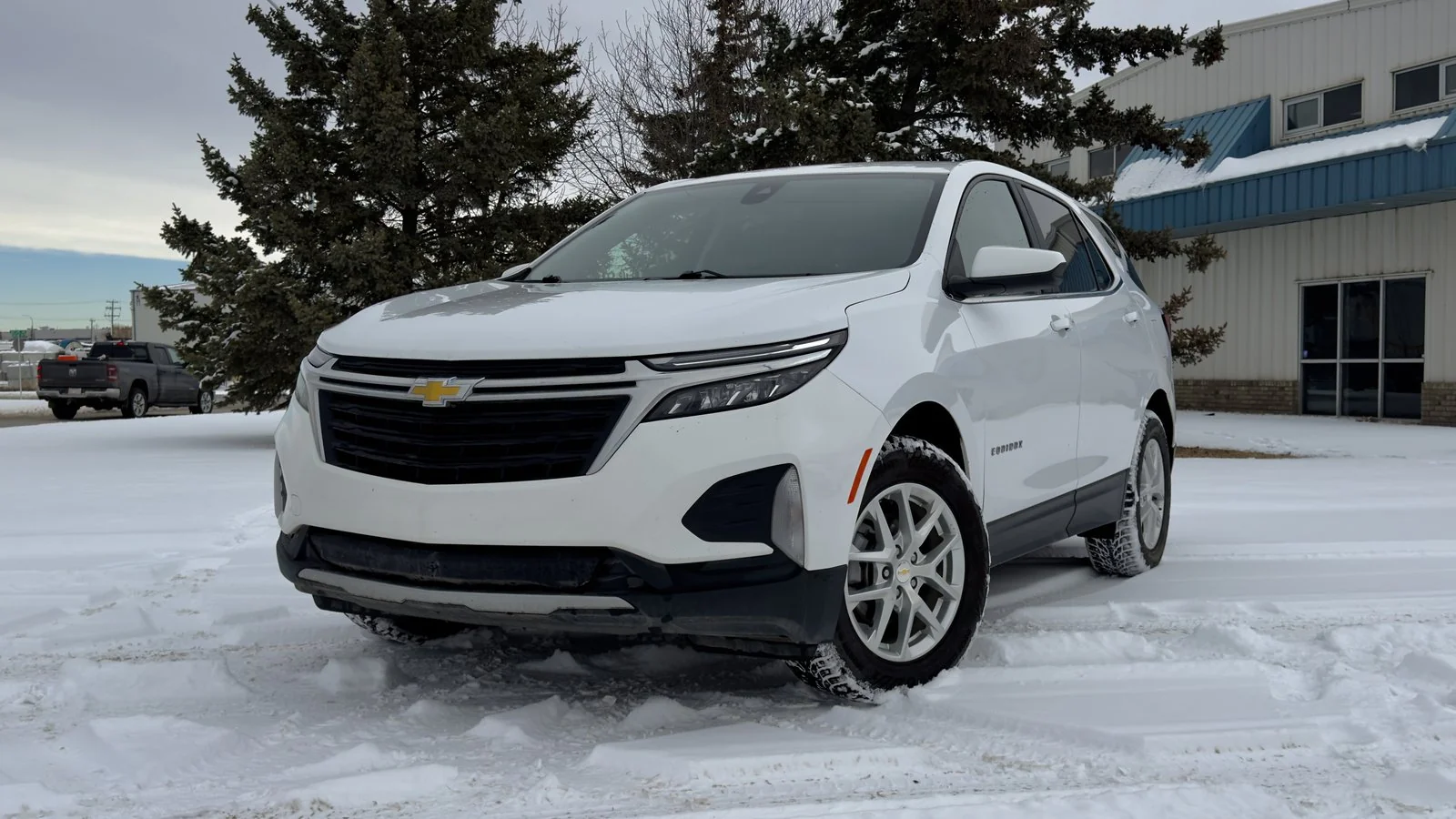
2022 Chevrolet Equinox LT
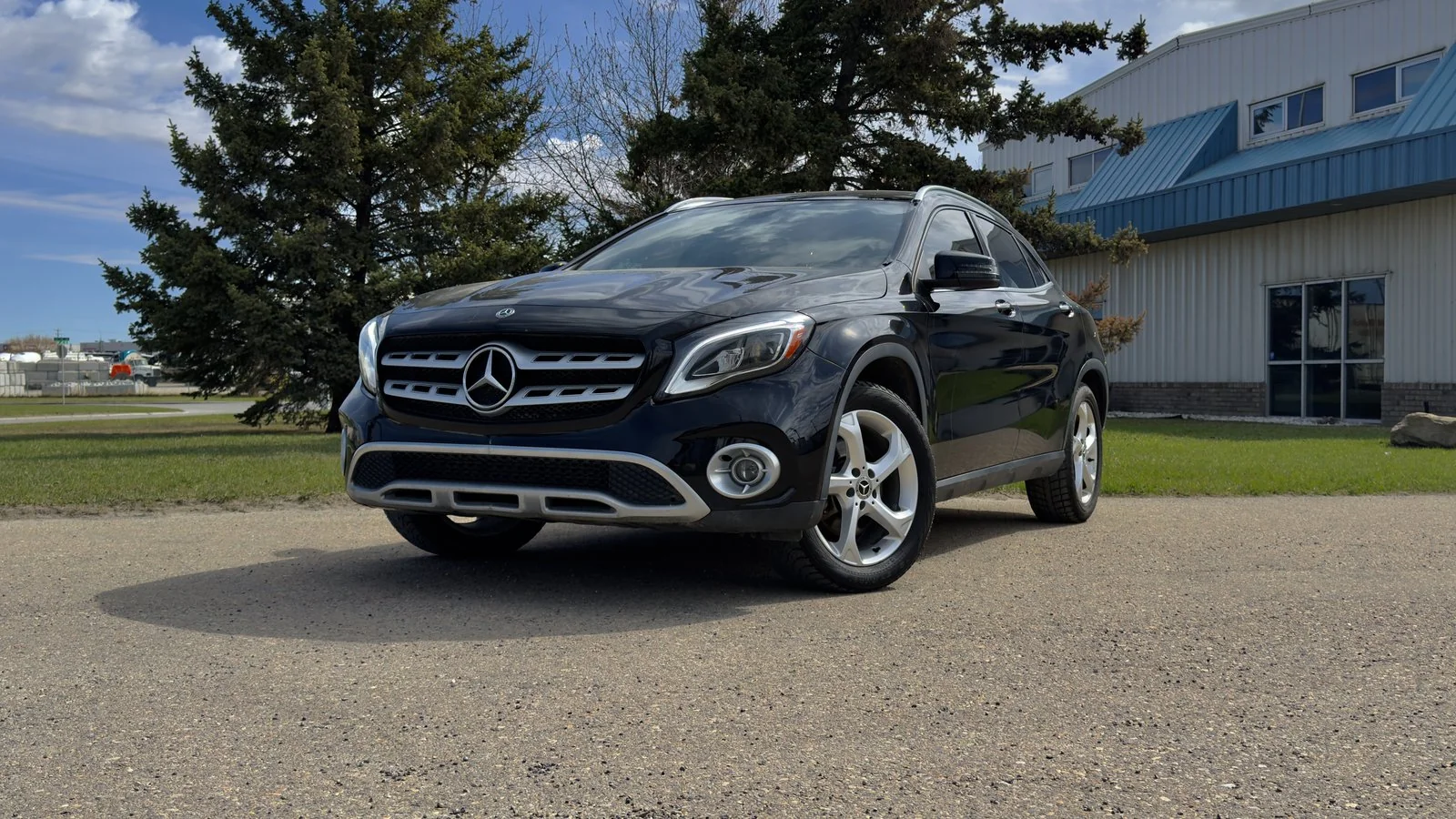
2020 Mercedes-Benz GLA250 4Matic
Not seeing it? We'll find it.
We source through our dealer partner network across Western Canada: 25,000+ vehicles to choose from. Tell us what you want and what works for your budget.
Find my car3 min · no credit impactOAC = on approved credit. Payments are examples at 6.49% APR over 84 months with $0 down, based on each vehicle's advertised price; GST extra. Your rate depends on your credit (4.99%–29.9% APR).
Related Articles

Ready to Find Your Vehicle?
Browse our inventory or apply for financing. All credit situations welcome.
5.0118+ Google ReviewsAMVIC LicensedFree Delivery 300km