
Adverse Action Notices: Your Rights When a Car Loan Is Declined
In this article
- What to Check After a Car Loan Is Declined
- Your Legal Rights When a Car Loan Is Declined in Canada
- Common Reasons Car Loans Are Declined in Alberta
- 1. Debt-to-Income Ratio Too High (TDS Over 44%)
- 2. Too Recent Derogatory Event
- 3. Multiple Recent Credit Inquiries
- 4. Insufficient Income Documentation
- 5. Vehicle Age or Mileage Beyond Lender Limits
- How to Read Your Credit Bureau After a Decline
- Strategic Steps After a Decline
- Step 1: Ask the Lender Why
- Step 2: Request Your Free Bureau Copy
- Step 3: Dispute Any Errors
- Step 4: Address Legitimate Issues
- Step 5: Reapply Strategically
- The Calgary and Airdrie Market Context
- Adjacent Situations
- When Shift Happens Makes Sense for You
- Frequently Asked Questions
- How often can I get a free copy of my credit report in Alberta?
- If my car loan was declined due to my credit score, what score would I need to qualify?
- Can I appeal a car loan decline in Canada?
- Will getting my own credit report hurt my credit score?
- Compare and Apply
Check Your Options in 3 Minutes
No credit impact. All credit situations welcome.
5.0118+ Google ReviewsAMVIC LicensedFree Delivery 300km
What to Check After a Car Loan Is Declined
After a car loan is declined, your credit report is the first thing to check. The Financial Consumer Agency of Canada says: "Lenders use this report to decide if they'll offer you credit or loans and at what interest rate." In Alberta, a credit bureau must give you your file on written request "once each year at no charge", under the Credit and Personal Reports Regulation.
Your car loan application just came back declined. The finance manager says the lender "couldn't do anything" and suggests you try again with more money down. What you can do next is check your credit report. The same agency advises: "Check your credit report regularly to make sure the information is accurate. Look for errors or signs of fraud, such as accounts you didn't open."
Your Legal Rights When a Car Loan Is Declined in Canada
In Alberta, credit bureaus are covered by Part 5 of the Consumer Protection Act and by the Credit and Personal Reports Regulation. The Financial Consumer Agency of Canada adds: "You may request that Equifax and TransUnion mail you a free copy of your credit report."
Specifically, you are entitled to:
- A free copy of your credit report from a credit bureau — in Alberta, "once each year at no charge" on your written request
- The right to dispute inaccurate information in the credit file that contributed to the decision
What you're NOT entitled to under Canadian law (unlike US law) is the specific credit score used or a numerical scoring breakdown. However, many lenders will provide this voluntarily if asked, and some disclose it as standard practice.
What to do immediately after a car loan decline in Alberta: (1) Ask the lender for the reason in writing — don't accept a verbal "we couldn't do it." (2) Identify which bureau they used (Equifax or TransUnion). (3) Request your free credit report from that bureau. (4) Compare the bureau file against what you know — look for errors, fraudulent accounts, or outdated information. (5) Dispute any inaccuracies directly with the bureau. A single wrong entry (e.g., a paid collection showing as unpaid, or a 2018 account showing an incorrect 2023 late payment) can change your approval outcome. After addressing errors, re-check your eligibility before applying again.Common Reasons Car Loans Are Declined in Alberta
Knowing why matters for what you do next. The most common adverse action reasons on Canadian subprime car loan applications, in approximate frequency order:
1. Debt-to-Income Ratio Too High (TDS Over 44%)
The most common decline reason — existing debt payments consume too much of your income to accommodate a car payment within lender guidelines. This isn't a credit score problem; it's a cash flow problem. Solutions: reduce other debt before applying, increase income documentation, add a co-applicant, or choose a less expensive vehicle. For more on how lenders calculate your maximum loan eligibility, see our guide on income-to-loan math in Alberta.
2. Too Recent Derogatory Event
Bankruptcy, consumer proposal, or repossession within the past 12–24 months frequently triggers decline, even from subprime lenders. The required waiting period varies by lender — most want 12 months post-discharge or post-repossession with clean history during that period. For post-bankruptcy and post-proposal financing timelines, see bankruptcy car financing and second chance auto financing.
3. Multiple Recent Credit Inquiries
Applying to many lenders in a short period creates multiple hard inquiries on your bureau. Equifax says that a hard inquiry "usually will impact your credit scores" and that "Recent hard inquiries on your credit reports tell a lender that you were recently shopping for new credit."
4. Insufficient Income Documentation
Income that can't be verified doesn't exist from a lender's perspective. Cash income, undisclosed side jobs, or inconsistent bank deposits without clear source documentation create approval problems even when real income is sufficient. Lenders use pay stubs, Notices of Assessment, bank statements, and employment verification letters — any income you can't document to this standard doesn't count in the TDS calculation.
5. Vehicle Age or Mileage Beyond Lender Limits
Lenders set maximum vehicle age (often 10–12 model years) and mileage (often 150,000–175,000 km) thresholds. A vehicle beyond these limits may be declined not because of your creditworthiness but because the collateral doesn't meet lender standards. This is particularly common when buyers bring specific vehicles to dealers for financing — the vehicle may not qualify with institutional lenders even if you do.
How to Read Your Credit Bureau After a Decline
Once you receive the free bureau copy, here's what to examine systematically:
- Personal information section — check your name, address history, SIN (partially masked), and date of birth. Errors here can indicate mixed files (your bureau merged with someone else's).
- Trade lines (accounts) — every credit account should be recognizable. Accounts you don't recognize may be fraud. For accounts you do recognize, check: current balance, payment history codes (the R1–R9 or I1–I9 codes), and account open/close dates.
- Collections section — any active collections will be listed here. Verify: does the collection relate to an actual debt? Is the amount accurate? Is the open date within the 6-year reporting period?
- Public records — judgments, bankruptcies, consumer proposals. Verify accuracy of dates and amounts.
- Inquiries — hard inquiries from lenders and soft inquiries from monitoring services. Inquiries you don't recognize should be investigated.
Any inaccurate, outdated (past 6-year reporting period), or fraudulent entry can be disputed directly with the bureau — Equifax Canada and TransUnion Canada both have online and written dispute processes. In Alberta, when you file a written statement of protest, the bureau "must, within 45 days after the filing of the statement, report to the individual in writing regarding the confirmation, correction, supplementing or deletion of the information in the individual's file". Understanding what hurts your credit score helps you prioritize which items to address first for maximum approval impact.
Strategic Steps After a Decline
Step 1: Ask the Lender Why
Call or email the lender and ask for the reason for the decision in writing. Reference the date of your application and ask which credit bureau, if any, was used.
Step 2: Request Your Free Bureau Copy
Contact Equifax or TransUnion (Equifax: 1-800-465-7166, TransUnion: 1-800-663-9980) and request your free credit report. You can also pull your credit reports for free at any time through each bureau's website — you're entitled to a free copy annually regardless of adverse action.
Step 3: Dispute Any Errors
File disputes with the bureau directly for any inaccurate entries. Provide supporting documentation (payment receipts, account closure letters, identity verification). Keep copies of everything. Successful disputes are corrected and the updated report is provided to you and to lenders who queried your bureau recently.
Step 4: Address Legitimate Issues
If the decline was accurate — high TDS, recent derogatory events, insufficient income — address the underlying issue before reapplying. Adding a co-applicant, reducing debt, saving more down payment, or waiting out the post-derogatory event period are all paths forward. For a clear look at what each credit tier qualifies for, see bad credit car loans and the credit rebuilding timeline.
Step 5: Reapply Strategically
Once underlying issues are addressed, reapply through a multi-lender dealer rather than directly to individual institutions. One application through Shift Happens reaches 15+ lenders. If you're at this point and ready to try again, start a financing application and let us find the lender best suited to your updated profile.
The Calgary and Airdrie Market Context
In Alberta's market specifically, the Airdrie and Calgary area has a diverse lender ecosystem with significant subprime capacity — more so than many smaller centres. Lenders like Rifco, Capital One, Westlake, and others specifically target the Alberta subprime market and evaluate factors that major banks overlook. An adverse action from TD Bank doesn't mean there's no approval available anywhere — it means TD's specific risk parameters weren't met. A specialist subprime lender evaluating the same file may reach a different conclusion based on employment stability, down payment, or vehicle collateral factors.
Adjacent Situations
Want the next layer of detail? These guides cover the closest-adjacent situations to this one:
- Apply Alone or With a Co-Applicant: The Credit Math
- Why Your Last Car Loan Was Approved But This One Isn't
- Pre-Approved But Not Ready to Buy: What Your Approval Locks In
- Loan-to-Value Ratio Explained: Why Lenders Care
- Rate-Shop Window: Apply to Multiple Lenders Without Hurting Your Score
- How to Stack Pre-Approvals Without Hurting Your Credit Score
When Shift Happens Makes Sense for You
Reach out to us if you: (1) were recently declined and want to understand why and what's next, (2) want to apply through 15+ lenders with a single application to maximize approval options, (3) have any credit situation from prime to deep subprime and are in Alberta. Not a fit if: new vehicles only, lease-only, or buying outside western Canada.
The fastest next steps: check your approval likelihood or start a financing application. No impact on your credit score until you formally proceed.
Frequently Asked Questions
How often can I get a free copy of my credit report in Alberta?
Under Alberta's Credit and Personal Reports Regulation, a credit bureau must furnish your file "once each year at no charge" on your written request. The Financial Consumer Agency of Canada also says: "You may request that Equifax and TransUnion mail you a free copy of your credit report."
If my car loan was declined due to my credit score, what score would I need to qualify?
There is no universal minimum score — requirements vary by lender and vehicle. Most Alberta prime lenders require 660+. Subprime lenders (500–659) accept lower scores with compensating factors like higher down payment, stable income, and low existing debt. Deep subprime lenders may go below 500 with the right deal structure. Rather than targeting a score, address the specific adverse action reasons — a score 50 points below a lender's threshold may be correctable faster than you expect if the underlying issue (unpaid collection, error) is addressable.
Can I appeal a car loan decline in Canada?
Formal appeal processes are rare in auto lending — unlike mortgages, auto loan decisions are typically algorithmic and delegated to dealer partners. The practical equivalent of an "appeal" is: address the specific decline reasons, then reapply (ideally through a different lender more suited to your profile). Multi-lender dealers are valuable here because submitting to 15+ lenders simultaneously identifies the most suitable lender rather than retrying the same one that declined you.
Will getting my own credit report hurt my credit score?
No. Equifax says: "Obtaining your own credit reports will not affect your credit scores". The Financial Consumer Agency of Canada says the same: "Checking your credit report or score won't affect your credit rating."
Compare and Apply
- Bad Credit Car Loans — Complete Guide — bad credit car financing in Alberta
Financing Resources
Cars you could drive home
See all inventory
2024 Toyota Corolla Cross LE
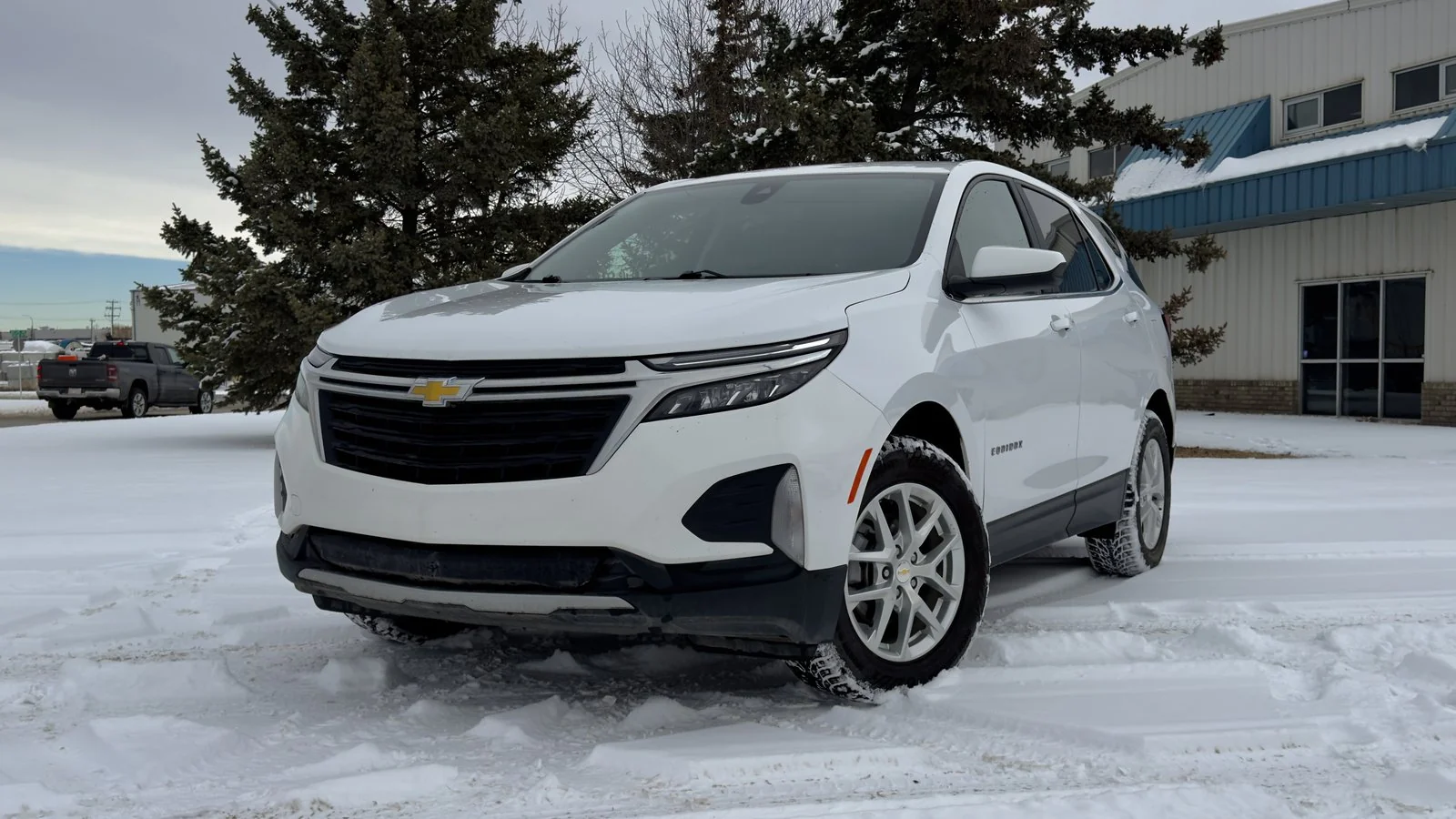
2022 Chevrolet Equinox LT
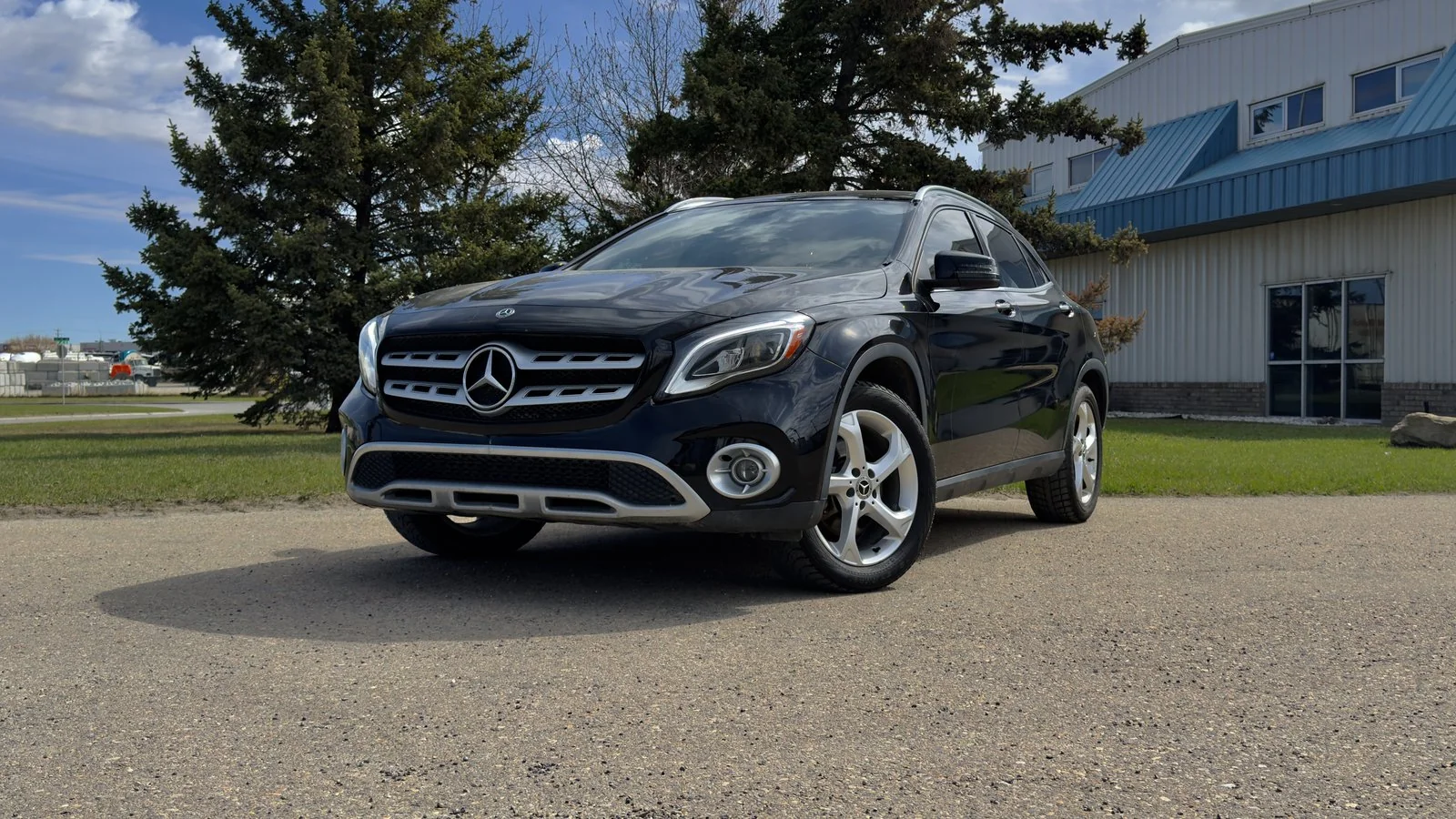
2020 Mercedes-Benz GLA250 4Matic
Not seeing it? We'll find it.
We source through our dealer partner network across Western Canada: 25,000+ vehicles to choose from. Tell us what you want and what works for your budget.
Find my car3 min · no credit impactOAC = on approved credit. Payments are examples at 6.49% APR over 84 months with $0 down, based on each vehicle's advertised price; GST extra. Your rate depends on your credit (4.99%–29.9% APR).
Related Articles

Ready to Find Your Vehicle?
Browse our inventory or apply for financing. All credit situations welcome.
5.0118+ Google ReviewsAMVIC LicensedFree Delivery 300km