
Going Back to School Mid-Career: Car Financing as a Mature Student

In this article
- Can a mature student in Alberta get a car loan while in school?
- Why Mature Student Applications Are Different
- What Income Sources Actually Count
- Credit Score Reality for Mid-Career Students
- The Right Vehicle for a Student Budget
- Building a Strong Application Package
- After Graduation: The Refinancing Play
- How Down Payment Affects Your Approval Odds and Rate
- The True Cost of a Student Vehicle: What Your Budget Actually Needs to Cover
- Adjacent Situations
- When Shift Happens Makes Sense for You
- What to Expect at Each Stage of the Application
- Frequently Asked Questions
- Does student loan income count for a car loan in Alberta?
- Can I get a car loan if I'm in school full-time with no job?
- Will taking a car loan hurt my Alberta Student Aid eligibility?
- What credit score do I need as a mature student to get a car loan in Alberta?
- Can I refinance my student car loan after I graduate and start working?
- Compare and Apply
Check Your Options in 3 Minutes
No credit impact. All credit situations welcome.
5.0118+ Google ReviewsAMVIC LicensedFree Delivery 300km
You're 38, you've been laid off from the oilfield, and you've just enrolled in a two-year trades program at SAIT. Your truck payment is overdue, your income dropped by 60%, and the bus from Airdrie to campus adds 90 minutes each way. Getting a reliable vehicle becomes an urgent financial problem — and applying for a car loan as a student, even a mature student with a real work history, feels more complicated than it should be.
Can a mature student in Alberta get a car loan while in school?
Yes. Mature students with verifiable income — student loans, part-time employment, EI, or spousal support — can qualify for used vehicle financing in Alberta. A 40-year-old student with $2,200/month in government-funded income and 5 years of prior credit history typically qualifies for $12,000–$18,000 in financing at rates between 14.99% and 24.99%, depending on credit score. Lenders weight employment history more heavily for mature students than for 18-year-olds, which often works in your favour.
Why Mature Student Applications Are Different
Traditional students — 18 to 22 years old, no credit, no work history — are hard to finance because lenders have nothing to assess. Mature students are the opposite problem: you have a history, but it might include a gap, a recent dip in income, or a credit score that slipped during a difficult period. Lenders need to understand what happened, why it's temporary, and how the new career path restores income stability.
Alberta's student loan system (NSLSC + Alberta Student Aid) issues disbursements that many lenders count as verifiable income. If you're receiving $14,000/year in combined federal and provincial aid, that's roughly $1,167/month — not enough on its own for most approvals, but a meaningful addition to a part-time job or spousal income. The key is documentation: disbursement letters, enrollment confirmation, and a written explanation of your career plan matter more in a mature student application than in almost any other file.
At Shift Happens, our lenders see mature student applications as recoverable-income files, not zero-income files. That's a fundamentally different risk calculation — and it usually produces a better outcome than you'd expect.
What Income Sources Actually Count
Lenders applying subprime underwriting to mature students will look at every income stream on the table. Here's what typically qualifies:
- Canada Student Loans / Alberta Student Aid disbursements — counted as income if shown on official award letters. Treated similarly to government benefits.
- Part-time employment — even 20 hours/week at $18/hour = $1,440/month gross. Many programs allow part-time work without affecting aid eligibility. If you have a part-time job and need a car loan, lenders can work with combined income streams.
- Employment Insurance (EI) — if you're still within your EI benefit period and attending school with ESDC approval, EI payments count fully.
- Spousal or common-law income — if you're applying jointly or with a co-signer, your partner's income is included. A household earning $5,500/month combined qualifies for a very different loan than a single-income file at $2,000.
- RRSP withdrawals or severance income — some lenders accept documented severance as bridge income for 12-24 months.
- Rental income — if you're renting part of your home, documented rental income (lease agreement + 3 months bank statements) is accepted.
The floor most subprime lenders want to see is $1,800-$2,000/month in provable income. If you can hit that threshold through combining 2-3 sources, you're fundable.
Credit Score Reality for Mid-Career Students
If you had good credit before the career transition — say, a 680 score — and it's dipped to 610 because of a late payment during the layoff period, that's a near-prime file. Rates might land between 9.99% and 14.99%. If the score is in the 540-580 range because of multiple missed payments or a collection, you're in subprime territory at 19.99%-24.99%, but still very much fundable with the right lender.
Your credit score and car financing options are directly linked — every 50-point band changes your rate bracket materially. A $15,000 loan at 14.99% over 72 months works out to approximately $148 biweekly. At 22.99% over 72 months, that same loan runs roughly $175 biweekly — a $27 difference that matters when you're on a student budget. Knowing your score before you walk into a dealership helps you set realistic expectations.
Mature student financing reality check: A 38-year-old student in a 2-year trades program with $2,400/month combined income (student aid + part-time work), a credit score of 580, and $1,500 down typically qualifies for $12,000–$16,000 in used vehicle financing at 19.99%–24.99% APR over 60–72 months. That's a biweekly payment in the $150–$185 range. After program completion and income restoration, refinancing to 9.99%–12.99% is realistic within 24 months.The Right Vehicle for a Student Budget
Buying the right vehicle matters as much as qualifying. A mature student financing a $22,000 truck with a $2,000/month budget is setting themselves up for stress. The goal during school is to minimize total cost of ownership while keeping a reliable vehicle. That usually means:
- 2015-2019 model year — post-recall resolution, pre-major depreciation
- 100,000-180,000 km — engines that have broken in but aren't at end-of-life
- Reliable nameplates: Toyota Corolla, Honda Civic, or Hyundai Elantra for commuter use; Toyota RAV4 or Honda CR-V if you need cargo space or AWD for Alberta winters
- Loan amount under $15,000 to keep biweekly payments below $170
If you're in a trades program and need a truck — welding, electrician, plumbing — budget for a 2014-2017 Ford F-150 or a GMC Sierra in the $14,000–$18,000 range. These trucks hold their value and are workhorses that won't leave you stranded on a job site. Just factor in higher fuel and insurance costs.
If you're wondering how much you can realistically qualify for on your current income, the affordability calculator runs the math on your specific numbers before you talk to anyone.
Building a Strong Application Package
A mature student application succeeds or fails on documentation. Here's exactly what to bring:
- Proof of enrollment — official enrollment letter from SAIT, NAIT, Bow Valley, or your institution showing program name and expected completion date
- Student Aid award letter — shows dollar amount and disbursement schedule
- Last 2 years of employment history — your T4s or Notice of Assessment confirm you had real income before school
- Bank statements (90 days) — shows current cash flow even if income is lower
- Part-time employment letter or pay stubs — if applicable
- Explanation letter — 1 page, written by you, explaining the career transition and expected income post-graduation. Lenders read these. A clear explanation of "I left oilfield operations to become a power engineer, graduating June 2027, starting salary $75,000" changes how underwriters frame the file.
The difference between an approval and a decline is often this explanation letter. At Shift Happens, we help clients write these before submitting — it's a 30-minute step that regularly moves files from decline to approval.
After Graduation: The Refinancing Play
Here's the strategic angle most mature students miss: your car loan isn't a 72-month commitment you're stuck with. It's a credit-building instrument that you can refinance at better terms once your income restores. If you finance a $14,000 vehicle at 22.99% today, make every payment on time for 24 months, and then refinance at 12.99%, you save real money on the back half of the loan. You also exit school with a 24-month track record of perfect payment history — which is exactly what a new employer or a mortgage lender wants to see. Your vehicle becomes a credit-building asset during the schooling period, not just a transportation cost. And if you've been rebuilding credit throughout your program, the graduation timeline and the credit improvement timeline often align.
How Down Payment Affects Your Approval Odds and Rate
Down payment is the lever mature students underestimate most. When income is lower and the credit score has dipped, lenders price both risk and reward through the loan-to-value ratio — how much you're borrowing versus what the vehicle is worth. At zero down on a $14,000 vehicle, the lender is fully exposed if you default. At $2,500 down, the lender's exposure drops to $11,500 and the risk profile shifts measurably.
The practical effect: a mature student who can bring $2,000–$3,000 to the table often qualifies for a rate 2-4 percentage points lower than the same applicant with zero down. On a $14,000 loan over 72 months, the difference between 22.99% and 18.99% is about $22 biweekly — and roughly $1,900 in total interest paid. If you have a tax refund coming, a severance residual, or a small RRSP withdrawal planned, timing it to coincide with the vehicle purchase is a smart financial move.
If you're currently at zero down and can't access funds quickly, some lenders will accept a trade-in as a down payment equivalent. Even a 2008 sedan worth $2,500 applied as a trade reduces the financed amount and improves the file. The trade-in estimator gives a baseline value on your current vehicle before you walk in.
The True Cost of a Student Vehicle: What Your Budget Actually Needs to Cover
First-time mature student applicants often calculate only the biweekly loan payment — and forget the full cost of ownership. Before finalizing a vehicle choice, build the complete monthly budget:
| Cost Item | Estimated Monthly Cost | Notes |
|---|---|---|
| Loan payment | $320–$360/month | $15,000 at 22.99%, 72 months |
| Insurance (Alberta) | $120–$200/month | Varies by vehicle, age, driving record |
| Fuel | $120–$180/month | Based on 1,500 km/month at Alberta prices |
| Maintenance reserve | $60–$100/month | Oil changes, tires, brakes over time |
| Registration | ~$15/month | Alberta annual registration amortized |
| Total estimated | $635–$855/month | Full cost of vehicle ownership |
A student with $2,400/month in combined income should target keeping total vehicle costs below $750/month — roughly 31% of income. If the full-ownership cost pushes above that threshold, look at a lower purchase price, higher down payment, or longer loan term to reduce the biweekly payment. The goal is a vehicle that fits today's budget while you're in school, with room to upgrade when income recovers post-graduation.
Airdrie and Calgary buyers making a daily commute to SAIT, NAIT, or Bow Valley College have the added consideration of Highway 2 winter driving. Factor in winter tires — a set of quality dedicated winters for a compact car runs $800–$1,200 installed, typically purchased in the first autumn. The Alberta winter car care guide covers what to budget for in that first cold season.
Adjacent Situations
If this post was useful, these directly-related guides will help you go deeper:
- Alberta Has No Car Cooling-Off Period: What Buyers Must Know
- Catalytic Converter Theft Prevention for Alberta Urban Drivers
- Boating Season: Tow Vehicle Setup and Trailer Wiring in Alberta
- Hail Season Vehicle Prep: May to September in Alberta
- Harley-Davidson Resale Value by Model: Alberta Guide
- Alberta Lemon Law Reality: What the Sale of Goods Act Covers
When Shift Happens Makes Sense for You
Reach out to us if you: (1) are a mature student in Alberta with any level of verifiable income, (2) have an established credit history — even a bruised one, (3) want lenders who understand non-traditional income and career transitions. Not a fit if: you have zero income and zero co-applicant, or you need a brand-new vehicle only.
If this article describes your situation, the fastest next steps are: check your approval likelihood in 60 seconds or start a financing application. Both are no-impact on your credit score until you formally apply.
What to Expect at Each Stage of the Application
Many mature student applicants have never navigated a subprime or alternative lender before — most of their previous financing was through a bank or credit union with straightforward employment income. Here's what the process looks like when you work through Shift Happens:
- Initial application (10-15 minutes) — complete our online financing form with your personal information, income sources, and desired vehicle type. This does not trigger a credit bureau pull yet.
- Document submission (same day) — upload or bring in your student aid letters, enrollment confirmation, bank statements, any employment letters, and ID. The cleaner and more complete this package, the faster lenders respond.
- Lender submissions (same day or next business day) — your file goes to 15+ lenders simultaneously. One credit bureau inquiry is placed. Multiple lenders review the file independently and return conditional offers.
- Offer review (same day) — we present all offers clearly: rate, term, monthly payment, total interest, and any conditions (e.g., larger down payment required, specific vehicle age or mileage limits). You compare and choose.
- Vehicle selection and delivery (1-3 days) — once you've accepted an offer and selected a vehicle, the paperwork is prepared and signed. Most mature student applicants who arrive with documentation in hand have a vehicle within 2-3 business days of first contact.
The most common reason for delays: missing documentation. The student aid letter, enrollment confirmation, and bank statements are the three documents that most often need to be retrieved. Having these ready before you start the process compresses the timeline from a week to 48 hours. If you're currently attending school in Airdrie or commuting from Calgary, we handle the entire process — you come in once to pick up your keys.
Frequently Asked Questions
Does student loan income count for a car loan in Alberta?
Yes. Government-funded student aid disbursements from NSLSC and Alberta Student Aid are accepted as income by most subprime lenders, particularly when combined with part-time employment or EI. Bring your award letter showing the monthly disbursement amount and your official enrollment confirmation from your institution — these two documents are the primary income verification for student files.
Can I get a car loan if I'm in school full-time with no job?
It's difficult without additional income sources. Most lenders want to see at least $1,800–$2,000/month in verifiable income from some combination of sources. Full-time students with no employment and no co-applicant are very hard to fund. A co-applicant with stable income, or a spousal income added to the file, is typically necessary when student aid alone doesn't reach the income threshold.
Will taking a car loan hurt my Alberta Student Aid eligibility?
In most cases no — vehicle financing creates a liability (debt), not income, and Alberta Student Aid assesses income when calculating need, not debt levels. However, rules can vary by program type and aid category. Confirm with your Student Aid advisor before applying, particularly if you receive any needs-based top-up grants that have specific asset or financial conditions attached.
What credit score do I need as a mature student to get a car loan in Alberta?
The practical floor with sufficient income is around 500. At 500–579 you're looking at 22–29.9% APR over a shorter term. At 580–639 you're in the 15–22% range with more term flexibility. At 640+ you may qualify for near-prime rates below 12%. Your prior employment history — T4s from oilfield, healthcare, or trades work — carries significant weight with manual underwriters at the subprime tier, often offsetting a weaker current score.
Can I refinance my student car loan after I graduate and start working?
Yes, and it's a strategy worth planning for before you sign. After 18–24 months of on-time payments and income restoration through employment, most lenders will refinance the remaining balance at substantially lower rates. A mature student who enters school at 22.99% APR and exits at a $75,000 trades salary can typically refinance to 9.99–12.99% — saving hundreds of dollars biweekly on the remaining balance. Plan for it explicitly as part of the original financing decision.
One final note for mature student applicants: your prior work history is a genuine asset younger students don't have. A decade of employment in trades, healthcare, oil and gas, or any other field — even if you're currently in school — tells lenders a story of someone who earns real income and manages financial obligations over time. Lenders who do manual underwriting read that story in your T4 history and credit file. It regularly results in approvals and rates that surprise applicants who expected to be treated identically to younger, newly enrolled students.
If you've been hesitating because you assumed your student status makes financing impossible, start with the approval quiz — it takes 60 seconds and gives a directional answer based on your actual income and credit estimate. Many mature students find their application is considerably stronger than expected once the full income picture — student aid, part-time work, and prior employment history — is properly presented to lenders who understand career transitions.
Compare and Apply
- Complete Bad Credit Car Buying Guide (Alberta) — your complete Alberta subprime buyer guide
Financing Resources
Cars you could drive home
See all inventory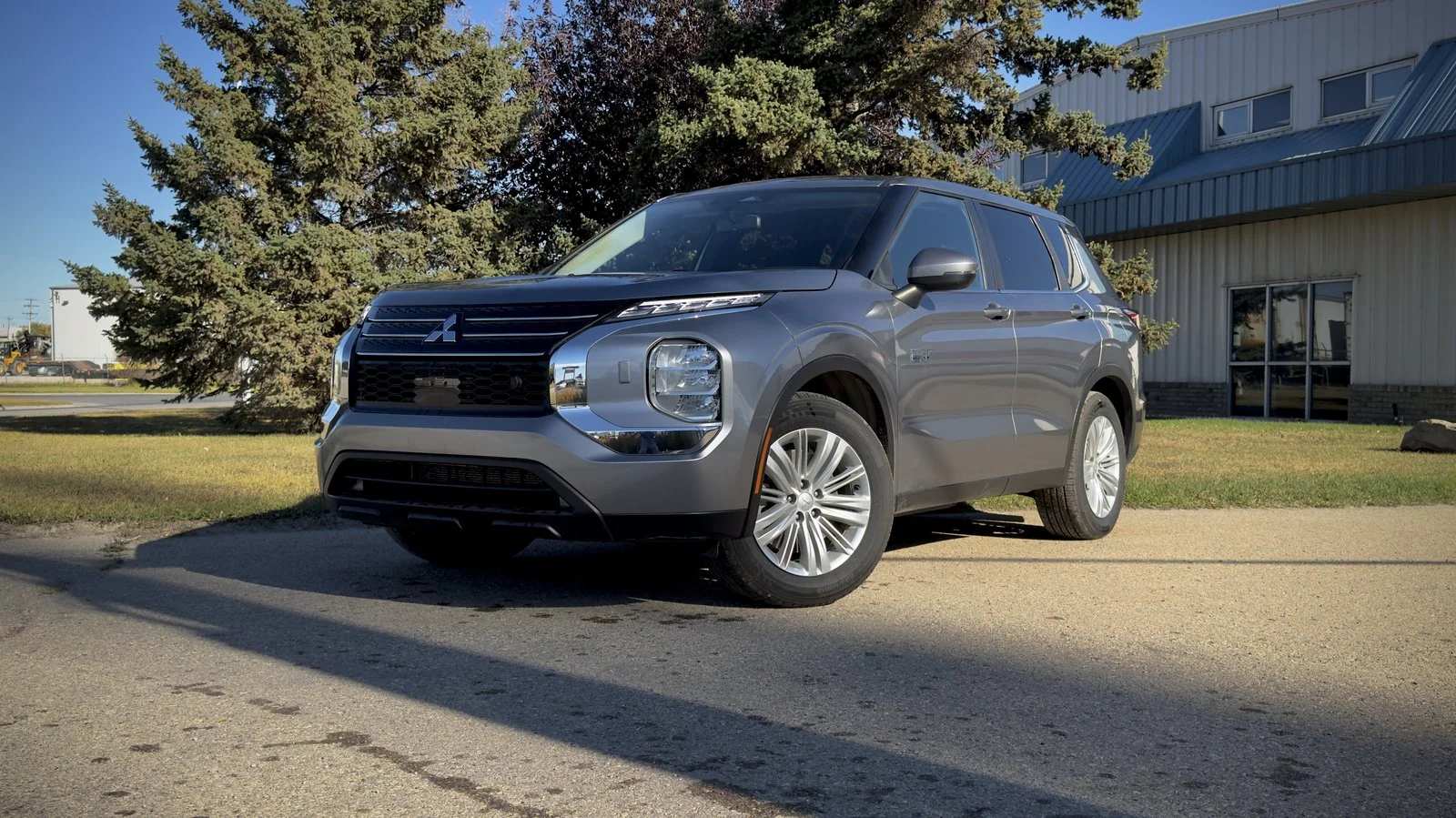
2023 Mitsubishi Outlander ES PHEV

2021 Land Rover Range Rover Evoque R-Dynamic HSE
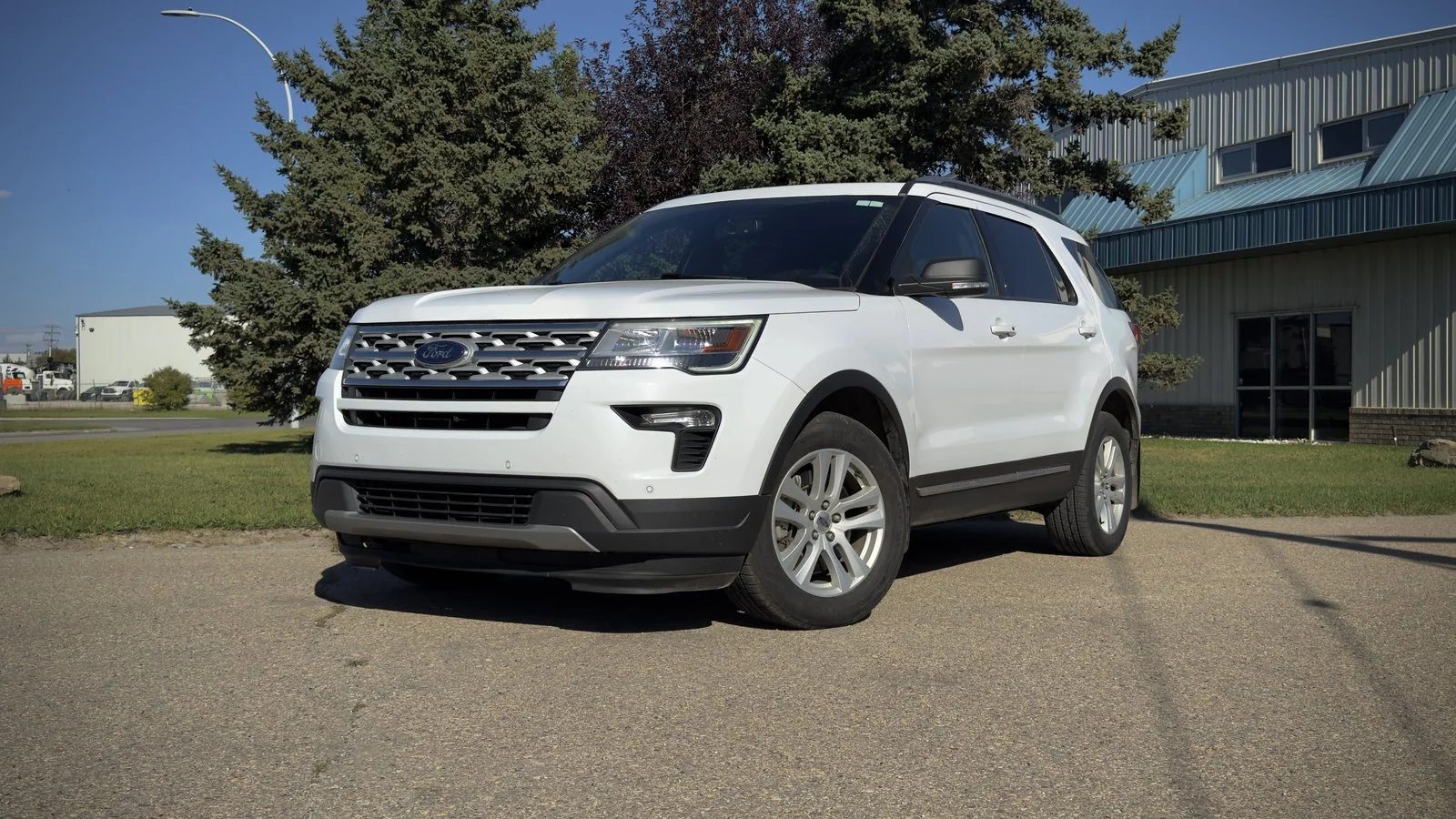
2019 Ford Explorer XLT
Not seeing it? We'll find it.
We source through our dealer partner network across Western Canada: 25,000+ vehicles to choose from. Tell us what you want and what works for your budget.
Find my car3 min · no credit impactOAC = on approved credit. Payments are examples at 6.49% APR over 84 months with $0 down, based on each vehicle's advertised price; GST extra. Your rate depends on your credit (4.99%–29.9% APR).
Related Articles


Ready to Find Your Vehicle?
Browse our inventory or apply for financing. All credit situations welcome.
5.0118+ Google ReviewsAMVIC LicensedFree Delivery 300km