
Indigenous Status Holders: Vehicle Tax Exemption Guide
In this article
- Do Indigenous status holders get PST exemption on vehicle purchases in Alberta?
- Alberta Has No PST — But the GST Picture Is More Complicated
- What Documentation You Need
- Financing: How the Exemption Interacts With Your Loan
- What About Provinces With PST? (For Those Buying Across Provincial Lines)
- The Financing Application Process: What to Expect
- Vehicles Worth Considering for Alberta Reserves and Rural Areas
- Common Errors to Watch For at the Dealership
- Financing Options Across Every Credit Profile
- Connecting With Community: Indigenous-Led Financial Resources
- Could Shift Happens Help With This?
- How to Comparison Shop Effectively as an Indigenous Buyer
- FAQ: Status Card Vehicle Purchase Exemptions
- Does Alberta have PST that status card holders can waive?
- What if the dealership says they don't know how to process the exemption?
- Can I get a GST refund after the fact if it was charged incorrectly?
- Does my credit score work the same way if I've been on-reserve for most of my life?
- Can I finance a vehicle on-reserve through Shift Happens?
- Compare and Apply
Check Your Options in 3 Minutes
No credit impact. All credit situations welcome.
5.0118+ Google ReviewsAMVIC LicensedFree Delivery 300km
If you hold a valid Indian Status Card under the Indian Act and you're buying a vehicle, you may be entitled to a provincial sales tax exemption — but the rules around where the transaction takes place, what documentation is required, and how dealerships process the exemption are poorly understood. Plenty of status holders pay tax they didn't owe, and some miss the exemption entirely because no one at the dealership knew how to file the paperwork correctly. This post cuts through the confusion.
Do Indigenous status holders get PST exemption on vehicle purchases in Alberta?
Alberta has no provincial sales tax (PST), so there is no PST to exempt. However, status card holders purchasing a vehicle delivered on-reserve may qualify for GST exemption under the Indian Act Section 87 tax exemption. Off-reserve purchases are fully taxable (5% GST applies). The exemption depends on delivery location, not where you live.
Alberta Has No PST — But the GST Picture Is More Complicated
First, the baseline: Alberta is Canada's only province with no provincial sales tax. So the "PST exemption" question that circulates in many online forums doesn't apply here the same way it does in British Columbia, Saskatchewan, or Ontario. In those provinces, status card holders can get PST removed on qualifying purchases — and the savings are significant (7–9.975% of the vehicle price).
In Alberta, the relevant tax is federal GST at 5%. Under Section 87 of the Indian Act, goods and services purchased by a status Indian are exempt from GST when the transaction occurs on a reserve. The key phrase is "on a reserve" — this is about where the legal transaction takes place, not where you live or where you're registered.
For vehicle purchases, the Canada Revenue Agency and the courts have interpreted "on a reserve" to mean where the delivery takes place. If you pick up the vehicle at a dealership located on a reserve, or if the dealership delivers the vehicle to you on a reserve, the GST exemption can apply. If you complete the purchase at an off-reserve dealership — even if you live on a reserve — GST is payable.
What Documentation You Need
To claim the Section 87 exemption on a vehicle purchase, you'll typically need:
- Valid Certificate of Indian Status (CIS) card: Issued by Indigenous Services Canada. Both the older laminated card and the newer Secure Certificate of Indian Status (SCIS) are accepted.
- Band membership number or band name: The dealership will record this on the exemption documentation for GST reporting purposes.
- Documentation of on-reserve delivery: If the vehicle is being delivered to you on-reserve, get a written record of the delivery address and date. The dealership files this with their GST returns.
Some dealerships that regularly serve Indigenous communities have a straightforward internal process for this. Others — particularly those that rarely see exemption claims — may not know how to process it and may incorrectly tell you the exemption doesn't apply. If that happens, ask to speak with a manager or finance officer and reference CRA's GST/HST technical information bulletin B-039, which covers this explicitly.
Financing: How the Exemption Interacts With Your Loan
The GST exemption reduces your vehicle's purchase price for financing purposes. On a $30,000 vehicle, 5% GST equals $1,500. Eliminating that $1,500 means you finance $1,500 less — not a massive difference in isolation, but meaningful when combined with your down payment.
If you're financing through a First Nations vehicle financing program, ask whether the lender has experience with on-reserve deliveries and whether the financing paperwork reflects the GST-exempt price correctly. An error in the contract — GST accidentally included when it shouldn't be, or excluded when it should be — creates headaches later when the lender's records don't match the tax return.
For the financing itself, status card holders apply for auto loans the same way as any other buyer. There's no separate "Indigenous car loan" product from most mainstream lenders — what determines your rate and approval is your credit profile, income, and debt load, same as anyone else. The standard financing process applies: income verification, credit pull, vehicle appraisal, and approval through one or more lenders.
If your credit file is thin or damaged, review what bad credit car loan options look like before you apply — understanding your tier helps you set expectations and prepare the right documents.
GST exemption math on a $28,000 vehicle: 5% GST = $1,400 saved if the purchase qualifies under Section 87 of the Indian Act. The exemption only applies when the vehicle is delivered on-reserve. Off-reserve purchases — even by status holders living on-reserve — attract the full 5% GST. Get the delivery location confirmed in writing before signing the purchase agreement.What About Provinces With PST? (For Those Buying Across Provincial Lines)
If you're an Alberta resident but buying a vehicle in British Columbia or Saskatchewan — perhaps a private sale or a specific model you tracked down — PST rules in those provinces are different:
- British Columbia: 12% PST on private sales and dealer sales. Status card holders can claim PST exemption if the vehicle is delivered on-reserve or if the transaction occurs on-reserve. Significant savings — $3,360 on a $28,000 vehicle.
- Saskatchewan: 6% PST. Similar exemption framework — on-reserve delivery required.
- Manitoba: 7% RST, same on-reserve delivery rule applies.
If you're registering an out-of-province vehicle in Alberta, you'll pay the out-of-province inspection fee and registration costs, but not PST — Alberta simply doesn't have one. The GST question would have been settled at the point of purchase in the originating province.
The Financing Application Process: What to Expect
When you apply for vehicle financing in Alberta, the lender pulls your Equifax or TransUnion credit report. Status card holders with established Alberta credit histories (credit cards, previous loans, bills in your name) apply the same as any other buyer. There's no negative or positive credit flag for Indigenous status — lenders aren't permitted to use it as a factor. For a plain look at what that credit pull involves, this explainer covers how credit checks work in car financing.
If you've spent significant time on-reserve and your credit file is thin — or if utilities and bills were in a band name rather than yours personally — your credit score may be lower than you'd expect. In that case, the strategies for building credit through a first car loan apply directly. A first loan with a solid down payment (15–20% of the vehicle price) and a co-signer if needed can establish your file quickly.
Current rate environment: buyers in the 600–659 (near-prime) range are seeing rates of 9.99–15.99% from subprime-friendly lenders on used vehicles. Deep subprime buyers (below 550) typically see rates of 19.99–29.9% — painful, but workable on lower-priced vehicles with a clear plan to refinance after 12–18 months of on-time payments. Use the payment calculator to model what different amounts and rates mean for your monthly budget before you commit.
Vehicles Worth Considering for Alberta Reserves and Rural Areas
If you're based on a reserve or in a rural area of Alberta, your vehicle needs shift compared to urban Calgary commuters. You likely need:
- AWD or 4WD capability for gravel roads and winter conditions
- Higher ground clearance for roads that get rough in spring
- Decent payload for hauling — whether that's tools, gear, or recreation equipment
- Reliability with manageable parts availability — brands with wide parts networks matter when the nearest dealership is an hour away
The Toyota 4Runner and Toyota Tacoma consistently top reliability lists for rural Alberta use. The Ford Explorer is a solid family option with 4WD. For pure utility, a used half-ton like the Ram 1500 covers almost every scenario. All are available in the $22,000–$38,000 range in the current used market, with financing options for every credit profile.
Maintenance in remote locations deserves real thought — a vehicle you can do basic oil changes and tire rotations on yourself, with parts available at any Canadian Tire, beats a complex European SUV that needs dealer-only servicing. The Alberta vehicle maintenance guide outlines what routine costs look like and how to budget for them year one.
Common Errors to Watch For at the Dealership
Status card exemption claims go wrong in a few predictable ways:
- Dealership doesn't know the process. Some smaller dealerships have never processed a GST exemption. Ask in advance if they're familiar with it, and give them time to check with their accountant if needed.
- GST is included in the financed amount by mistake. If the tax was supposed to be exempted but ends up in the purchase price, you're financing money you didn't owe. Review the purchase agreement line by line before signing.
- Delivery location isn't documented. If you're claiming exemption based on on-reserve delivery, the dealership needs to record the delivery address explicitly. A verbal agreement isn't enough for CRA purposes.
- Wrong province's rules applied. If you recently moved from BC or Saskatchewan, the rules you used there don't apply the same way in Alberta.
Financing Options Across Every Credit Profile
Indigenous buyers in Alberta span the full credit spectrum, and the right financing approach depends on where you sit. Here's a realistic breakdown:
| Credit Profile | Typical Rate Range | What Helps Most |
|---|---|---|
| Prime (660+) | 6.99–9.99% | Standard application — best rate through any lender |
| Near-prime (600–659) | 9.99–14.99% | Full income documentation, 10–15% down |
| Subprime (500–599) | 16.99–22.99% | 15–20% down, stable employment letter |
| Deep subprime (below 500) | 22.99–29.9% | 20–25% down, co-signer if available, lower vehicle price target |
| Thin file (no history) | 16.99–22.99% | Secured credit card 6+ months old, 20% down |
The GST exemption, where applicable, helps most in the thin-file and subprime tiers where every dollar of purchase price reduction improves the loan-to-value ratio. On a $25,000 vehicle, a $1,250 GST saving moves the financed amount from $22,000 to $20,750 (assuming $3,000 down) — that's a meaningful LTV improvement that can affect the lender's risk tier.
Connecting With Community: Indigenous-Led Financial Resources
Beyond the dealership, several community-based financial resources serve Indigenous buyers in Alberta:
- Alberta Indian Investment Corporation (AIIC): Provides business financing — not personal vehicle loans, but relevant if you're buying a vehicle for business use on-reserve.
- First Nations Bank of Canada: A full-service bank that explicitly serves Indigenous communities. Their personal lending products may include vehicle financing and often have underwriters with experience in status-holder situations.
- Aboriginal Financial Officers Association (AFOA) Canada: Financial literacy resources specifically designed for Indigenous communities, including guidance on credit building and financial planning.
- Métis Capital Corporation (for Métis members): Note: Section 87 tax exemptions generally apply to registered Indians under the Indian Act, not Métis members — confirm eligibility with a tax advisor.
These organizations aren't direct car-loan sources in most cases, but they can help with financial literacy, credit building, and connecting you with community-informed lenders before you apply.
The questions this post raises usually lead to the topics below — pick the angle that fits your scenario:
- Indigenous Buyers Off-Reserve: The Standard Financing Path Explained
Could Shift Happens Help With This?
We're likely a fit if you: (1) are an Indigenous status holder buying a used vehicle in Alberta, (2) want transparent assistance with any applicable tax exemption documentation, (3) have any credit profile from prime to deep subprime and want 15+ lenders reviewing your deal. Not a fit if: you need new vehicle inventory, lease-only options, or you're buying outside western Canada.
The fastest next steps: check your approval likelihood (60 seconds, no credit impact) or start your financing application. Bring your status card and we'll make sure the tax documentation is handled correctly so you're not paying taxes you don't owe.
How to Comparison Shop Effectively as an Indigenous Buyer
Getting the best deal on a vehicle and financing is the same process for any buyer — but the tax exemption adds a wrinkle. If you're buying at a dealership that can't process the exemption correctly, the financial advantage of qualifying on-reserve disappears. Before you invest time in any dealership's inventory, confirm two things: (1) they can process the GST exemption with proper documentation, and (2) they have access to a multi-lender financing network so your credit profile goes to multiple underwriters simultaneously.
Shopping effectively means: get a pre-approval range first (using the 60-second approval check), establish your budget including estimated insurance, then look at inventory within that budget. Don't fall in love with a specific vehicle before you know what financing terms you can actually access — the emotional pull of the right truck can lead buyers into payments that are 25–30% of their net income instead of the recommended 15–20%.
Also compare the total cost of ownership between two or three finalist vehicles, not just the purchase price. A Toyota Tacoma at $32,000 might have lower 5-year maintenance costs than a comparable domestic truck at $28,000, making it the better financial choice over the full ownership period. The oil change and maintenance schedule guide helps you estimate annual maintenance costs by vehicle type.
FAQ: Status Card Vehicle Purchase Exemptions
Does Alberta have PST that status card holders can waive?
No. Alberta is the only province with no provincial sales tax. The relevant federal tax (GST at 5%) can be exempted on qualifying on-reserve transactions under Section 87 of the Indian Act, but PST exemptions discussed in national forums apply to other provinces, not Alberta.
What if the dealership says they don't know how to process the exemption?
Ask them to consult with their accountant or finance officer before you finalize the purchase. Reference CRA Bulletin B-039. If they can't accommodate you, find a dealership that has experience with the process — the savings are worth the extra step.
Can I get a GST refund after the fact if it was charged incorrectly?
Yes, potentially — but it's complicated. You'd need to file with CRA and work with the dealership to amend their return. Much easier to get it right at the point of sale. Don't sign a purchase agreement with GST included if you believe you qualify for the exemption.
Does my credit score work the same way if I've been on-reserve for most of my life?
Your credit score is based on accounts in your name at Canadian credit bureaus (Equifax and TransUnion). If utilities and accounts were in a band name, your personal credit file may be thin or non-existent — not bad, just absent. That's a solvable problem: a first auto loan with a down payment and possibly a co-signer establishes your file quickly.
Can I finance a vehicle on-reserve through Shift Happens?
Yes. We can arrange on-reserve or off-reserve delivery depending on your situation. The financing itself goes through our lender network the same way. Contact us to discuss delivery logistics and tax documentation before you finalize anything.
Compare and Apply
- Bad Credit Car Loans — Complete Guide — subprime auto financing options
Financing Resources
Cars you could drive home
See all inventory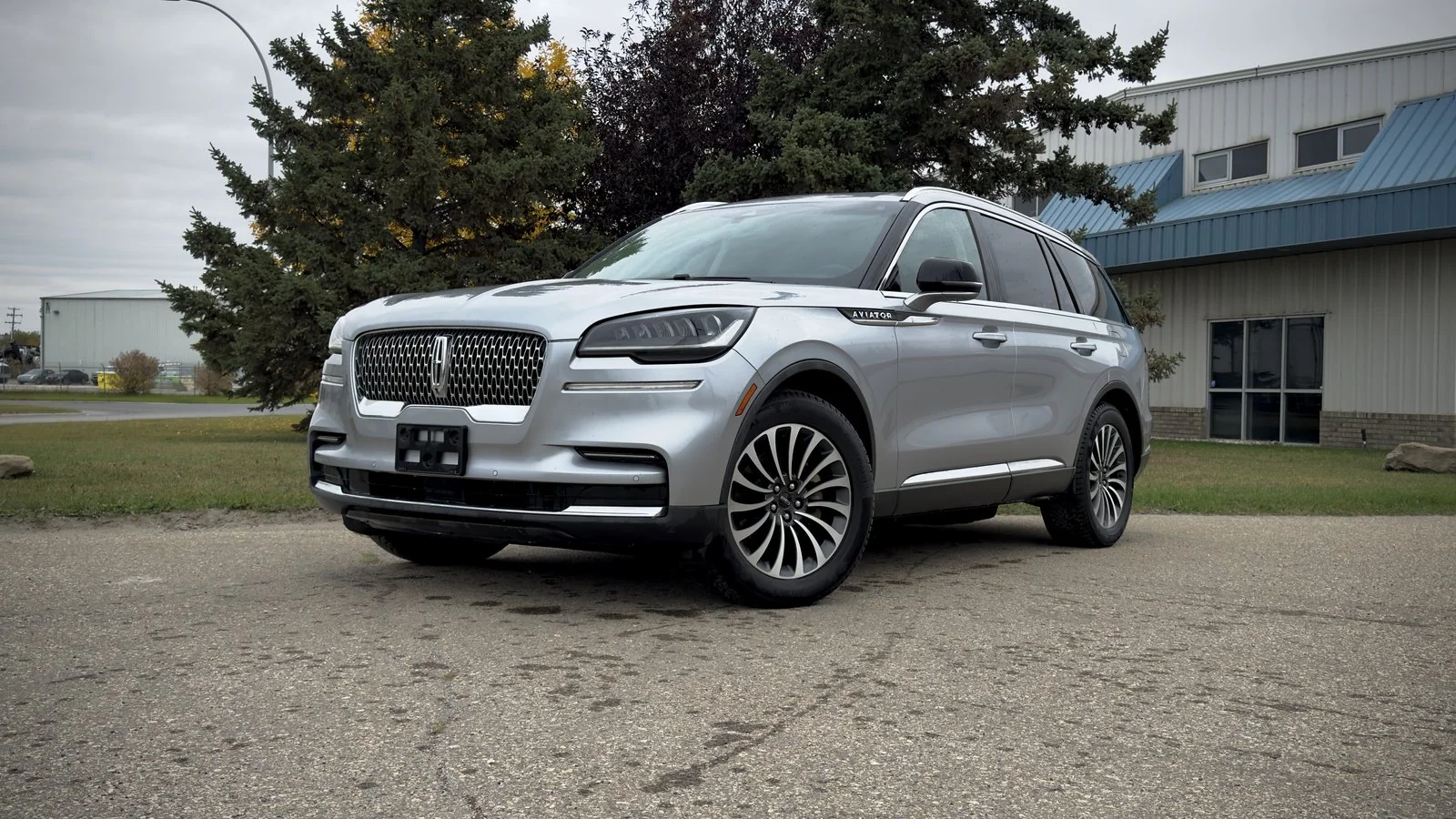
2022 Lincoln Aviator Reserve
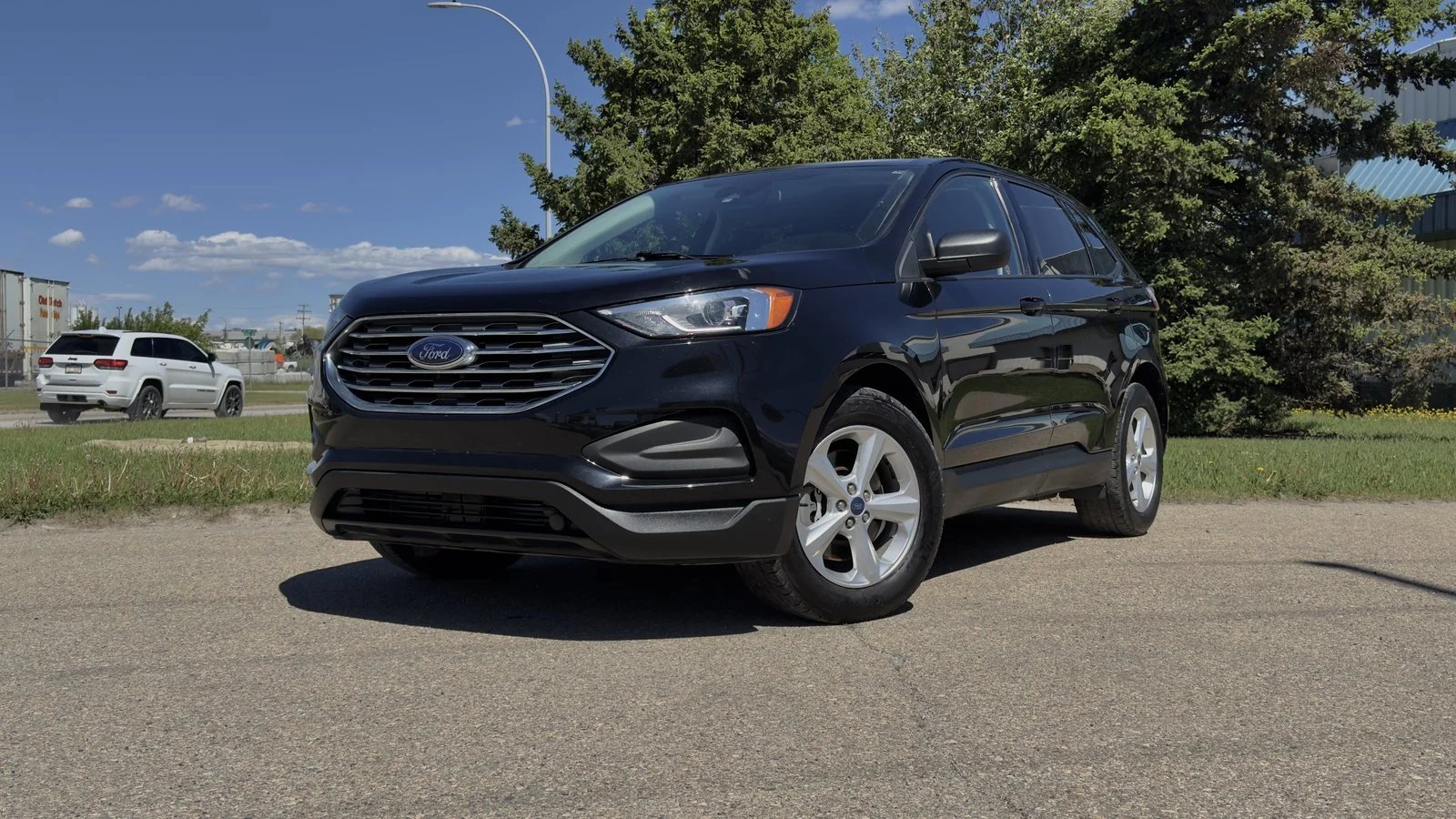
2020 Ford Edge SE
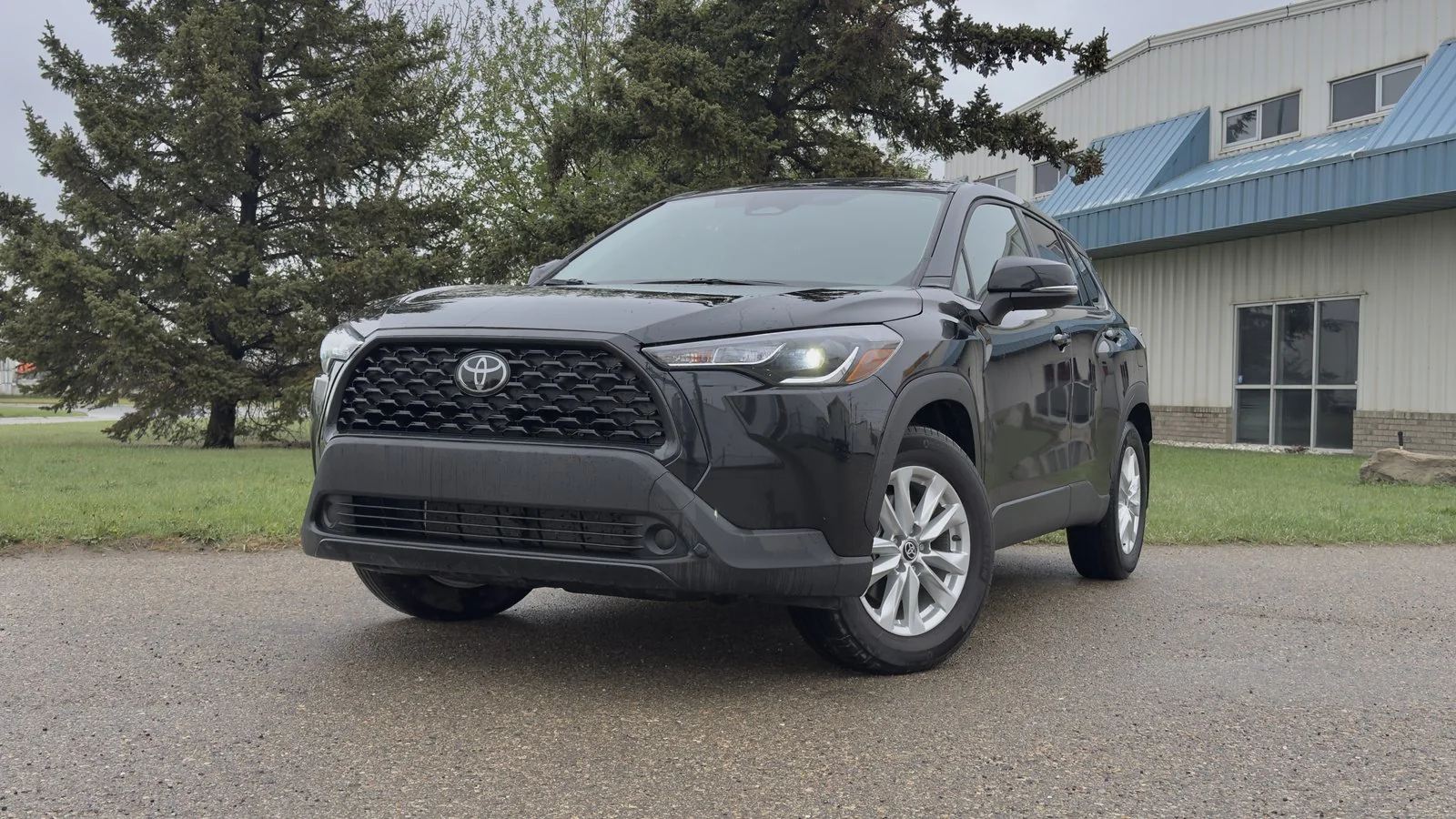
2024 Toyota Corolla Cross LE
Not seeing it? We'll find it.
We source through our dealer partner network across Western Canada: 25,000+ vehicles to choose from. Tell us what you want and what works for your budget.
Find my car3 min · no credit impactOAC = on approved credit. Payments are examples at 6.49% APR over 84 months with $0 down, based on each vehicle's advertised price; GST extra. Your rate depends on your credit (4.99%–29.9% APR).
Related Articles
Ready to Find Your Vehicle?
Browse our inventory or apply for financing. All credit situations welcome.
5.0118+ Google ReviewsAMVIC LicensedFree Delivery 300km