
Why Your Approved Amount Differs From Your Max Budget
In this article
- Why Does Your Approved Loan Amount Differ From What You Can Actually Afford?
- How Lenders Calculate Your Maximum Approval
- The Real Budget: What Lenders Don't Factor In
- The 15% Rule and Why Buyers Ignore It
- Down Payment as the Calibration Tool
- Loan Term Manipulation: Lenders Extend, You Pay
- Credit Score and Its Effect on the Gap
- How to Use Your Approval Strategically
- Adjacent Situations
- Is This a Job for Shift Happens?
- Frequently Asked Questions
- Why did the lender approve me for more than I can realistically afford?
- Can I ask a lender to approve me for less than my maximum?
- How much does my credit score affect the gap between approved amount and real cost?
- Is it better to get pre-approved before shopping or apply at the dealership?
- What's the maximum percentage of my income I should spend on a car payment in Alberta?
- Compare and Apply
Check Your Options in 3 Minutes
No credit impact. All credit situations welcome.
5.0118+ Google ReviewsAMVIC LicensedFree Delivery 300km
Why Does Your Approved Loan Amount Differ From What You Can Actually Afford?
Lenders approve you based on debt-to-income ratios, credit score, and payment history — not on what your budget spreadsheet says. In Alberta, a buyer approved for $28,000 at 18.99% over 72 months carries a $354 biweekly payment, but their real-world budget may only absorb $275 biweekly after insurance, fuel, and maintenance. These two numbers are almost never the same, and confusing them is how buyers end up stretched thin within 90 days of driving off the lot.
You submitted your application, waited two days, and the lender came back with an approval. The number on the approval letter — say, $32,000 — sounds exciting. But then you run the actual payment through a calculator, add Alberta insurance for a vehicle in that price range, estimate fuel for your Airdrie-to-Calgary commute, and realize the monthly math doesn't work the way you pictured. This gap between approved amount and real budget catches more Alberta buyers off guard than almost any other part of the car-buying process.
Understanding why these two numbers diverge — and how to use that knowledge to your advantage — can save you thousands of dollars over the life of your loan and protect your credit score from the kind of strain that comes from being perpetually house-poor but car-poor instead.
How Lenders Calculate Your Maximum Approval
When a lender reviews your application, they're running a specific set of calculations that have nothing to do with what you think you can afford. The core metric is your Total Debt Service (TDS) ratio — the percentage of your gross monthly income consumed by all debt payments combined. Most subprime auto lenders in Alberta will approve deals where the vehicle payment brings your TDS to 40-50% of gross income. Prime lenders typically cap at 36-42%.
Here's how that plays out concretely. If you earn $5,500 gross per month and carry a $900 rent payment plus a $200 credit card minimum, your existing debt consumes $1,100 — or about 20% of gross income. A lender targeting 45% TDS has room for roughly $1,375 more in monthly debt payments ($5,500 × 0.45 = $2,475, minus the $1,100 already committed). At 18.99% over 72 months, $1,375 monthly supports a loan of approximately $53,000. The lender may cap the approval lower based on vehicle age or LTV limits, but the income math alone could support a very large number.
The problem: $1,375 per month in additional debt payments leaves only $4,125 per month gross — and after taxes, insurance, fuel, and everything else, real take-home on $5,500 gross in Alberta is closer to $4,100 net. The lender's math works on gross income. Your life operates on net.
The Real Budget: What Lenders Don't Factor In
Lenders have one job: determine whether you'll make your payment. They don't model your full vehicle ownership cost. That gap is your problem to close. In Alberta specifically, these costs compound in ways buyers from warmer provinces don't always anticipate.
- Insurance: A 2019 Ford F-150 financed at $32,000 in Calgary can cost $180-280/month to insure depending on your history and coverage level. Subprime buyers often pay the higher end. Check rates before you fall in love with a truck.
- Fuel: At $1.55/litre and the Airdrie-Calgary commute of roughly 55 km round trip, a V8 pickup doing 13L/100km costs around $210/month in fuel alone, 22 workdays per month.
- Maintenance reserve: Alberta mechanics recommend budgeting $100-200/month for a used vehicle over 100,000 km. Oil changes, tires, brake pads — it adds up faster in a climate that swings from -35°C to +35°C.
- Registration and fees: Alberta registration on a $32,000 vehicle runs approximately $120-150/year at current fee schedules.
Add it up: a $354 biweekly loan payment on a $32,000 approval becomes a $700+ biweekly true cost of ownership when you include insurance, fuel, and a maintenance reserve. If your take-home pay is $2,800 biweekly, you've just committed 25% of it to the loan alone — and closer to 50% when total vehicle costs are included. That's a squeeze most budgets can't sustain without cutting something important.
The 15% Rule and Why Buyers Ignore It
Financial planners commonly cite 15% of gross monthly income as a sustainable vehicle budget — all-in, covering payment, insurance, fuel, and maintenance. On $5,500 gross monthly income, that's $825/month or about $380 biweekly. Most buyers ignore this target because the lender's approval felt like permission. It isn't. Approval means the lender believes you'll pay. It says nothing about whether paying will hurt you.
The practical tool here is our affordability calculator, which works backward from your take-home pay and existing expenses — not your gross income and the lender's TDS model. Running both numbers side by side before you shop puts you in a fundamentally stronger position. You'll know your comfortable ceiling before a salesperson quotes you on a trim level you technically qualify for but can't sustainably afford.
Alberta buyers at the subprime end of the spectrum — credit scores in the 500-599 range — face this problem acutely because higher interest rates mean more of each payment goes to interest early in the loan. On an $18,000 loan at 24.99% over 72 months, the first year's payments total approximately $5,760 — but only about $1,600 of that reduces the principal. The lender qualifies you for the payment. Whether the underlying math serves your financial recovery is a different question entirely.
Down Payment as the Calibration Tool
One of the most effective ways to close the gap between approved amount and real budget is using a larger down payment to buy the loan down to a payment that actually fits. Many buyers think of down payment as money required to get approved. It's more useful to think of it as the lever that brings an oversized approval into a manageable monthly reality.
Example: You're approved for $28,000 at 19.99% over 72 months — a $368 biweekly payment. That's at the edge of your comfort zone. Adding $3,500 down reduces the financed amount to $24,500. At the same rate and term, the biweekly payment drops to $321 — a $47 biweekly difference that saves $3,384 over the loan and significantly reduces interest paid. If you're holding a tax refund or saved a few months' worth of extra shifts, the tax refund down payment strategy is worth reading before you finalize your deal structure.
The down payment page at down payment for bad credit car loans covers the minimum thresholds lenders in Alberta require at different credit tiers — that context matters because putting 10% down on a $30,000 vehicle has different leverage depending on whether your score is 520 or 640.
Budget anchor, not approval ceiling: Your lender's approved amount is the maximum they'll fund — not the number you should spend. Alberta buyers who use 80% of their approved amount and put the difference toward a larger down payment consistently report lower financial stress 6-12 months post-purchase. On a $28,000 approval, targeting a $22,000-24,000 vehicle leaves you $4,000-6,000 to apply as down payment, cutting your biweekly payment by $50-75 and your total interest paid by $2,000-4,000 over 72 months.Loan Term Manipulation: Lenders Extend, You Pay
When the monthly payment on a vehicle you want is too high, the easiest fix a lender offers is extending the term. Going from 60 months to 84 months on a $25,000 loan at 16.99% drops the biweekly payment from $327 to $258 — a meaningful difference that makes the vehicle feel more affordable. But the total interest paid jumps from $9,620 to $13,776. You've bought $69/biweekly of payment comfort at a cost of $4,156 in additional interest.
This is the payment shopping trap covered in more depth in our post on all-in pricing vs payment shopping — but the specific mechanism at play here is that a lender extending your term to fit you into an approval is doing you a technical favour that costs you real money. Always run the full amortization, not just the payment.
If you're at the point of comparing terms and wanting to stress-test different scenarios, the biweekly payment calculator lets you run rate, term, and amount simultaneously — critical for understanding what a 12-month term extension actually costs you over the life of the loan.
Credit Score and Its Effect on the Gap
Buyers with lower credit scores face a specific version of this problem: they may be approved for a meaningful loan amount, but the rate attached to that approval is high enough that a large percentage of each payment goes to interest rather than principal. This creates a gap not just between approved amount and budget — but between approved amount and the vehicle value you can sustainably own.
A 580 credit score buyer approved for $20,000 at 26.99% over 72 months pays $287 biweekly — roughly $8,500 more in interest than a prime borrower getting the same vehicle at 8.99%. The lender's approval is real. The cost difference is also real. Understanding the relationship between credit score and auto financing means you can make a strategic decision: take the vehicle now at the available rate and refinance in 18-24 months once your payment history improves your score, or wait and save more toward a larger down payment that reduces the financed amount and compresses the rate impact.
Neither path is wrong. The mistake is not knowing which path you're on when you sign.
How to Use Your Approval Strategically
The right way to use a loan approval is as a ceiling — and to deliberately shop below it. Here's a practical framework for Alberta buyers:
- Run your real budget first. Before visiting any dealership, use the affordability calculator to find your sustainable biweekly payment based on take-home pay, not gross income. If your take-home is $2,600 biweekly and you want to keep vehicles at 20% of that, your target payment is $520/month — or $260 biweekly.
- Back-calculate the vehicle price. At 18.99% over 72 months, $260 biweekly supports approximately $17,800 in financing. Add your down payment to get your vehicle budget. If you have $3,000 down, your max vehicle price is roughly $20,800.
- Compare to your approval. If the lender approved you for $28,000, you have room — but using all of it puts you at $368 biweekly, $108 over your target. That's $2,808 per year you hadn't budgeted for.
- Negotiate price, not payment. If a salesperson tries to move you to the $28,000 approval ceiling by extending the term, that's the moment to hold your price target, not your payment target.
If this process feels complex, the fastest path forward is to check your approval likelihood first, then bring those numbers into a conversation with our team. We work with 15+ lenders who compete for your deal — that competition means we can often find a rate that makes your sustainable payment number and your vehicle budget align better than a single-lender approval would suggest. Buyers in Calgary and the surrounding area are welcome to visit our Airdrie location or apply fully online.
Adjacent Situations
Continue down the path — these guides walk through the specific situations most similar to yours:
- Pre-Approval vs Full Car Loan Approval: Trade-offs Explained
- Soft Pull vs Hard Pull: When Credit Checks Happen on Car Loans
- Front-End vs Back-End DTI: How Alberta Lenders Calculate Risk
- Apply Alone or With a Co-Applicant: The Credit Math
- Why Your Last Car Loan Was Approved But This One Isn't
- Pre-Approved But Not Ready to Buy: What Your Approval Locks In
Is This a Job for Shift Happens?
Shift Happens works well when you: (1) are shopping for a used vehicle in Alberta and want to understand your real budget before you commit, (2) have any credit situation from prime to deep subprime and want multiple lender options competing for your deal, (3) want transparent payment-plus-total-cost conversations rather than payment-only focus. Not a fit if: you're looking only for new vehicles, lease-only inventory, or buying outside western Canada.
If that sounds like you, two soft next steps: run an approval check (60 seconds) or begin a financing application. Both stay credit-soft until you decide to submit a formal application.
Frequently Asked Questions
Why did the lender approve me for more than I can realistically afford?
Lenders calculate approvals based on your Total Debt Service ratio using gross income, not net take-home pay. They're verifying you'll make the payment — not modeling your full cost of vehicle ownership including insurance, fuel, and maintenance. The gap between gross-income math and real budget can be $200-400/month on a mid-range approval.
Can I ask a lender to approve me for less than my maximum?
Yes, and it's often a smart move. You can specify a maximum loan amount on your application. Lenders approve up to a ceiling — you're not obligated to use all of it. Telling your dealership or broker you want financing capped at a specific number keeps the conversation anchored to your budget rather than their approval ceiling.
How much does my credit score affect the gap between approved amount and real cost?
Significantly. A 580 score buyer and a 700 score buyer might be approved for the same $22,000 vehicle, but the 580 score buyer could pay 18-26% APR versus 7-10% for the prime buyer. On 72 months, that's $4,000-8,000 more in total interest paid, widening the real cost gap substantially even when the approval amounts are identical.
Is it better to get pre-approved before shopping or apply at the dealership?
Pre-approval gives you a budget anchor before emotions run high on the lot. However, dealership-arranged financing through a multi-lender model like ours often produces better rates because 15+ lenders compete for your deal simultaneously, rather than you approaching one bank at a time. The ideal approach: understand your budget ceiling independently, then let us find the best rate within it.
What's the maximum percentage of my income I should spend on a car payment in Alberta?
Most financial advisors recommend keeping total vehicle costs (payment + insurance + fuel + maintenance) at or below 15-20% of gross monthly income, or closer to 20-25% of net take-home. For an Alberta worker earning $5,000 gross monthly, that's $750-1,000/month all-in — including all ownership costs, not just the loan payment.
Compare and Apply
- Bad Credit Car Loans — Complete Guide — financing for low credit scores
Financing Resources
Cars you could drive home
See all inventory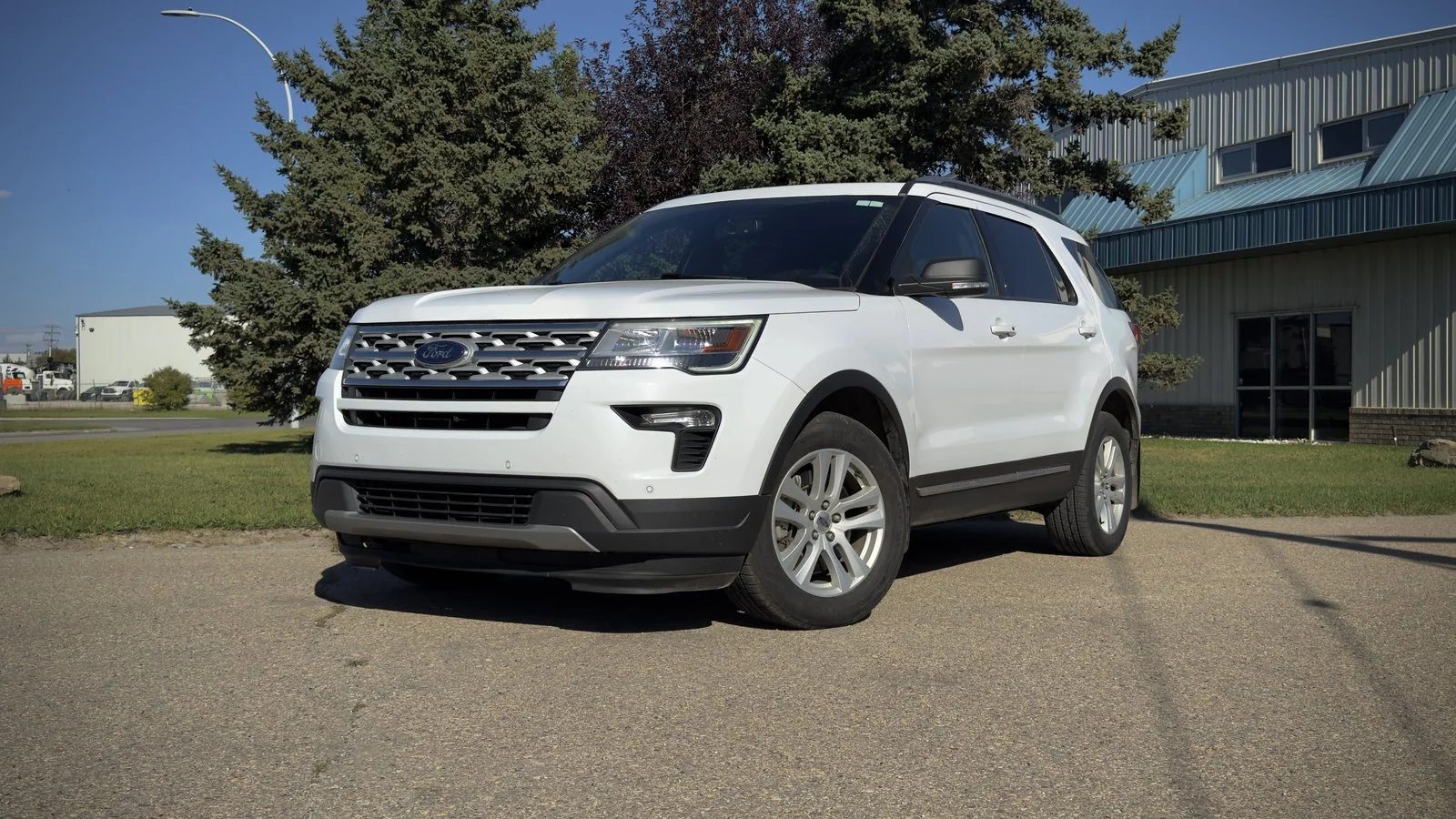
2019 Ford Explorer XLT
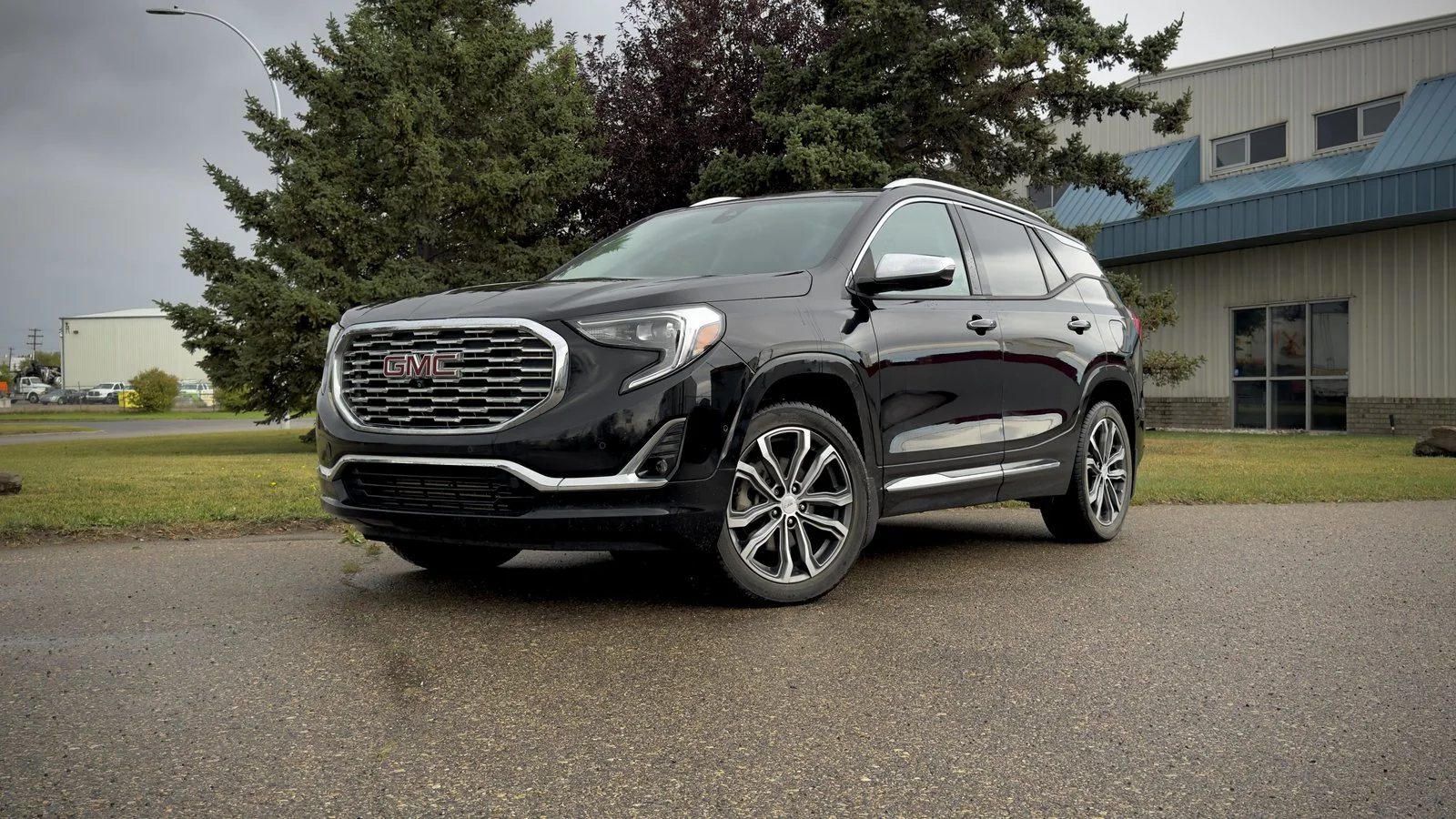
2020 GMC Terrain Denali
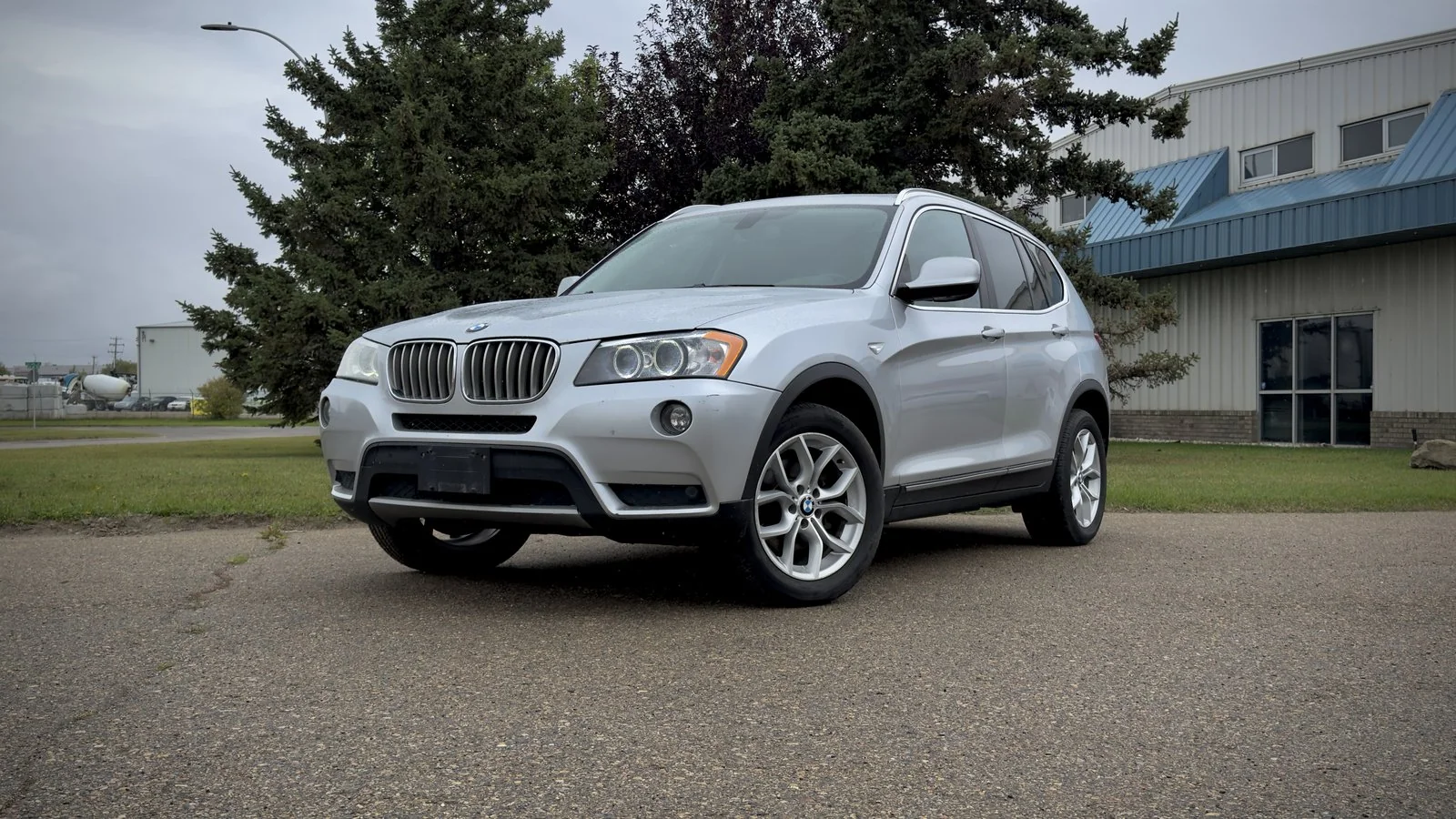
2014 BMW X3 xDrive28i
Not seeing it? We'll find it.
We source through our dealer partner network across Western Canada: 25,000+ vehicles to choose from. Tell us what you want and what works for your budget.
Find my car3 min · no credit impactOAC = on approved credit. Payments are examples at 6.49% APR over 84 months with $0 down, based on each vehicle's advertised price; GST extra. Your rate depends on your credit (4.99%–29.9% APR).
Related Articles


Ready to Find Your Vehicle?
Browse our inventory or apply for financing. All credit situations welcome.
5.0118+ Google ReviewsAMVIC LicensedFree Delivery 300km