
Refugees and Sponsored Newcomers: Build Car Credit Year 1
In this article
- Can refugees and sponsored newcomers get a car loan in Canada with no credit history?
- The Credit History Gap — and Why It's Solvable
- What Documents Newcomers Need for a Car Loan
- Income Sources That Count
- Down Payment: The Single Biggest Lever You Have
- Which Vehicles Make Sense in Year One?
- Building Credit Aggressively After Your First Loan
- Settlement Agencies and Financial Literacy Resources
- Auto Insurance for Newcomers: What to Expect
- A Realistic Year 1-3 Financial Timeline
- When Shift Happens Makes Sense for You
- FAQ: Car Financing for Refugees and Newcomers
- How long do I have to live in Canada before I can get a car loan?
- Can I get a car loan with an Open Work Permit if I'm still waiting for PR?
- What if my RAP allowance runs out partway through my loan term?
- Do I need a Canadian driver's licence or can I use an international licence?
- Is the interest rate higher for newcomers than for Canadians?
- Compare and Apply
Check Your Options in 3 Minutes
No credit impact. All credit situations welcome.
5.0118+ Google ReviewsAMVIC LicensedFree Delivery 300km
You've landed in Canada — maybe through the Government-Assisted Refugee program, a private sponsorship group, or family sponsorship — and within weeks you realize that getting around Alberta without a vehicle is genuinely difficult. Calgary and Airdrie are not cities designed for transit-dependent life. If you live outside the core, don't own a car, and have zero Canadian credit history, every commute is a calculation. This guide is written specifically for sponsored newcomers and refugees navigating year one.
Can refugees and sponsored newcomers get a car loan in Canada with no credit history?
Yes. Refugees and sponsored newcomers in Canada can access auto financing in year one, typically with a down payment of 20–30% of the vehicle price, a verifiable income source (employment, RAP allowance, or sponsorship support letters), and a co-signer or newcomer-specialist lender. Rates run 14.99–24.99% initially, with significant improvement after 12–18 months of payment history.
The Credit History Gap — and Why It's Solvable
When you arrive in Canada, your credit history from your home country doesn't transfer. Even if you had an excellent credit score and a mortgage abroad, Canadian lenders see a blank file. Equifax and TransUnion only track Canadian credit accounts. That means your file starts at zero — not bad, just absent.
A blank file is different from a damaged file. With no derogatory marks and no missed payments on record (because there's no record at all), you're in the "thin credit" category. Subprime lenders who specialize in newcomer car financing understand this and underwrite differently than mainstream banks. The key inputs become: verified income (any income — employment, government assistance, or a sponsorship letter), down payment size, and total debt load.
The fastest path to buildable credit is to open a secured credit card the week you arrive — deposit $500 and get a $500 limit. Use it for groceries, pay it in full every month. After 6 months, that single account gives you a credit score of roughly 580–620. After 12 months, you're at 620–660. An auto loan layered on top of that credit card — paid on time — can push your score above 680 within 18–24 months of arrival.
What Documents Newcomers Need for a Car Loan
Different immigration statuses bring different document packages. Here's what lenders typically accept by status type:
| Status Type | Acceptable IDs | Income Evidence |
|---|---|---|
| Government-Assisted Refugee (GAR) | IMM 5292, IMM 1000, PR card once issued | RAP allowance letter, provincial assistance letter, employment letter if working |
| Blended Visa Office-Referred (BVOR) | IMM 5292, PR card | Sponsoring organization letter confirming support commitment + employment income if working |
| Privately Sponsored Refugee (PSR) | IMM 5292 or PR card, photo ID from sponsor package | Sponsorship group letter confirming financial support for 12 months; employment letter if working |
| Family Sponsored / Reunification | PR card or Open Work Permit, COPR | T4 or employment letter, bank statements showing income deposits |
One common question: "My PR card isn't issued yet — can I still apply?" Generally yes. Your IMM 5292 (Confirmation of Permanent Residence) or a valid work permit combined with your passport is accepted by most newcomer-specialist lenders during the period before your card arrives. The card processing time can be 3–6 months — lenders who understand immigration don't make you wait.
Income Sources That Count
Lenders want to see that you can make the payment. For government-assisted refugees, the Resettlement Assistance Program (RAP) provides income support for the first 12 months. The monthly RAP rate varies by province and family size, and your exact amount is verifiable through a letter from IRCC or your settlement agency.
RAP alone may not support a large vehicle purchase, but it can support a smaller one. A $12,000–$15,000 used vehicle with $3,000–$4,000 down, financed at $100–$130 biweekly, is realistic on RAP income if no other major debt exists. More commonly, refugees who qualify for larger loans do so because they've found employment — even part-time work at $16–$22/hour adds meaningful income to an application.
Private sponsorship group letters — signed by the sponsoring organization on letterhead, confirming they will provide financial support for 12 months — carry weight with specialized lenders. This isn't a formal co-sign (the sponsor isn't on the loan), but it demonstrates income security during the settlement period. See how similar income situations are treated in the Alberta car financing approval guide for context on how lenders treat income stability overall.
Down Payment: The Single Biggest Lever You Have
With no Canadian credit history, your down payment does the work that your credit score would normally do. Here's the practical breakdown:
- 10% down (e.g., $2,000 on a $20,000 vehicle): Difficult without a co-signer. Lender is taking significant risk on a blank file.
- 20% down ($4,000 on $20,000): Meaningfully more accessible. Many newcomer-specialist lenders approve at this level with verified income.
- 30% down ($6,000 on $20,000): Opens up more lenders and lower rates. Strong position for someone with no Canadian credit.
Where does the down payment come from in year one? Some sponsored newcomers receive financial gifts from family or community. Others save aggressively in the first 3–6 months before applying. Government-assisted refugees often receive a Canada Child Benefit (CCB) payment if they have children — that monthly amount, combined with working income, can accumulate a down payment within 4–6 months.
A co-signer — a Canadian permanent resident or citizen with established credit and stable income — is the other major lever. With a strong co-signer, a blank credit file becomes much less of an obstacle. The co-signer guide explains how that arrangement works and what risks the co-signer takes on.
If you're at the down payment planning stage right now, use the affordability calculator to model how different down payment amounts change your monthly payment and total cost.
Year 1 newcomer financing reality: A government-assisted refugee family in Alberta with one employed adult earning $3,200/month, $3,500 saved for a down payment, and a 6-month-old secured credit card (score ~590) typically qualifies for $14,000–$18,000 in used vehicle financing at 19.99–24.99% over 60 months — roughly $160–$190 biweekly. After 18 months of on-time payments, refinancing at 12–14% is realistic as the credit score crosses 650.Which Vehicles Make Sense in Year One?
Budget, reliability, and running costs all matter. A newcomer family in Airdrie or a southeastern Calgary suburb needs a vehicle that can handle -30°C starts, carry a family, and not require expensive specialist repairs. Here's what that shortlist looks like:
- Toyota Corolla (2016–2020): $15,000–$20,000, excellent reliability, simple mechanics, cheap to insure, easy to park.
- Honda Civic (2016–2020): Similar price range, strong resale value, excellent fuel economy for commuting.
- Hyundai Tucson (2017–2020): $18,000–$24,000, good AWD option for Alberta winters, family-sized without truck running costs.
- Kia Sportage: Similar to Tucson in price and capability, often slightly more available in inventory.
Avoid: luxury vehicles with expensive parts, any vehicle over 200,000 km in year one (repair risk when you're still building financial stability), and vehicles with known expensive mechanical issues on your target model.
Building Credit Aggressively After Your First Loan
The first car loan for credit building strategy applies directly to newcomers. The mechanics are: pay on time every payment, keep your credit card under 30% utilization, and don't apply for new credit more than once per year (hard inquiries cluster and lower your score). With those three rules, your score at months 6, 12, and 18 follows a predictable trajectory.
Month 6: Score typically 600–640 with the auto loan and one credit card both in good standing.
Month 12: Score typically 640–670. You're now in near-prime territory. Some lenders will offer rates below 15% for a refinance at this point.
Month 18–24: Score typically 670–720 if you've had no missed payments and opened one or two additional credit products (a second credit card or a small personal loan). You're now a prime or near-prime borrower. The car loan that started at 22% can be refinanced at 9–12%.
That trajectory — from no Canadian credit to near-prime in two years — is not unusual. It's the standard path for any newcomer who manages the fundamentals correctly. Your first car loan is the accelerant if you treat it right.
Also read: how to rebuild credit with a car loan in Alberta for the full timeline and mechanics.
Settlement Agencies and Financial Literacy Resources
Calgary and Airdrie have strong newcomer support infrastructure. The following agencies can help with financial literacy and sometimes connect newcomers with transportation support while they build toward a purchase:
- Centre for Newcomers (Calgary): Financial literacy workshops, settlement support, employment connections.
- Immigrant Services Calgary: Housing, employment, and financial support navigation.
- Bow Valley College: Free ESL and financial literacy programming for newcomers.
- IRCC-funded settlement programs: Varies by sponsor type — your settlement worker can identify what you qualify for.
These agencies won't arrange your car loan, but they can help you understand your income sources, organize documents, and prepare for a financing conversation. Arriving at a dealership with organized paperwork and a clear picture of your monthly income is worth more than almost anything else you can do to improve your financing outcome.
Auto Insurance for Newcomers: What to Expect
In Alberta, auto insurance is mandatory before you can register and drive a vehicle. New arrivals sometimes face higher rates because they have no Alberta (or Canadian) insurance history, even if they drove for 20 years in another country. Alberta insurers don't recognize foreign driving records for rate purposes — you typically start as a new driver.
What this means practically: your first year of Alberta insurance may cost $200–$350/month for a standard used vehicle. That needs to be in your monthly budget calculation alongside the car payment. After 3 years of claims-free driving in Alberta, your insurance rate typically drops to $120–$180/month for a comparable vehicle.
Tips to reduce insurance costs in year one:
- Choose a vehicle with a lower insurance group rating — sedans and smaller crossovers typically have lower rates than trucks or performance vehicles
- Complete a recognized driver training course — some Alberta insurers offer a discount for completion of a formal driving program
- Get quotes from multiple insurers — rates vary significantly for new drivers. BrokerLink, Intact, Wawanesa, and TD Insurance all write personal auto in Alberta
- Ask your settlement agency if they have relationships with insurers experienced in newcomer driver situations
For initial insurance quotes, budget $250/month as a planning assumption and refine from there. Your actual car payment plus insurance plus fuel plus maintenance is the true monthly cost of vehicle ownership — make sure all four fit before committing.
A Realistic Year 1-3 Financial Timeline
Month 1–3 after arrival: Open a secured credit card ($500 limit), open a chequing account, organize RAP or employment income documentation. Begin saving aggressively for a down payment target.
Month 4–6: Apply for a car loan with 20–25% down. Accept the 18–22% rate as a credit-building tool, not a permanent condition. Choose a reliable $14,000–$18,000 vehicle with low maintenance costs.
Month 12–18: Score in the 620–660 range with consistent card payments and on-time car payments. Begin looking at whether refinancing at 12–14% is available. Even a 4-point rate reduction on $14,000 saves approximately $600 over the remaining term.
Month 24–36: Score in the 660–710 range. You're now in near-prime territory. Second vehicle purchase (or refinance/upgrade) at mainstream rates becomes realistic. Your credit file is established enough that a bank credit union becomes a viable option alongside subprime lenders.
That's the arc. Every newcomer who plays the fundamentals correctly follows a version of it. The first loan is a tool — use it right and it pays dividends far beyond the vehicle itself.
The questions this post raises usually lead to the topics below — pick the angle that fits your scenario:
- Newcomers on Bridge Visa, PR, or Citizenship: Which Status Qualifies for Car Loans
- Newcomer Auto Insurance in Alberta: No Canadian Driving History
- Best Used Vehicles for Alberta Newcomers Under $20,000
When Shift Happens Makes Sense for You
Reach out to us if you: (1) are a refugee or sponsored newcomer with any immigration status in Alberta, (2) have verifiable income whether from employment, RAP, or sponsorship support, (3) want 15+ lenders — including newcomer specialists — reviewing your deal. Not a fit if: you need new vehicle inventory, lease financing, or you're buying outside western Canada.
The fastest next steps: check your approval likelihood (60 seconds, no credit impact) or start a financing application. Bring your immigration documents, income proof, and any settlement agency letters — we'll match your file to the right lender.
FAQ: Car Financing for Refugees and Newcomers
How long do I have to live in Canada before I can get a car loan?
There's no mandatory waiting period — you can apply from day one. However, having 3–6 months of Canadian banking history (a chequing account with regular deposits) and at least one credit product (secured credit card) dramatically improves your options. Most newcomers who get approved in month one have a co-signer and a substantial down payment.
Can I get a car loan with an Open Work Permit if I'm still waiting for PR?
Yes. Many specialized lenders accept Open Work Permits as documentation. Your permit expiry date matters — some lenders want it valid for at least 12 months beyond the loan start date. If your permit is short-term, a PR application in-progress letter from IRCC can supplement.
What if my RAP allowance runs out partway through my loan term?
This is a real concern. RAP ends after 12 months, so ideally you're employed before your loan's first year ends. If employment is delayed, some lenders will consider a payment deferral or extension. Don't miss payments and assume it's fine — contact the lender proactively if your income situation changes.
Do I need a Canadian driver's licence or can I use an international licence?
You need a valid driver's licence to register and insure the vehicle. Alberta accepts international licences for new residents for up to 1 year after establishing residency. After that, you need an Alberta licence. You can drive the vehicle with an international licence while financing is arranged, but you must convert before the year is up.
Is the interest rate higher for newcomers than for Canadians?
Yes, typically. Rates reflect risk, and a blank credit file is higher risk to a lender than an established good-credit file. Expect 14.99–24.99% in year one. After 18–24 months of on-time payments, refinancing at 9–14% is common. The first loan is a credit-building tool — optimize for reliability and on-time payment, not the lowest possible rate.
Compare and Apply
- Bad Credit Car Loans — Complete Guide — Alberta's subprime auto financing guide
Financing Resources
Cars you could drive home
See all inventory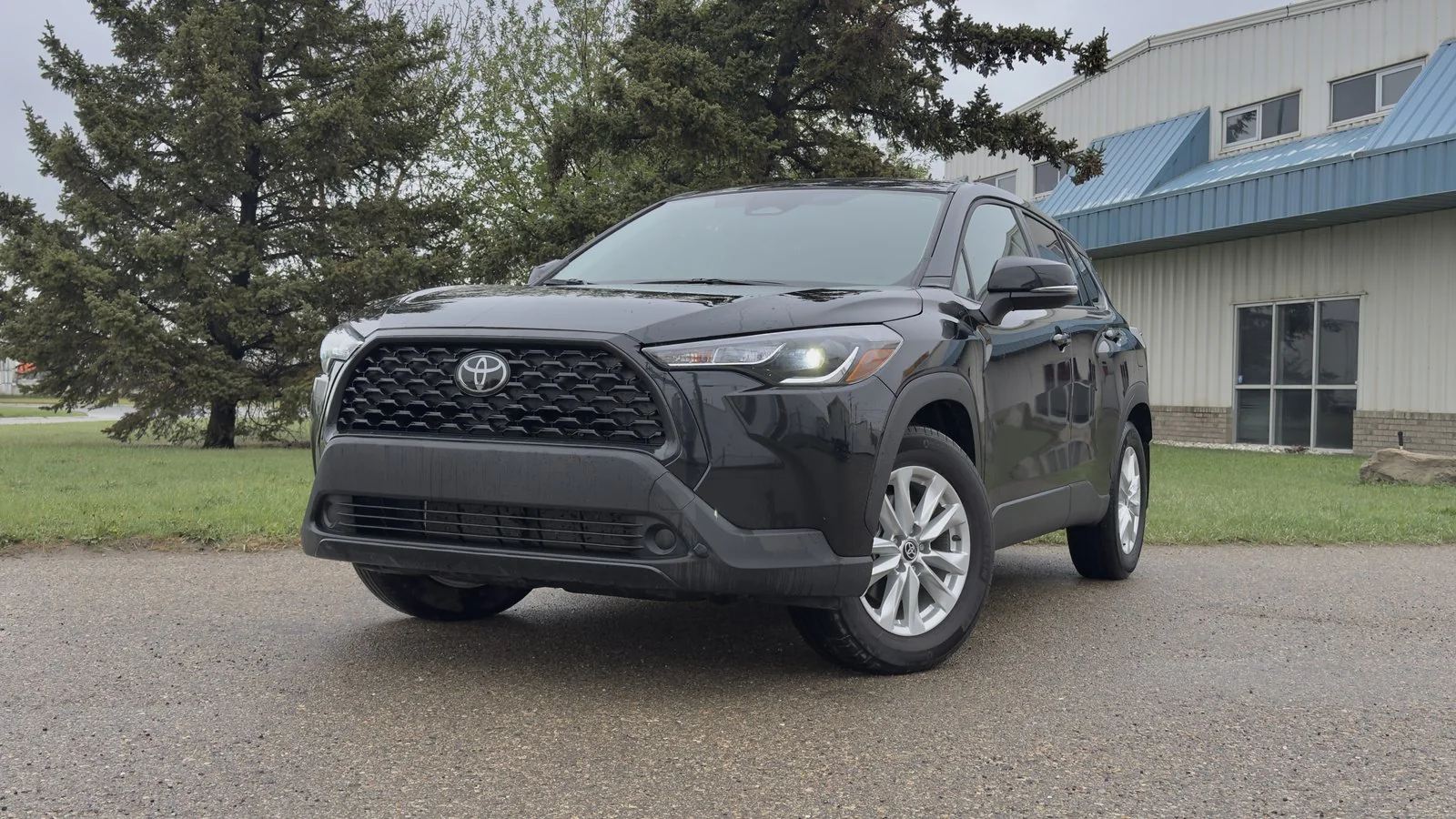
2024 Toyota Corolla Cross LE
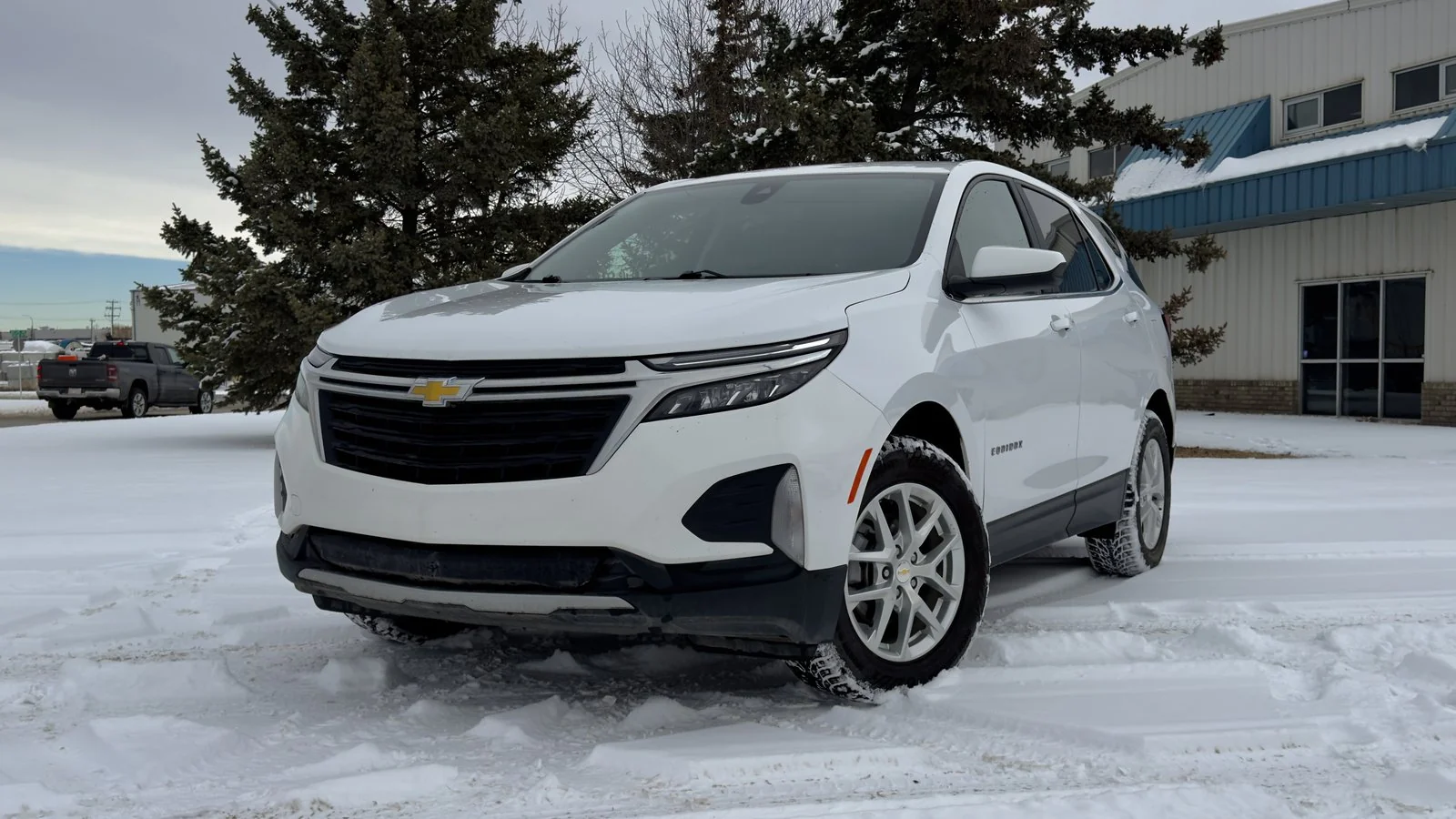
2022 Chevrolet Equinox LT
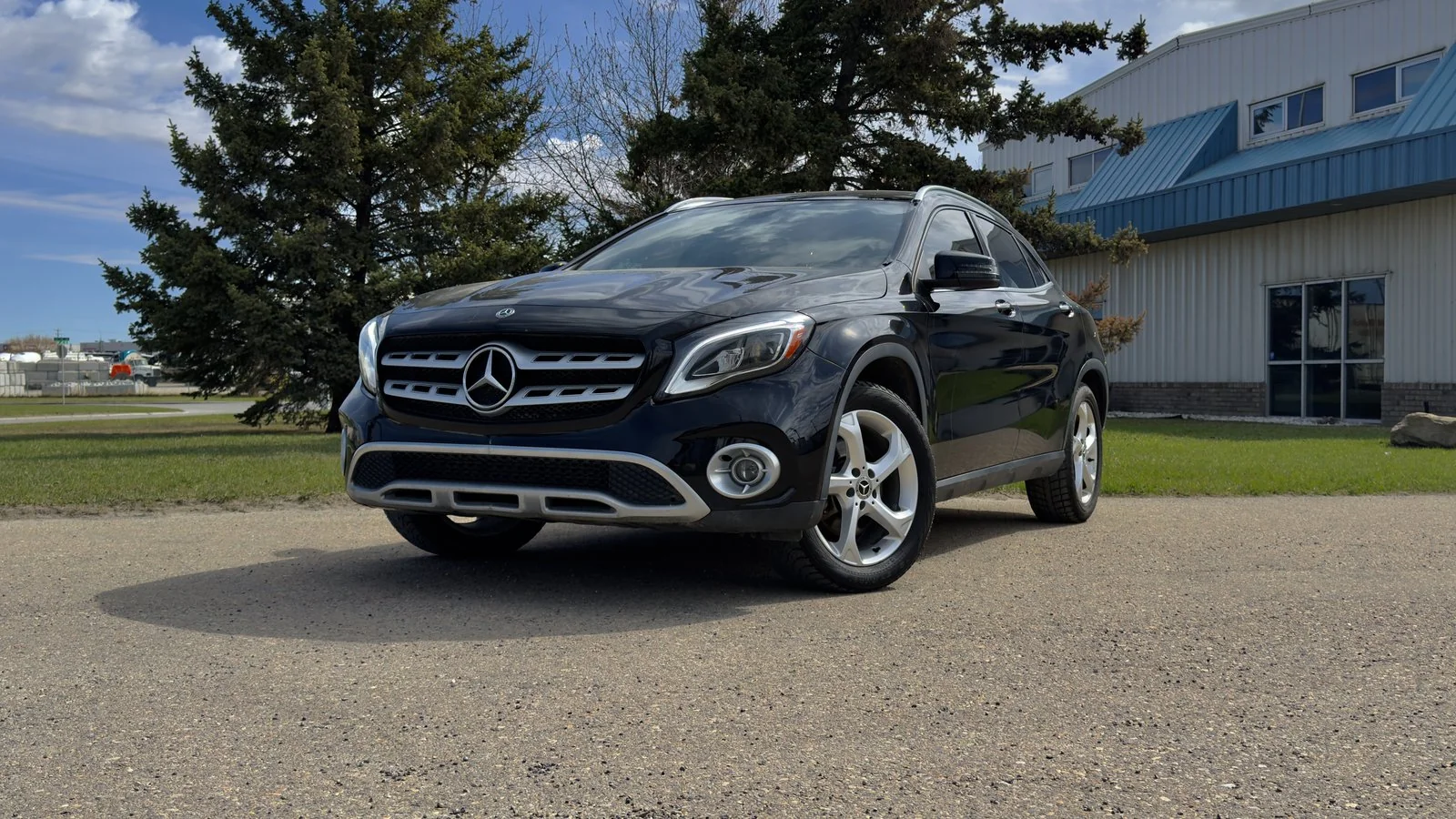
2020 Mercedes-Benz GLA250 4Matic
Not seeing it? We'll find it.
We source through our dealer partner network across Western Canada: 25,000+ vehicles to choose from. Tell us what you want and what works for your budget.
Find my car3 min · no credit impactOAC = on approved credit. Payments are examples at 6.49% APR over 84 months with $0 down, based on each vehicle's advertised price; GST extra. Your rate depends on your credit (4.99%–29.9% APR).
Related Articles


Ready to Find Your Vehicle?
Browse our inventory or apply for financing. All credit situations welcome.
5.0118+ Google ReviewsAMVIC LicensedFree Delivery 300km