
How to Negotiate Your Car Loan Rate: Scripts That Actually Work

In this article
- Before You Walk In: The Pre-Negotiation Checklist
- Know Your Credit Score Before Anyone Else Looks at It
- Get a Competing Pre-Approval
- Know Your Payment Comfort Zone in Rate Terms, Not Just Dollars
- The Scripts: What to Say in the Finance Office
- Opening: Getting Rate Transparency Without Tipping Your Hand
- The Competing Offer Pivot
- If No Competing Offer: The Certainty Trade
- Handling the "That's the Best We Can Do" Response
- Rate vs. Term vs. Down Payment: What to Negotiate First
- Priority 1: Rate
- Priority 2: Down Payment
- Priority 3: Term — Handle with Care
- Why Multi-Lender Dealers Give You Built-In Negotiating Power
- Red Flags: Tactics That Should Slow You Down
- Payment Packing
- Exclusive Focus on Monthly Payment
- Yo-Yo Financing
- The Rate Bait-and-Switch
- Alberta-Specific: Interest Rate Disclosure Requirements
- How the Variable Rate Question Factors In
- A Realistic Scenario: How the Scripts Play Out
- Matching Strategy to Your Credit Profile
- The Multi-Lender Advantage Works Before You Negotiate
- Related Buyer Guides
- Compare and Apply
Check Your Options in 3 Minutes
No credit impact. All credit situations welcome.
5.0118+ Google ReviewsAMVIC LicensedFree Delivery 300km
Most people negotiate the vehicle price and completely ignore the loan rate — which is a mistake that can cost more than the negotiation they won. On a $22,000 loan over 72 months, the difference between 12.99% and 16.99% is over $3,600 in total interest paid. The rate is negotiable. Most finance managers won't lead with that information. Here are the exact words to use to find out where you stand and move the number in your favour.
Before You Walk In: The Pre-Negotiation Checklist
Negotiation without information is just guessing. Before you sit across from a finance manager, you need three things: your credit score, a competing offer or at least a market benchmark, and a clear sense of what you're willing to pay per payment. Without these, you're negotiating blind against someone who does this every day.
Know Your Credit Score Before Anyone Else Looks at It
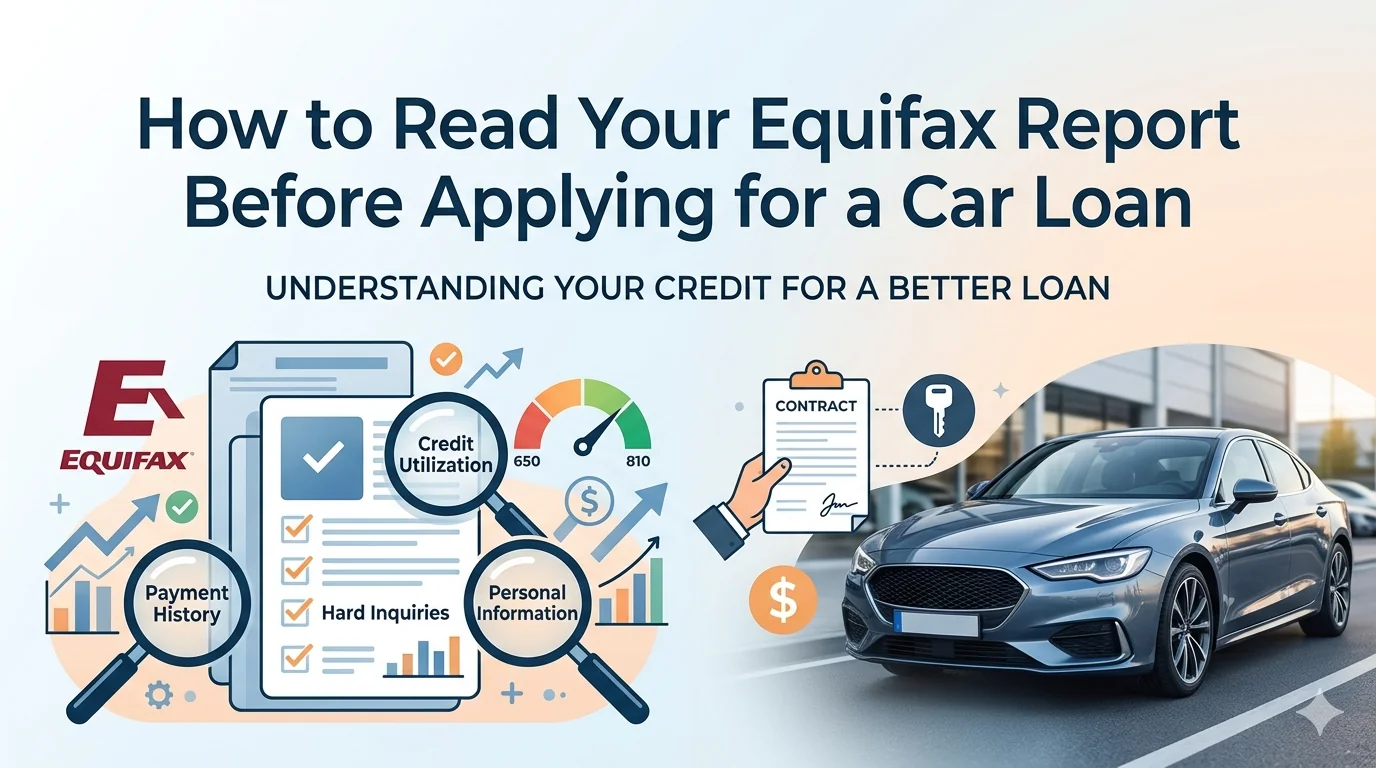
Pull your own Equifax report before applying anywhere. In Canada, you can request your credit report free through Equifax's online portal — this is a soft pull and does not affect your score. Knowing where you stand tells you which lender tier is realistic for your application and prevents you from accepting a rate that's too high for your credit profile. If your score says you're near-prime but you're being quoted deep-subprime rates, that's a conversation worth having.
Use these ranges as rough benchmarks for the current Alberta market:
- 660+: Prime — rates from 6.99%–11.99% are realistic; push back on anything over 13%
- 600–659: Near-prime — 9.99%–16.99% range depending on income stability and down payment
- 500–599: Subprime — 14.99%–24.99% range; strong income and down payment can improve position
- Below 500: Deep subprime — rates reflect higher risk; focus on getting approved first, then optimize
For a full breakdown of how your score affects car loan rates in Alberta, that page covers current market conditions across all credit tiers in detail.
Get a Competing Pre-Approval
A pre-approval from your bank or credit union is the single most powerful negotiation tool you can walk in with. It doesn't need to be your preferred option — it just needs to be real and confirmed in writing. A documented offer of 11.99% from your bank changes the entire conversation: instead of asking "what rate can you get me?" from a position of zero information, you're saying "I have 11.99% confirmed — can you beat that?" These are very different conversations with very different dynamics.
A meaningful comparison between dealership financing and a bank loan requires knowing both numbers. The bank pre-approval gives you one. The dealer gives you the other. Then you choose the better outcome — which is how buying decisions are supposed to work.
If your credit profile makes a bank pre-approval unlikely, you can still research rate ranges. Published rates from lenders who specialize in your credit tier give you a realistic benchmark. Check how car financing works to understand where rates come from before you sit down. Don't walk in without at least a benchmark to evaluate against.
Know Your Payment Comfort Zone in Rate Terms, Not Just Dollars
Finance managers are trained to work in monthly or biweekly payment space rather than rate space. "What do you need the payment to be?" is a useful question from their perspective — and a potential trap from yours. It allows them to extend the loan term to hit a payment number you'll accept without improving the rate at all. A 72-month loan at 16.99% and a 60-month loan at 12.99% can produce similar biweekly payments while having dramatically different total costs.
Use our payment calculator to build your own numbers before the meeting. Plug in different rate and term combinations so you understand the landscape before someone else frames it for you. When you know that dropping from 16.99% to 14.99% saves you $28 per biweekly payment, you can hold that ground effectively. When you don't, you're just responding to whatever's presented.
The Scripts: What to Say in the Finance Office
These scripts are designed for real conversations, not confrontations. The goal is information and a fair result — not combat. A finance manager who's operating in good faith will respect a buyer who's done their homework. One who isn't will reveal themselves quickly through their responses to these questions.
Opening: Getting Rate Transparency Without Tipping Your Hand
"Before we get into the paperwork, can you walk me through the rate ranges your lenders are offering for someone with my credit profile? I'm not looking for a commitment — I just want to understand the landscape before we proceed."
This question is deliberately better than "what's the best rate you can get me?" because it invites a range rather than a single opening number. A range tells you where the floor likely is. If the finance manager says "we're seeing 10.99% to 14.99% for your profile," you now know 10.99% is achievable and you're negotiating toward that end of the range — not accepting whatever single number they chose to open with.
A finance manager who refuses to discuss ranges and immediately presents a single "best offer" is a signal. A good one will engage the question honestly.
The Competing Offer Pivot
If you have a confirmed bank or credit union pre-approval, this is the script:
"I have a confirmed pre-approval from [institution] at [rate]% for [term] months. I'd prefer to work with you if the rate is competitive — can you match or beat it?"
This is the cleanest and most effective approach in the entire playbook. It's not aggressive and it's not a bluff — don't bluff, it backfires immediately when they ask to see the offer and you can't produce it. The pre-approval letter is your evidence. Put a real number on the table and ask for a response. Most finance managers will either match it, beat it slightly to win the business, or honestly tell you they can't — which tells you dealer financing isn't the right call for this deal, and you save yourself a worse rate by just using the bank.
If No Competing Offer: The Certainty Trade
If you don't have a pre-approval, use this script after they present an initial rate:
"I appreciate the offer. I'm ready to move forward on this vehicle today. If you can get the rate down by a point and a half to two points, I'll sign the paperwork right now. Is there anything you can do?"
This works because the certainty of a same-day close has real value to the dealer. A buyer who's committed today is worth more than a buyer who might come back next week or might not. The "ready to sign today" element adds genuine incentive without you paying a dollar more. One important note: have the vehicle price settled before you use this script. Never negotiate rate and price simultaneously — it lets the dealer give on one while quietly taking back on the other.
Handling the "That's the Best We Can Do" Response
"I understand. Before I decide, can you tell me whether that rate includes a dealer markup over the lender's buy rate? I've read that dealers typically have a 2–4 point spread available, and I want to make sure I understand the full picture of what I'm being offered."
This is the most direct move in the negotiation, and it should be used deliberately. It directly references finance reserve — the rate markup discussed in our post on how dealership financing actually works. Some finance managers will bristle; a dealership that operates transparently will answer honestly. The answer tells you whether there's room left in the rate or whether you're genuinely at the floor of what the lender will allow.
The fact that you know this concept exists signals that you've done your research. Most finance offices will respond with more candour to a buyer who clearly understands the mechanics.
Rate vs. Term vs. Down Payment: What to Negotiate First
Rate, term, and down payment all interact — and not always in ways that are obvious in the moment. There's a clear priority order for maximizing your financial outcome.
Priority 1: Rate
Rate is the only lever that reduces total loan cost without changing anything else about the deal structure. Every 1% reduction in rate on a $20,000 loan over 72 months saves approximately $720 in total interest. This savings is permanent and compounds through the life of the loan — there's no way to "make it up later" if you accept a higher rate today.
Our post on car loan pre-approval vs. final approval covers an important nuance: the rate in your initial conditional approval can sometimes still move between that conditional offer and the signed contract. Lenders occasionally sharpen rates at the final stage when a deal is close to falling through or when a competing offer is introduced late. Don't assume the first number is the final number even after a conditional approval.
Priority 2: Down Payment
More down payment reduces the loan principal, which reduces total interest even at the same rate. If you have $4,000 in savings and putting it toward a down payment saves $2,800 in interest over the loan term, you've effectively earned 70% return on that money — without taking any market risk. Down payment also improves your loan-to-value ratio, which some lenders use to tier rates. Ask directly: "Would a larger down payment change the rate you're offering?"
For buyers with subprime credit profiles, down payment is often the most accessible lever for improving both approval odds and rate. A lender who won't touch a zero-down application at a 520 credit score might approve the same profile with $3,000 down because the LTV drops to a level they're comfortable with.
Priority 3: Term — Handle with Care
Term should be treated as the residual variable after rate and down payment are settled. Never let term be the primary negotiation variable — that's how payment packing works, and it's a trap. "What if we stretch it to 84 months to get you to $X per payment?" is a question that makes the payment more affordable while dramatically increasing what you pay over the life of the loan.
Here's the math on term impact for a $22,000 loan at 14.99%:
| Term | Biweekly Payment | Total Interest Paid | vs. 48-Month Loan |
|---|---|---|---|
| 48 months | $302 | $4,896 | — |
| 60 months | $254 | $6,240 | +$1,344 |
| 72 months | $224 | $7,728 | +$2,832 |
| 84 months | $203 | $9,252 | +$4,356 |
Moving from 48 to 84 months drops your biweekly payment by $99 — but adds $4,356 in interest. That $99 in monthly cash flow relief costs you significantly over the full loan. Understanding how car loan amortization works makes these tradeoffs visible before someone presents them to you selectively.
Why Multi-Lender Dealers Give You Built-In Negotiating Power
Here's something most buyers don't think about: the negotiation dynamic at a multi-lender dealer is structurally different from the negotiation at a single-lender arrangement. When a dealer broadcasts your application to 10–15 lenders simultaneously, the finance manager isn't presenting you with the result of a single lender's decision — they're presenting you with the best result from actual competition between lenders who all want your business. The lowest rate in that competitive set is already better than any single lender would have given you on their own.
This means when you negotiate rate at a multi-lender dealer, you're negotiating the dealer markup on top of an already-competitive lender offer. At a single-lender dealer, you're negotiating the markup on top of a single uncontested quote. The starting point is better before the conversation begins.
That's not a marketing claim — it's arithmetic. More lenders competing for your deal produces lower buy rates. The dealer's job is to pass that competitive benefit to you. Your job as a buyer is to make sure they do, rather than capturing the competitive benefit entirely as markup.
Buyers who understand this walk into the finance conversation with the right framing: "I've already benefited from lender competition. Now I want to make sure the dealer markup is reasonable relative to that buy rate." That's a different conversation than "please give me a good rate." Here's how in-house financing sends an application to lenders, if you want to see that process up close.
Red Flags: Tactics That Should Slow You Down
Not every dealership operates with transparency. These are the specific tactics worth watching for, and what to do when you encounter them.
Payment Packing
You're quoted a biweekly payment of "$198 including everything." When you ask what "everything" includes, you discover it bundles extended warranty, GAP insurance, and paint protection into the payment figure — without disclosing them as optional or separately priced. The fix: ask for a full itemized breakdown of everything included in the loan amount before you agree to anything. Each product should be listed with its cost, and each should be presented as optional — because they are.
Exclusive Focus on Monthly Payment
A finance manager who refuses to discuss total loan cost, total interest paid, or APR, and steers every question back to "the payment is comfortable for you at this level" — that's a pattern worth noticing. Insist on seeing the full amortization picture. Under Alberta's cost-of-credit disclosure requirements, the total cost of borrowing must be disclosed in writing before signing. Ask to see it before, not after, you've agreed to proceed.
Yo-Yo Financing
You sign the contract, drive away with the vehicle, and get a call one week later: "The lender changed their terms — we need you to sign a new contract at a higher rate." This is sometimes called yo-yo financing or spot delivery reversal. It does happen. Know your rights: in Alberta, if the financing falls through after you've signed and taken delivery, you generally have the right to return the vehicle and unwind the deal on the original terms — consult an AMVIC or consumer protection contact if you're uncertain. Do not sign a new contract under pressure without understanding what actually changed and why.
The Rate Bait-and-Switch
Advertising "rates from 6.99%" in large font, with a footnote specifying the rate requires 800+ credit score, under-36-month term, and maximum 80% LTV — then presenting you with a 19.99% rate in the finance office without explaining why the advertised rate doesn't apply. Ask before the test drive: "Is your advertised starting rate available for my credit profile and for the term I'm looking at?" The answer shapes the rest of the conversation.
Alberta-Specific: Interest Rate Disclosure Requirements
Alberta's Consumer Protection Act and the federal Cost of Borrowing Disclosure regulations create specific disclosure requirements that protect you in any consumer credit transaction. Before you sign a retail instalment sale contract in Alberta, the dealer is legally required to provide you with — in plain language:
- The annual percentage rate (APR) expressed as a percentage
- The total amount of credit being extended (principal)
- The total cost of credit — meaning every dollar of interest you'll pay over the full term
- The payment schedule — amount, frequency, and number of payments
- The total of all payments over the loan term
- Any administration fees, optional product costs, or other charges — each disclosed separately
These requirements aren't suggestions. If any item is missing, unclear, or seems to have changed between the verbal offer and the written contract, you have every right to ask for clarification — and to take the contract home for review before signing. Any AMVIC-licensed dealer who refuses that request is not operating within Alberta's consumer protection framework.
How the Variable Rate Question Factors In
Most used car loans in Canada are fixed-rate: your interest rate and payment don't change for the full term of the loan, regardless of what the Bank of Canada does with the overnight rate. For most buyers — especially those with subprime or near-prime credit — fixed rate is the right product because payment predictability matters more than potential savings from rate fluctuations.
But it's worth asking, particularly if you're a prime buyer in an environment where rates are expected to decline. Some lenders offer variable-rate financing on used vehicles, and if rates drop meaningfully during your loan term, the total interest savings can be real. The comparison between variable vs. fixed rate car loans in Alberta covers when each option makes sense in the current environment. For most readers, fixed rate will be the answer — but knowing to ask the question puts you ahead of buyers who assume there's only one product on offer.
A Realistic Scenario: How the Scripts Play Out
Here's how this looks in practice. Marcus has a 625 credit score and is looking at a used Honda CR-V priced at $23,500. Before the appointment, he pulled his Equifax report and got a pre-approval from his credit union at 14.49% for 60 months — a biweekly payment of $257 on $22,500 financed.
He sits down with the finance manager at a multi-lender dealer and uses the opening question: "Can you walk me through the rate ranges your lenders are offering for my profile?" The finance manager comes back with a range of 11.99%–15.99%. Marcus then uses the competing offer pivot: "I have 14.49% from my credit union confirmed. You're in that range — is there room to get closer to 11.99%?"
The finance manager checks with the lender and comes back at 12.99% — a biweekly payment of $243. Marcus accepts. Total interest savings versus the credit union offer: $1,728 over the 60-month term. That conversation took about 12 minutes.
The key elements that made it work: he knew his credit score before walking in, he had a real competing offer with a real number, and he used the range question to establish that better rates existed before anchoring to one. None of those steps are complicated — they just require doing 20 minutes of prep work before the appointment.
Matching Strategy to Your Credit Profile
Not all negotiation approaches work equally at every credit level. Here's how to calibrate your strategy based on where you stand:
| Credit Profile | Primary Strategy | Best Leverage Point |
|---|---|---|
| Prime (660+) | Lead with bank pre-approval, ask dealer to beat it | Rate competition — you have options they need to compete with |
| Near-Prime (600–659) | Get pre-approval if possible; use rate range question if not | Rate + down payment combination |
| Subprime (500–599) | Focus on approval first; negotiate down payment impact on rate | Down payment reduces LTV and can shift rate tier |
| Deep Subprime (<500) | Work with what lenders will approve; focus on term and payments | Term structure and payment affordability |
If you're in the subprime or deep subprime range, our approval likelihood quiz gives you a realistic picture of where you stand before the formal application. It's not a credit pull — it's an honest assessment based on the factors our lender network actually uses. Knowing your profile going in lets you focus your energy on the right variables rather than fighting battles you can't win.
The Multi-Lender Advantage Works Before You Negotiate
Here's the final thing worth understanding: the most effective negotiation at a multi-lender dealer isn't what happens across the desk — it's the lender competition that already happened before you sat down. When 15 lenders have competed for your application and the finance manager is presenting you with the best result from that competition, you're starting from a better position than you would at any single-lender arrangement. The negotiation you do in the finance office is the last mile, not the whole journey.
We work with buyers across all credit situations throughout Calgary, Airdrie, and Alberta. Our multi-lender network means the competition for your deal happens before you walk through the door — and the scripts above help you make sure that competitive benefit reaches your rate, not just our margin.
Ready to see what your rate landscape actually looks like for your profile? Start your application — no commitment, and we'll get back to you the same day with real numbers you can evaluate and negotiate from.
Compare and Apply
- Subprime Auto Financing Explained — subprime auto financing explained
Financing Resources
Cars you could drive home
See all inventory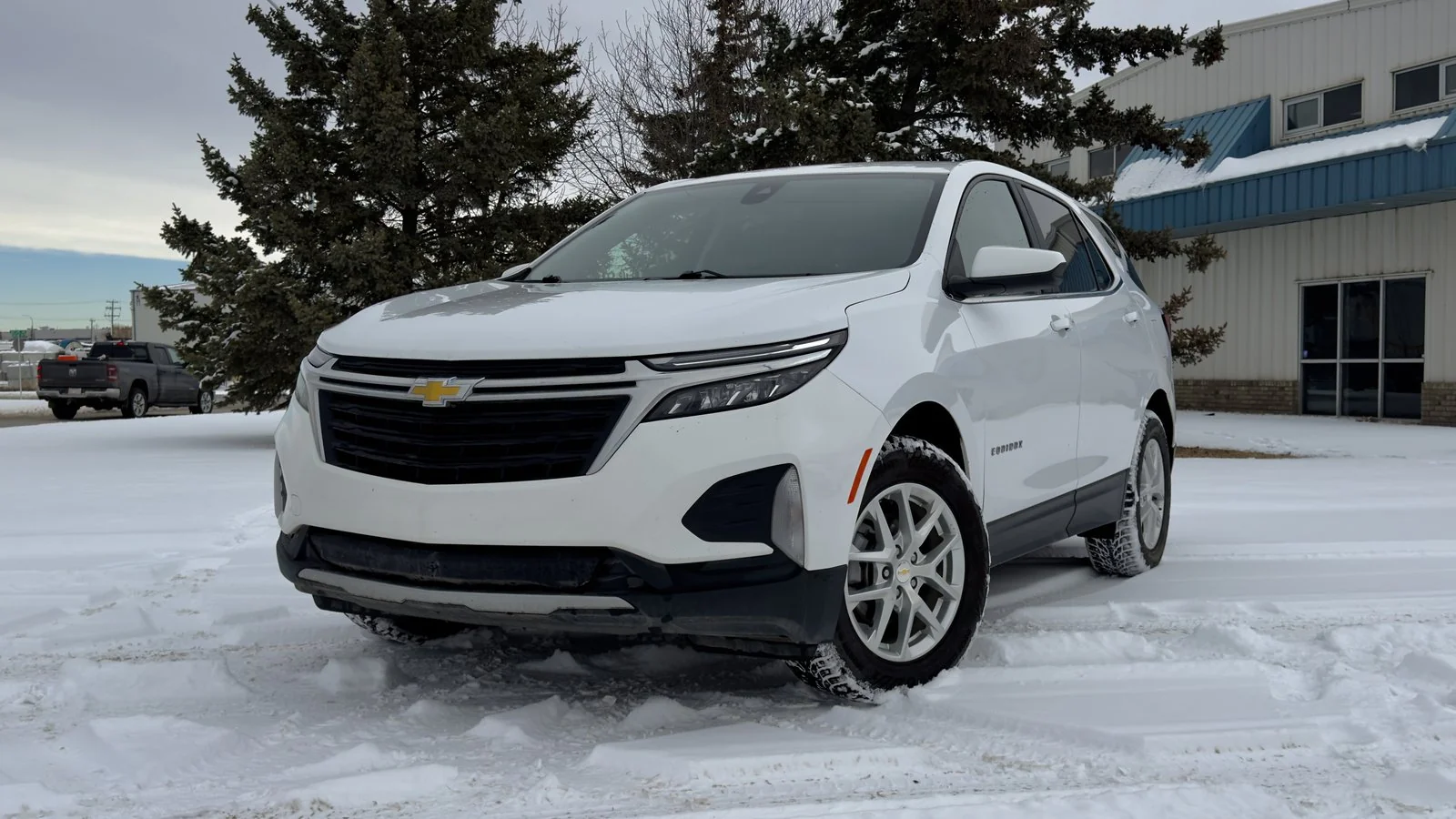
2022 Chevrolet Equinox LT
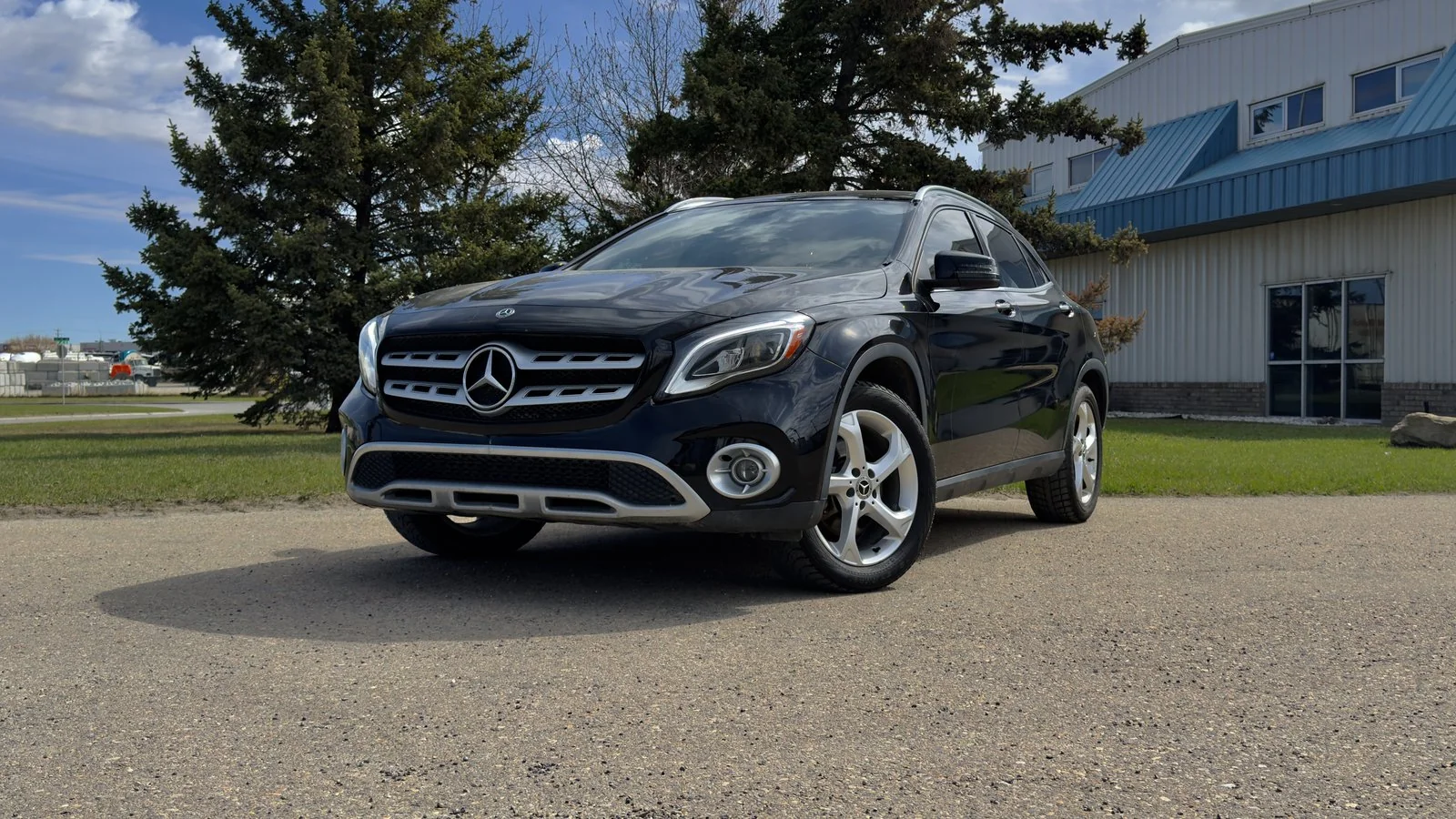
2020 Mercedes-Benz GLA250 4Matic

2020 Land Rover Range Rover Evoque P250 First Edition
Not seeing it? We'll find it.
We source through our dealer partner network across Western Canada: 25,000+ vehicles to choose from. Tell us what you want and what works for your budget.
Find my car3 min · no credit impactOAC = on approved credit. Payments are examples at 6.49% APR over 84 months with $0 down, based on each vehicle's advertised price; GST extra. Your rate depends on your credit (4.99%–29.9% APR).
Related Articles


Ready to Find Your Vehicle?
Browse our inventory or apply for financing. All credit situations welcome.
5.0118+ Google ReviewsAMVIC LicensedFree Delivery 300km