
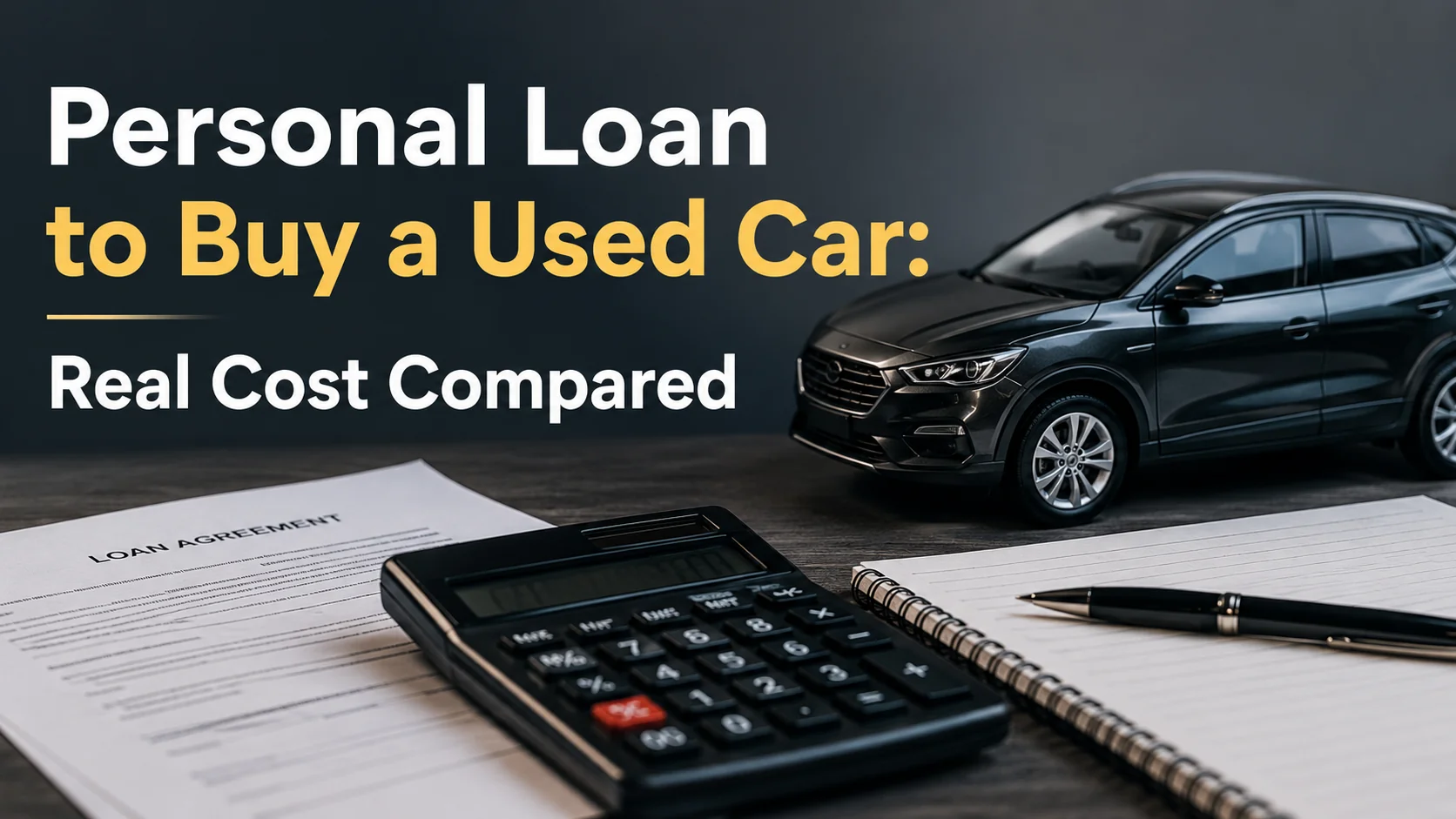
Personal Loan to Buy a Used Car: Real Cost Compared
In this article
- Can You Use a Personal Loan to Buy a Used Car in Alberta?
- How Personal Loans and Auto Loans Are Structurally Different
- The Real Dollar Comparison: $20,000 at Different Rates and Terms
- When a Personal Loan Actually Makes Sense for a Car Purchase
- The Hidden Cost: Opportunity Loss on Credit Building
- Personal Loan Origination Fees: The Invisible Rate Bump
- How Alberta Lenders Actually Process Each Application
- Tax Implications: Is There a Difference in Alberta?
- Related Guides
- Is Shift Happens Right for Your Situation?
- Frequently Asked Questions
- Can I get a personal loan for a car if I have bad credit in Alberta?
- Does using a personal loan to buy a car look bad on my credit?
- What's the maximum term on a personal loan for a car in Canada?
- Can I negotiate a personal loan rate the same way I negotiate an auto loan rate?
- If I get a personal loan for a car, do I own it outright from day one?
- Compare and Apply
Check Your Options in 3 Minutes
No credit impact. All credit situations welcome.
★★★★★ 114+ Google Reviews · AMVIC Licensed · Free Delivery 300km
You've found a $22,000 used pickup on a private listing and your bank pre-approved you for a $25,000 personal loan at 11.99%. Sounds like a clean deal — no dealership, no financing department. But before you sign, run the actual numbers side by side against a secured auto loan, because the difference over 60 months can exceed $3,000 in interest alone — sometimes much more.
See what you pre-qualify for
Three quick answers — soft check, no commitment.
Can You Use a Personal Loan to Buy a Used Car in Alberta?
Yes — a personal loan can legally purchase a used vehicle in Alberta. However, personal loans typically carry rates of 9.99–19.99% versus 6.99–14.99% for secured auto loans, and terms max out at 60 months rather than 84–96. On a $20,000 vehicle, choosing a personal loan over a secured auto loan can cost $1,800–$4,500 more in total interest.
How Personal Loans and Auto Loans Are Structurally Different
A secured auto loan uses the vehicle as collateral. If you stop paying, the lender repossesses the car. That collateral lowers the lender's risk — which is why rates are lower. A personal loan is unsecured: nothing backs it except your signature and credit score. Lenders price that extra risk into the rate.
The second key difference is term length. Personal loans from Canadian banks and credit unions typically cap at 60 months (5 years). Auto loans — especially through dealership financing networks — go to 84 or even 96 months. That longer runway can meaningfully lower your biweekly payment, though it does increase total interest paid if you ride it to the end.
Third: how lenders report and build credit. Both product types report to Equifax and TransUnion. An auto loan, however, adds to your "secured credit" mix, which credit scoring models weight slightly differently than unsecured revolving or installment credit.
The Real Dollar Comparison: $20,000 at Different Rates and Terms
Let's run four scenarios on a $20,000 used vehicle — no down payment, biweekly payments — to see exactly what each path costs.
| Product | Rate | Term | Biweekly Payment | Total Interest Paid |
|---|---|---|---|---|
| Secured auto loan (prime buyer) | 6.99% | 72 mo | $152 | $3,888 |
| Secured auto loan (near-prime) | 12.99% | 72 mo | $175 | $6,600 |
| Personal loan (bank) | 11.99% | 60 mo | $207 | $6,420 |
| Personal loan (fintech/online) | 19.99% | 60 mo | $238 | $10,280 |
The near-prime auto loan and the bank personal loan land at similar total interest — but the auto loan gives you 12 extra months to breathe on payments. The fintech personal loan at 19.99% costs more than $6,000 extra versus a 12.99% auto loan over the loan's life. That's a used Honda Civic down payment.
When a Personal Loan Actually Makes Sense for a Car Purchase
There are four scenarios where a personal loan legitimately wins:
- Private sale, no lien possible: Some lenders won't finance private sales, or the vehicle title situation is complicated. A personal loan sidesteps the collateral paperwork entirely.
- Small loan under $8,000: Lenders often set minimum auto loan thresholds. A $6,500 beater from a private seller may fall below what subprime auto lenders will touch. A personal loan has no such floor.
- Excellent credit, short payoff plan: If your score is above 720 and you plan to pay it off in 24–36 months, a personal loan rate may actually beat a dealer's best auto rate on a lower-demand vehicle.
- Vehicle doesn't qualify as collateral: High-mileage (250,000+ km), salvage-title, or older vehicles sometimes fail lender collateral requirements. Personal loans don't care about vehicle condition.
For most buyers — especially those with credit scores under 700 — a secured auto loan through a multi-lender network will land a lower rate than any personal loan you'll find at a branch. If you're shopping with a 600-650 score, check what you'd qualify for before committing to a personal loan path.
The Hidden Cost: Opportunity Loss on Credit Building
This one gets overlooked. A secured auto loan actively builds what lenders call "credit mix" — you have a secured installment product on file, which is a positive signal. If your credit profile is thin (fewer than 4 tradelines), a well-managed auto loan can move your score meaningfully over 12–18 months.
A personal loan builds credit too, but as unsecured installment — slightly less impactful on the mortgage-readiness metrics that Equifax scores are increasingly tuned to recognize. If rebuilding credit is part of your plan, the secured auto loan structure does double duty: transportation and credit rehabilitation simultaneously. That's the logic behind credit rebuilding auto loans as a product category.
Key insight: On a $20,000 used vehicle, the difference between a 12.99% secured auto loan (72 months) and a 19.99% personal loan (60 months) is approximately $3,880 in total interest. Multi-lender auto financing through Shift Happens accesses 15+ lenders competing for your deal — that competition typically trims 2–5 percentage points off the top-end rate a single bank would quote.Personal Loan Origination Fees: The Invisible Rate Bump
Many personal loan products — especially through online lenders and fintechs — charge origination fees of 1–5% of the loan amount. On a $20,000 personal loan at 3% origination, that's $600 added to the cost before day one. Auto loans through dealership lenders almost never carry origination fees — the dealer earns a reserve on the rate spread instead.
Always calculate APR (annual percentage rate), not just the stated interest rate. A personal loan at 12.99% with a 3% origination fee is effectively closer to 15.5–16% APR when that fee is folded back into the cost of credit over a 60-month term. Check your payment calculator with the all-in APR before comparing products.
How Alberta Lenders Actually Process Each Application
When you apply for a personal loan at a bank, one lender makes one credit decision. You get one offer — or a decline. When you apply through a subprime auto dealership like Shift Happens, your application goes to 15+ lenders simultaneously. They compete. The best offer wins.
That competitive structure matters enormously for buyers in the 550–700 score range. A single bank might decline you, while a specialized subprime auto lender will approve at 17.99% with specific conditions. A second lender at 15.99% with a higher down payment requirement. A third at 19.99% with nothing down. You can compare all three — which is structurally impossible when you're knocking on bank doors one at a time.
The financing process at Shift Happens submits to lenders who specialize in Alberta buyers across all credit tiers. Even buyers with recent collections, consumer proposals, or scores in the 500s have options that a personal loan from a mainstream bank simply won't offer.
Tax Implications: Is There a Difference in Alberta?
For most personal vehicle purchases in Alberta, neither personal loans nor auto loans generate tax deductions. However, if you're purchasing the vehicle for business use — as a gig driver, contractor, or self-employed individual — the interest you pay on a vehicle loan used for income-earning purposes may be partially deductible on your T1 personal tax return (Schedule 8).
The CRA doesn't care whether it's a personal loan or auto loan — what matters is the proportion of business use. Track your mileage from day one. If you drive 60% for business, 60% of the interest (and other vehicle expenses) may be deductible. This calculation applies equally to both loan types.
Related Guides
Want the next layer of detail? These guides cover the closest-adjacent situations to this one:
- Alberta Has No Car Cooling-Off Period: What Buyers Must Know
- Catalytic Converter Theft Prevention for Alberta Urban Drivers
- Boating Season: Tow Vehicle Setup and Trailer Wiring in Alberta
- Hail Season Vehicle Prep: May to September in Alberta
- Harley-Davidson Resale Value by Model: Alberta Guide
- Alberta Lemon Law Reality: What the Sale of Goods Act Covers
- How Lender Pricing Tiers Work: Tier 1 Through Tier 4
- How Much Car Loan Can I Get Approved For? Alberta Income Math
Is Shift Happens Right for Your Situation?
Shift Happens Auto Sales is a fit if you: (1) are buying a used vehicle in Alberta, (2) want lenders to compete for your business rather than taking the first offer a bank gives you, (3) have any credit situation from prime to deep subprime. Not a fit if: you need a specific new vehicle, are looking to lease only, or are buying outside western Canada.
If this article describes your situation, the fastest next steps are: check your approval likelihood (60 seconds) or start a financing application. Both are no-impact on your credit score until you formally apply.
Frequently Asked Questions
Can I get a personal loan for a car if I have bad credit in Alberta?
Yes, but expect rates of 19.99–29.99% through online lenders. A secured subprime auto loan through a dealership lender network will typically offer lower rates (14.99–24.99%) for the same credit profile because the vehicle serves as collateral — reducing lender risk and therefore your rate.
Does using a personal loan to buy a car look bad on my credit?
No — both personal loans and auto loans show as installment credit on your credit report and build payment history the same way. The distinction is that auto loans add secured installment credit to your file, which slightly improves credit mix for score calculation purposes.
What's the maximum term on a personal loan for a car in Canada?
Most major banks and credit unions cap personal loans at 60 months (5 years). Auto loans through dealership lenders go to 84 or 96 months. The longer term reduces your biweekly payment but increases total interest paid unless you make accelerated payments.
Can I negotiate a personal loan rate the same way I negotiate an auto loan rate?
At a bank, personal loan rates have limited negotiation room — they're risk-tiered by your credit score and income. Auto loan rates through a dealership have more flexibility because multiple lenders are competing and the dealer can adjust the rate spread they earn. This makes dealership auto financing structurally more negotiable for most buyers.
If I get a personal loan for a car, do I own it outright from day one?
Yes — a personal loan pays the seller directly (or funds your account), and no lien is registered against the vehicle. With a secured auto loan, the lender holds a lien on the title until the loan is paid off. Practically speaking, this only matters if you want to sell or trade before payoff — lien discharge takes a few business days and the lender must be paid out first.
Compare and Apply
- Complete Bad Credit Car Buying Guide (Alberta) — step-by-step guide to getting approved in Alberta
Financing Resources
Related Articles

Ready to Find Your Vehicle?
Browse our inventory or apply for financing. All credit situations welcome.
★★★★★ 114+ Google Reviews · AMVIC Licensed · Free Delivery 300km