
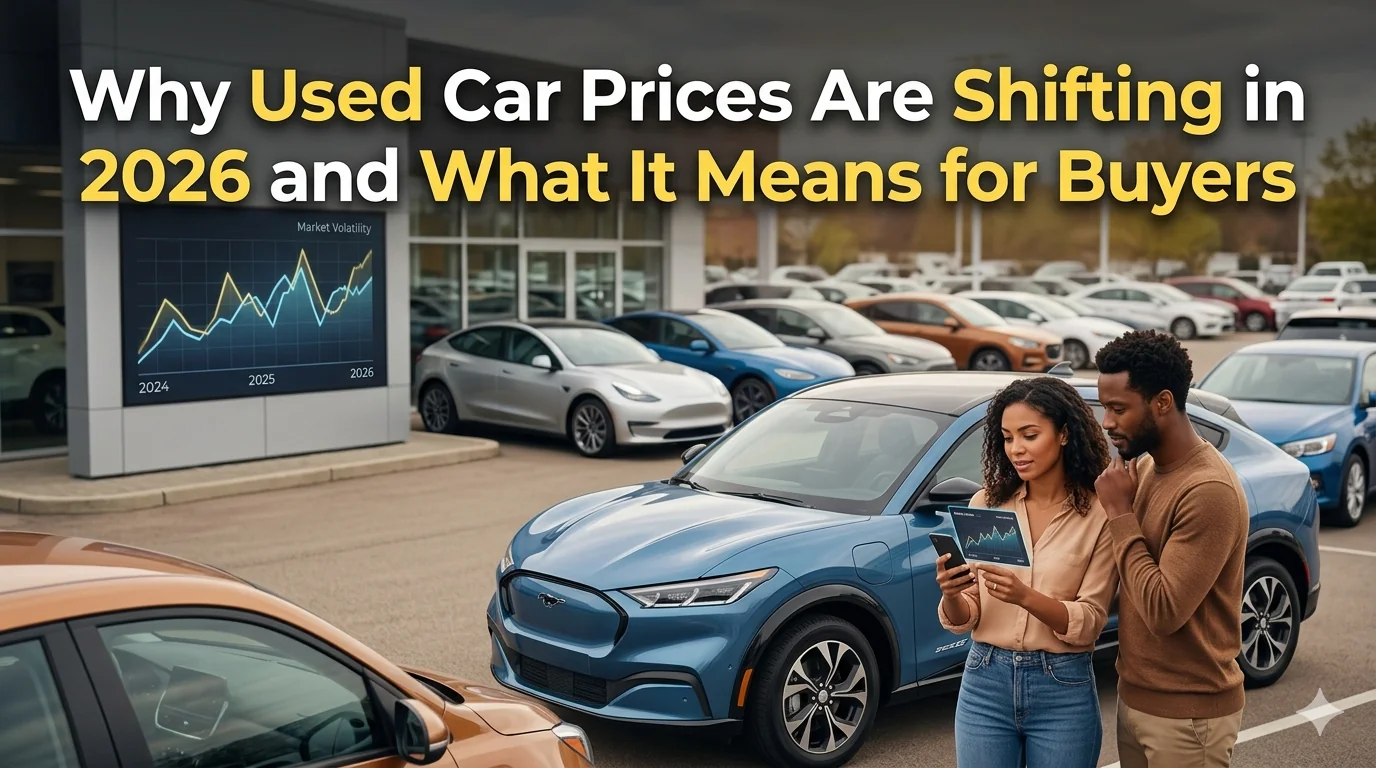
Why Used Car Prices Are Shifting in 2026 and What It Means for Buyers
In this article
- The Post-Pandemic Price Normalization Is Real, but Uneven
- EV Depreciation Is Reshaping the Whole Market
- Interest Rates: The Hidden Price Variable
- Using the Rate Environment to Your Advantage
- Alberta-Specific Forces: Population Growth and Resource Sector Confidence
- Which Vehicles Are Dropping in Price Right Now
- Which Vehicles Are Holding Value
- When to Buy vs. When to Wait in 2026
- How to Approach the 2026 Market as a Buyer
- The Alberta Outlook for the Rest of 2026
- How Credit and Financing Fit Into the 2026 Market Picture
- Red Flags to Watch in the 2026 Market
- Related Buyer Guides
- Compare and Apply
Check Your Options in 3 Minutes
No credit impact. All credit situations welcome.
5.0118+ Google ReviewsAMVIC LicensedFree Delivery 300km
If you've been watching used car prices in Canada since 2021, you've seen a market that went from predictable to chaotic to something resembling normal — but not quite the normal we had before. In 2026, buyers are navigating a market shaped by post-pandemic supply chain recovery, a fundamentally different EV landscape, shifting interest rates, and Alberta-specific economic forces that don't apply anywhere else in the country. Understanding what's actually happening right now — and why — puts you in a better position to decide when and what to buy.
The Post-Pandemic Price Normalization Is Real, but Uneven
During 2021–2023, used car prices across Canada ran 30–50% above historical norms. The mechanism was straightforward: semiconductor shortages killed new car production, new car inventory collapsed, and buyers flooded into the used market. Demand spiked while supply contracted. Dealers were selling used cars at or above MSRP. Auction prices went vertical.
That era is over, but the reset hasn't been uniform. Supply chains have largely recovered. New car inventory is rebuilding. The extreme used car premiums have normalized — prices are down 15–25% from their 2022 peaks across most segments. But "normalized" doesn't mean "back to 2019." Inflation has baked into the market permanently. A used sedan that cost $12,000 in 2019 might be $14,500–$15,500 today even after the bubble deflated.
For buyers, this creates an opportunity that didn't exist in 2022: actual negotiating room. Dealers are no longer moving everything at list price within 48 hours. Inventory sits longer. Offers get considered. If you walked into a dealership in 2022 and made an offer below asking, you got laughed at. In 2026, a well-researched offer is a real conversation.
EV Depreciation Is Reshaping the Whole Market
The rapid expansion of new EV models — and the ongoing price cuts from manufacturers — has created a depreciation wave in the used EV market that's pushing down prices on gas vehicles indirectly. Here's the chain reaction:
New EVs got significantly cheaper from 2023 to 2025 as manufacturers cut prices to compete and governments adjusted incentive programs. That made used EVs worth less overnight, since the gap between a used 2022 EV and a new 2025 EV shrank dramatically. Used EV prices — especially Nissan Leaf and Chevy Bolt — dropped sharply. This softened demand for used economy cars broadly, as some buyers who might have bought a used sedan instead bought a discounted used EV.
The practical result for used car prices in 2026 Canada: sedans and compact cars are trading at some of the most competitive prices in years. The used sedan market is soft by historical standards. If you're shopping for a used sedan in Calgary or Airdrie, 2026 is one of the better times in recent memory to buy in this segment.
Market signal: Vehicles losing value fastest in 2026 — small sedans, older EVs (pre-2020), high-mileage imports. Vehicles holding value best — light-duty trucks, body-on-frame SUVs, anything with AWD and proven reliability. If you're buying to build equity, the truck/SUV side of the market is more stable.
Interest Rates: The Hidden Price Variable
A vehicle's sticker price is only part of the real cost equation. The Bank of Canada's rate cycle from 2022 to 2024 pushed borrowing costs significantly higher before rates began declining in 2024–2025. In 2026, rates have moderated from their peaks, but they're not back to the historic lows of 2020–2021 that made $30,000 trucks feel affordable on any income.
This matters because high rates effectively price buyers out of more expensive vehicles. When car loan rates in Alberta are higher, the monthly payment on a $35,000 truck climbs enough to push buyers toward $25,000 trucks — which pushes prices up on that segment and down on the more expensive one. Rates shape the whole market, not just your individual deal.
For 2026 specifically: rates are lower than 2023 peaks but not at the floor. A buyer with good credit might access rates in the 6.99–9.99% range. A buyer working through some credit challenges might see 14–19%. Either way, running your numbers through a payment calculator before shopping is essential — $500 more per vehicle might cost you more or less than you expect depending on your rate and term.
Using the Rate Environment to Your Advantage
One underused strategy in a declining rate environment: buy now, refinance later. If you need a vehicle today and rates are higher than you'd like, locking in an approval at current rates and refinancing in 12–18 months when rates potentially drop further can save meaningful money over the life of the loan. Not every lender allows early payoff without penalty — confirm terms before signing. Our post on how to negotiate your car loan rate covers exactly how to push back on initial offers and what levers actually move.
Alberta-Specific Forces: Population Growth and Resource Sector Confidence
Alberta's used car market in 2026 is being pulled by two forces that don't apply the same way in Ontario or BC.
First, Alberta's population growth has been substantial. The province has absorbed significant interprovincial and international migration over the past three years, driven by housing affordability relative to Vancouver and Toronto, and strong employment demand. New residents need vehicles. Alberta doesn't have the transit infrastructure of Vancouver or Toronto, so car ownership is essentially mandatory in most parts of the province. That sustained demand has kept Alberta's used car market tighter than national averages would suggest.
Second, the resource sector. Alberta's oil and gas industry drives consumer confidence in ways that have no direct equivalent elsewhere in Canada. When WTI crude trades above $80, Albertans — especially in Calgary and the surrounding area — feel financially confident. They buy trucks. They upgrade. Used truck inventory gets absorbed quickly and prices stay firm. When prices soften or layoff cycles hit, inventory builds and prices respond. In early 2026, resource sector confidence in Alberta is measured — not the euphoria of 2022, but not the anxiety of 2015–2016 either. That translates to stable truck demand and moderate inventory.
For buyers in Edmonton and northern Alberta especially, oilfield employment patterns matter when timing a purchase. Watch the energy headlines as a lagging indicator of what used truck inventory will look like in 60–90 days.
Which Vehicles Are Dropping in Price Right Now
The vehicles experiencing the most price softness in 2026 are not random — they follow clear patterns:
- Sedans (most segments): Supply has recovered, EV competition is pulling demand away, and consumer preference has shifted toward crossovers. A used Toyota Camry or Honda Accord that might have been $28,000 in 2022 is more likely to be $21,000–$24,000 in 2026 depending on mileage and year.
- Pre-2020 EVs: The Nissan Leaf and first-generation Chevy Bolt have depreciated aggressively as range anxiety about older battery technology has grown and newer EVs offer substantially more range at competitive prices. These can be extraordinary value purchases for city commuters with home charging — and a poor fit for everyone else.
- High-mileage imports: Japanese and Korean vehicles above 180,000 km are selling at significant discounts because buyer risk tolerance has tightened since financing rates rose. These are often mechanically sound vehicles — Corollas, Civics, and Elantras built to run 300,000+ km with basic maintenance — but they require a mechanical inspection before purchase.
- Large domestic sedans: Cars like the Chrysler 300 and Dodge Charger, which already faced headwinds from fuel costs and segment preferences, are trading at multi-year lows in Alberta.
Which Vehicles Are Holding Value
The other side of the equation — vehicles where you should not expect significant negotiating room:
- Used trucks — F-150, Silverado, Ram 1500: Demand in Alberta is structural. These trucks will always be in demand here. A clean, lower-mileage used truck with solid service history commands its price. Don't expect 2022 bubble prices, but don't expect aggressive discounting either.
- Mid-size SUVs with AWD: Toyota RAV4, Honda CR-V, and comparable vehicles hold value well due to their combination of versatility, reliability reputation, and Alberta-appropriate capability. Supply has improved but demand remains strong.
- Diesel trucks: Work trucks and diesel-powered vehicles maintain value because they serve a purpose that's hard to replace. Commercial users aren't price-shopping the same way retail buyers are.
- Certified late-model vehicles (2021–2023): Lower supply of very recent used vehicles and higher consumer preference for near-new options means recent-year units hold value better than older inventory.
When to Buy vs. When to Wait in 2026
The honest answer: for most buyers in 2026, the market is more in your favour than it's been since 2019, and waiting carries some risk.
The case for buying now: prices are off their peaks, selection is better than the 2021–2022 shortage years, and dealers are negotiating again. If you need a vehicle, the current environment is genuinely reasonable by historical standards. For sedans and non-truck inventory specifically, 2026 pricing is soft in ways that are likely temporary as the used car supply glut from post-pandemic restocking eventually gets absorbed.
The case for waiting: If interest rates continue declining into late 2026, your financing cost on the same vehicle could be meaningfully lower in 6–12 months. If you're specifically after a truck and your timeline is flexible, January pricing (seasonal low) is still worth waiting for. See our breakdown of seasonal used car pricing in Alberta for timing strategy by month.
The case for not waiting: Your current vehicle's reliability is deteriorating. Your personal situation — a new job, a growing family, an upcoming move to a less transit-friendly area — makes having a reliable vehicle now more valuable than the savings of waiting. Opportunity cost is real. A vehicle you need today is worth more than marginal savings you might capture in six months. The cost of a breakdown, a missed shift, or a stranded family on the highway isn't a number that shows up in market analysis articles, but it's very real.
How to Approach the 2026 Market as a Buyer
Practically, here's what the current environment calls for:
- Research comparable sales first. Use AutoTrader, CarGurus, and Kijiji to establish what similar vehicles are actually selling for in Alberta — not just what they're listed at. Listed prices in 2026 have more room to negotiate than they did in 2022, but you need market data to know where the floor is.
- Get financing pre-approved. The current rate environment makes your credit profile more important than ever. A pre-approval through our financing application establishes your rate before you walk into a dealership, which protects you from payment-focused negotiations that obscure the vehicle's true cost.
- Focus on total cost of ownership, not just purchase price. In 2026, the gap between what different vehicles cost to own over five years has widened due to parts availability differences, insurance cost variations, and fuel economy. Our post on total cost of car ownership in Alberta runs through the full calculation so you're comparing the right numbers.
- Don't over-index on depreciation. Buying a vehicle that's already experienced its steepest depreciation (like a 2–3 year old used vehicle) is typically smarter than buying new, but some buyers overcorrect and buy high-mileage units to save money upfront only to spend it on repairs. In 2026's market, the sweet spot is generally 3–6 year old vehicles with under 100,000 km.
The Alberta Outlook for the Rest of 2026
Used car prices in 2026 Alberta are unlikely to spike back to 2022 levels — the supply chain conditions that drove that bubble don't exist anymore. They're also unlikely to crash dramatically — demand from population growth and the resource sector provides a structural floor, especially on trucks and capable SUVs.
What's most likely: gradual continued normalization, with some segments (sedans, older EVs) continuing to soften and others (trucks, near-new SUVs) holding relatively firm. For the average buyer, this is a reasonable market to buy in with appropriate research and negotiation.
How Credit and Financing Fit Into the 2026 Market Picture
One aspect of the current market that doesn't get enough attention: the 2026 used car market actually works well for buyers with credit challenges, not just prime borrowers. Here's why.
When the market was at its 2022 peak, lenders tightened their criteria. Prices were high, vehicles were depreciating off peak values, and subprime lenders were cautious about loan-to-value ratios on overpriced inventory. As prices have normalized, lenders have loosened. The used vehicle is now worth closer to what's being paid for it, which reduces lender risk and makes approvals more accessible for buyers working through credit challenges.
This is a meaningful shift. A buyer with a 580 credit score trying to finance a $28,000 truck in 2022 (when that truck's real market value was maybe $24,000) faced a tough conversation with lenders about the gap. In 2026, that same buyer, financing the same truck now priced closer to its actual value, has a more straightforward case to make. Lenders specialize in exactly these situations — the multi-lender model we use at Shift Happens means your application goes to lenders who compete for your business rather than one lender who can take it or leave it. If credit is what's holding you back, here's what lenders check when you apply for a car loan, explained plainly.
For a deeper look at how lender decisions work in the current rate environment, our post on electric vs gas used car comparison covers which vehicle types make the most financial sense right now, and the subprime vs prime financing page walks through what drives your specific rate offer.
Red Flags to Watch in the 2026 Market
A more balanced market doesn't mean every deal is a good one. A few patterns to watch for specifically in 2026:
- Overpriced trucks held over from 2022 peaks: Some independent dealers are still listing trucks at 2022 bubble prices, hoping a buyer who hasn't done market research pays the ask. Run comparable searches on AutoTrader before making any offer on a truck.
- Used EVs with undisclosed battery degradation: As used EV supply grows, more units with significant battery wear are entering the market. Always request a battery health report on any EV purchase. A Leaf with 75% battery health is a fundamentally different vehicle from one with 92%.
- High-mileage units priced close to lower-mileage alternatives: In a normalizing market, the spread between 80,000 km and 150,000 km units has widened. Don't pay 80,000 km prices for 150,000 km vehicles — the market is no longer that tight.
- Vehicles from private sellers who bought at peak: Private sellers who bought at 2022 prices and are now selling may be asking above current market to recoup their loss. They're not always anchoring to current market values. Do your homework on recent comparable sales, not what the seller paid two years ago.
Shift Happens Auto Sales in Airdrie monitors Alberta's used vehicle market daily and works with 15+ lenders to find financing that works for every credit situation — from prime buyers looking for the best rate to buyers working through past credit challenges. Apply for financing today and see what the current market means for your specific situation. We serve buyers across Alberta, from Calgary to Red Deer to Edmonton, with access to a 25,000+ vehicle network.
Compare and Apply
- Complete Bad Credit Car Buying Guide (Alberta) — complete bad credit car buying guide
Financing Resources
Cars you could drive home
See all inventory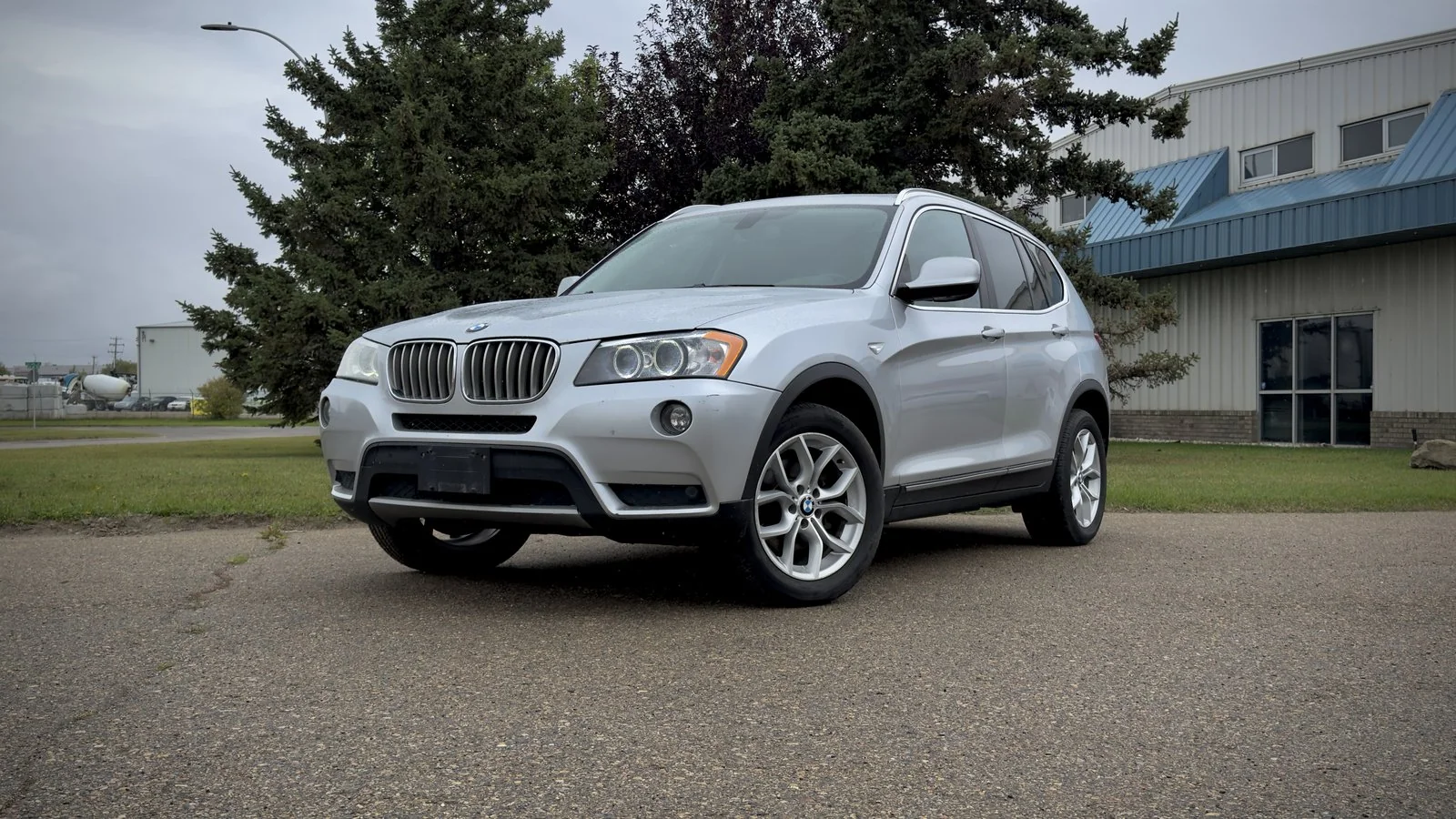
2014 BMW X3 xDrive28i
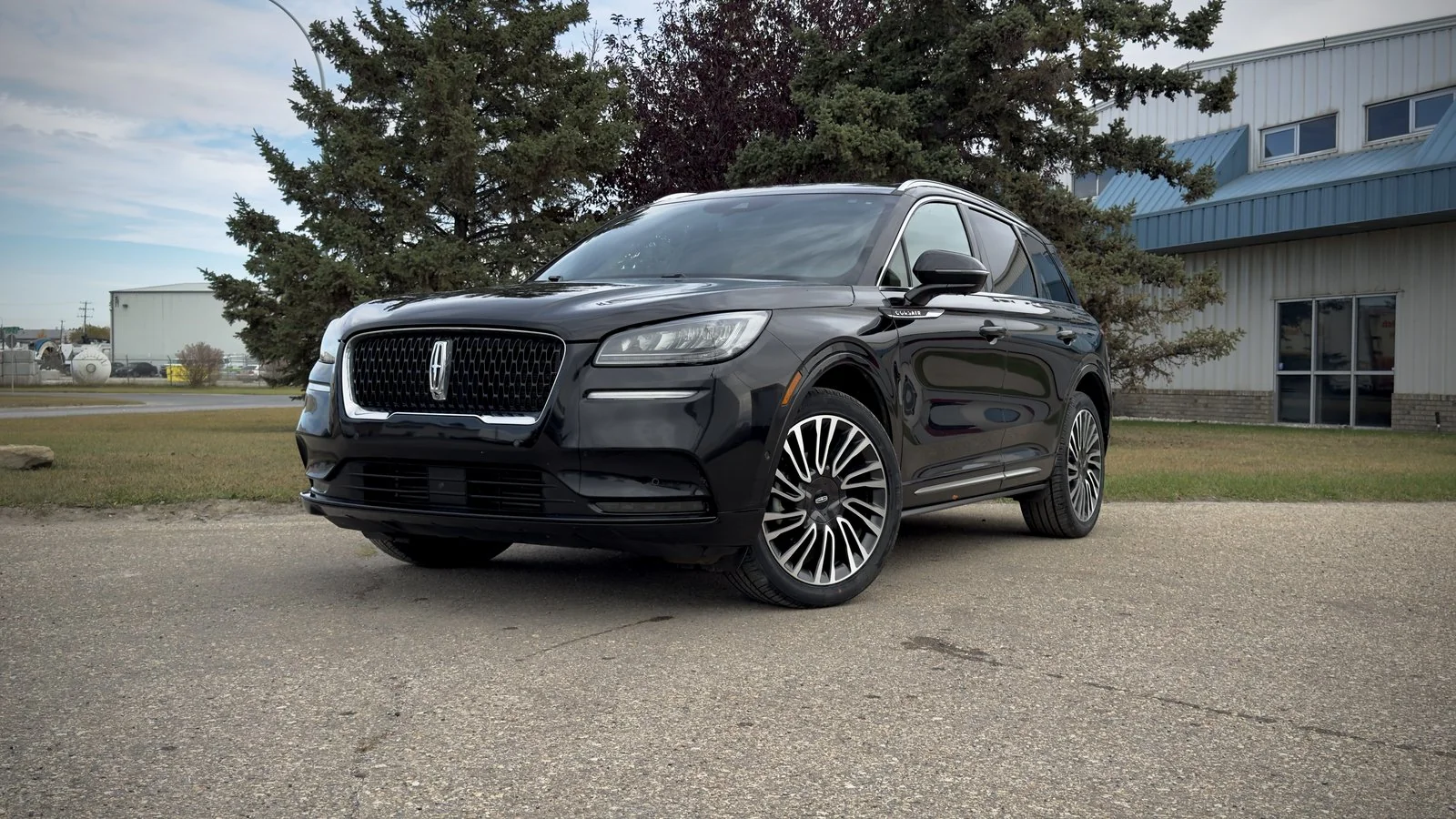
2021 Lincoln Corsair Reserve
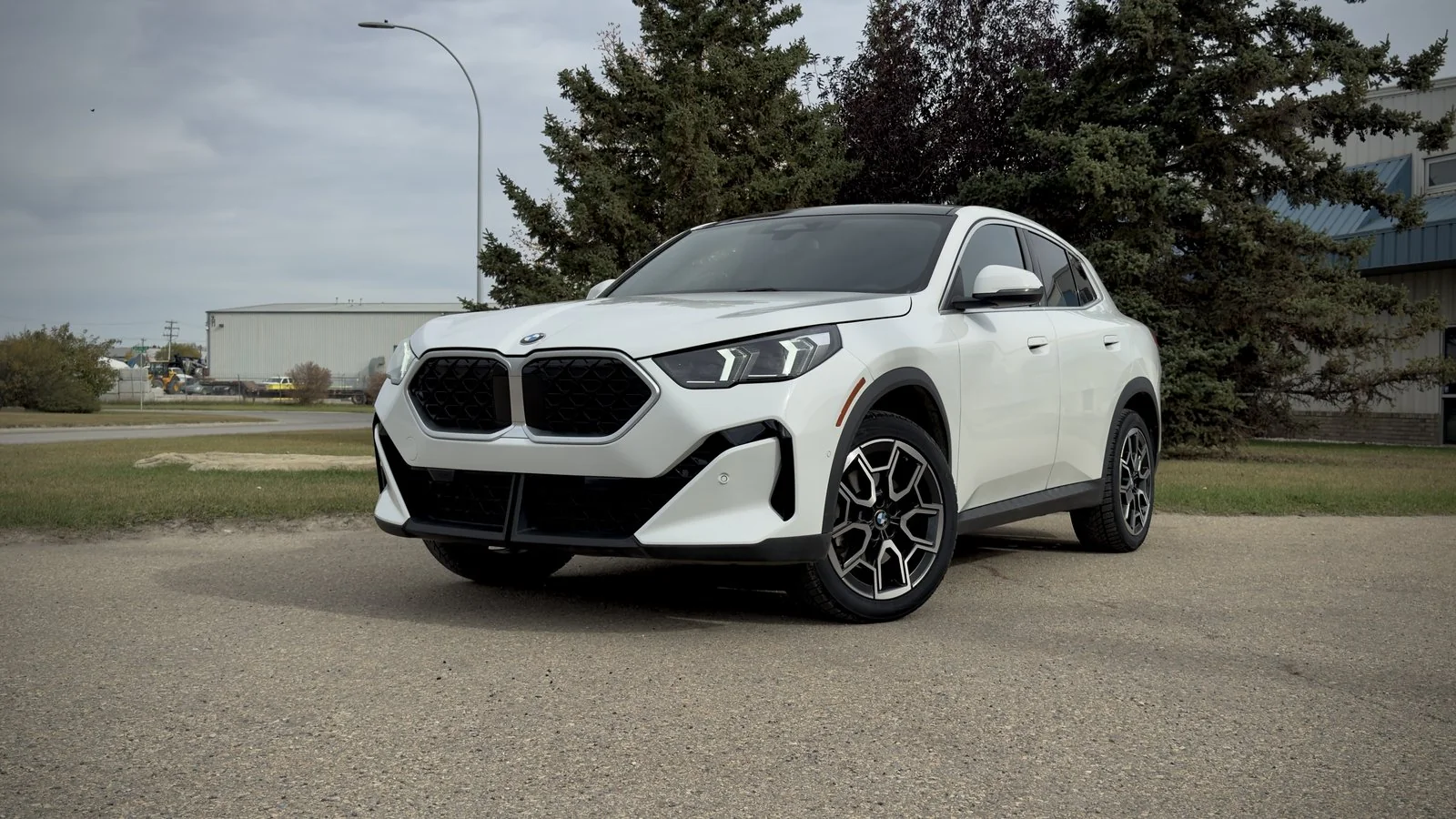
2025 BMW X2 xDrive28i
Not seeing it? We'll find it.
We source through our dealer partner network across Western Canada: 25,000+ vehicles to choose from. Tell us what you want and what works for your budget.
Find my car3 min · no credit impactOAC = on approved credit. Payments are examples at 6.49% APR over 84 months with $0 down, based on each vehicle's advertised price; GST extra. Your rate depends on your credit (4.99%–29.9% APR).
Related Articles


Ready to Find Your Vehicle?
Browse our inventory or apply for financing. All credit situations welcome.
5.0118+ Google ReviewsAMVIC LicensedFree Delivery 300km