
Subprime vs Prime Financing
Auto lenders categorize borrowers into credit tiers. Understanding where you sit — and how to move up — is the foundation of any credit recovery plan.
Last reviewed: October 2026
What is the difference between subprime and prime car financing in Alberta?
Prime financing (scores 750+) runs 4.99–8.9% APR through major banks. Subprime financing (scores below 650) runs 7.9–29.9% APR through specialty lenders. Shift Happens accesses both with one application.
Not sure where you fall?
Check your tier in 3 minutes. We work with all credit levels.
5.0118+ Google ReviewsAMVIC LicensedFree Delivery 300km
Key Facts
- Deep subprime rates
- 19.9–29.9% typical
- Subprime rates
- 7.9–24.9% typical
- Near-prime rates
- 6.9–12.9% typical
- Prime rates
- 4.99–8.9% typical
The Tier You Start In Is Not Permanent
What Is the Difference Between Subprime and Prime Financing?
Prime financing is for borrowers with credit scores of 750+ and offers the best available rates (4.99–8.9%); subprime financing serves borrowers below 650 at higher rates (7.9–29.9%), but with the same access to a reliable vehicle. The tier you start in is not permanent — consistent on-time payments move most borrowers up within 12–24 months.
Auto lenders categorize borrowers into tiers based on their credit profile. Prime borrowers — those with scores of 750+ — get the best rates. Subprime borrowers, those with scores below 650, pay higher rates but still get approved. The key insight: subprime financing exists specifically to serve people who can't qualify for prime. It is not a penalty — it is a bridge.
The rate difference between tiers is real and meaningful. But the rate is temporary. The credit improvement that comes from a year of on-time payments is permanent. That asymmetry is why subprime financing, done right, is a tool — not a trap.
Credit Tiers at a Glance
| Tier | Score Range | Typical Rates | What to Expect |
|---|---|---|---|
| Deep Subprime | 300-499 | 19.9-29.9% typical | Fewer lenders available, but approval is possible with stable income and a meaningful down payment. The focus at this tier is on rebuilding — not the rate. One year of on-time payments can move you into subprime territory. |
| Subprime | 500-649 | 7.9-24.9% typical | More lender options than deep subprime. This is where most credit-challenged buyers sit. Manageable rates with stable income. 12-18 months of consistent payments typically pushes scores into the near-prime range. |
| Near-Prime | 650-749 | 6.9-12.9% typical | Significantly more options than subprime. Many customers reach this tier within 12-18 months of on-time payments on a subprime loan. Rates become genuinely competitive. Refinancing the original subprime loan becomes an option. |
| Prime | 750+ | 4.99-8.9% typical | Best terms available. Full lender market open. The destination after consistent credit rebuilding. Once here, maintaining it requires the same habits that got you here: on-time payments, low utilization, no new negatives. |
Rate ranges are typical market ranges as of 2026. Individual approvals depend on income, down payment, employment, and vehicle selection.
What Determines Your Tier?
Your credit tier is determined by your credit score as a starting point, but lenders also weigh income stability, time since your last negative event, employment tenure, down payment, and vehicle selection. Two borrowers with the same score can land in different tiers depending on these supporting factors.
Credit score is a starting point, not the full picture. Lenders evaluate your entire file before placing you in a tier. A 520 score with one old collection is a different application than a 520 score with active collections and a recent repossession. These factors all influence where you land:
If a bank or credit union has already turned you down, our guide to why lenders decline a car loan and what to do next covers what to check first.
How Do You Move from Subprime to Prime?
You move from subprime to prime by making every payment on time for 12–24 months, adding a secured credit card for a second trade line, and keeping credit utilization below 30%. Most borrowers who start in subprime reach near-prime (650+) within 18–24 months following this approach consistently.
The path is predictable. It requires consistency, not luck. Most people see meaningful improvement within 12-24 months when they follow this approach:
Start with a subprime loan
Even at a higher rate, a subprime car loan establishes a positive installment trade line on your credit report. This is the foundation. The rate is the cost of entry — the credit improvement is the return.
Make every payment on time for 12-18 months
Payment history is the largest factor in your credit score — roughly 35%. Consistent on-time payments compound. Missing one can set you back 3-6 months of progress.
Add a secured credit card
A secured card ($300-500 limit, paid in full every month) adds a revolving trade line. The combination of an installment loan and a revolving account improves your credit mix — another scoring factor.
Check your credit report every 6 months
Errors on credit reports are common. Dispute anything inaccurate — old accounts still showing active, wrong balances, duplicate entries. Errors can artificially suppress your score.
Explore refinancing after 12-24 months
Once your score has improved, refinancing your car loan at a lower rate reduces your monthly payment and your total interest cost. Many customers move from 15-18% to 8-10% after their first year.
Keep utilization below 30% on revolving credit
Credit card balances above 30% of your limit suppress your score even when you pay on time. Keep balances low relative to your limits — ideally under 10% for maximum impact.
For more on the credit rebuilding process, see our guides on bad credit car loans and second chance auto financing.
Is Subprime Financing Worth the Higher Rate?
Yes — if the alternative is no vehicle and no credit building, a subprime loan at a higher rate that rebuilds your credit profile is worth far more than waiting. The rate is temporary; the credit improvement is permanent.
Yes — if the alternative is no vehicle and no credit building. A subprime loan at 15% for 24 months that rebuilds your credit to near-prime is worth far more than 24 months of waiting with no positive trade line on your report. The rate is temporary; the credit recovery is permanent.
The real comparison is not subprime vs. prime — it is subprime now vs. subprime forever because you never took the first step.
The Math on a Typical Subprime Loan
A $15,000 vehicle at 15% over 48 months costs roughly $416/month — about $4,972 in interest over the term. After 12-24 months of on-time payments, refinancing at 9% drops the remaining balance to approximately $10,500 at $294/month. The credit improvement that made the refinance possible is worth more than the interest savings — it unlocks better rates on every future borrowing decision.
Frequently Asked Questions
At what credit score does a borrower cross from subprime to prime rates?
The boundary between subprime and near-prime is generally around 650, and near-prime crosses into prime at approximately 750. These are not hard cutoffs — lenders set their own thresholds, so one lender's near-prime approval might be another's subprime. The rate difference between tiers is significant: borrowers in the 650–749 range typically see rates of 6.9–12.9%, while 750+ unlocks rates from 4.99%. Crossing from subprime to near-prime is typically achievable within 18–24 months of consistent on-time payments.
Can I refinance from subprime to prime?
Yes. Refinancing is one of the most common next steps after 12-24 months of on-time subprime payments. By that point, your credit score has typically improved enough to qualify for better rates — either with the original lender or a new one. Not every lender offers refinancing, so it is worth checking the terms of your original loan. Many customers move from a 15-20% rate to 9-12% after their first year of consistent payments.
How long does it take to go from subprime to prime?
Most people see meaningful credit improvement within 18-36 months of consistent on-time payments, combined with other credit-building habits like keeping a secured credit card at low utilization. Moving from deep subprime (below 500) to prime (750+) typically takes 3-5 years. Moving from subprime (500-649) to near-prime (650-749) is often achievable within 18-24 months. Near-prime to prime can happen in another 12-18 months.
Is subprime financing predatory?
No — legitimate subprime auto financing is regulated under provincial consumer protection law and Canada's federal lending regulations. It serves a real need: giving people with imperfect credit access to vehicle financing while rebuilding their credit profile. The higher interest rate reflects higher lender risk, not exploitation. The key is working with licensed dealers and lenders who are transparent about terms. Be cautious of unregulated rent-to-own or buy-here-pay-here arrangements that operate outside the standard lending framework.
Related Resources
What Our Customers Say
“If you're looking for a new vehicle or to trade in your old one, Luke is your guy!! Same day we called he had us an approval, and the 1st vehicle he showed us was exactly what we wanted!”
“Luke was awesome to deal with and made the car buying experience enjoyable again for me and my wife after a few very unpleasant interactions in the past. I would highly recommend.”
“The truck is gorgeous and it's exactly what they said it was. I recommend to anyone.”
Cars you could drive home
See all inventory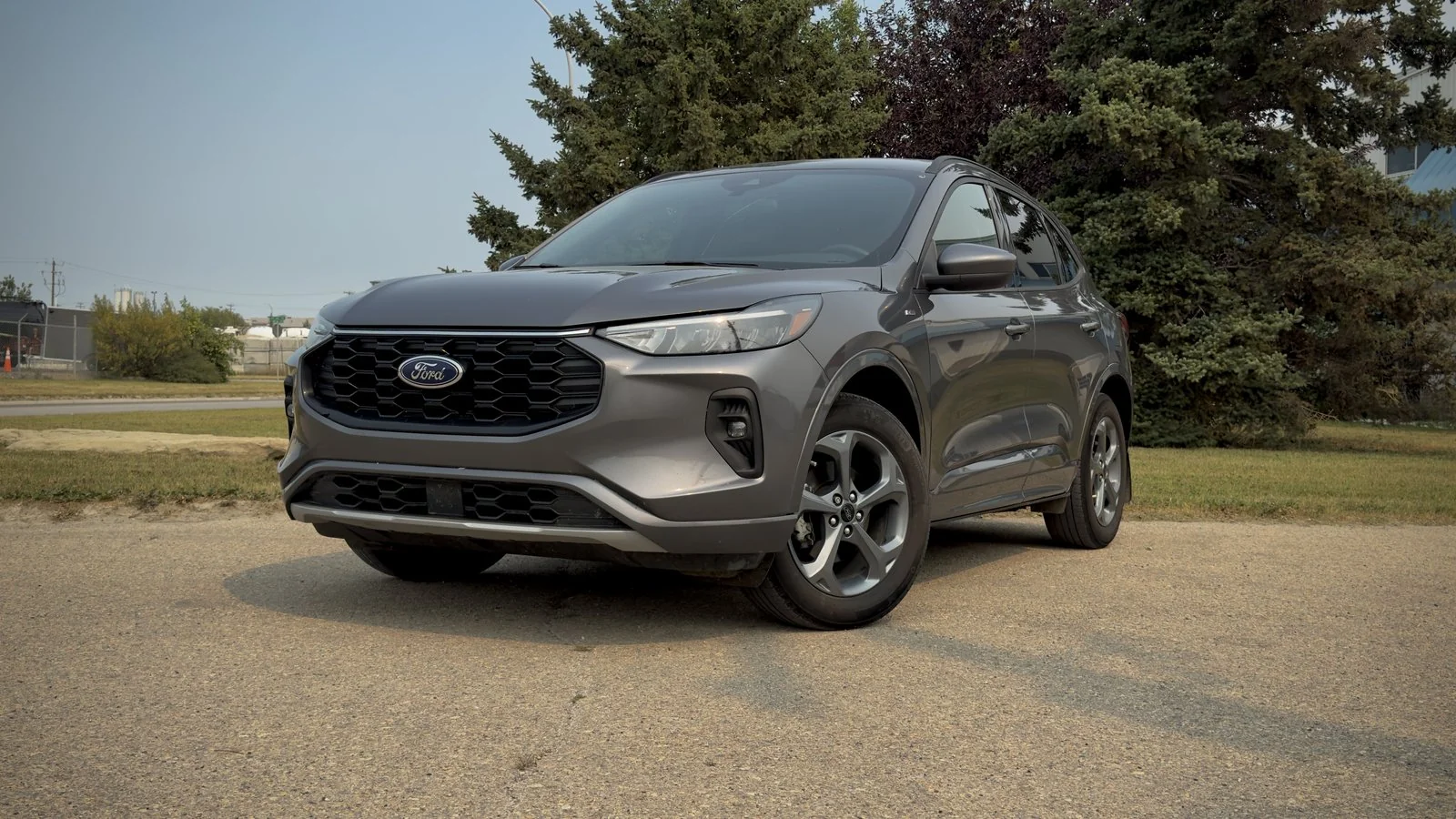
2024 Ford Escape Hybrid ST-Line

2023 Mitsubishi Outlander ES PHEV

2021 Land Rover Range Rover Evoque R-Dynamic HSE

2019 Ford Explorer XLT
Not seeing it? We'll find it.
We source through our dealer partner network across Western Canada: 25,000+ vehicles to choose from. Tell us what you want and what works for your budget.
Find my car3 min · no credit impactOAC = on approved credit. Payments are examples at 6.49% APR over 84 months with $0 down, based on each vehicle's advertised price; GST extra. Your rate depends on your credit (4.99%–29.9% APR).
Not sure where you fall?
Check your tier in 3 minutes. We work with all credit levels.
5.0118+ Google ReviewsAMVIC LicensedFree Delivery 300km
Other Financing Options
Start Building Credit Today
Whatever tier you are in right now, the path to prime starts with one on-time payment. Apply and we will match you with the right lender for your situation.