
Loan Term
What is a loan term on a car loan?
Loan term is the length of time you have to repay the loan, measured in months. Common Canadian auto loan terms are 60, 72, 84, and 96 months — longer terms reduce the monthly payment but increase total interest paid.
The Monthly Payment vs Total Cost Tradeoff
Loan term is the single lever that most powerfully changes your monthly payment without changing the vehicle, the rate, or the amount financed. Every additional year you add to the term spreads the same debt across more payments, lowering each one. But interest keeps accruing on the outstanding balance for every month of that extended term — so the lender collects more interest in total, and you pay more for the vehicle overall.
Illustrative example on a $20,000 loan at 15% APR:
- 60 months: ~$476/month. Total interest ~$8,560. Total repaid ~$28,560.
- 72 months: ~$413/month. Total interest ~$9,750. Total repaid ~$29,750.
- 84 months: ~$370/month. Total interest ~$11,050. Total repaid ~$31,050.
Moving from 60 to 84 months saves $106/month but costs roughly $2,490 more in total interest. These are illustrative figures; your actual numbers will vary by rate and fees.
Loan Term and Negative Equity Risk
A vehicle typically depreciates fastest in its first two to three years of ownership. On a long-term loan, the balance declines slowly early on because early payments are weighted heavily toward interest. This mismatch — fast depreciation, slow balance reduction — means you may owe more than the vehicle is worth for a significant portion of the loan term.
Being underwater is not a crisis if you plan to keep the vehicle for the full term. But it becomes a problem if you need to sell, trade in, or if the vehicle is totalled by an insurer. In those situations, the shortfall between the settlement or trade value and the remaining loan balance must be paid out of pocket or rolled into the next loan — making the next loan more expensive from day one.
GAP insurance is specifically designed to cover this shortfall in the event of a total loss. If you are financing at 84 months or longer, GAP coverage is worth evaluating, particularly in the first three years when the equity gap is widest.
What Subprime Lenders Allow in Alberta
Most subprime lenders in Alberta offer terms between 48 and 84 months. A subset extends to 96 months (8 years) on vehicles that are newer and lower-mileage — lenders need the vehicle to retain collateral value for the loan's full duration. Older or higher-mileage vehicles are more likely to be capped at 60 or 72 months. The specific terms available depend on the vehicle's year, mileage, and appraised value relative to the loan amount.
Choose the shortest term you can comfortably sustain
Frequently Asked Questions
What is the most common car loan term in Canada?
The most common terms in Canada are 72 months (6 years) and 84 months (7 years) for subprime borrowers, as these reduce the monthly payment to a range more borrowers can manage. Prime borrowers often choose 60 months (5 years) to minimize total interest. Terms of 96 months (8 years) exist but are less common and typically result in prolonged negative equity periods on depreciating vehicles.
How does loan term length affect negative equity on a car loan?
On a long-term loan, the loan balance decreases slowly in the early months because most of each payment covers interest. Meanwhile, the vehicle's market value depreciates faster than the balance drops — creating a gap where you owe more than the car is worth. This is negative equity (sometimes called being "underwater"). Negative equity makes it difficult to trade in or sell the vehicle without rolling the shortfall into the next loan, which compounds the problem.
What loan terms do subprime lenders in Alberta typically allow?
Most subprime lenders in Alberta offer terms from 48 to 84 months. Some extend to 96 months on newer vehicles with lower mileage. Longer terms are generally more restricted on older or high-mileage vehicles because the lender needs the vehicle to retain enough value to serve as collateral for the full loan duration. The specific term available to you depends on the vehicle, your credit tier, and the lender's guidelines.
Is a shorter loan term always better on a car loan?
A shorter term minimizes total interest and reduces negative equity risk — but only if the monthly payment is manageable. A payment you cannot reliably make is worse than a longer term with a lower payment you can sustain. The right term balances total cost against monthly affordability. If a shorter term payment is comfortable, it is generally the better financial choice. If it would stress your budget, a slightly longer term with consistent payments is preferable to missed payments on a shorter loan.
Cars you could drive home
See all inventory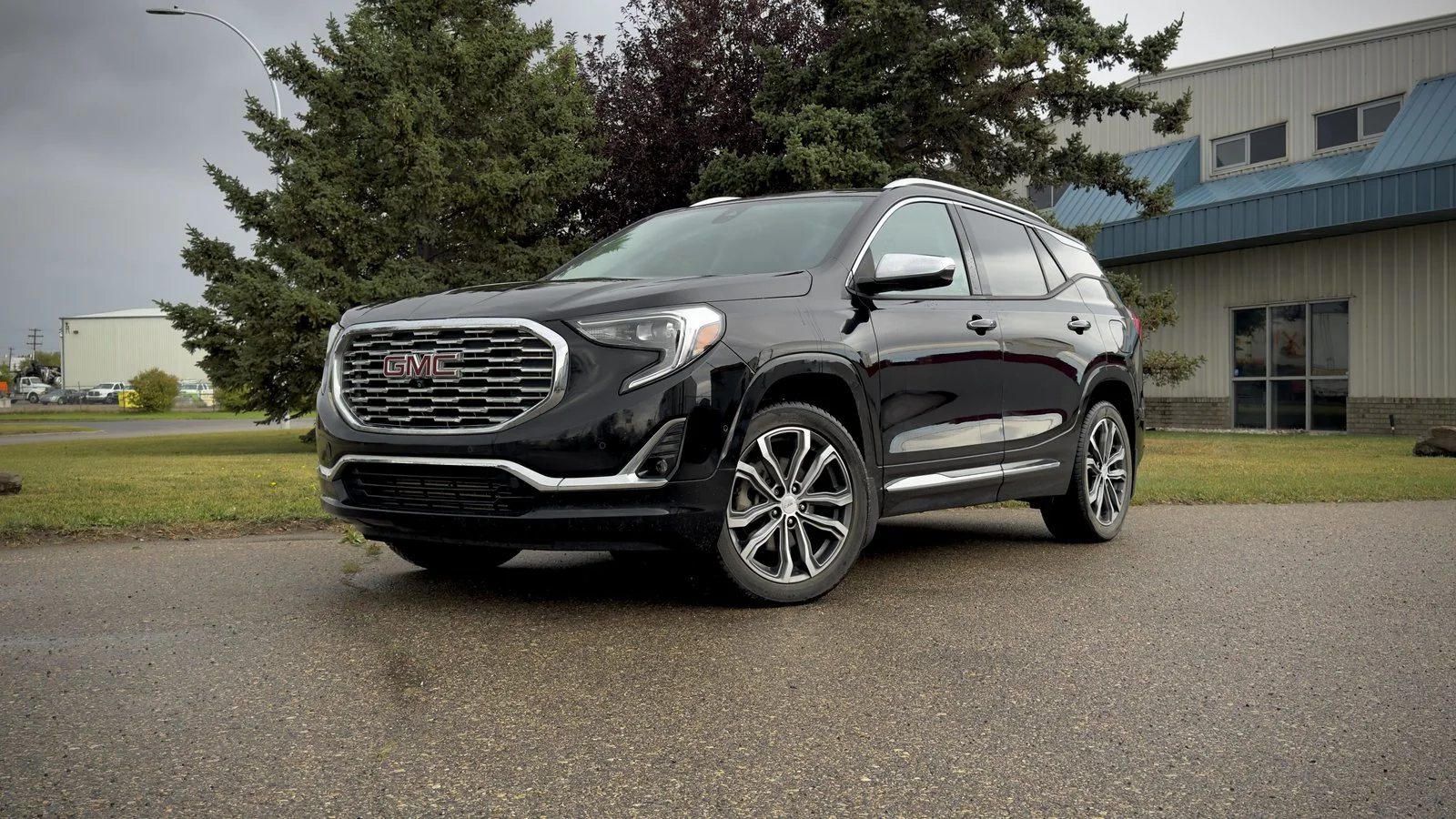
2020 GMC Terrain Denali

2014 BMW X3 xDrive28i

2021 Lincoln Corsair Reserve
Not seeing it? We'll find it.
We source through our dealer partner network across Western Canada: 25,000+ vehicles to choose from. Tell us what you want and what works for your budget.
Find my car3 min · no credit impactOAC = on approved credit. Payments are examples at 6.49% APR over 84 months with $0 down, based on each vehicle's advertised price; GST extra. Your rate depends on your credit (4.99%–29.9% APR).
Related terms
- Amortization — the payment schedule driven by your loan term
- Loan-to-Value Ratio — how loan term interacts with negative equity risk
- APR vs Interest Rate — the rate that determines how fast interest accumulates over the term
- ← Back to glossary