
How Dealership Financing Actually Works Behind the Scenes
In this article
- The Multi-Lender Model: What Actually Happens When You Apply
- What Lenders Actually See in Your Application
- Lender Tiers: Prime, Near-Prime, Subprime, and Deep Subprime
- How Dealers Make Money on Financing (The Honest Version)
- Dealer Financing vs. Bank Pre-Approval vs. Credit Unions
- Understanding Optional Finance Products
- Extended Warranty
- GAP Insurance
- Credit Insurance
- How Online Applications Actually Work
- Timeline: From Application to Approval
- What Happens Between "Approved" and "Driving Away"
- Clearing Conditions
- Signing the Contract
- Vehicle Delivery
- The Multi-Lender Advantage: What the Numbers Actually Look Like
- Buyers Across Alberta Deserve to Understand This
- Related Buyer Guides
- Compare and Apply
Check Your Options in 3 Minutes
No credit impact. All credit situations welcome.
5.0118+ Google ReviewsAMVIC LicensedFree Delivery 300km
You've filled out the application, handed over your paystubs, and now the finance manager has disappeared into a back office for 20 minutes. What's actually happening back there? Most people imagine some version of one phone call to one bank, one answer, and a take-it-or-leave-it rate. The reality is a lot more interesting — and a lot more in your favour — than that. Understanding the mechanics of how dealership financing works gives you the context to evaluate every number you're presented with, and to ask the right questions when something doesn't look right.
The Multi-Lender Model: What Actually Happens When You Apply
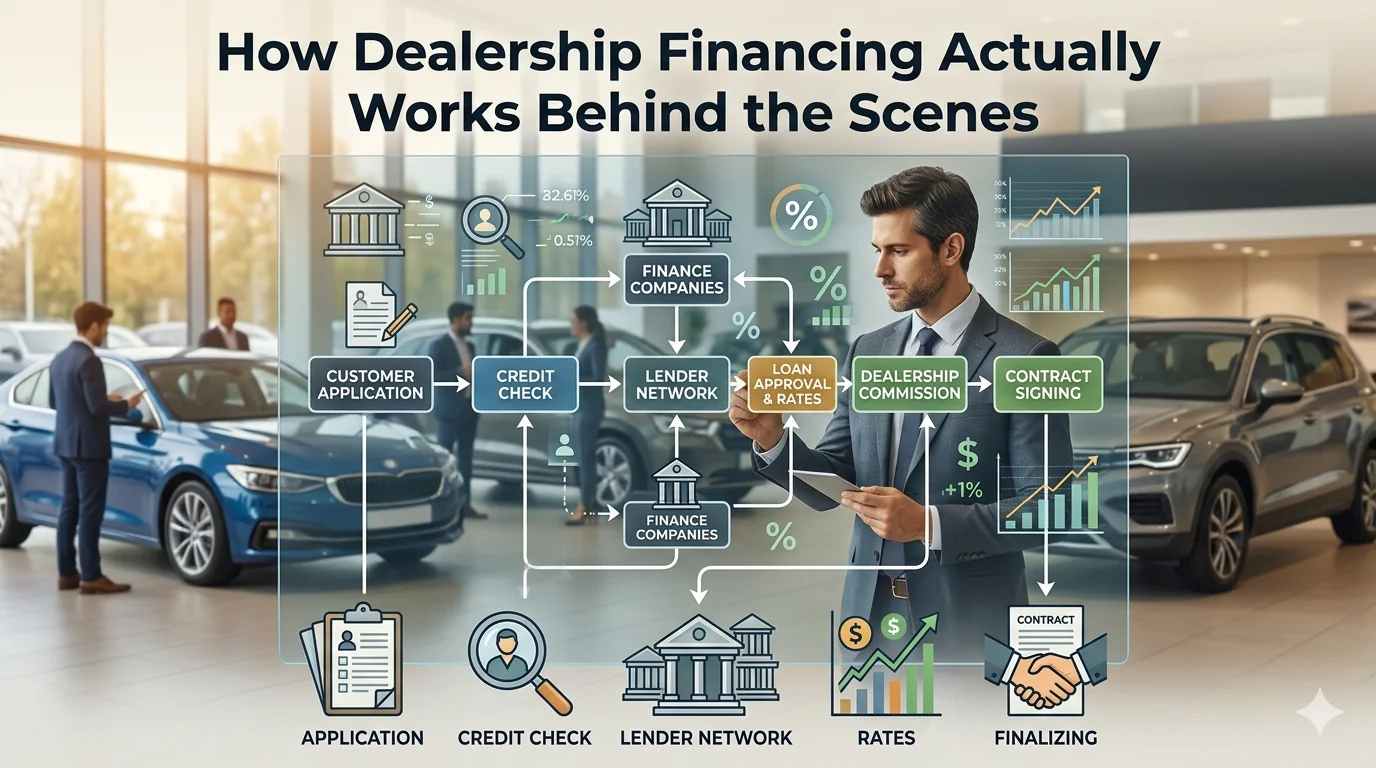
When you submit a financing application at a dealer like Shift Happens Auto Sales, your application doesn't go to one lender. It goes to many — often 10 to 15 simultaneously. This is called a "shotgun" or broadcast submission, and it's the fundamental reason dealer financing can be competitive with (and often better than) going to your own bank first.
Each lender in the dealer's network receives your application, runs their own credit adjudication process, and responds with either a decline, a conditional approval, or a full approval with a rate and term attached. The finance manager then reviews those responses — sometimes in real time as they come in, sometimes after collecting several within a few hours — and presents you with the best viable option. That competition between lenders is working in your corner, even if you never see it happening.
This is the core of how car financing works at the dealer level: you get access to a lender network that would take you weeks to replicate on your own. To approach all 15 lenders yourself, you'd need to know who they are (many are wholesale-only — they don't deal directly with consumers at all), submit separate applications to each one, and manage 15 separate conversations, document requests, and response timelines. The dealer has already done that infrastructure work, built those relationships, and handles the coordination on your behalf. One application triggers the whole network.
What Lenders Actually See in Your Application
Lenders evaluate four main factors when adjudicating your application. Understanding these helps you present your situation in the strongest possible light and explains why two people with similar credit scores can get meaningfully different outcomes.
- Credit profile: Your Equifax score, full payment history, derogatory marks, how long accounts have been open, and critically — how long ago any issues occurred. A bankruptcy discharged 4 years ago reads very differently from one discharged 4 months ago.
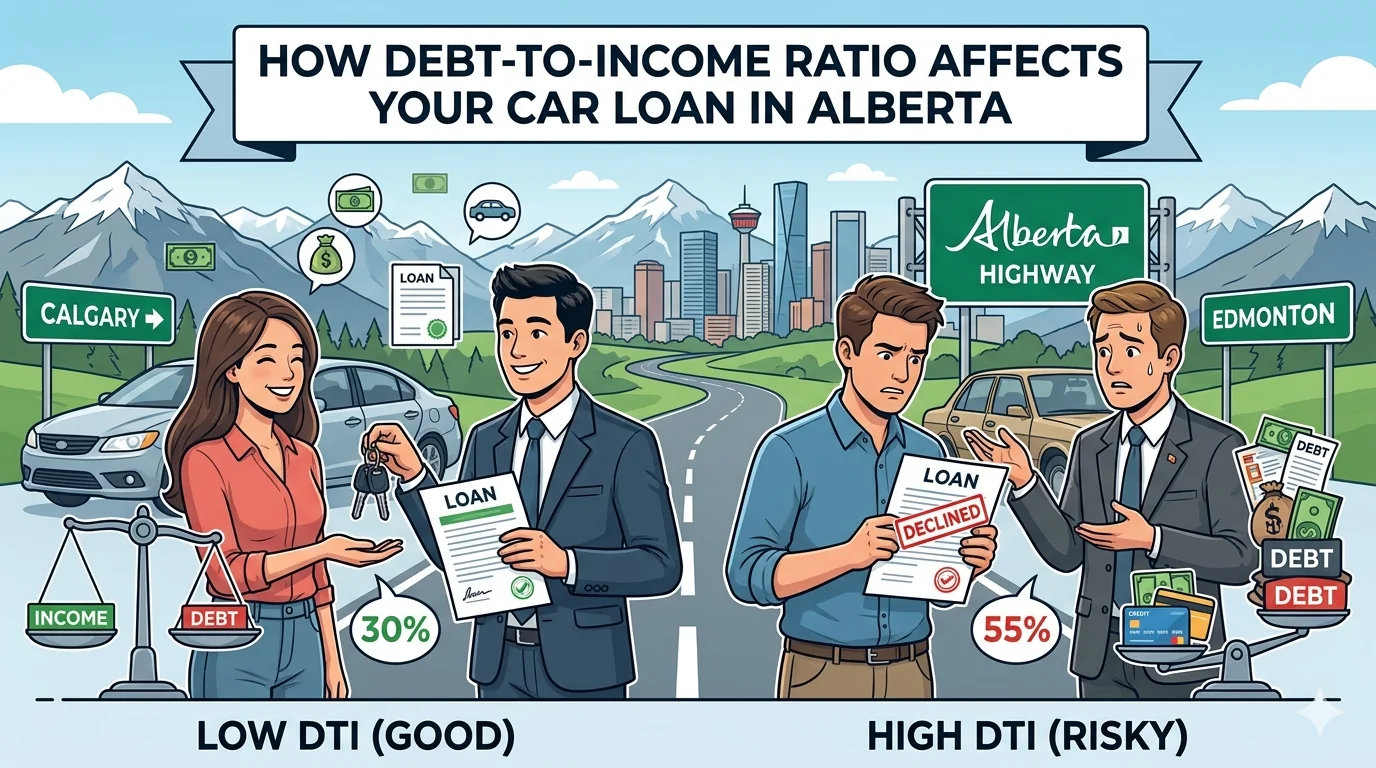
- Capacity: Your income relative to your total debt obligations — what's called your debt-to-income (DTI) ratio. A lender wants to know that after your existing payments, you have enough income to service the new loan comfortably. Different lenders use different DTI thresholds.
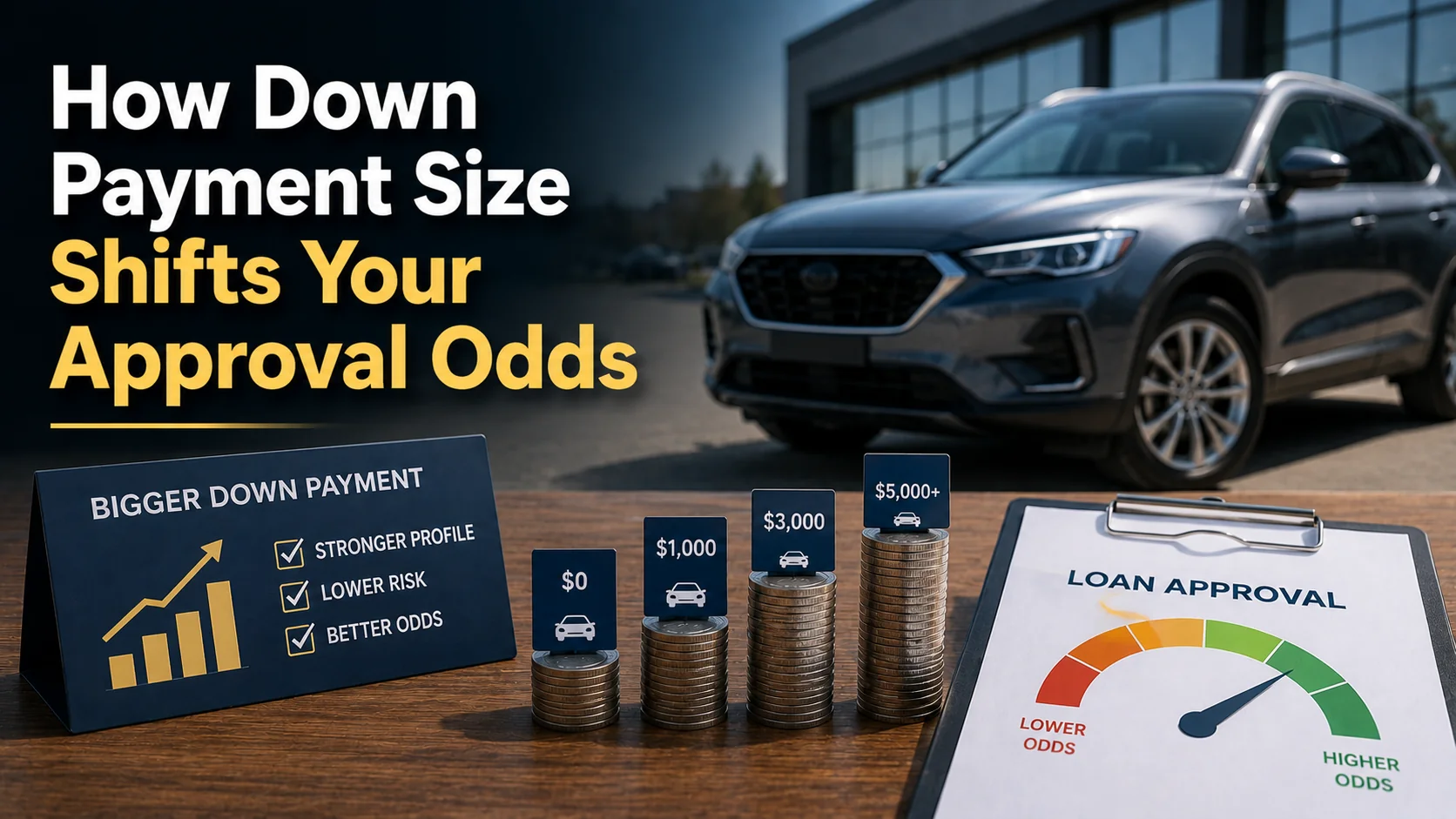
- Capital: Down payment, trade equity, or other assets that reduce the lender's risk. More skin in the game from you means less exposure for them. A 20% down payment on a $20,000 vehicle ($4,000 down) is meaningfully different from zero down — it changes the loan-to-value ratio and can unlock better rates.
- Collateral: The vehicle itself. Age, mileage, and type all affect what a lender will finance. A 3-year-old pickup truck is strong collateral. A 14-year-old luxury vehicle with 230,000 km is weak collateral regardless of your credit score — the lender can't recover much if they ever need to.
The lender isn't just approving you — they're approving the deal as a complete package. A strong applicant on a high-mileage older vehicle can hit the same friction as a weaker applicant on a newer, lower-mileage unit. Vehicle selection matters more than most buyers realize, which is one reason finance-focused dealers help guide buyers toward vehicles that lenders will actually support.
Lender Tiers: Prime, Near-Prime, Subprime, and Deep Subprime
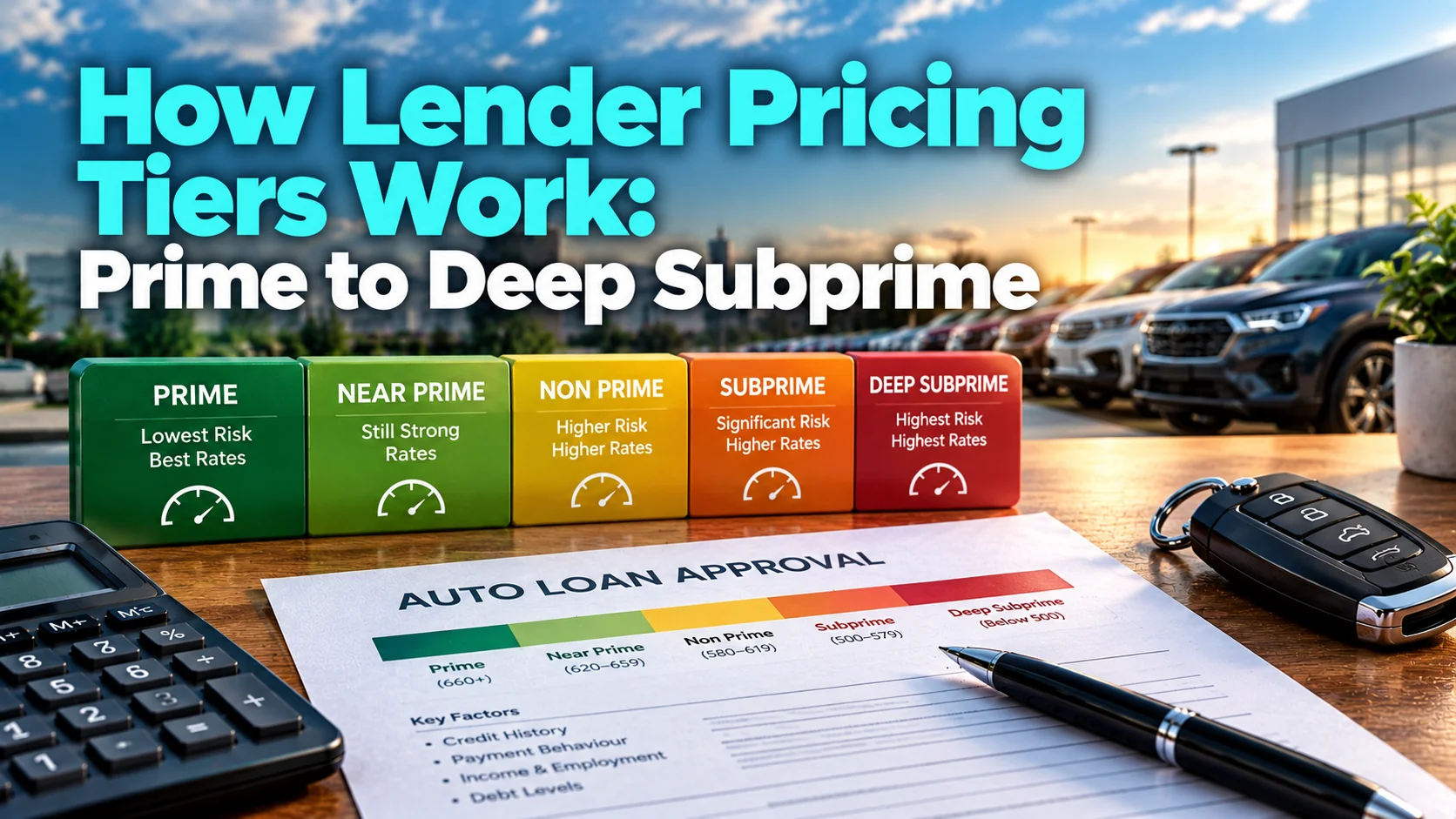
Not every lender on a dealer's roster accepts every application. Lenders are tiered by the credit profiles they'll work with, and dealers route applications to the appropriate tier based on the buyer's profile. Understanding which tier you're in helps you assess whether the rate you're being offered makes sense for your situation.
| Tier | Credit Score Range | Typical Rate Range | Who These Lenders Are |
|---|---|---|---|
| Prime | 660+ | 6.99%–10.99% | Major banks, credit unions, captive lenders (Toyota Financial, etc.) |
| Near-Prime | 600–659 | 9.99%–16.99% | Credit unions, specialty finance companies, some banks |
| Subprime | 500–599 | 14.99%–24.99% | Specialty subprime lenders (Rifco, Westlake, etc.) |
| Deep Subprime | Below 500 | 19.99%–29.9% | Deep-subprime specialists, some regional lenders |
These rate ranges reflect the current Alberta market. Your actual rate depends on the complete picture — income stability, time at your current job, down payment amount, and the specific vehicle. Understanding the difference between subprime and prime financing helps set realistic expectations before you walk into any dealership. Don't assume a low score automatically means the highest rate in the range — a strong income, stable employment history, and meaningful down payment can move your outcome significantly within a tier.
A dealer with deep lender relationships across all tiers can often find approval paths that a single-lender approach would miss entirely. This is especially true if your credit has blemishes but your income is strong, or if you've recently rebuilt after a difficult period. Some lenders specialize in exactly these situations — they're not accessible to the public directly, but they're accessible to dealers who've built volume relationships with them.
How Dealers Make Money on Financing (The Honest Version)
This is the part most finance managers don't explain voluntarily, so here it is plainly: dealers typically earn what's called a finance reserve or rate markup on loans they arrange. Knowing this exists lets you evaluate your offer with full information rather than partial information.
Here's exactly how it works: A lender approves your application at what's called a "buy rate" — let's say 9.99%. The lender then allows the dealer to mark that rate up by a certain amount — typically capped at 2–4 percentage points depending on the lender and applicable regulations — and present it to you at the higher rate. The difference between the buy rate and the rate you're offered is called the "spread." That spread is split between the dealer and the lender as compensation for originating the loan and managing the relationship.
On a $25,000 loan over 72 months, the difference between a buy rate of 9.99% and a retail rate of 12.99% is roughly $27 per biweekly payment — which works out to approximately $1,944 over the life of the loan. That spread funds the dealership's finance department: salaries, technology, compliance, and the ongoing cost of maintaining lender relationships that give you access to the network in the first place.
Is this inherently unfair? Not necessarily — as long as you know it exists. The relevant question is whether the rate you're offered, inclusive of dealer markup, is still competitive compared to what you'd find on your own. That's why knowing current car loan rates in Alberta before you walk in is worth the 10 minutes it takes. It gives you a benchmark to evaluate whether the rate on the table is reasonable for your credit profile, rather than just trusting that you're getting a good deal.
The transparency test: A dealer who explains reserve markup when you ask is one worth trusting. A dealer who deflects or denies it exists is not. Ask directly: "Is there a rate markup built into this loan?" The answer tells you a lot about who you're working with.
Dealer Financing vs. Bank Pre-Approval vs. Credit Unions
One of the most common pieces of advice floating around personal finance forums is "get pre-approved at your bank before going to the dealer." It's not bad advice — but it's incomplete, and sometimes it's counterproductive if you don't understand the tradeoffs between each option.
| Option | Lender Access | Rate Potential | Flexibility | Best For |
|---|---|---|---|---|
| Dealer Financing | 15+ lenders, all tiers | Competitive at all credit levels | High — multiple simultaneous offers | Most buyers, especially subprime |
| Bank Pre-Approval | That bank only | Strong if you have prime credit and existing relationship | Low — one offer, one set of terms | Prime buyers with strong bank relationship |
| Credit Union | That credit union only | Often excellent for established members | Low to moderate | Members with good standing and history |
The comparison between dealership financing vs. a bank loan depends heavily on your credit situation. If you have a 720 credit score and a 10-year relationship with your bank, their pre-approval might be hard to beat and is worth using as a benchmark. If your score is 580 and you haven't dealt with your bank in years, they may decline your application outright — and the dealer's subprime lender network is your most direct path to getting approved at all.
The practical strategy that works for most buyers: get a bank pre-approval if you can, use it as your baseline, and let the dealer's network try to beat it. You're not obligated to finance through the dealer. But if the dealer's offer is better — which it often is, especially for subprime and near-prime credit — there's no reason not to take it. You came prepared with a competing number, which put you in a better negotiating position regardless of which offer you ultimately accepted.
Understanding Optional Finance Products
The financing conversation doesn't end at the loan rate. The finance office is also where optional products get introduced — and these deserve careful attention because they affect both your monthly payment and the total cost of the vehicle.
Extended Warranty
An aftermarket extended warranty extends coverage beyond the manufacturer's original warranty. On a used vehicle, this can provide real protection against major mechanical failures — a transmission failure on a 5-year-old vehicle can easily run $3,000–$6,000. The question is whether the warranty cost (typically $1,500–$3,500 depending on term and coverage) is worth the premium for your specific vehicle. Higher-mileage vehicles or makes with higher historical repair rates are stronger candidates.
GAP Insurance
GAP (Guaranteed Asset Protection) insurance covers the difference between what you owe on your loan and what your auto insurer pays if the vehicle is written off or stolen. In the early years of a loan — especially if you financed with minimal down payment — you can easily owe more than the vehicle's depreciated value. GAP closes that gap. It typically costs $300–$700 and is most valuable in the first 1–3 years of a loan with low equity. After that, as you pay down the principal and the vehicle depreciates more slowly, the exposure shrinks.
Credit Insurance
Loan protection insurance pays your car payments if you become disabled, ill, or unemployed. It can provide genuine peace of mind, but the premiums add up — sometimes $30–$80 per biweekly payment over a 72-month term. Evaluate whether you already have disability coverage through your employer before adding another layer.
None of these products are mandatory, regardless of what you might hear. An AMVIC-licensed dealer in Alberta is required to present them as optional and separately price each one. If a payment quote bundles optional products without disclosing them individually, ask for the itemized breakdown before signing anything.
How Online Applications Actually Work
Applying online has become the standard starting point for most buyers, and it's genuinely better than walking in cold. Here's what actually happens step by step when you check your approval likelihood or submit a full application online:
- Initial submission: You enter basic information — income, employment type, time at current job, residence history. Most dealers start with a soft credit pull (no impact to your score) to do an initial profile assessment before proceeding further.
- Dealer review: A finance specialist reviews your application and maps it to the lenders in their network most likely to be a fit. Strong prime profiles go to bank-tier lenders. Challenged profiles go to subprime specialists who understand the nuances of recovering credit histories.
- Lender submission: With your authorization, a hard credit pull is run and your full application goes to 1–5 targeted lenders (or more for complex profiles). This is the live broadcast to the lender network.
- Lender responses: Lenders respond with conditions or approvals. Common conditions include: proof of income documents, proof of residence, references, minimum down payment amounts, or restrictions on vehicle age and mileage.
- You're contacted: The dealer calls or emails with the best available options. For strong profiles, this can happen same-day — sometimes within hours of submission. Complex profiles may take 24–48 hours as additional lender conversations happen.
One important note about applications: submitting to multiple dealers at once triggers multiple hard inquiries, which can temporarily lower your credit score by a few points. Equifax typically treats multiple auto loan inquiries within a 14-day window as a single inquiry for scoring purposes — so if you're comparing multiple dealers, batch those applications within the same two-week period to minimize the score impact.
Timeline: From Application to Approval
People often wonder how long this whole process takes. Here's a realistic breakdown of each stage and what's driving the timeline:
| Stage | Typical Timeframe | What Controls the Speed |
|---|---|---|
| Online application submitted | 5–10 minutes | Your availability to complete the form |
| Initial dealer review | 1–4 hours during business hours | Dealer staffing and current volume |
| Lender submission and responses | 2–24 hours | Lender workload, profile complexity, time of day |
| Conditional approval communicated | 24–72 hours from application | Lender adjudication speed and conditions required |
| Document collection | Same day if you're prepared | Whether you have paystubs, ID, proof of insurance ready |
| Conditions cleared, final approval | Same day or next business day | Lender review of submitted documents |
| Contract signed, delivery | Same day after final approval | Scheduling and vehicle preparation |
The difference between a 24-hour deal and a 4-day deal is almost always on the document side. Buyers who have their last two paystubs, a recent bank statement, photo ID, proof of residence, and a void cheque ready to submit move through quickly. Buyers who need to track down their employer's HR department for a letter, locate a utility bill from a previous address, or sort out insurance details add days at each stage. Come prepared and the process compresses significantly.
For more detail on what changes between the initial offer and the final signed contract, see our breakdown of car loan pre-approval vs. final approval — the distinction matters more than most buyers realize, and there are specific things you can do (and avoid) during that window to protect the offer.
What Happens Between "Approved" and "Driving Away"
Conditional approval is not final approval. This is where many buyers get surprised — they hear the word "approved" and expect to be in a vehicle by the end of the day. In practice, there's a structured process between that first positive signal and the moment you drive home. Here's what needs to happen:
Clearing Conditions
Every lender attaches conditions to their approval. These are specific items the lender needs to verify before they'll fund the loan. Common conditions include:
- Proof of employment (recent paystub, employer letter on letterhead, or Notice of Assessment for self-employed buyers)
- Proof of residence (utility bill, bank statement, or government mail showing your current address)
- Proof of insurance on the specific vehicle being purchased — the VIN must match
- Down payment verification — bank draft or certified cheque, not cash in most cases
- Co-signer documentation if the approval was conditioned on a co-signer
- Vehicle inspection or appraisal for higher-mileage or older units
These conditions exist because the lender is extending credit based on the information in your application. Before they fund a $20,000+ loan, they want documentary confirmation that the information is accurate. This isn't bureaucracy for its own sake — it's the verification step that protects both parties.
Signing the Contract
Once conditions are cleared, you sign the retail instalment sale contract — the binding legal agreement between you and the lender (not the dealer). This document specifies: the exact loan amount, the annual interest rate expressed as a percentage, the total cost of credit (all interest you'll pay over the full term), the payment schedule, and any optional products you've agreed to. Read every line. Ask about anything you don't recognize. Under Alberta's Consumer Protection Act and federal cost-of-credit disclosure requirements, all of this information must be disclosed in plain language before you sign. Anything missing or unclear is worth pausing on.
Vehicle Delivery
After signing, the vehicle is prepared for delivery — cleaned, fueled, any promised repairs or accessories completed. You'll do a final walkthrough of the vehicle to confirm condition and ensure everything matches what you agreed to. Get your keys. The lender funds the loan once they receive confirmation and documentation from the dealer — typically within 24–48 hours of signing, though funding timing varies by lender. The dealer holds the signed contract and the vehicle title until funding is confirmed.
Want to see the lender network that powers this entire process? Our lenders page gives you a look at who's competing for your deal across all credit tiers. And if you want to understand what makes our approach different from a traditional dealership, our About page covers our model and our commitment to multi-lender access for every buyer.
The Multi-Lender Advantage: What the Numbers Actually Look Like
Let's make this concrete with a realistic example. Here's what the difference between one lender and 15 lenders looks like for a buyer named Marcus, who has a 610 credit score and is looking at a $21,000 vehicle:
- His bank: Declines — hasn't dealt with him in two years, score below their auto loan threshold
- His credit union: Approves at 17.99% for 72 months — biweekly payment of $206
- Multi-lender dealer submission: Lender A approves at 15.49% — biweekly $196. Lender B approves at 14.99% — biweekly $194. Dealer presents the 14.99% offer.
The difference between the credit union offer and the dealer offer: $12 per biweekly payment, or $864 over the loan term. That's not a dramatic gap — but it's real money Marcus keeps, plus he never had to manage the credit union conversation directly. And if Marcus had only gone to his bank and been declined, he might have assumed no financing was available at all.
For buyers with more complex credit situations — recent bankruptcies, consumer proposals, self-employment income, or non-traditional work arrangements — the multi-lender difference isn't measured in dollars per biweekly payment. It's measured in whether an approval exists at all. Specialized lenders who understand these situations are embedded in our network. They're not accessible to Marcus or anyone else walking in off the street.
Buyers Across Alberta Deserve to Understand This
Whether you're financing in Calgary, Airdrie, Red Deer, or anywhere else in Alberta, the mechanics described here are the same at every dealership — whether they explain them to you or not. Understanding that your application is broadcast to multiple lenders, that there's a rate markup structure, and that the finance office is part of the dealer's revenue model gives you the context to ask better questions and evaluate what you're being offered with clear eyes.
Transparency isn't something to be suspicious of — it's a minimum bar for a dealership worth working with. If a finance manager won't explain how they're compensated on your loan, that tells you something. If they explain it upfront and walk you through the lender responses, that tells you something better.
Ready to see what's available for your specific situation? Start your application here — it takes about five minutes, your credit won't be affected until you authorize it, and our finance team will get back to you the same business day with real options, not ballpark guesses.
Compare and Apply
- Bad Credit Car Loans in Alberta — how lenders look at your whole file, with any credit
Financing Resources
Cars you could drive home
See all inventory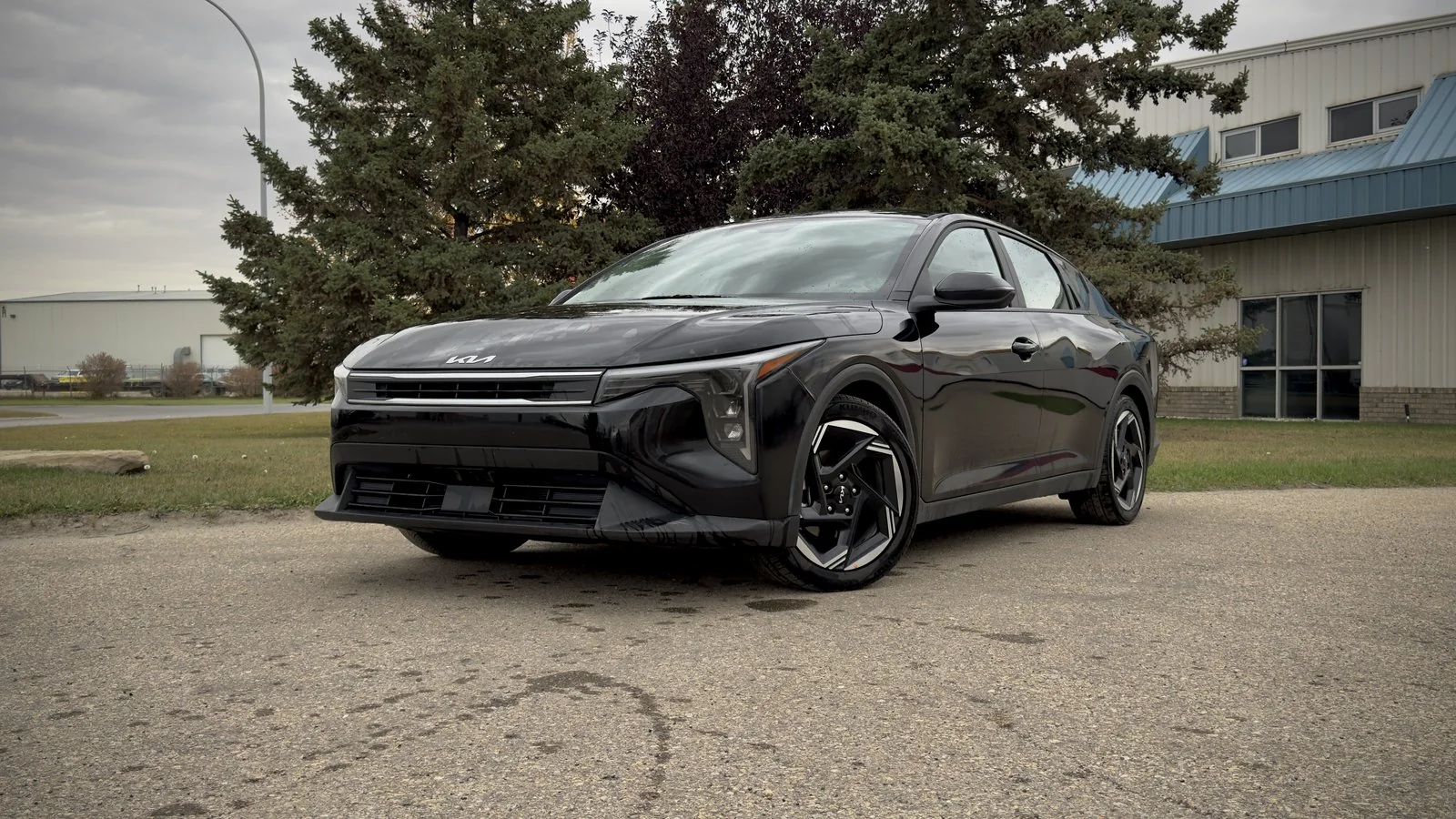
2025 Kia K4 EX
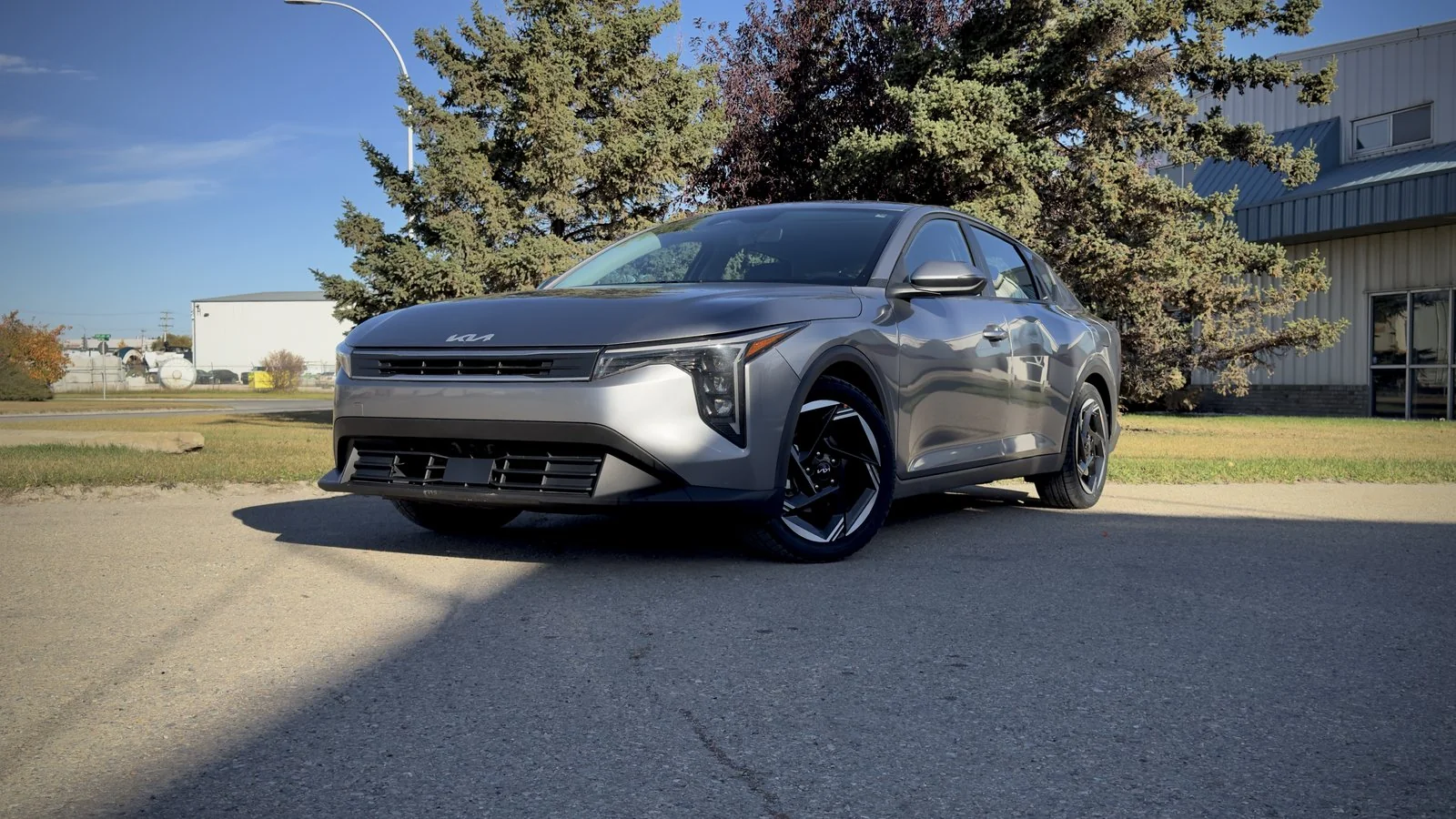
2025 Kia K4 EX
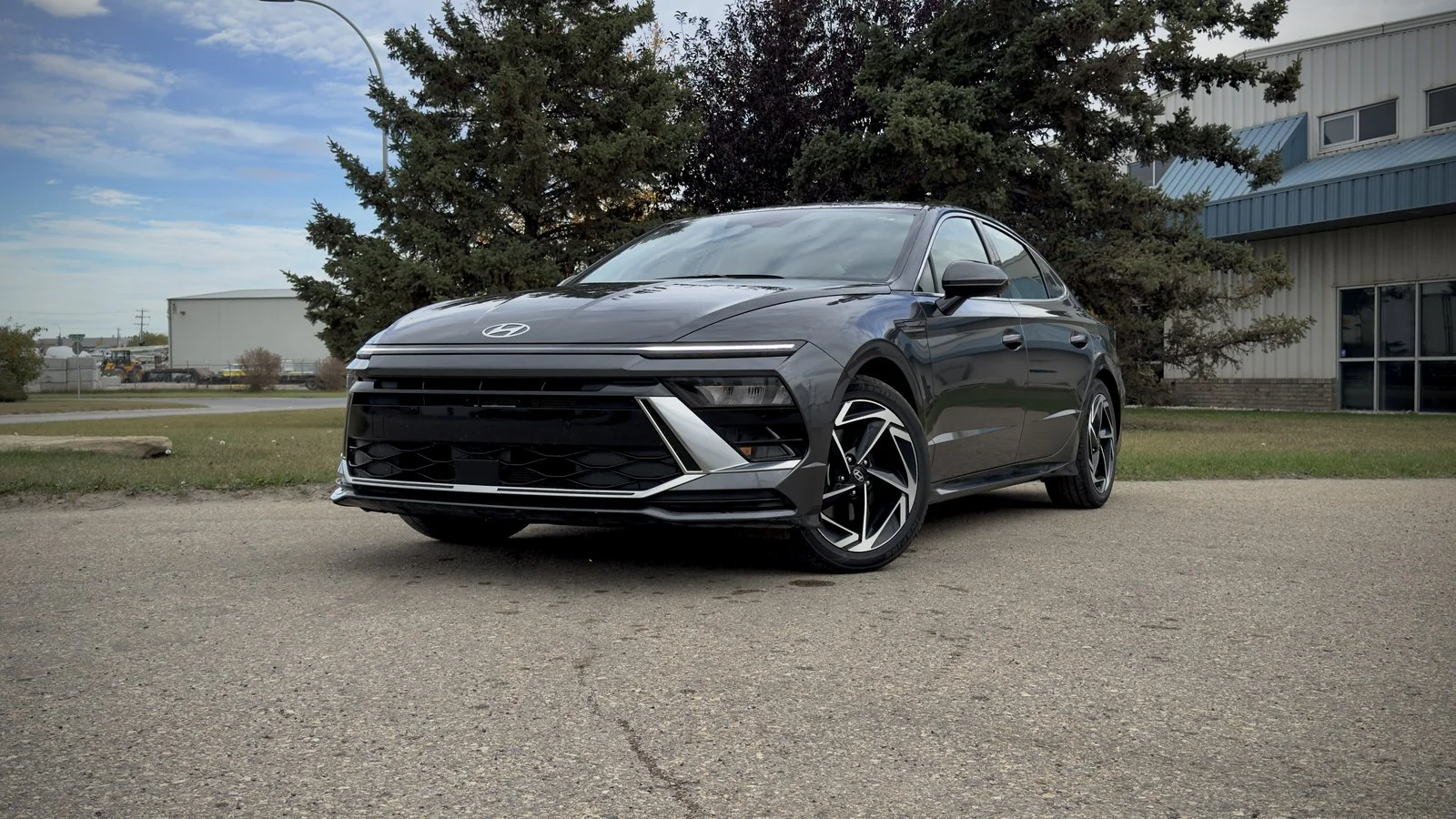
2025 Hyundai Sonata Preferred w/ Trend
Not seeing it? We'll find it.
We source through our dealer partner network across Western Canada: 25,000+ vehicles to choose from. Tell us what you want and what works for your budget.
Find my car3 min · no credit impactOAC = on approved credit. Payments are examples at 6.49% APR over 84 months with $0 down, based on each vehicle's advertised price; GST extra. Your rate depends on your credit (4.99%–29.9% APR).
Related Articles
Ready to Find Your Vehicle?
Browse our inventory or apply for financing. All credit situations welcome.
5.0118+ Google ReviewsAMVIC LicensedFree Delivery 300km