
Refinancing Math: When It Actually Saves You Money
In this article
- When Does Car Loan Refinancing Actually Save Money?
- How Do I Work Out the Savings?
- When Doesn't Refinancing Save You Money?
- 1. A longer term with only a small rate cut
- 2. Fees and early payout charges
- 3. Too little time left
- How Does a Better Credit Score Change the Picture?
- How Do I Refinance a Car Loan in Alberta, Step by Step?
- What About Interest Rates in General?
- Refinancing vs. Extra Payments: Which Wins?
- Frequently Asked Questions
- How much does it cost to refinance a car loan in Alberta?
- Can I refinance a car loan if my credit score went down since I financed?
- How long after getting a car loan can I refinance in Canada?
- Will refinancing my car loan hurt my credit score?
- Can I refinance if I owe more than the car is worth (negative equity)?
- Keep Reading
Check Your Options in 3 Minutes
No credit impact. All credit situations welcome.
★★★★★ 118+ Google Reviews · AMVIC Licensed · Free Delivery 300km
Say you took a $24,000 car loan two years ago, when your credit was rough, at 16.9% over 84 months. You have made every payment on time, and your score has climbed into the 650–749 band. Is it worth refinancing? The answer is not yes or no. It is a math problem, and you can solve it step by step for your own loan.
See what you pre-qualify for
Three quick answers — soft check, no commitment.
When Does Car Loan Refinancing Actually Save Money?
Refinancing saves money when the interest you avoid over the rest of the loan is more than the refinance costs, and when you do not stretch the term to get there. In the example below, the loan has about $19,722 left after two years, with 60 months to go. Moved to 9.9% over the same 60 months, it saves about $4,260 in interest, or about $3,960 after a $300 fee. Example, not an offer. Every lender decides each file, and the rate you are offered depends on your credit at the time.
Not sure whether to refinance, trade in or keep the loan you have? Our refinance, trade in or keep tool runs your own numbers. This post shows the math behind it.
How Do I Work Out the Savings?
The only comparison that matters is the interest you still owe on the current loan against the interest you would pay on the new one, minus what the refinance costs. Keep the remaining term the same when you compare. If you change the term and the rate together, you are comparing two things at once.
- Get the numbers from your current lender: the payout balance, the rate, the months left and any early payout charge.
- Get a quote with the new rate, the new term and every fee.
- Compare the interest left on each loan. The payment calculator lets you model both.
- Subtract all the fees. Fees divided by the monthly saving is the break-even, in months.
Here is one loan followed through time. $24,000 at 16.9% over 84 months is $489 a month. 16.9% is an example rate inside the 550–599 band (9.9–19.9%). The new rate, 9.9%, is an example inside the 650–749 band (6.9–12.9%), and the fee is an example $300. The table shows what a refinance over the same remaining term would do, depending on when you do it.
| Months left | Balance | Payment now | Payment at 9.9% | Interest saved | Saved after the $300 fee |
|---|---|---|---|---|---|
| 72 | $22,040 | $489 | $407 | $5,900 | $5,600 |
| 60 | $19,722 | $489 | $418 | $4,260 | $3,960 |
| 48 | $16,980 | $489 | $430 | $2,840 | $2,540 |
| 36 | $13,737 | $489 | $443 | $1,670 | $1,370 |
| 24 | $9,901 | $489 | $456 | $780 | $480 |
| 12 | $5,365 | $489 | $471 | $210 | -$90 |
Example, not an offer. Interest is rounded to the nearest ten dollars. Two years in (60 months left), the $300 fee is paid back in about 4.2 months of the lower payment. The sooner you refinance, the more interest is left to save. With 12 months left, the saving is smaller than the fee.
When Doesn't Refinancing Save You Money?
Refinancing can cost you money in three cases.
1. A longer term with only a small rate cut
Dealers and lenders may offer to lower your payment by stretching the term. FCAC says: “Dealers and lenders may tell you that you may lower your car loan payments to fit your budget. Keep in mind that this usually involves extending the term of your car loan. You may end up paying more interest in the end.”
Example, not an offer: on the same $19,722 balance with 60 months left, a refinance to 14.9% (a rate inside both the 550–599 and 600–649 bands) over 84 months drops the payment from $489 to $379, a saving of $110 a month. But the interest rises from about $9,620 to about $12,150, which is about $2,530 more. Compare total interest, not just the payment.
2. Fees and early payout charges
FCAC says: “Lenders may allow you to make extra payments to pay off your loan faster. They may also allow you to pay off your loan before the end of the term without a penalty. Some lenders may charge a fee if you pay off your loan early.” Check your contract for an early payout charge, and ask the new lender for its fees in writing. Add every fee to the cost of the refinance. The table uses $300 as an example only. Yours may be different.
3. Too little time left
Every month you pay down the loan, there is less interest left to save. In the table, with 12 months left the saving is about $210 against a $300 fee, which leaves you about $90 behind.
How Does a Better Credit Score Change the Picture?
In our experience, the most common reason a refinance works is a better score. FCAC says payment history is “the most important part of your credit score”.
In the example, the score moved from the 550–599 band (9.9–19.9%) into the 650–749 band (6.9–12.9%), so the rate range for the file moved down with it. That is not a promise of a lower rate. FCAC says the rate a lender offers “may vary depending on” your credit history, the type of lender and the type of loan, and every lender decides each file. Every score band and its range is on our car loan rates in Alberta page.
Timing matters too. In our experience, lenders want to see some on-time payments on the loan first, and the table shows the saving shrinks as the loan ages. Waiting too long costs savings, and moving too early may not work. Our credit rebuilding timeline shows what on-time payments do over time.
How Do I Refinance a Car Loan in Alberta, Step by Step?
- Get your current loan details. You need the payout balance, the rate, the months left and any early payout charge. Call your lender or sign in to your account.
- Check your own credit report. FCAC says you can get it online for free from Equifax and TransUnion. Look for mistakes, and dispute any you find.
- Run the break-even math. Fees divided by the monthly saving is the number of months it takes to pay for the refinance. If that is longer than the time you have left, skip it.
- Get quotes and compare. FCAC says: “Get quotes from multiple dealers and lenders. You may save money by getting a lower interest rate.” Your own lender may also lower your rate. FCAC says “You may also be able to renegotiate the terms of your personal loan agreement with your lender”, and that there may be a fee. FCAC adds that quotes from different lenders within a 2-week period count as 1 inquiry, so keep your shopping inside that window.
- Get a payout statement. Once you have an offer, ask your current lender for the exact payout on the funding date. FCAC says “Liens stay registered on your car until you’ve paid your debt in full.” After the payout, ask your old lender to confirm in writing that the lien is gone.
- Read the new contract. Check that the amount financed matches your payout, the rate matches the offer and nothing was added that you did not ask for. FCAC says: “You don’t have to take loan insurance with a personal loan.” It also says of the disclosure statement: “Read it carefully before signing it. Make sure you ask for a copy.”
What About Interest Rates in General?
Rates in the wider market move too. In our experience, a drop in market rates can help a refinance, but FCAC says the rate a lender offers “may vary depending on” your credit history, the type of lender and the type of loan, so your own file still matters.
Refinancing vs. Extra Payments: Which Wins?
They do different jobs. Extra payments cut the balance, and every dollar paid early saves interest at your loan's rate. A refinance cuts the rate on every dollar still owed. FCAC says some lenders allow extra payments, so check your contract. Here is the same $19,722 balance with 60 months left, four ways. Example, not an offer.
| Choice | Months to pay off | Interest left | Saved vs keeping the loan |
|---|---|---|---|
| Keep the loan as it is (16.9%) | 60 | $9,620 | none |
| Add $100 a month at 16.9% | 46 | $7,140 | $2,480 |
| Refinance to 9.9% over 60 months | 60 | $5,360 | $4,260 |
| Refinance, then add $100 a month | 46 | $4,050 | $5,570 |
In this example the refinance saves more than the extra payments do, and doing both saves the most. Our guides to accelerated car payments and to paying off your car loan early go further.
Frequently Asked Questions
How much does it cost to refinance a car loan in Alberta?
It depends on the lenders, so we cannot give one figure. Ask both for a written list: any fee at the new lender, and any early payout charge on your current loan. FCAC says “Some lenders may charge a fee if you pay off your loan early”. Add them up and divide by your monthly saving to get the break-even in months. The table above uses $300 as an example only.
Can I refinance a car loan if my credit score went down since I financed?
A lower score usually means a higher rate offer, not a lower one, so a refinance rarely saves money then. FCAC says lenders use your credit report and score to decide whether to lend “and at what interest rate”. Keep paying on time and look again when your score recovers.
How long after getting a car loan can I refinance in Canada?
There is no single rule. Each lender sets its own minimum, and in our experience many want some on-time payments first. Ask each lender what it needs. The table above shows why not to wait longer than you have to: the saving shrinks every month.
Will refinancing my car loan hurt my credit score?
A refinance is a new credit application, so the lender checks your report and the bureau records an inquiry. FCAC says hard inquiries “affect your credit score”, and Equifax says: “There is no rule in scoring algorithms dictating a certain number of points lost with each new hard inquiry.” Hard inquiries “remain on Equifax credit reports for a period of three years”. FCAC also says quotes from different lenders within a 2-week period count as 1 inquiry. After the refinance, what shows on your report is how you pay the new loan, if the lender reports it.
Can I refinance if I owe more than the car is worth (negative equity)?
It is hard. FCAC says you have negative equity when “your car is worth less than the amount you owe on your car loan”, and warns: “If you need to sell your car quickly, you may lose money.” In our experience, many lenders limit a new loan to a share of the car's value, so a lender may not refinance the full balance. Read about negative equity car financing if this sounds like you.
Keep Reading
- Origination, admin and doc fees on car loans: what's legit
- What is negative equity and how to avoid being upside down
- 60 vs 72 vs 84 vs 96 month loans: the real cost
- Skip-a-pay options: the hidden interest cost
If you want us to look at refinancing a car loan, you can start the online application. We review every application and call you back, and every lender decides each file.
Sources (pages opened 2026-10-06): Financial Consumer Agency of Canada: Shopping around for auto-financing; Personal loans; Improving your credit score; Car financing options; Risks associated with car liens; How you're protected when buying a car; Getting your credit report and credit score; Credit report and score basics; Financial risks when buying a car. Equifax Canada: 4 Credit Score Myths Explained.
Financing Resources
Cars you could drive home
Browse all inventory →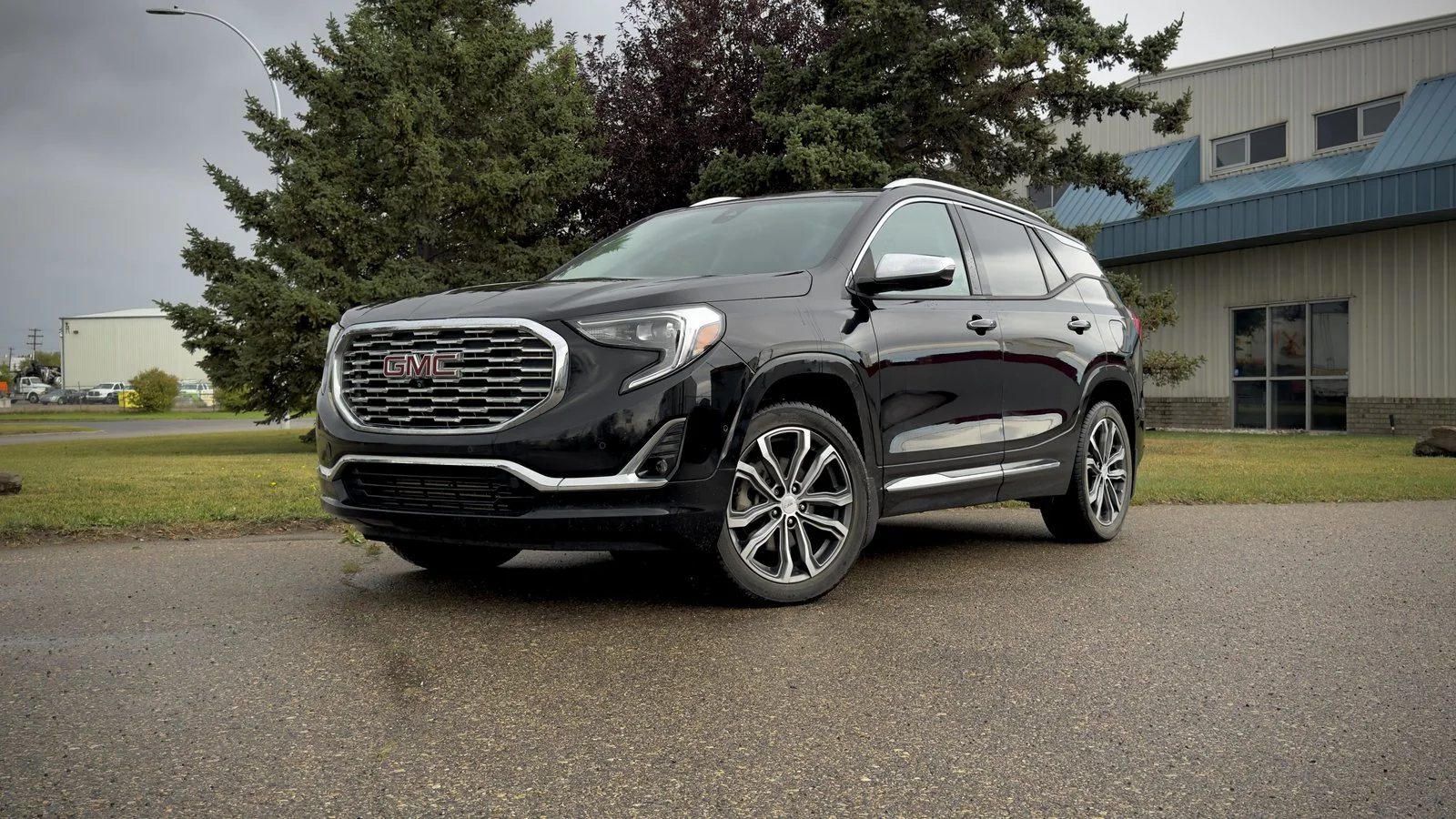 Reconditioning
2020 GMC Terrain Denali
$175 bi-weekly OAC
6.49% APR · 84 months · $0 down · cost of borrowing $6,260
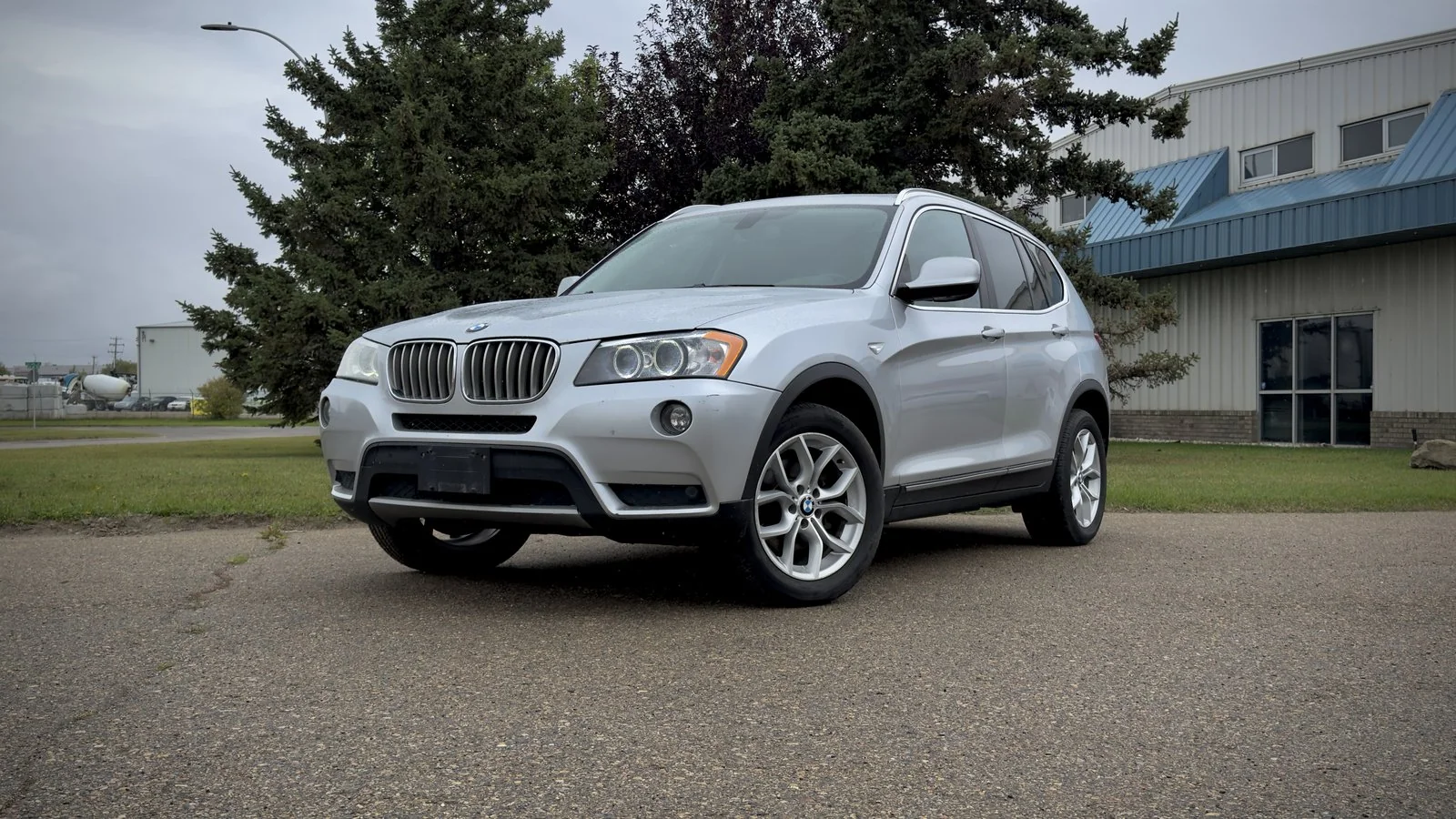
2014 BMW X3 xDrive28i
$75 bi-weekly OAC
6.49% APR · 84 months · $0 down · cost of borrowing $2,698

2022 Lincoln Aviator Reserve
$267 bi-weekly OAC
6.49% APR · 84 months · $0 down · cost of borrowing $9,571
OAC = on approved credit. Payments are examples at 6.49% APR over 84 months with $0 down, based on each vehicle's advertised price; GST extra. Your rate depends on your credit (4.99%–29.9% APR).
Related Articles

Ready to Find Your Vehicle?
Browse our inventory or apply for financing. All credit situations welcome.
★★★★★ 118+ Google Reviews · AMVIC Licensed · Free Delivery 300km