
How Much Car Loan Can I Get? By Income and Credit Score in Alberta
How much car loan can I get approved for in Alberta?
Your pay sets the payment you can carry and your credit score sets the rate. At a payment near 15% of gross monthly pay, the grid below shows an example loan size and bi-weekly payment for every score band. Example, not an offer. Every lender decides each file.
This grid is part of our guide to car loan rates in Alberta. The rates there set the loan sizes here.
Who this page is for
- You have steady pay you can show: a T4 job, your own business or a steady contract.
- Your credit took a hit, and you want to size up a loan before you shop.
- You would rather see real numbers than guess.
The grid starts at $3,500 a month. If you earn less, or your pay is not steady yet, talk to us first. A co-applicant, a bigger down payment or a few months of income history can change the picture.
Key Facts
- Who this is for
- Steady pay, credit took a hit
- Payment used
- 15% of gross monthly pay (a rule of thumb)
- Loan used
- 72 months, $0 down
- Rate used
- The middle of each score band's range (4.99%–29.9% APR across all bands)
- Lender network
- 21+ lenders
How much car loan can my pay carry at my credit score?
Find your gross monthly pay on the left and your credit score across the top. Each box is an example estimate: the most a payment near 15% of that pay would carry, then the bi-weekly payment on that loan.
Slide the table sideways to see every score band.
| Gross pay a monthand payment at 15% | 750+6.95% APR | 650–7499.9% APR | 600–64911.4% APR | 550–59914.9% APR | 500–54919.9% APR | 450–49924.9% APR | 300–44927.4% APR |
|---|---|---|---|---|---|---|---|
| $3,500$525/mo | Up to $30,500~$239/bi-weekly | Up to $28,000~$238/bi-weekly | Up to $27,000~$239/bi-weekly | Up to $24,500~$238/bi-weekly | Up to $21,500~$237/bi-weekly | Up to $19,500~$241/bi-weekly | Up to $18,000~$236/bi-weekly |
| $4,000$600/mo | Up to $35,000~$275/bi-weekly | Up to $32,000~$272/bi-weekly | Up to $31,000~$275/bi-weekly | Up to $28,000~$272/bi-weekly | Up to $25,000~$275/bi-weekly | Up to $22,000~$272/bi-weekly | Up to $21,000~$275/bi-weekly |
| $4,500$675/mo | Up to $39,500~$310/bi-weekly | Up to $36,500~$311/bi-weekly | Up to $35,000~$310/bi-weekly | Up to $32,000~$311/bi-weekly | Up to $28,000~$308/bi-weekly | Up to $25,000~$309/bi-weekly | Up to $23,500~$308/bi-weekly |
| $5,000$750/mo | Up to $44,000~$345/bi-weekly | Up to $40,500~$345/bi-weekly | Up to $38,500~$341/bi-weekly | Up to $35,500~$345/bi-weekly | Up to $31,000~$341/bi-weekly | Up to $27,500~$340/bi-weekly | Up to $26,000~$340/bi-weekly |
| $6,000$900/mo | Up to $52,500~$412/bi-weekly | Up to $48,500~$413/bi-weekly | Up to $46,500~$412/bi-weekly | Up to $42,500~$413/bi-weekly | Up to $37,500~$413/bi-weekly | Up to $33,000~$408/bi-weekly | Up to $31,500~$412/bi-weekly |
| $7,000$1,050/mo | Up to $61,500~$483/bi-weekly | Up to $56,500~$481/bi-weekly | Up to $54,500~$483/bi-weekly | Up to $49,500~$481/bi-weekly | Up to $43,500~$479/bi-weekly | Up to $39,000~$483/bi-weekly | Up to $36,500~$478/bi-weekly |
| $8,000$1,200/mo | Up to $70,000~$549/bi-weekly | Up to $64,500~$549/bi-weekly | Up to $62,000~$550/bi-weekly | Up to $56,500~$549/bi-weekly | Up to $50,000~$550/bi-weekly | Up to $44,500~$551/bi-weekly | Up to $42,000~$550/bi-weekly |
| $9,000$1,350/mo | Up to $79,000~$620/bi-weekly | Up to $73,000~$621/bi-weekly | Up to $70,000~$620/bi-weekly | Up to $64,000~$622/bi-weekly | Up to $56,000~$616/bi-weekly | Up to $50,000~$619/bi-weekly | Up to $47,000~$615/bi-weekly |
Estimates only, not offers. Every box assumes a 72-month loan with $0 down and the rate shown under the score: the middle of that band's range (4.99%–29.9% APR across all bands). Your own rate depends on your file. Loan sizes are rounded down to the nearest $500, so a box never overstates, and the bi-weekly payment is worked on the rounded loan, so it can differ by a few dollars from box to box. GST, fees and add-ons that you finance come out of the loan size, so the price of the car is lower. Every lender decides each file.
See what you pre-qualify for
A few quick answers. No commitment.
How do I read the grid?
Start with your gross monthly pay. That is your pay before tax, from your pay stub. If it changes from month to month, use an average of the last few months. If you are between two rows, use the lower one. If you are below the first row, call us at (825) 736-4438 and we will go through your options.
Find your credit score. Not sure of it? You can check your credit score for free. If your score sits right on the edge of two bands, read both columns.
Read the box where they meet. The first number is the most a payment near 15% of your pay would carry. The second is the bi-weekly payment on that loan.
Treat it as a ceiling, not a target. A smaller loan means a smaller payment, and you do not have to borrow the most. The payment calculator lets you try your own price, term and rate, and our guide to how much car you can afford helps you set a budget. Already know the payment you want? Shop used SUVs sorted by monthly payment. Planning for a family SUV or minivan? See the pay a three-row SUV or minivan loan needs.
Why does my credit score change how much I can borrow?
Your pay sets the payment you can carry. Your score sets the rate on that payment. A higher rate means more of each payment goes to interest, so the same payment repays a smaller loan.
Take pay of $5,000 a month. The rule-of-thumb payment is about $750 a month. In the 750+ column that payment repays about $44,000. In the 300–449 column it repays about $26,000. Same pay, same payment, about $18,000 less car.
That gap is the price of the rate, not a verdict on you. As your credit rebuilds, the rate you are offered can move up a band. See how long it takes to rebuild credit with a car loan, or the car loan rates by credit score that set every column above.
If your score is around 600, one band has its own page: a 600 credit score car loan on $4,000–$9,000 a month.
Is this what a lender will approve?
No. It is an example of what the rule of thumb carries, not a lender's limit. Many lenders like the payment to stay near 15% of your gross monthly pay. That is a rule of thumb, not a lender rule, and it moves with the rest of your file.
A lender also looks at what you already owe each month (credit cards, loans, a consumer proposal payment), how long you have worked, the price and value of the car, and your down payment. Someone with other payments may carry a smaller loan than the grid shows. What car lenders verify when you work covers the paperwork, and how a steady income helps a bad credit car loan covers why pay carries so much weight.
Every lender decides each file. We cannot promise what any lender will say. What we do is review your application, match it to lenders that fit your situation, and call you back.
What does one box look like in real money?
Here is one box worked through: a buyer with steady pay and a score in the 500–549 band, looking at a used SUV.
Worked example
- Gross pay
- $4,500 a month
- Credit score
- 500–549
- Vehicle
- used SUV, $26,000
- Down payment
- $0
- Amount financed
- $26,000 over 72 months
- Example rate
- 19.9% APR (the middle of the 500–549 band)
Payment: ~$286/bi-weekly (or ~$621/mo)
That is about 14% of gross monthly pay. A common rule of thumb is to keep a car payment under 15% of gross pay.
Example, not an offer. Your rate depends on your file; rates run from 4.99% APR (prime) to 29.9% APR (deep subprime).
The loan ceiling for that pay and band is about $28,000, so this car sits under it. You do not have to spend the whole ceiling. A bigger down payment makes the payment smaller. A longer loan makes it smaller too, but you pay more interest overall.
What if my pay is not a regular paycheque?
Lenders can work with pay that is not a regular paycheque, as long as you can show it. Self-employed buyers usually bring a Notice of Assessment and several months of bank statements. If you just started a job, a letter from your employer that shows your pay can help. On the grid, use your average monthly pay before tax. If your pay moves with the work, check the payment against a slower month; see flat-rate and commission pay.
Read more in self-employed car financing and a car loan when you start a new job.
Example payments are estimates. Not an offer.
Vehicles in stock right now
Browse all inventory →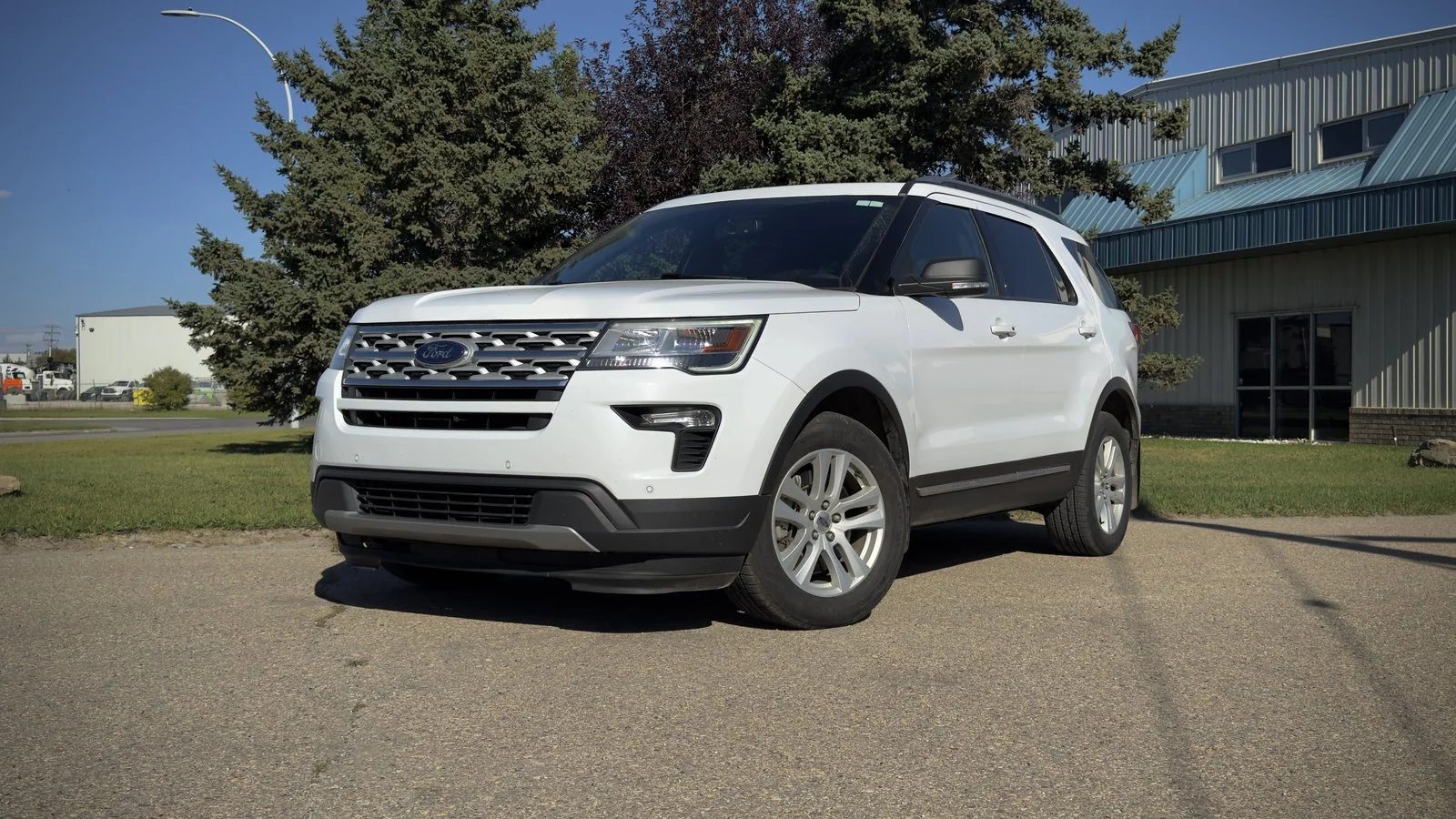
2019 Ford Explorer XLT
$123 bi-weekly OAC
6.49% APR · 84 months · $0 down · cost of borrowing $4,416
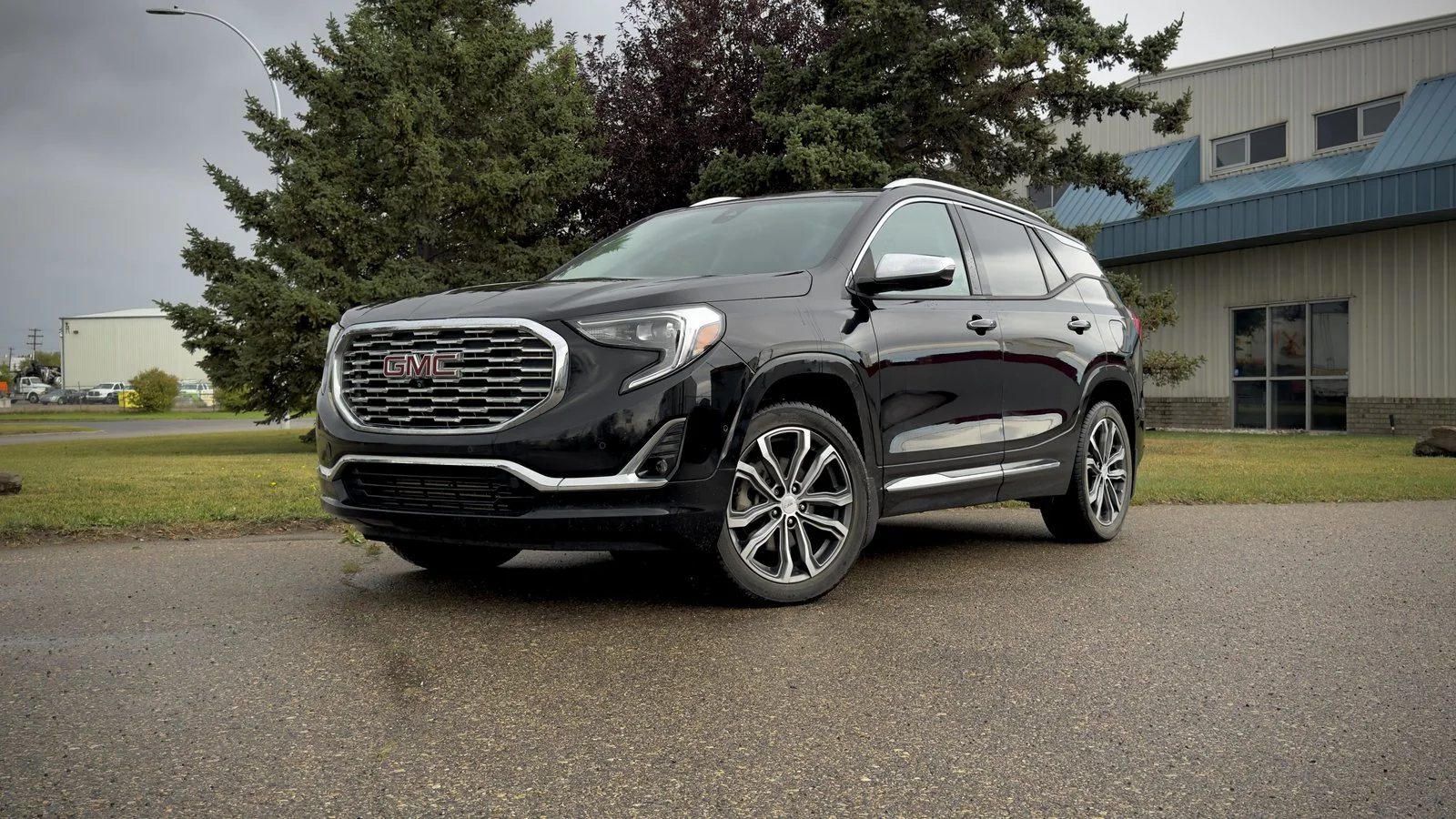 Reconditioning
2020 GMC Terrain Denali
$175 bi-weekly OAC
6.49% APR · 84 months · $0 down · cost of borrowing $6,260
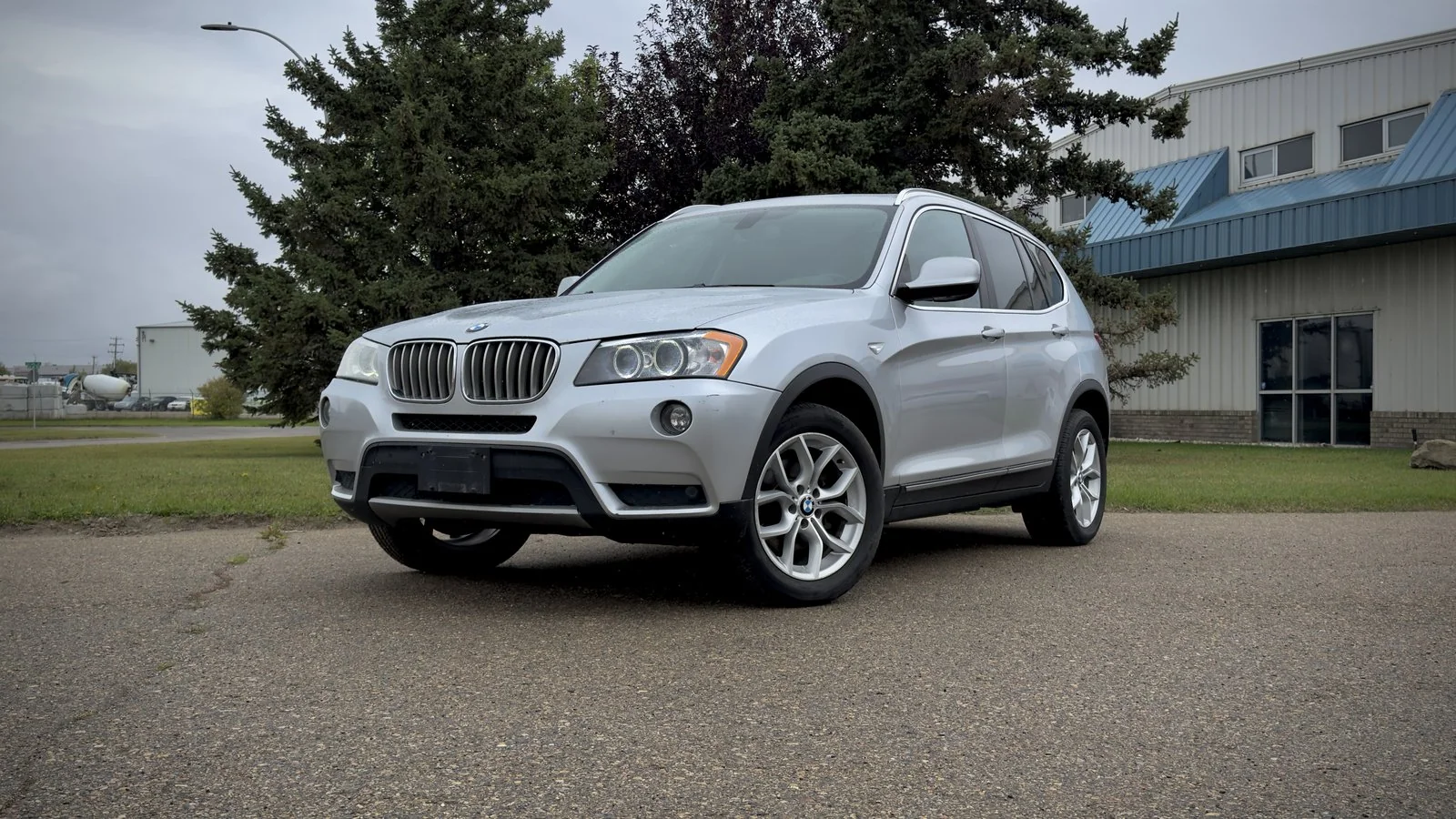
2014 BMW X3 xDrive28i
$75 bi-weekly OAC
6.49% APR · 84 months · $0 down · cost of borrowing $2,698
OAC = on approved credit. Payments are examples at 6.49% APR over 84 months with $0 down, based on each vehicle's advertised price; GST extra. Your rate depends on your credit (4.99%–29.9% APR).
Car loan size by income and credit: common questions
How much car loan can I get approved for?
There is no one number. It depends on your pay, your credit score, what you already owe and the car you choose. The grid on this page is an example built on a payment near 15% of gross monthly pay, not a lender's limit. We cannot promise what any lender will decide. We review every application and call you back.
How is the loan size on this grid worked out?
We take 15% of gross monthly pay as the payment, then work out the loan that payment repays over 72 months with $0 down, at the middle rate of each score band. We round the result down to the nearest $500 so it never overstates, and we work the bi-weekly payment on that rounded loan.
Does my income or my credit score matter more?
They do different jobs. Your income shows the payment you can carry. Your score mostly sets the rate on that payment. When credit took a hit, steady pay often carries more of the file, but a lower score still means a smaller loan for the same payment. Each lender decides each file.
Why is the loan smaller at a lower score if the payment is the same?
A higher rate sends more of every payment to interest, so less goes to repaying the loan. The same payment therefore repays a smaller loan. On the grid, each column to the right uses a higher rate, so each box in a row is a little smaller than the one before it.
Can I borrow more than the grid shows?
Possibly. The grid assumes one income, $0 down and a payment near 15% of pay. A co-applicant with income can raise the payment a lender will consider, and a down payment or a trade-in lets you buy a pricier car for the same loan. Each lender decides each file.
Do GST and fees come out of the loan size?
If you finance them, yes. GST, fees and add-ons that go into the loan are part of the amount financed, so the price of the car is lower than the loan size shown. Ask for the full price, with GST and fees, before you decide.
Is 15% of my pay a lender rule?
No. It is a rule of thumb that keeps a payment in a comfortable range. Lenders look at all your monthly debts together, so the loan one lender will consider can be smaller or larger than the grid shows. Use it to pick a price range, then let the application tell you more.
Last reviewed October 2026 by the Shift Happens finance team
What Our Customers Say
“Who ever thought you could buy a car online. I was surfing the net looking for a more reliable vehicle when Luke called me with some proposals. Very friendly and straight up.”
“The buying experience was handled very professionally. Wes was very attentive and presented everything in an open and honest manner that gave me the reassurance that I made a good purchase.”
“Had an amazing experience at this dealership from start to finish. Huge thanks to Luke for being professional, knowledgeable, and genuinely making the whole process stress-free.”
Other Financing Options
See what you pre-qualify for
Apply online in about three minutes. We review every application and call you back.
★★★★★ 118+ Google Reviews · AMVIC Licensed · Free Delivery 300km