
Why Your Last Car Loan Was Approved But This One Isn't
In this article
- Why Would a Car Loan Be Denied When Your Last One Was Approved?
- Is the Car Loan You Already Have Working Against You?
- Your Credit Score Looks the Same. Is the File Behind It the Same?
- Did the Income Paperwork Change?
- Is It the Vehicle?
- Did the Lender's Rules Change?
- What Can You Do Next?
- Does Paying Your Current Car Loan on Time Help?
- Adjacent Situations
- When Shift Happens Makes Sense for You
- Frequently Asked Questions
- Can a car loan be denied even if I was approved for the same amount before?
- Do lenders share information about why they declined an application?
- If my income increased since my last approval, why would I still be declined?
- Can I use my existing car as a trade-in to improve my new application?
- What's the best way to find out which lender will work with my file now?
- Compare and Apply
Check Your Options in 3 Minutes
No credit impact. All credit situations welcome.
5.0118+ Google ReviewsAMVIC LicensedFree Delivery 300km
Say a lender approved you for a car loan a few years ago, and now you are declined, or offered a much higher rate, with a job that looks the same. It is frustrating, and it almost always has a reason. This post covers the common ones and how to find out which one applies to you. Our guide to what to do after your bank or credit union declines a car loan covers the next steps in more detail.
Why Would a Car Loan Be Denied When Your Last One Was Approved?
A lender decides on your file as it is today, not as it was when you were last approved. One major bank says: "Credit approval is based upon your current financial circumstances." The things that most often change are what you owe next to your income, what your credit report shows, the proof of income a lender will accept, the vehicle and the lender's own rules. A decline can also come from "a combination of marginally weak factors, not just one major factor." We cannot promise what any lender will decide.
Is the Car Loan You Already Have Working Against You?
It can be. One major bank says lenders look at the balances on "your mortgage, line of credit, car loans, student loans, and credit cards" when deciding whether to extend more credit. Another bank explains the test: "Affordability can be determined by your debt-to-income ratio, or the percentage of your monthly income required to pay your current debts. If the ratio is too high, your credit application may be denied." One loan-comparison site says a debt-to-income ratio no higher than 44% is generally recommended. Every lender sets its own limit.
Example, not an offer, using 44% only to show the arithmetic and not as a lender rule. Say you earn $4,200 a month before tax. At 44%, all your debt payments together would top out at $1,848 a month. Say rent is $1,400, a credit card minimum is $80 and your current car payment is about $333 a month (a $15,000 loan at 16.9% over 72 months is about $153 bi-weekly, about $333 a month). That is $1,813 before any new payment, which leaves $35 a month under the 44% mark. When that loan was first approved, its payment was not yet on your list of debts.
If the existing car is traded in, the old loan is paid off as part of the deal, and its payment leaves your list. Our guide to trading in a car you still owe on explains what happens if you owe more than the car is worth.
Your Credit Score Looks the Same. Is the File Behind It the Same?
A score is a snapshot, and the report underneath it can change in ways you do not see. The Financial Consumer Agency of Canada (FCAC) says "The credit score you see may be different than the score a lender sees," because a lender may give more weight to certain information. Things that may have changed:
- Late or missed payments. One bank says "A history of missing or late payments, especially recently, increases the possibility that you'll be denied new credit." A late payment you forgot about can matter.
- An older account that closed. FCAC says closing an older account makes you lose older credit history and reduces your available credit. Equifax puts the length of your credit history at about 15% of a score, in a general breakdown across models.
- A run of applications. FCAC says too many credit inquiries made too close together may make lenders think you are urgently seeking credit or spending beyond your means.
- Higher balances. FCAC says: "Try to use less than 30% of your total credit limit." It adds that if you regularly use a lot of your available credit, lenders may see you as a higher risk.
- A mistake on your report. One bank says "Errors on your credit report could be to blame." Our post on disputing a collection covers how to challenge a wrong entry.
Did the Income Paperwork Change?
Lenders confirm income. One major bank says "A T4 slip or a pay stub is generally required as minimum proof of income," and that if you are self-employed or on contract, more information may be requested. It also says "Based on your employment history, it must appear reasonable that your income will continue into the future." If you moved from a job to your own business between approvals, the proof a lender asks for changes with it. Our guide to self-employed car financing in Alberta covers that case.
In our experience, lenders typically look for about $2,800 a month in income you can prove, from all sources combined. If you are under that, talk to us first.
Is It the Vehicle?
Most car loans are secured, which means the vehicle is the collateral. One major bank says that, depending on the credit requested, "you may be required to provide collateral of sufficient value to support the debt." One loan-comparison site says more money down reduces the lender's risk "as your car loan is less likely to end up upside down." So a lender can say yes to one vehicle and no to another for the same buyer. In our experience, the age and kilometres of the vehicle and its price against what it is worth all play a part. If the vehicle is the reason, a different vehicle or more money down can change the answer.
Did the Lender's Rules Change?
Lenders write their own rules. One major bank says its credit granting policies "vary by product and from one lender to the next," and that "your credit rating is dynamic. This means that it will change as your financial circumstances change." In our experience, lenders review their own limits from time to time, so the same lender can give a different answer than it did years ago. That is one reason to ask a lender what drove its decision rather than guess.
What Can You Do Next?
- Ask the lender why. One major bank says: "In the event that your credit application is not approved, we'll help you to understand the reasons why." Write down what you are told.
- Get both credit reports and check them. FCAC says you can access your credit report online for free from Canada's 2 main credit bureaus, Equifax and TransUnion.
- Fix what you can. If you have missed payments, one bank says to "get current and stay current." Bring balances down.
- Change the size of the ask. A smaller loan, more money down or a co-applicant can each change the picture. One Alberta bank says a co-signer with good credit "can improve your chances of approval and potentially lower your interest rate," and the co-signer is liable for the debt. Our post on applying alone or with a co-applicant shows the math.
- Apply where your file is priced. Rates in our lender programs run 4.99%–29.9% APR across all tiers, and where you land depends on your score band and the rest of your file. Our guide to bad credit car loans in Alberta explains how.
Does Paying Your Current Car Loan on Time Help?
It does. FCAC says payment history is "the most important part of your credit score." A vehicle loan is an installment loan, and Equifax says lenders and creditors like to see that you have managed different types of accounts responsibly over time. If you have never missed a payment on your current loan, that record is on your report. It may not outweigh a high debt load or a weak vehicle, but it counts.
Adjacent Situations
If this post was useful, these directly-related guides will help you go deeper:
When Shift Happens Makes Sense for You
We sell used vehicles in Alberta and work with buyers whose credit took a hit. If you have steady income and were declined despite an earlier approval, tell us what the lender said and we will tell you what to bring. We review every application and call you back. Every lender decides each file, so we cannot promise a result. You can start on our financing application page.
Frequently Asked Questions
Can a car loan be denied even if I was approved for the same amount before?
Yes. A lender decides on your file as it is today. One major bank says "Credit approval is based upon your current financial circumstances," and a previous approval does not carry over. What changed since your last approval is the right question to ask.
Do lenders share information about why they declined an application?
Ask. One major bank says that if an application is not approved, it will help you understand the reasons why. Other lenders have their own practices, so ask yours, and write down what you are told. Knowing whether it was your debts, your credit report, your income papers or the vehicle tells you what to fix.
If my income increased since my last approval, why would I still be declined?
Income is one part of the file. What you owe, your credit report, the vehicle and the proof of the income all count too. If the new income comes from a new job or self-employment, a lender may ask for more proof, and one major bank says it must appear reasonable that your income will continue into the future.
Can I use my existing car as a trade-in to improve my new application?
It can help, because the old loan is paid off as part of the deal and its payment leaves your list. If you owe more than the car is worth, that gap has to be paid or added to the new loan, which makes the new loan bigger. Every lender decides each file.
What's the best way to find out which lender will work with my file now?
Start by finding out why the last lender said no, then fix what you can. We review every application and call you back, and we match your file with lenders that fit your situation. Every lender decides each file, so we cannot promise what any lender will say.
Compare and Apply
- Complete Bad Credit Car Buying Guide (Alberta) — step-by-step guide to bad credit car buying in Alberta
Sources (pages opened October 6, 2026): Financial Consumer Agency of Canada: Credit report and score basics, Improving your credit score, Getting your credit report and credit score; Equifax Canada: How are credit scores calculated?, What is a credit mix?; Bank, credit union and loan-site pages: TD: credit granting process, Scotiabank: 7 reasons you may not be getting approved, Loans Canada: how to qualify for a car loan, ATB: navigating car loans in Alberta. These are public pages, quoted to show what they say. Check the source page before you rely on a detail. This is general information, not legal advice.
Financing Resources
Cars you could drive home
See all inventory
2022 Lincoln Aviator Reserve

2019 Mercedes-Benz GLC-Class GLC300
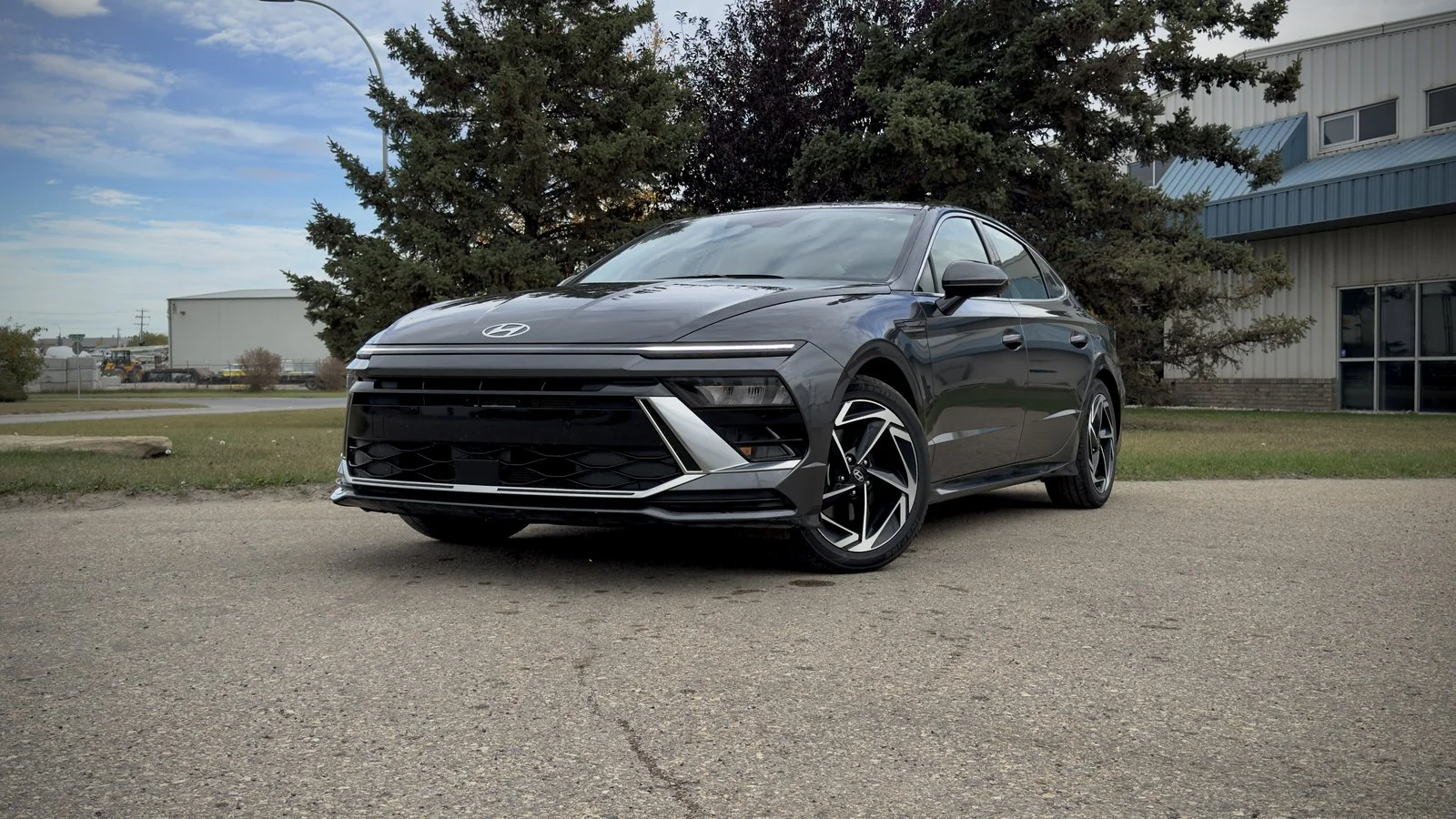
2025 Hyundai Sonata Preferred w/ Trend
Not seeing it? We'll find it.
We source through our dealer partner network across Western Canada: 25,000+ vehicles to choose from. Tell us what you want and what works for your budget.
Find my car3 min · no credit impactOAC = on approved credit. Payments are examples at 6.49% APR over 84 months with $0 down, based on each vehicle's advertised price; GST extra. Your rate depends on your credit (4.99%–29.9% APR).
Related Articles

Ready to Find Your Vehicle?
Browse our inventory or apply for financing. All credit situations welcome.
5.0118+ Google ReviewsAMVIC LicensedFree Delivery 300km