
Apply Alone or With a Co-Applicant: The Credit Math
In this article
- Does a Co-Applicant Help or Hurt a Bad-Credit Car Loan in Alberta?
- How Do Lenders Use Credit Scores on a Joint Application?
- How Does Income Stacking Work, and Where Does It Stop?
- When Does a Co-Applicant Actually Help?
- Your income alone is short
- Your debts leave no room
- The loan is big next to the car's value
- Who Gets the Credit-Building Benefit?
- Can a Co-Applicant Be Removed Later?
- What Is the Difference Between a Co-Signer and a Co-Applicant?
- Frequently Asked Questions
- Does adding a co-applicant lower my interest rate on a bad-credit car loan in Alberta?
- Can a spouse with good credit co-apply to fix my bad-credit car loan rate?
- What's the minimum credit score for a co-applicant on a bad-credit car loan?
- Will a co-applicant car loan affect my co-applicant's ability to get a mortgage?
- Can I apply for a bad-credit car loan without a co-applicant in Alberta?
- Keep Reading
Check Your Options in 3 Minutes
No credit impact. All credit situations welcome.
5.0121+ Google ReviewsAMVIC LicensedFree Delivery 300km
You have a 560 credit score and need a car. Your partner has a 680 score and earns $5,500 a month. Should you apply together or go it alone? The instinct is to apply together, and sometimes that is right. Sometimes a partner's income comes with debts that shrink the loan, or a credit file that makes things harder. Here is how to run the numbers before you decide.
Does a Co-Applicant Help or Hurt a Bad-Credit Car Loan in Alberta?
It depends on what the second person brings. A co-applicant can help when their income adds room and their credit is stronger than yours. It can hurt when their debts use up more room than their income adds, or when their credit is weaker. Equifax says lenders will likely consider both credit profiles on a joint application. Run both versions of the numbers before you decide. Every lender decides each file.
This post is part of our guide for steady earners with bad credit in Alberta. It looks at one choice inside that guide: applying alone or with someone.
How Do Lenders Use Credit Scores on a Joint Application?
In our experience, lenders do not share one rulebook here. Equifax says that when two people apply for a joint credit account, such as a car loan, lenders “will likely consider both your credit profiles in addition to other information from your application”, and that “if your spouse has poor credit or high debt, it can affect your odds of approval and may lead to higher interest rates”. It says this about spouses, and the same logic holds for any second applicant.
In our experience, some lenders lean on the main applicant's credit for the rate and use the second person's income to add room, and some look hard at both files. So a stronger co-applicant may help, and a weaker one can hurt. Do not count on the two scores being averaged. Ask the lender how it works before you add a name.
If the weaker file is a partner's and it includes a consumer proposal, see what a spouse's proposal does to a car loan application.
How Does Income Stacking Work, and Where Does It Stop?
When two incomes combine, the debts combine too. In our experience, a lender compares your monthly debt payments, including the new car payment, with your gross monthly income, which is your income before tax. Each lender sets its own limit. To show how it works, this example assumes a limit of 40% of gross income for all debt payments together. That is an assumption for the example, not any lender's rule.
| Factor | You alone | You and your partner |
|---|---|---|
| Your gross monthly income | $3,800 | $3,800 |
| Partner's gross monthly income | n/a | $4,200 |
| Combined gross monthly income | $3,800 | $8,000 |
| Your monthly debt payments | $650 | $650 |
| Partner's monthly debt payments | n/a | $2,100 |
| Combined monthly debt payments | $650 | $2,750 |
| 40% of gross income | $1,520 | $3,200 |
| Room left for a car payment | $870 | $450 |
| Loan that payment could carry at 16.9% over 72 months | about $39,200 | about $20,300 |
Example, not an offer. 16.9% is an example rate inside the 550–599 band (9.9–19.9%), the band a 560 score falls in.
Your partner's income adds $1,680 of room (40% of $4,200), but their debts use up $2,100. The joint file ends up with less room than you had alone. Even if a lender priced the joint file off your partner's stronger score, say at 9.9% (an example rate inside the 650–749 band, 6.9–12.9%), $450 of room carries about $24,400. That is still less than the $39,200 you could carry alone.
Run the numbers before you apply: (combined gross monthly income × your limit) − (all monthly debt payments) = room for the car payment. Then try that payment in the payment calculator at a rate inside your score band. If the joint number is lower than the solo number, apply alone, or look for a co-applicant with fewer debts.
When Does a Co-Applicant Actually Help?
Your income alone is short
In our experience, lenders typically look for about $2,800 a month in income you can prove, from all sources combined. If you are under that, a co-applicant with steady income can close the gap.
Your debts leave no room
Say you earn $4,500 a month and your debts are $1,800 a month. At the example 40% limit, your room is $0. A partner who earns $3,000 with only $200 of debts adds $1,200 of room and uses $200 of it. The joint room is $1,000, which carries about $45,100 at 16.9% over 72 months. Example, not an offer.
The loan is big next to the car's value
In our experience, some lenders will lend only up to a share of what the vehicle is worth, and the share can depend on the file. A co-applicant with stronger credit can sometimes change that. If you hear "we can lend this much on that car for you alone, and more with a co-applicant", ask for both numbers in dollars.
Who Gets the Credit-Building Benefit?
Equifax says: “Once opened, joint accounts can appear on both of your credit reports. That means any late or missed payments on those accounts can negatively impact both of your credit scores.” It adds that “any positive credit activity on these accounts can have a positive impact on your scores”, so both of you share the upside too.
FCAC says a joint borrower is “someone who signs a mortgage, loan, credit card or line of credit agreement with one or more other persons”, and that “As a joint borrower, you become equally responsible for repaying the unpaid balance on the borrowed amount.” That is a legal obligation, not a formality, so have the conversation before anyone signs.
Ask whether the lender reports to both bureaus. Equifax says some lenders report to both, just one, or none at all. For the credit-building side, read how car payments build credit over time.
Can a Co-Applicant Be Removed Later?
Not by paperwork alone, in our experience. A joint loan usually stays joint until it is paid off or replaced. Equifax, writing about divorce, says: “If you are the primary account holder, it may be possible to convert the account to an individual account, depending on the lender’s policies. Converting it to an individual account will place the account -- and the payment responsibility -- in your name.”
So ask the lender what the options are before you sign. Do not promise a co-applicant they will be off in six months unless you have a real plan to qualify alone by then. Our guide to removing a cosigner from your car loan and our post on when a refinance pays for itself cover the usual routes.
What Is the Difference Between a Co-Signer and a Co-Applicant?
People use the words loosely. FCAC describes a joint borrower as someone who signs the agreement with one or more other persons, and says: “This is also referred to as co-signing.” Ask the lender which role each name has on the form and what that person is responsible for. Our guides to co-signer vs joint applicant and to the legal distinctions between a co-borrower, a guarantor and a cosigner explain the roles. If you would rather not bring anyone in, see car loans without a cosigner in Alberta.
Frequently Asked Questions
Does adding a co-applicant lower my interest rate on a bad-credit car loan in Alberta?
Not on its own. In our experience, a co-applicant with stronger credit can help a lender say yes, or say yes to a bigger loan, and many lenders still lean on the main applicant's file for the rate. Your own credit, a bigger down payment and a smaller loan are the levers you control. Each lender decides each file.
Can a spouse with good credit co-apply to fix my bad-credit car loan rate?
Equifax says lenders will likely consider both credit profiles on a joint application, so a stronger file can help and a weaker one can hurt. It also says applying alone “might be the best option if you have a good credit score and your spouse doesn’t”. In your case that would mean your spouse applies in their own name, and the loan and the responsibility are theirs.
What's the minimum credit score for a co-applicant on a bad-credit car loan?
There is no single minimum we can quote. In our experience, each lender sets its own cut-offs, and scores come in several versions. Equifax says: “One bank might interpret a score of 620 (on the version they use) the way another bank interprets a score of 670 (on their specific score version).” In our experience, some lenders will not take a second applicant whose credit is weaker than their own cut-off, even when the income is good. Check the co-applicant's credit report before you add them.
Will a co-applicant car loan affect my co-applicant's ability to get a mortgage?
It can. FCAC says a mortgage lender or broker will look at your income and your “level of debt”, and it lists “car loans” among the monthly payments counted as debts. A $400 bi-weekly car payment is about $867 a month (400 × 26 ÷ 12). If your co-applicant plans to buy a home soon, talk to them before you add their name.
Can I apply for a bad-credit car loan without a co-applicant in Alberta?
Yes, you can apply on your own. In our experience, income you can prove, a steady address and job history, and a down payment all help, and each lender decides each file. Our guide to when you actually need a cosigner goes through the options.
Keep Reading
If a lender has already said no to the two of you, see second chance auto financing in Alberta. When you are ready, you can start the online application, with or without a co-applicant. We review every application and call you back, and every lender decides each file.
Sources (pages opened 2026-10-06): Equifax Canada: What To Know About Credit & Marriage; What Information Is in a Credit Report?; Does Divorce Affect Your Credit Score?; 4 Credit Score Myths Explained. Financial Consumer Agency of Canada: Disclosure of information to joint borrowers: know your rights; Getting preapproved for a mortgage.
Financing Resources
Cars you could drive home
See all inventory
2014 BMW X3 xDrive28i
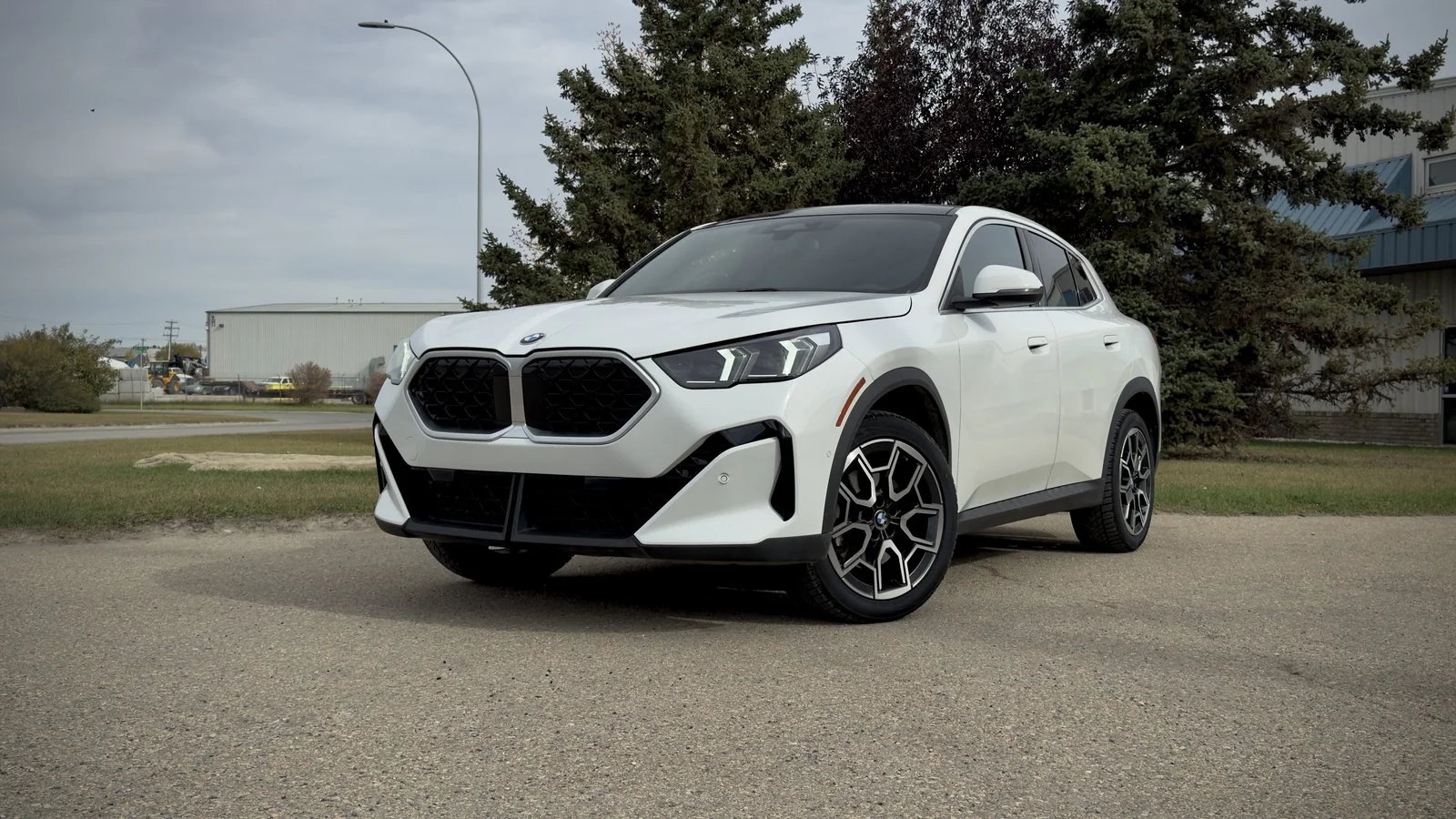
2025 BMW X2 xDrive28i

2025 Chevrolet Malibu 1LT
Not seeing it? We'll find it.
We source through our dealer partner network across Western Canada: 25,000+ vehicles to choose from. Tell us what you want and what works for your budget.
Find my car3 min · no credit impactOAC = on approved credit. Payments are examples at 6.49% APR over 84 months with $0 down, based on each vehicle's advertised price; GST extra. Your rate depends on your credit (4.99%–29.9% APR).
Related Articles


Handover day. Real buyers, the day they drove away.
View more handovers















Ready to Find Your Vehicle?
Browse our inventory or apply for financing. All credit situations welcome.
5.0121+ Google ReviewsAMVIC LicensedFree Delivery 300km